Best premium smartwatches: Which watch deserves a place on your wrist?
Six premium watches, six different priorities: iPhone integration, Android apps, running data, expedition mapping and battery life that can last beyond the weekend.
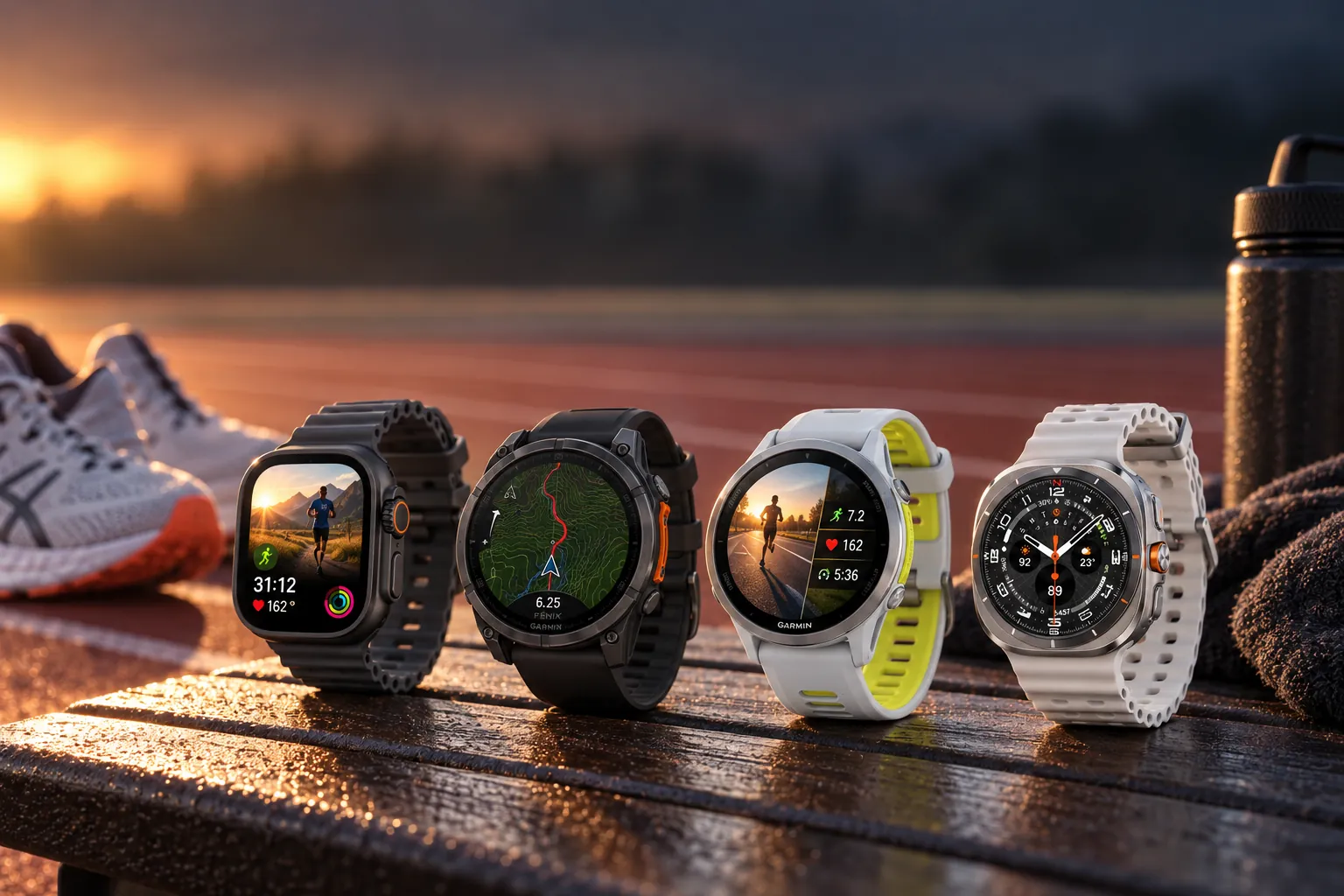

Combines deep iPhone integration, cellular, 40m recreational diving support and published heart-rate results close to chest straps.
Check price on Amazon
Built for offline mapping, multi-band GPS, training analysis and substantially longer quoted battery life than conventional smartwatches.
Check price on Amazon
A lighter Garmin for runners and triathletes, with maps, multi-band GPS, coaching tools and advanced running analysis.
Check price on Amazon
A rugged Android LTE watch with strong published GPS results, 64GB storage and Galaxy-phone-specific health features.
Check price on Amazon
Pairs Garmin health, sleep and sport tools with a conventional design and multi-day battery claims.
Check price on Amazon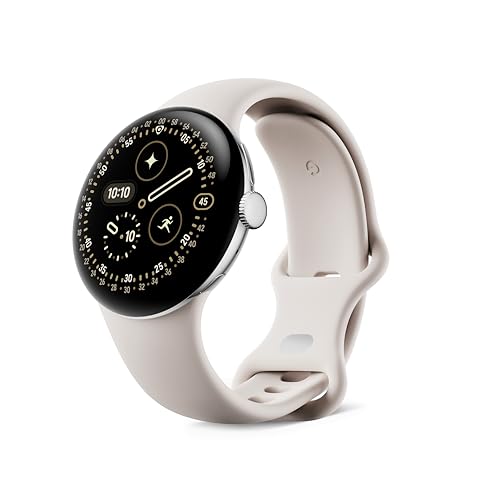
A compact Android watch with Gemini, a 3,000-nit display, dual-frequency GPS and a reported 42-minute full charge.
Check price on AmazonWe link to the exact model on Amazon UK. Prices change often, so check the live price before you buy. As an Amazon Associate we earn from qualifying purchases.
You are halfway through a long run, a train commute or a wet hillside walk. A notification buzzes, your route bends under tree cover and the battery icon suddenly matters more than the titanium around it. Premium watches can all look convincing in a product photo; the useful one is the model that works properly with your phone and the way you actually train.
The Premium Smartwatch Dilemma: Why "Best" Depends on Your Pocket, Not Just Your Wrist
The short answer: iPhone owners who want calls, apps, diving support and outdoor safety should choose Apple Watch Ultra 3. Android users who want LTE and a large Wear OS watch should start with Samsung Galaxy Watch Ultra, particularly if they use a Samsung Galaxy phone. Google Pixel Watch 4 is the lighter, lower-cost Android route for Google services, Gemini and rapid charging.
For training rather than app breadth, Garmin is the deciding fork in the road. Garmin fēnix 8 is the substantial adventure watch for offline mapping, diving and long battery life. Garmin Forerunner 970 targets runners and triathletes who want detailed coaching and navigation in a lighter package. Garmin Venu 4 brings Garmin wellness and fitness tools to a less overtly rugged everyday watch.
Buy the phone ecosystem first
Before comparing displays or GPS chips, remove the watches that cannot pair with your phone. Apple Watch Ultra 3 is iPhone-only. Pixel Watch 4 is Android-only. Samsung's watch works with Android phones, but several headline health and AI functions need a Samsung Galaxy handset. Garmin is the broadest fit for people switching between Android and iPhone.
After compatibility, the meaningful choice is between lifestyle polish and sport depth. Apple, Samsung and Google put calls, messages, payments and apps close to the centre of the experience. Garmin puts training status, recovery, navigation and endurance first. Battery follows the same divide: hours or a couple of days for conventional smartwatches, versus days or longer for Garmin models.
| Watch | Display | Quoted everyday battery | Core buying role |
|---|---|---|---|
| Apple Watch Ultra 3 | 49mm always-on OLED, up to 3,000 nits | Up to 42 hours normal use | iPhone smartwatch with outdoor and dive hardware |
| Samsung Galaxy Watch Ultra | 1.5-inch Super AMOLED, 480 × 480 | Up to 80 hours with always-on display off | Large Android LTE smartwatch with rugged design |
| Google Pixel Watch 4 | 41mm AMOLED LTPO, up to 3,000 nits | Up to 30 hours with always-on display | Compact Android watch for Google and Fitbit features |
| Garmin fēnix 8 | 1.4-inch AMOLED, 454 × 454 | Up to 16 days smartwatch mode | Maps, multisport analysis and expedition use |
| Garmin Forerunner 970 | 1.4-inch AMOLED, 454 × 454 | Up to 15 days smartwatch mode | Running, triathlon and coaching-led training |
| Garmin Venu 4 | 1.4-inch AMOLED, 454 × 454 | Up to 12 days smartwatch mode | Wellness, gym work and everyday Garmin tracking |
First, the Dealbreaker Question: What Phone Is In Your Pocket?
Apple Watch Ultra 3 required an iPhone 11 or later running iOS 26 or later. It did not pair with Android. Google Pixel Watch 4 required Android 11 or later and did not support iPhone pairing. Samsung Galaxy Watch Ultra paired with Android, but Samsung's ECG, blood-pressure measurement, selected Galaxy AI tools and some gesture features depended on a compatible Samsung Galaxy phone.
This distinction is more important than a marginal battery advantage. An Apple Watch cannot become an Android watch through an app, and a Pixel Watch cannot replace Apple Watch integration on an iPhone. If you own a Galaxy phone, Samsung's additional health functions make its Ultra more compelling; if you do not, factor in those restrictions before paying for it.
Garmin takes a different approach. The fēnix 8, Forerunner 970 and Venu 4 work as sports and wellness watches with either Android or iPhone, although they do not replicate the depth of Apple's iOS integration or the Wear OS app catalogue. That makes Garmin appealing to athletes who expect to change phones before changing training platforms.
Apple Watch Ultra 3: The Outdoor Flagship for People Who Will Never Leave iOS
Apple Watch Ultra 3 was introduced in September 2025 and the Black Titanium 49mm GPS + Cellular model covered here launched at a UK RRP of £749 with the Ocean Band. It combined Apple's usual smartwatch experience with a Grade 5 titanium case, 100m water resistance, IP6X dust resistance and support for recreational scuba diving to 40m with a compatible app.
The practical appeal is range. It can handle calls and music away from the phone through cellular, show maps on a bright display, run Apple Pay, track sleep and health measures, and supply offline maps, waypoints and Backtrack for outdoor use. Its satellite Emergency SOS and Find My features added a safety layer, subject to regional availability and Apple's service terms.

Accuracy evidence was particularly strong. TechRadar reported a 45-minute run averaging 148bpm on the watch versus 149bpm from a Polar H10 chest strap. Wareable reported a difference of only 0.5bpm from a Garmin HRM 600 during the final 15 minutes of a 20km race. Wareable also reported that a continuous-GPS mountain hike lasting more than 10 hours ended with roughly 50% battery remaining.
Why it fits
- Deep iPhone, Apple Pay, app and cellular integration.
- Bright display and accurate heart-rate figures in published comparisons.
- Proper outdoor hardware, including satellite safety functions and diving support.
The catch
- No Android pairing.
- Training-load and recovery analysis remains less detailed than Garmin's platform.
- Wareable reported distance under-recording through tunnels because the watch did not estimate the missing segment.
Choose it if your iPhone is central to daily life and you want a watch that can move from a café payment to a trail route to a dive. Skip it if your priority is week-long battery endurance or detailed training readiness and recovery interpretation.
Samsung Galaxy Watch Ultra: Android's Titanium Toughness
The Amazon configuration is the 2025 Samsung Galaxy Watch Ultra, model family SM-L705F, rather than the later Galaxy Watch Ultra 2. It launched in July 2025 at a UK RRP of £599. The refresh retained the 47mm titanium case, Exynos W1000 processor and 590mAh battery of the earlier design, whilst increasing storage to 64GB.
This is Samsung's answer for people who want a conventional smartwatch, not a stripped-back sports computer. It has Wear OS apps, NFC, offline content, LTE, a programmable Quick Button and an emergency siren. The sapphire-protected display sits within Samsung's cushion-shaped titanium case, with 10ATM and IP68 ratings plus MIL-STD-810H durability assessment.

Its GPS and heart-rate results were generally encouraging. Wareable reported heart-rate averages usually within 1bpm of a Garmin Epix Pro Gen 2 and GPS distance around 50 metres behind Garmin over 10km. Android Authority also described GPS tracks as closely aligned with an Apple Watch Ultra 2 during runs in rain, built-up areas and tree cover. Rowing was a weaker use case, where Android Authority reported less reliable heart-rate results against chest-strap and armband references.
The important warning is battery consistency. Samsung quoted up to 80 hours with always-on display disabled, but Wareable's published range was 35 to 55 hours under broadly similar settings, including an approximately 25% overnight drop in many cases. Notebookcheck and Tom's Guide each reported roughly 48 hours. Charging was also slow: Notebookcheck recorded about 95 minutes for a full charge.
It makes sense for Galaxy owners wanting LTE, a bold display and familiar Android services in a tougher case. It is less convincing for divers, for people seeking slim overnight comfort, or for buyers who need the predictable multi-day endurance of a dedicated sports watch.
Google Pixel Watch 4: A Compact Android Watch for Gemini and Google Services
Google Pixel Watch 4 in this guide is the 41mm Wi-Fi/Bluetooth model in Polished Silver Aluminium with Porcelain Active Band. It arrived in UK shops in October 2025 at a £349 RRP for the 41mm Wi-Fi/Bluetooth configuration with the Iris Active Band; the Polished Silver Aluminium with Porcelain Active Band configuration featured in this listing is priced at £399. The 41mm LTE version launched at £449. That starting price put it below the other watches here, whilst still including a 3,000-nit domed AMOLED display, dual-frequency GPS and Wear OS 6.
Its pitch is less about expedition credibility and more about being pleasant to wear every day. The 41mm aluminium case is markedly lighter than the Ultra-class watches, and reviewers praised its curved Actua 360 screen for natural swipes and broad viewing angles. It also carried Google's on-wrist Gemini integration, Fitbit-derived health tools, Google Wallet and Google's app ecosystem.

Charging is a genuine convenience advantage. Google quoted 45 minutes from empty to full, while CHIP reported around 42 minutes on a 41mm LTE unit and Woman & Home reported 45 minutes. The revised upright dock also made it useful as a small bedside clock. That said, the Wi-Fi model discussed here did not provide independent cellular calls or messages away from the phone.
Why it fits
- Light 41mm design with a very bright display.
- Fast top-ups: Google quoted 15 minutes to 50%.
- Google apps, Gemini, health tracking and dual-frequency GPS.
The catch
- Android-only, and this specific model lacks LTE.
- 9to5Google reported around 36 hours before Battery Saver began at 15%.
- Gemini required an internet connection, and Engadget reported that the wrist-raise gesture could be inconsistent.
CHIP described GPS tracking as highly accurate, but Pixel Watch 4 is not designed as a dive watch or endurance expedition device. Choose it for Android daily life, smaller wrists, sleep tracking and fast charging. Look to Garmin if you dislike regular charging or expect to spend long days navigating away from a phone.
Garmin fēnix 8: The Expedition-Grade Choice When Battery Matters More Than Apps
The standard Garmin fēnix 8 in this guide is the 47mm AMOLED Slate Grey model, part number 010-02904-00. It launched in August 2024 at £869.99, putting it in a different category of spending and specialism from a mainstream smartwatch. The reward is a watch built around mapping, route guidance, structured training and long periods between charges.
The fēnix 8 loaded TopoActive maps, downloadable mapping, round-trip routing, turn-by-turn directions, NextFork and ClimbPro route data. Those are tools for someone deciding which turning to take in poor weather, not merely logging a park run. The five physical buttons are useful when gloves, water or mud make a touchscreen less convenient, whilst the touchscreen still helps with maps.

Its official battery figures are unusually broad: up to 16 days in smartwatch mode, seven days with always-on display, 47 hours GPS-only, 35 hours with all systems plus multi-band, 81 hours in Max Battery GPS mode and 17 days in Expedition mode. Tom's Guide reported six to seven days for the 47mm model with always-on display and regular runs, which illustrates how display and GPS settings alter the real outcome.
Why the fēnix costs more
The price buys Garmin's complete navigation and sports platform rather than a richer app store. You get offline maps, multi-band positioning, Training Readiness, Training Load, Endurance Score, Hill Score, music, Garmin Pay, flashlight and 40m recreational dive support in one watch. You do not get the same cellular-first messaging and app experience as Apple or Wear OS.
Wearable's criticism is equally useful: the standard model uses Gorilla Glass rather than sapphire and its reviewer scratched a non-Sapphire 47mm sample. Optical heart-rate tracking could also struggle during sprinting, HIIT and heat, so athletes basing sessions on precise heart-rate zones may still want a chest strap.
Garmin Forerunner 970: Built for Runners and Triathletes Who Read Every Metric
Garmin Forerunner 970 is the running and triathlon specialist in this group. The Whitestone model has a titanium bezel, sapphire lens, 1.4-inch AMOLED display, built-in white and red LED flashlight, multi-band GPS and full-colour maps, but weighs 56g with its supplied strap. That lighter, sport-led construction is the reason to choose it instead of the more rugged fēnix 8.
Garmin quoted up to 15 days in smartwatch mode, 26 hours in GPS-only mode and 21 hours in all-systems multi-band mode. Real endurance depends sharply on screen settings: WIRED averaged roughly two weeks with low brightness and gesture wake, while The Guardian reported around six days with always-on display, frequent notifications, health monitoring and flashlight use.

The training tools are the central attraction: Training Readiness, Training Status, Garmin Coach, running tolerance, maps and triathlon guidance. Garmin also offered running economy and step-speed-loss analysis, but those two advanced form metrics required the separate HRM 600 chest strap. That is worth knowing before treating the watch price as the complete cost of the feature set.
Choose Garmin Forerunner 970 if you want Garmin's high-level running and triathlon analysis without the fēnix 8's 80g watch weight. Its 5ATM rating suits swimming, but the fēnix 8 is the more appropriate option for diving and tougher expedition use.
Reviewer feedback identified accurate GPS, durable sapphire glass, useful maps and a flashlight that was genuinely practical on dark routes. The compromises were a sporty appearance, occasional scrolling lag reported by TechRadar, and a shorter battery reserve than Garmin's MIP-screen ultra watches when the AMOLED screen stays on.
Garmin Venu 4: The Lifestyle Pick for Wellness Tracking Without a Rugged-Watch Look
Garmin Venu 4 is the route for someone who wants Garmin's health and training platform in a more conventional round watch. The 45mm Slate model has a stainless-steel and fibre-reinforced polymer case, a 1.4-inch AMOLED display, multi-band GNSS, ECG, a microphone and speaker, onboard music, Garmin Pay and more than 80 sports apps.
It is lighter than the fēnix 8 at 38g watch-only, although the supplied silicone strap brings total weight to 56g. Garmin quoted up to 12 days of smartwatch battery life, four days with always-on display, and up to 20 hours in GPS-only mode. TechRadar reported around 10 days before charging with regular workouts, while Wareable saw its always-on sample reach a fifth day before needing power.

This is not simply a step counter in nicer clothes. It included Training Readiness, Training Status, workout benefit, recovery time, sleep coaching, HRV Status, Body Battery, Health Status and Lifestyle Logging. TechRadar reported an average heart rate of 151bpm over a 30-minute run, against 156bpm from a Polar H10 and 155bpm from an Apple Watch Ultra 3.
The catches reflect its more lifestyle-focused design. There is no LTE, no full-colour mapping and no broad third-party app store. Wareable also missed the third physical button from the Venu 3, because navigation now relied more heavily on touchscreen gestures. For gym work, swimming, sleep tracking and general fitness, those compromises may be easier to live with than the size of a fēnix.
Battery Life Reality Check: Claimed Hours Versus Reported Use
Battery figures are useful only when you know the settings behind them. Always-on displays, multi-band GPS, music, LTE and frequent notifications all draw more power. Garmin's much longer figures come partly from a different product philosophy: the watches are designed to behave like sports computers first and connected screens second.
| Watch | Manufacturer claim | Published real-world reference | Charging reference |
|---|---|---|---|
| Apple Watch Ultra 3 | Up to 42 hours normal use | Wareable reported light use approaching 60 hours | Tech Advisor reported about 45 minutes to 80% |
| Samsung Galaxy Watch Ultra | Up to 80 hours, always-on display off | Wareable reported 35–55 hours; others reported about 48 hours | Notebookcheck reported about 95 minutes to full |
| Google Pixel Watch 4 | Up to 30 hours with always-on display | 9to5Google reported about 36 hours to its Battery Saver threshold | CHIP reported about 42 minutes to full |
| Garmin fēnix 8 | Up to 16 days smartwatch mode | Tom's Guide reported six to seven days with always-on display and regular runs | Garmin proprietary plug charger |
| Garmin Forerunner 970 | Up to 15 days smartwatch mode | The Guardian reported about six days with always-on display and frequent use | The Guardian reported about 83 minutes to full |
| Garmin Venu 4 | Up to 12 days smartwatch mode | TechRadar reported about 10 days with regular workouts | Android Central reported up to two hours to full |
The battery decision is straightforward. Pick Apple, Samsung or Google if you are content to charge around every day or two and value modern smartwatch conveniences. Pick a Garmin if you want sleep tracking, regular GPS activity and notifications without constantly planning around a charger.
Heart-Rate and GPS Accuracy: Read the Useful Detail, Not a Marketing Label
Wrist sensors are not all equally dependable in every sport. Skin contact, temperature, motion and workout type matter. Published comparisons gave Apple Watch Ultra 3 the clearest chest-strap figures here: 148bpm versus 149bpm from a Polar H10 in TechRadar's run, plus Wareable's 0.5bpm difference from a Garmin HRM 600 during the end of a race.
Samsung Galaxy Watch Ultra also showed strong general results, with Wareable's heart-rate averages generally within 1bpm of a Garmin Epix Pro Gen 2 and a GPS distance difference of about 50m over 10km. But rowing exposed a weakness in Android Authority's comparison, which is exactly why a runner's result should not automatically be applied to every sport.
For Garmin, Venu 4's 151bpm result against a Polar H10's 156bpm in TechRadar's 30-minute run gives a useful everyday reference. WIRED reported that Forerunner 970 heart-rate readings closely matched a chest strap in its coverage, while reviewers also advised a chest strap for fēnix 8 users doing sprint-heavy or heat-intensive sessions.
For training plans driven by heart-rate zones, a chest strap remains the cautious choice, regardless of watch brand. For ordinary runs, rides, walks and indoor sessions, the figures above suggest that all six can provide useful wrist-based guidance, but their strengths differ by activity.
Matching the Watch to the Reader: Six Different Right Answers
iPhone hiker, swimmer or diver
Choose Apple Watch Ultra 3 for iPhone integration, cellular service, accurate published heart-rate results, bright maps and 40m recreational dive support.
Samsung Galaxy owner
Choose Samsung Galaxy Watch Ultra for LTE, Wear OS, a Quick Button, dual-frequency GPS and the additional features available with a Galaxy phone.
Google-first Android user
Choose Google Pixel Watch 4 for Gemini, Google apps, Fitbit-style health tracking, a compact 41mm case and quick charging.
Mountain days and multi-day routes
Choose Garmin fēnix 8 for TopoActive maps, ClimbPro, offline navigation, dive capability and long battery claims.
Data-focused runner or triathlete
Choose Garmin Forerunner 970 for running tolerance, coaching, maps, multi-band GPS and a lighter build than the fēnix 8.
Wellness and everyday exercise
Choose Garmin Venu 4 for sleep, ECG, gym and sport tools, multi-band GPS and days of battery in a more discreet design.
Common Questions Before You Buy
Who Should Buy Which?
Choose the watch that matches the life around your training
Apple Watch Ultra 3 is the clear iPhone-first recommendation: published heart-rate comparisons were close to chest straps, and it combines cellular, apps and serious outdoor hardware. Samsung Galaxy Watch Ultra is the Android choice for buyers who value LTE, a large display and Galaxy-specific extras, provided they accept inconsistent real-world battery reports and slower charging.
Google Pixel Watch 4 is the lower-price Android entry with a bright display, Google services and an unusually convenient charge time. Garmin fēnix 8 is the watch to buy when offline maps, physical controls and long periods away from a charger matter more than third-party apps. Garmin Forerunner 970 makes more sense for committed runners and triathletes, whilst Garmin Venu 4 makes Garmin's health and training ecosystem easier to wear from office to gym.
There is no single watch for every wrist. Phone compatibility removes much of the field immediately; your appetite for charging, maps and training data should settle the rest.
Sources
- Apple Watch Ultra 3 technical specifications; Wareable; TechRadar; Tech Advisor.
- Samsung UK Galaxy Watch Ultra specifications; Wareable; Notebookcheck; Tom's Guide.
- Google Pixel Watch 4 specifications; 9to5Google; CHIP; Engadget.
- Garmin fēnix 8 product page; Garmin Forerunner 970 product page; Garmin Venu 4 product page.
- Tom's Guide fēnix 8 review; WIRED Forerunner 970 review; The Guardian Forerunner 970 review; TechRadar Venu 4 review.
- Apple Watch Ultra 3iPhone outdoor pickView on Amazon
- Garmin fēnix 8Maps and enduranceView on Amazon
- Garmin Forerunner 970Running data pickView on Amazon
- Samsung Galaxy Watch UltraGalaxy LTE pickView on Amazon
- Garmin Venu 4Wellness lifestyle pickView on Amazon
- Google Pixel Watch 4Google services pickView on Amazon
Sources and evidence (70)
- support.apple.com (other)
- apple.com (other)
- apple.com (other)
- wareable.com (other)
- techradar.com (other)
- tomsguide.com (other)
- techadvisor.com (other)
- support.apple.com (other)
- techradar.com (other)
- samsung.com (other)
- news.samsung.com (other)
- samsung.com (other)
- notebookcheck.net (other)
- tomsguide.com (other)
- wareable.com (other)
- androidauthority.com (other)
- blog.google (other)
- store.google.com (other)
- support.google.com (other)
- 9to5google.com (other)
- chip.de (other)
- womanandhome.com (other)
- engadget.com (other)
- techradar.com (other)
- tomsguide.com (other)
- store.google.com (other)
- garmin.com (other)
- garmin.com (other)
- theguardian.com (other)
- garmin.com (other)
- tomsguide.com (other)
- tomsguide.com (other)
- wareable.com (other)
- androidcentral.com (other)
- tomsguide.com (other)
- techradar.com (other)
- garmin.com (other)
- tomsguide.com (other)
- androidcentral.com (other)
- garmin.com (other)
- garmin.com (other)
- garmin.com.sg (other)
- wired.com (other)
- outdoorgearlab.com (other)
- theguardian.com (other)
- techradar.com (other)
- garmin.com (other)
- www8.garmin.com (other)
- garmin.com (other)
- androidcentral.com (other)
- garmin.com (other)
- techradar.com (other)
- tomsguide.com (other)
- wareable.com (other)
- tomsguide.com (other)
- t3.com (other)
- androidauthority.com (other)
- www8.garmin.com (other)
- apple.com (other)
- news.samsung.com (other)
- garmin.com (other)
- garmin.com (other)
- apple.com (other)
- techradar.com (other)
- garmin.com (other)
- garmin.com (other)
- images.apple.com (other)
- apple.com (other)
- samsung.com (other)
- samsung.com (other)