
Best Budget OLED TVs Have Arrived — But Should You Wait for QD-OLED?
Affordable OLED has never looked this good. But with two rival panel technologies fighting for your living room, does it make sense to buy now — or hold out for QD-OLED in 2026?
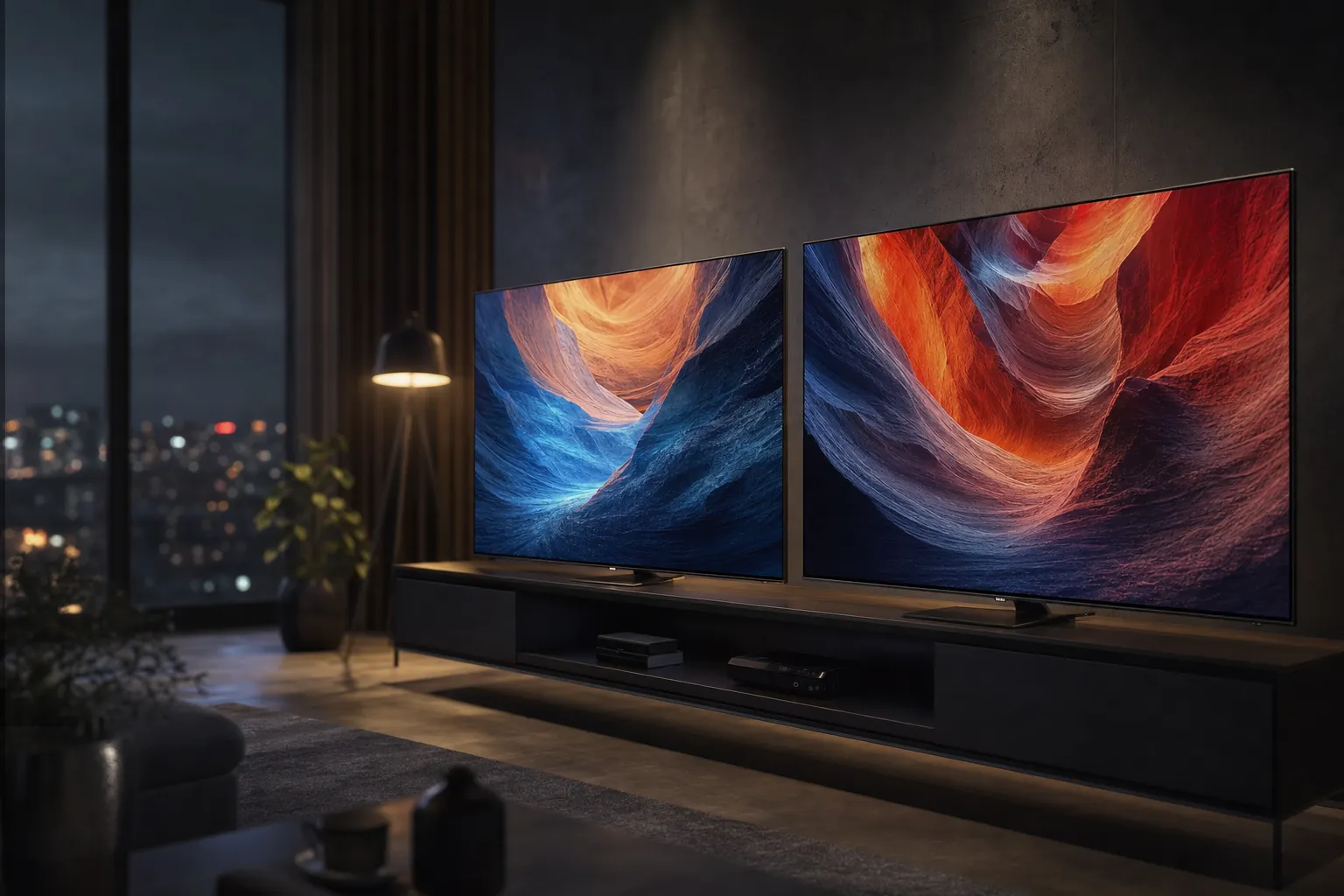
We link to the exact model on Amazon UK. Prices change often, so check the live price before you buy. As an Amazon Associate we earn from qualifying purchases.
Budget OLED TVs have quietly become the most exciting corner of the telly market — but the panel inside matters more than ever.
WOLED vs QD-OLED: The Divide That Actually Matters
Before we get into individual tellies, we need to clear up the single most important decision you'll make: which type of OLED panel you're bringing home. There are now two flavours on the market, and whilst they share that glorious OLED party trick — every pixel lights itself, so blacks are genuinely black rather than a dark grey — they get to their colours and brightness in very different ways.
WOLED (the technology LG has championed for years) uses a white OLED sub-pixel structure with a colour filter layer sitting on top. It's mature, reliable, and produces gorgeous contrast thanks to millions of individually controlled self-lit pixels — LG's panels pack over 8.3 million of them. QD-OLED, developed by Samsung Display, takes a different route: it uses blue OLED emitters with a quantum dot layer that converts that blue light into red and green. The upshot is a wider colour gamut and, historically, punchier brightness in colourful scenes.
Here's the nuance that trips people up, though. When QD-OLED first landed, it held a clear brightness advantage. But newer WOLED technology has largely evened the score, so the old "QD-OLED is always brighter" line no longer holds. Separately, there's a third contender creeping into the conversation — Mini LED. Those sets use a huge number of tiny LEDs split into many dimming zones, which helps them improve contrast, deepen black levels and reduce the halo effect around bright objects on dark backgrounds. It's not OLED, but it's the technology budget shoppers most often cross-shop against.
Colour volume
QD-OLED's quantum dot layer achieves a wider colour gamut than WOLED, which can make richly saturated content pop that little bit more.
Brightness
QD-OLED once led here, but newer WOLED panels have closed the gap. Neither budget tier hits flagship brightness figures.
Black levels
Both technologies deliver the perfect, self-lit blacks that OLED is famous for — this is the shared superpower.
Tuning matters
Samsung and Sony both use Samsung Display's QD-OLED panels yet produce dramatically different results through processor tuning and screen coatings.
The key takeaway: don't buy on panel-type alone. Processor tuning, screen coating and anti-reflection layers matter just as much as the underlying tech. A well-tuned WOLED can look better than a poorly configured QD-OLED, and vice versa.
The Best Budget OLED TVs at a Glance
I've picked out the standout affordable and mid-range OLEDs worth your attention this year. Two are true budget picks — LG's WOLED B-series and Samsung's entry-level UK WOLED — and I've included a mid-range step-up so you can see exactly what the extra money buys. Here's how they stack up before we dig into each one.
| Feature | Samsung S85F OLED | LG B5 OLED | LG C5 OLED |
|---|---|---|---|
| Panel technology | WOLED in the UK (QD-OLED is North America only) | WOLED | WOLED |
| Positioning | Entry-level UK WOLED | Entry-level WOLED | Mid-range |
| Sizes | 55"–83" | 48", 55", 65", 77", 83" | Multiple sizes |
| Refresh rate | 4K 120Hz | 120Hz | 120Hz |
| HDMI 2.1 ports | Four | Four | Four |
| Peak HDR (10% window) | Up to 818 nits | — | — |
| Gaming features | VRR, ALLM | G-Sync, FreeSync, Game Optimizer | Game-focused |
| Best for | Colour lovers on a budget | Dark-room cinema value | Most people |
| Buy | Out of stock | Check price | Check price |
Three OLEDs, two panel technologies — and three very different reasons to buy.
The Ranked Picks
1. Samsung S85F OLED — Best for Colour Lovers on a Budget
See Samsung S85F OLED on Amazon UK
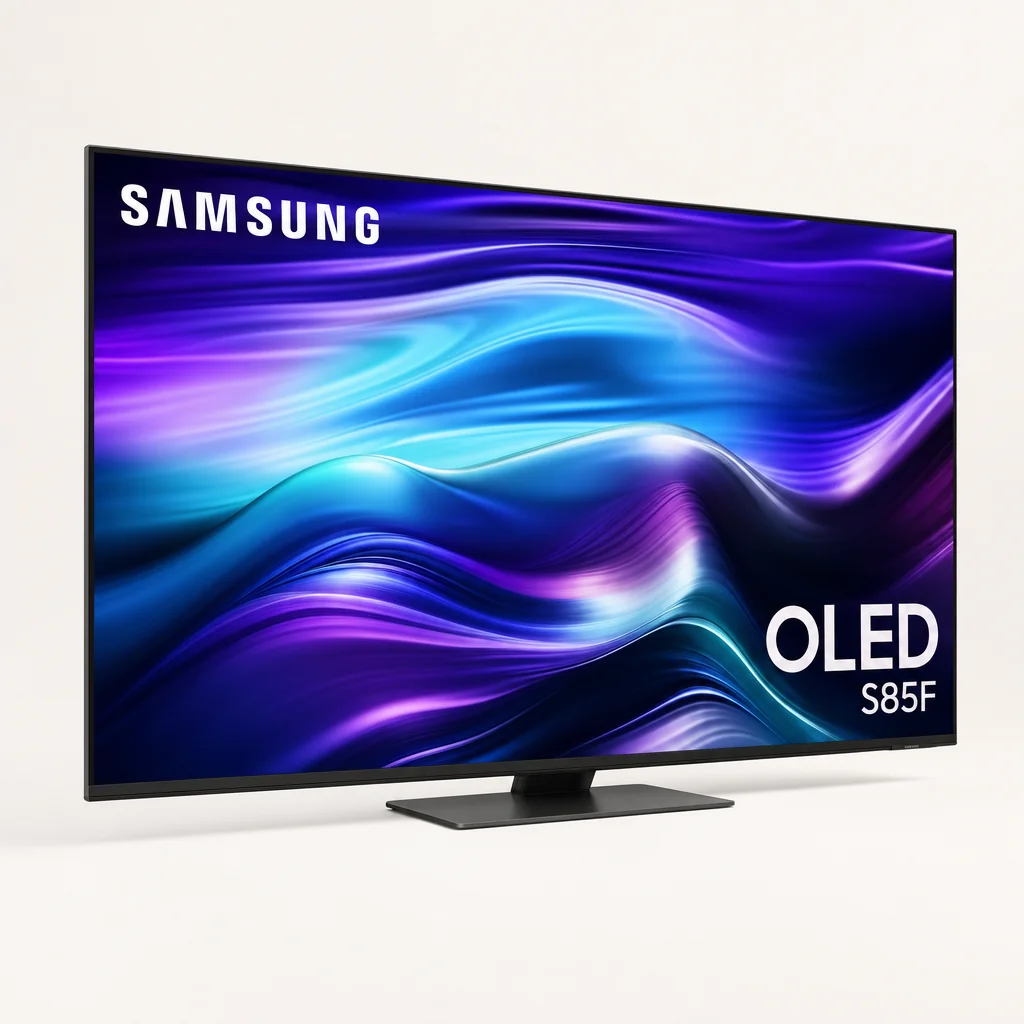
The Samsung S85F is an interesting entry-level OLED, but UK units use a WOLED panel rather than QD-OLED. You still get self-lit pixels and perfect OLED blacks, with Samsung's processing and feature set supplying the main distinction from LG's budget models.
Underneath, it runs the same Gen2 processor as the pricier S90D, complete with 20 neural networks handling upscaling and image optimisation. That's a big deal at this price, and it shows: in my time with QD-OLED sets in this class, the upscaling of HD content is consistently impressive. A stream of Fight Club on Disney+ benefited from upscaled textures and showed genuinely good contrast, the kind of clean, filmic look you'd hope for.
Picture quality comes close to rivalling the best OLED TVs. Colours are vibrant, contrast is strong with deep blacks and refined shadow detail, and textures look realistic with both 4K and HD sources — giving people and objects that lovely 3D-like sense of depth. Pantone-validated colour also means skin tones and natural elements come through accurately, which is exactly the sort of thing that separates a good telly from a great one.
On the numbers, peak HDR brightness on a 10% white window measures 777 nits in Filmmaker Mode and 818 nits in Standard mode. That's a healthy figure for punchy highlights. Where it gives ground to flagships is fullscreen brightness, which is just average at 147 nits in Filmmaker Mode and 150 nits in Standard — so a bright, sun-flooded room isn't its natural habitat, but a typical living room in the evening absolutely is.
Gaming is well catered for: 4K 120Hz with VRR and ALLM across four HDMI 2.1 ports means PS5 and Xbox Series X owners are sorted. Audio is a 2.0-channel, 20-watt system on every size, backed by Q-Symphony and Object Tracking Sound Lite plus Dolby Atmos support. It's fine for casual viewing, though as with most slim OLEDs you'll want a soundbar for films.
Pros
- UK WOLED panel at a budget-friendly price
- Vibrant, Pantone-validated colours
- Strong contrast with deep blacks and refined shadow detail
- Capable Gen2 processor with excellent HD upscaling
- Full gaming suite: 4K 120Hz, VRR, ALLM, four HDMI 2.1 ports
Cons
- Lower brightness than flagship OLEDs, especially fullscreen
- Built-in 2.0-channel speakers are on the weaker side
- Some users find the Tizen interface slow and clunky
User feedback backs up the strong showing: it holds a 4.8 out of 5 rating on Samsung's own site across 210+ reviews, with most buyers praising the colours, contrast and brightness. Amazon paints a slightly more mixed picture at 4.2 out of 5, where the main gripe is Tizen — one shopper memorably called the software "slow, clunky, and buggy." If a snappy interface is a dealbreaker, that's worth weighing up.
The S85F proves you don't need a flagship badge to enjoy a very good OLED's signature colour and contrast.
2. LG B5 OLED — Best for Dark-Room Cinema on a Budget

See the LG B6 (the B5's successor) on Amazon UK
Check today's price & availability on Amazon UK
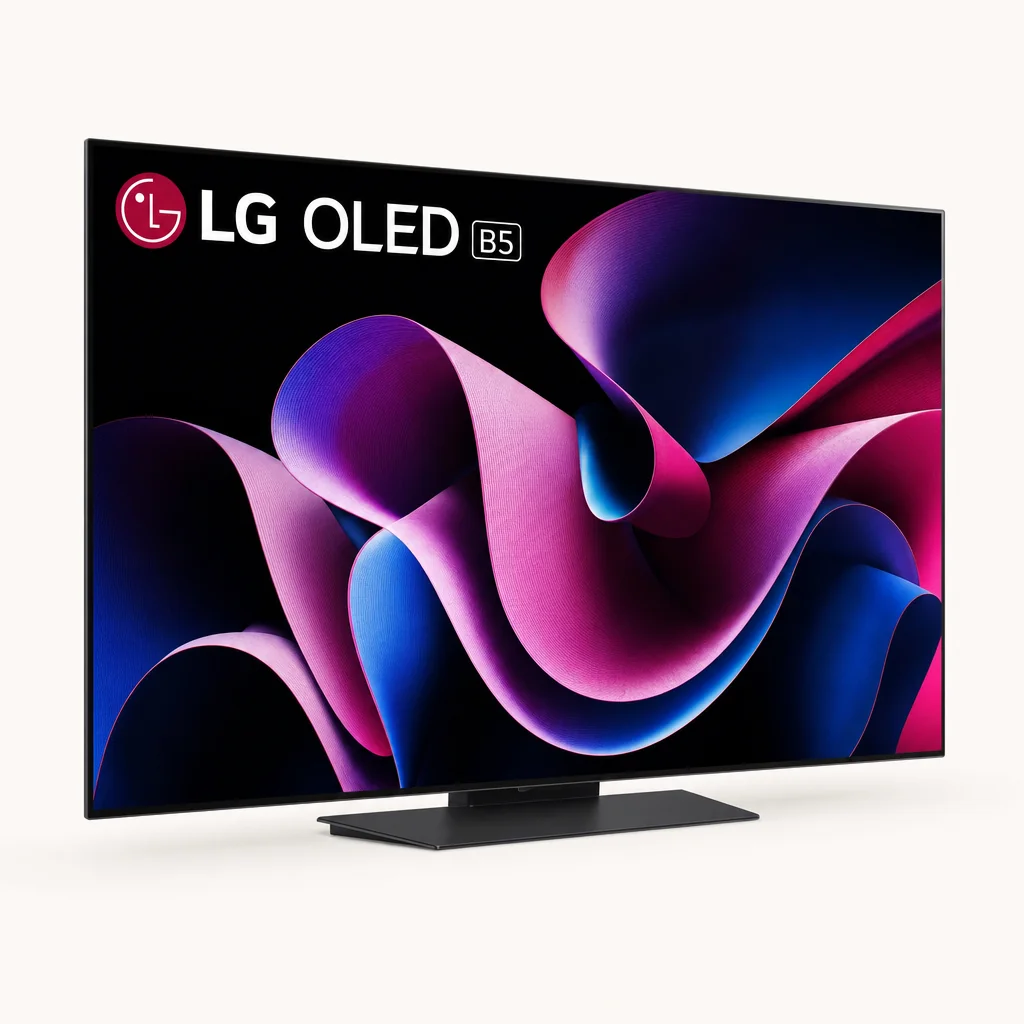
If the S85F is the affordable Samsung OLED gateway drug, the LG B5 is its WOLED counterpart — and it's arguably the best-value OLED of the year. This is a premium OLED experience without needing to sell your house to afford it, and the 55-inch version in particular really understands what budget buyers actually want. You won't get the brightest panel on the market, but you are getting a display that ranks among the best for one crucial thing: pixel-perfect contrast.
The B5 is a surprisingly capable machine. It pairs good colour with a strong operating system, and it comfortably competes with flagships costing considerably more. That's down to LG's mature WOLED panel, which uses over 8.3 million self-lit smart pixels to produce great colour quality and the deep, controlled contrast the brand is known for.
For gamers, the B5 is a genuinely strong choice. You get a 120Hz refresh rate, support for Dolby Vision and HDR10, NVIDIA G-Sync, AMD FreeSync and a dedicated Game Optimizer mode. All four HDMI 2.1 ports top out at 4K/120Hz, so whether you're on PS5 or Xbox, the B5 keeps pace beautifully.
Where does it fall short? Predictably, in bright rooms. One Amazon reviewer loved the TV's dark-room performance but felt it struggled in a brightly lit space — which is entirely typical of standard WOLED panels at this tier. If your living room is bathed in daylight, that's the trade-off you're accepting for the price. In a dim or light-controlled room, though, it's stunning.
Pros
- Outstanding value — a genuine premium OLED experience for less
- Pixel-perfect contrast from 8.3 million self-lit pixels
- Excellent dark-room performance
- Comprehensive gaming support: G-Sync, FreeSync, Game Optimizer, 4K/120Hz
- Strong, capable operating system with good colour
Cons
- Not the brightest panel on the market
- Struggles in brightly lit rooms — best suited to controlled lighting
Reviewers clearly agree it's a winner: the B5 carries a 4.7-star rating at Best Buy, and the 48-inch model has been singled out as the top OLED TV value of the year. That's the kind of endorsement that tells you all you need to know about where this set sits in the market.
3. LG C5 OLED — Best Mid-Range Step-Up

See LG C5 OLED on Amazon UK
Check today's price & availability on Amazon UK
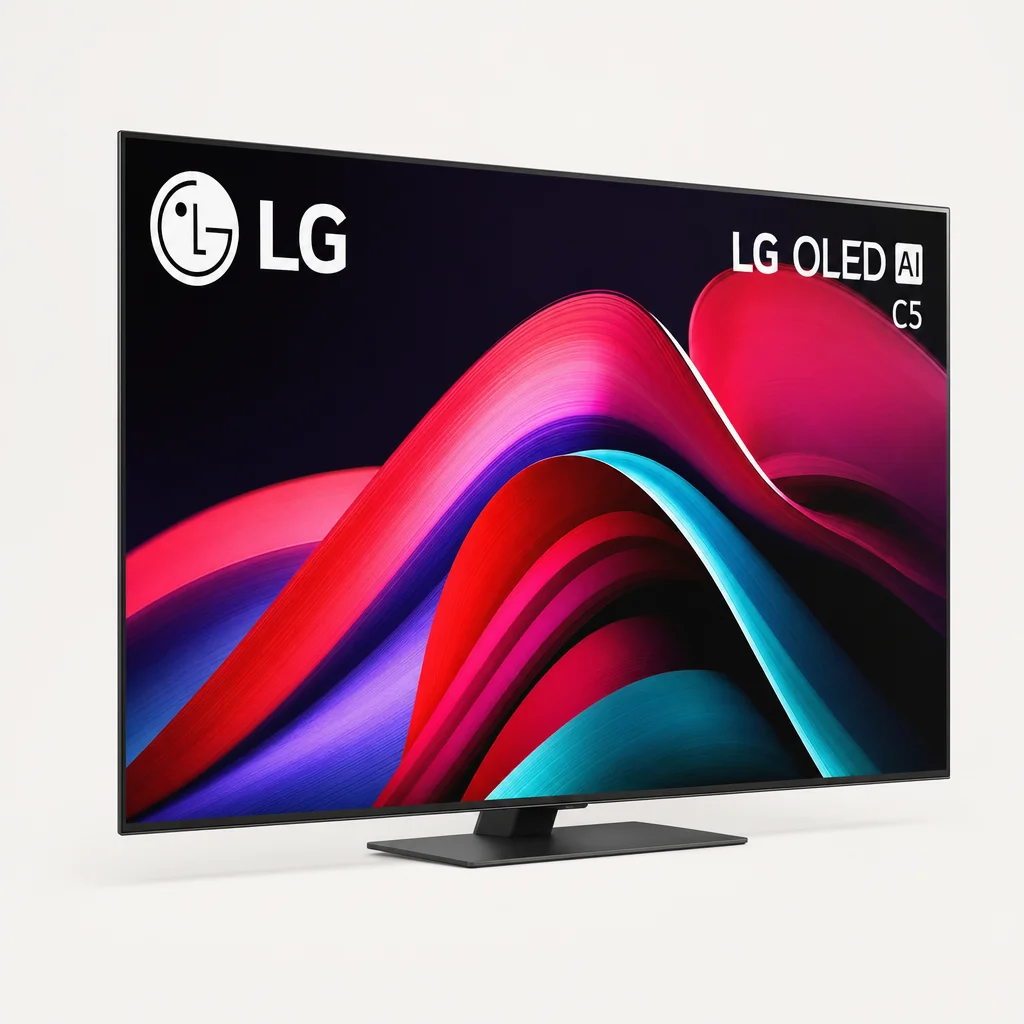
Rounding out the trio is the LG C5, the natural upgrade if you can stretch a little beyond entry-level. The C5 continues the tradition of affordable, mid-range greatness that its C4 predecessor established, and it has firmly taken its place as the best OLED TV for most people. That's a lofty claim, but the C-series has earned it year after year by hitting the sweet spot between price, features and picture quality.
It's a WOLED panel like the B5, but it sits a rung higher, offering the refinements that keep the C-series the default recommendation for buyers who don't want to overthink it. If the B5 is about squeezing maximum OLED into the smallest possible outlay, the C5 is about getting the well-rounded, do-everything package that suits the widest range of homes and use cases — from film nights to console gaming to everyday telly.
My Take
If you're the sort of buyer who wants to pick a telly, be delighted with it, and never think about it again, the C5 is the safest bet in this guide. The B5 saves you money; the C5 removes the compromises. Which matters more to you comes down to budget and how demanding your room is.
Buy Now or Wait for QD-OLED? The Honest Answer
This is the question the headline promised to answer, so let's tackle it head on. The instinct to "wait for the better tech" is understandable — nobody wants to buy a telly and watch a superior one arrive at the same price six months later. But the reality of the 2026 market is more reassuring than that instinct suggests.
Here's the crucial point: the old assumption that QD-OLED is categorically better no longer holds. QD-OLED's early brightness lead has been narrowed by newer WOLED panels, so the two technologies are much closer than they used to be. QD-OLED still offers a wider colour gamut thanks to its quantum dot layer, and if ultra-saturated colour is your priority, that's a real reason to lean towards a confirmed QD-OLED model. But WOLED's contrast, black levels and — critically — value at the entry tier are genuinely excellent, as the LG B5 proves.
Should you wait?
If you have a specific need — you crave the widest colour gamut, or you want the reassurance of buying the latest panel generation — then holding out to compare 2026's QD-OLED options as prices settle is a sensible plan. But if you just want a superb OLED right now, both budget picks here already deliver the perfect blacks and pixel-perfect contrast that make OLED special. Waiting won't fix the one genuine limitation at this tier — brightness in bright rooms — because that's a function of price bracket, not panel type.
My honest advice: don't wait for the technology to "get good," because it already is. Wait only if you're chasing a specific price drop or a specific feature. The gap between a budget QD-OLED and a budget WOLED today is a matter of character and taste — colour punch versus contrast-and-value — not a matter of one being obsolete.
The panel-tech war has cooled into a stalemate of strengths — which is great news for budget buyers.
What Actually Matters When Choosing
Panel type dominates the headlines, but there are more practical factors that will shape how happy you are day to day. Here's what I'd weigh up before committing.
Your room's lighting
This is the single biggest factor at the budget tier. Both the B5 and S85F excel in dim or controlled lighting but give ground in bright, sunny rooms. If daylight floods your space, manage your expectations — or consider a curtain.
Gaming needs
All three picks offer four HDMI 2.1 ports and 120Hz. The LG sets add G-Sync and FreeSync; the Samsung brings VRR and ALLM. Any of them will satisfy a PS5 or Xbox Series X owner.
Colour vs contrast preference
WOLED (S85F, B5 and C5) delivers self-lit contrast; processing and tuning, rather than an S85F QD-OLED panel, leans towards deep, controlled contrast. Neither is wrong — it's about what your eye prefers.
Smart platform
Samsung's Tizen drew criticism from some users for feeling sluggish. LG's webOS earns praise as a strong, capable OS. If you live in the menus, this matters more than the spec sheet suggests.
Sound
Slim OLEDs rarely have room for great speakers — the S85F's 2.0-channel 20W setup is typical. Budget for a soundbar if audio matters to you.
Size options
The B5 spans 48" up to 83", giving it the edge for smaller rooms with that compact 48-inch panel. The S85F starts at 55" and scales to 83".
Pro Tip
Whichever set you choose, spend ten minutes in Filmmaker Mode before you judge the picture. It disables the aggressive processing and motion smoothing that's on by default, and it's how directors intend content to look. On the S85F, Filmmaker Mode still delivers 777 nits of peak HDR — plenty for a properly cinematic image.
How the Panels Compare in Practice
To make the abstract concrete, here's a side-by-side of the practical experience you can expect from each panel technology at this price tier — the things you'll actually notice from the sofa.
| Real-world trait | Budget WOLED (S85F) | Budget WOLED (B5) |
|---|---|---|
| Colour saturation | Wider gamut, punchier | Very good, natural |
| Black levels | Perfect, self-lit | Perfect, self-lit |
| Peak highlights | Up to 818 nits | Strong for the tier |
| Bright-room use | Better in a typical room | Best in a dark room |
| Upscaling | Excellent (Gen2 processor) | Very capable |
| Smart platform | Tizen (some criticism) | webOS (well liked) |
| Value | Strong entry-level OLED value | Best-in-class value |
What jumps out is how much the two share. Both give you those flawless self-lit blacks — the defining OLED trait — along with genuinely capable gaming and image processing. The differences that remain are ones of flavour: the Samsung S85F edges colour and brightness in a typical living room, whilst the WOLED B5 counters with best-in-class value and superb dark-room contrast. There's no loser here.
A Closer Look at the S85F's Numbers
Because the Samsung S85F is our most benchmarked pick, it's worth pausing on what its measurements actually mean for your viewing. The headline figure — up to 818 nits peak HDR on a 10% window — tells you how bright small, intense highlights get: think the glint of sunlight on water, or a lightsaber against a dark corridor. That's a genuinely satisfying level of pop for HDR content.
The fullscreen figures — 147 to 150 nits — tell a different story. That number reflects how bright the whole panel gets when displaying a full white or bright scene, and here it's merely average. In practice this means a snowy landscape or a bright daytime scene won't blast light across your room. For evening film viewing in controlled light, it's a non-issue. For a conservatory in July, it's a limitation. Knowing which of those describes your room is the single most useful thing you can do before buying.
Beyond raw brightness, the S85F's Gen2 processor with its 20 neural networks is doing quiet, unglamorous work that you'll feel more than see. Upscaling standard-definition and HD content to fill a 4K panel is a genuine skill, and this set does an impressive job of it — old TV shows and lower-resolution streams gain texture and clarity rather than looking soft and stretched. That's a real quality-of-life benefit if your viewing isn't all pristine 4K Blu-rays.
Small-highlight brightness is where budget OLED can still shine; fullscreen brightness is where the price bracket shows.
Frequently Asked Questions
Who Should Buy What
Buy the Samsung S85F if…
You want Samsung's processing and a UK WOLED panel at an accessible price, watch a lot of HD content that needs good upscaling, game on a modern console, and view mostly in a typical living room rather than a sun-drenched conservatory.
Buy the LG B5 if…
Value is your top priority and you have a dark or light-controlled room. It offers the best OLED value of the year, superb dark-room contrast, a strong webOS platform and full gaming support — including a compact 48-inch option.
Buy the LG C5 if…
You can stretch beyond entry-level and want the do-everything OLED that suits the widest range of homes. It's the best OLED for most people — the safe, well-rounded choice you'll never second-guess.
Wait if…
You're specifically chasing a wider colour gamut at a lower price, or you simply want to compare 2026's QD-OLED lineup as prices settle. Otherwise, both budget picks already deliver the OLED magic today.
The Verdict
Budget OLED has genuinely arrived, and it's better than the "budget" label suggests. The LG B5 is the value champion — a premium WOLED experience for a fraction of flagship money, with pixel-perfect contrast and comprehensive gaming features, provided you can keep the room dim. The Samsung S85F is the more exciting proposition for colour lovers, using a UK WOLED panel at an accessible price, backed by up to 818 nits of peak HDR and a genuinely clever processor. And the LG C5 remains the sensible, do-it-all mid-range pick for anyone who wants zero compromises.
As for waiting on QD-OLED? Don't do it for the technology's sake — the panel war has settled into a balance of strengths rather than a clear winner. Wait only for a specific price or feature. Otherwise, whichever of these you choose, you're getting the self-lit, inky-black brilliance that makes OLED special. And that's never been cheaper than it is right now.
- LG C5 OLEDView on Amazon