
Anker vs Baseus vs UGREEN Power Banks: Who Makes the Best Now?
Three very different takes on portable power, from magnetic iPhone backups to serious 200W laptop-capable batteries. Here is how the current ranges actually stack up.
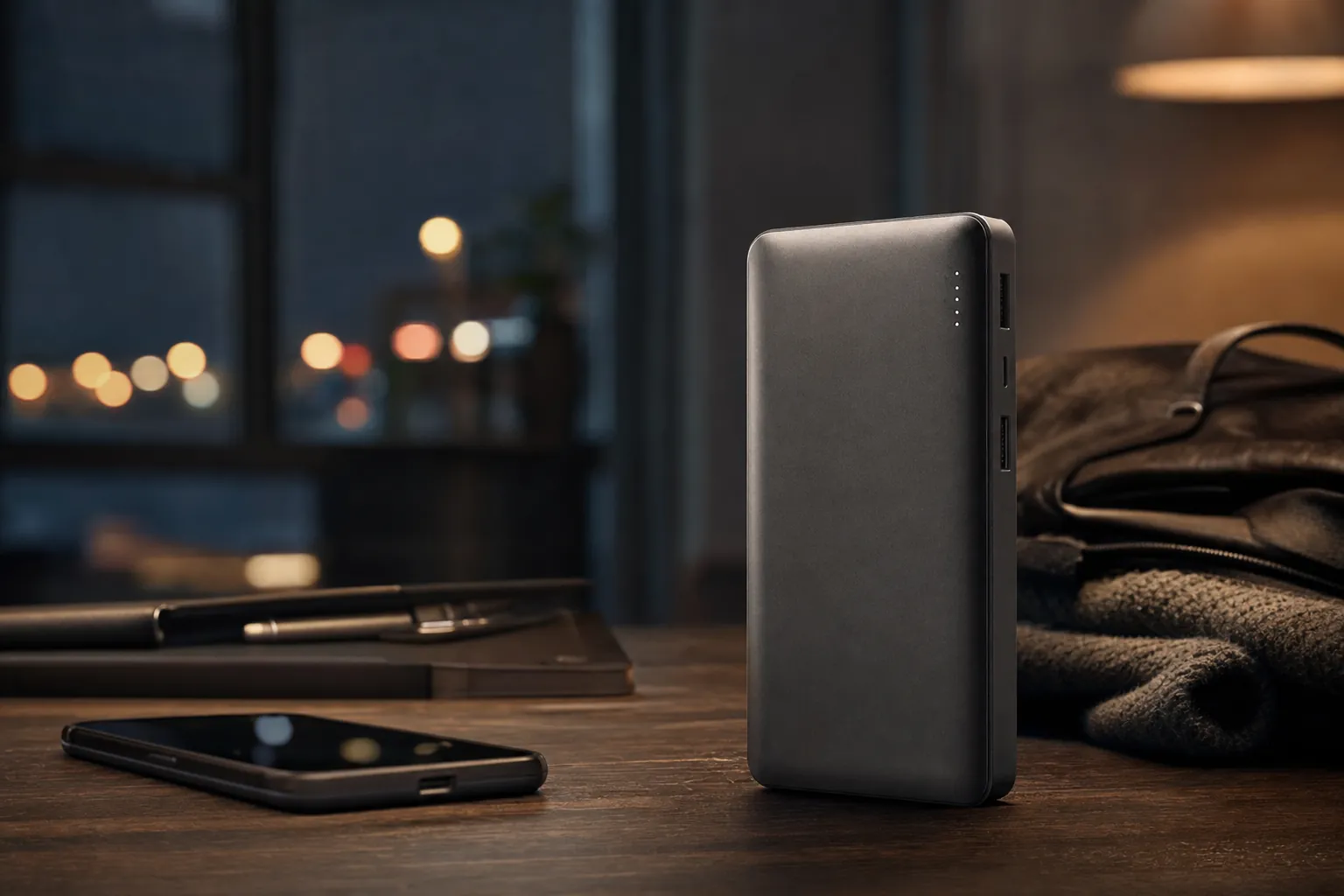
We link to the exact model on Amazon UK. Prices change often, so check the live price before you buy. As an Amazon Associate we earn from qualifying purchases.
The power-bank market is no longer just a shelf of anonymous black bricks: capacity, cable design, displays and output now matter as much as the logo.
Buying a power bank used to be almost comically simple. Pick the biggest mAh number you could afford, make sure it had a USB port, and accept that it would take an age to refill. That approach is now a reliable route to buying the wrong thing. A 5,000mAh magnetic pack, a 10,000mAh pocket bank and a 25,000mAh laptop battery all solve wildly different problems. Anker, Baseus and UGREEN understand that better than most — but they have taken rather different routes there.
Where to buy
Where a model has a stable Amazon UK listing we link it directly. For the rest, prices and stock move constantly, so the button opens a live Amazon UK search for that brand's range.
See Anker power banks on Amazon UK
The Budget Power Bank Battle: Why These Three Brands Dominate in 2026
Anker, Baseus and UGREEN have become the names most shoppers meet once they look beyond the own-brand power bank at the supermarket checkout. They are all Chinese-founded global accessory makers, but lumping them together as "budget brands" does each a disservice. There is overlap, certainly. All three sell ordinary 10,000mAh packs and all three now reach into proper laptop-charging territory. Yet their priorities are distinct enough that the right choice is usually clearer than it first appears.
Anker is the broadest and most overtly premium of the three. Its current range stretches from a 5,000mAh MagGo Ultra Slim through Nano, Zolo and MagGo lines to Prime models with up to 300W of total output. The company has made the display a genuine product feature rather than a decorative percentage readout: the high-end Prime family is where you find detailed digital monitoring and the sort of power allocation that makes a power bank feel more like a compact charging station.
Baseus remains the more design-led wildcard. It is perfectly happy selling a 20,000mAh, 30W bank with built-in Lightning and USB-C cables in China for 99 yuan, but it also has some of the most interesting form factors here. The PicoGo AM52 combined 25W Qi2.2 wireless charging with a 16mm profile, whilst the EnerGeek range treats an integrated cable and screen as useful everyday conveniences rather than premium indulgences. If cables repeatedly vanish into the bottom of your bag — and they do, somehow, even in bags with no bottom — Baseus is paying attention.
UGREEN is the engineering-first middle ground. It has been particularly strong where output, thermal efficiency and sensible pricing meet. The Nexode 25,000mAh 200W brings PD 3.1, a smart TFT screen and two 100W USB-C ports into a package that undercuts some flagship rivals, whilst the 20,000mAh range gives you 100W, 130W or 145W options without needing to move into the very largest capacities.
For laptop owners, output has become the first filter
A 30W bank can be excellent for a phone and still be the wrong tool for a power-hungry notebook. Anker reaches 300W total output, Baseus reaches 145W, and UGREEN reaches 200W in its current high-power portable models.
Displays are no longer just a luxury
Smart displays appear on Anker Prime, Baseus EnerGeek and UGREEN Nexode models. On a multi-device bank, seeing the power state and charging behaviour is much more useful than four tiny LEDs having a quiet disagreement.
Magnetic charging is its own category now
Anker's MagGo range covers slim 5,000mAh and 10,000mAh Qi2 options, while Baseus pushed to 25W Qi2.2 with the PicoGo AM52. UGREEN's magnetic PB567 offered 15W wireless charging and a much larger 20,000mAh capacity.
The useful shortcut
Start with the device you need to rescue, not the capacity printed on the box. Phone-only users should first decide between pocketability and magnetic convenience. Laptop users should begin with the wattage their machine expects, then choose capacity. This prevents the classic "huge battery, wrong port" purchase.
2026 is a good moment to make that distinction because USB-PD 3.1, high-power USB-C and Qi2-family magnetic charging are no longer confined to a couple of showcase products. The practical result is not that everybody needs a 200W battery. Far from it. It means you can buy a small bank that behaves intelligently, or a larger one that can genuinely keep a laptop in service, rather than merely slowing the decline.
Meet the Contenders: Full 2026 Lineup Breakdown
Before comparing winners, it helps to map the ranges. These are not three single products being forced into a cage match. Each company now has a family of power banks, and the strongest model in one family does not automatically make its smaller sibling the best buy. That sounds obvious. It is also the bit people skip when they see a tempting headline wattage.
Anker's catalogue is the most spread out. At the compact end, the Nano 10K offers 10,000mAh, 30W two-way charging and an integrated USB-C cable. The MagGo 5K Ultra Slim is a 5,000mAh, 15W Qi2 magnetic battery at just 0.3 inches thick, whilst the MagGo 10K Qi2 Slim takes capacity to 10,000mAh with 15W wireless and 30W wired charging in a 0.58-inch body. The 533 PowerCore 10K serves the more conventional shopper with 30W PD and three ports.
Move up and Anker becomes unapologetically serious. The 737 PowerCore 24K supports 140W PD 3.1. The 25K 165W has retractable cables, a smart display and three USB-C ports capable of 100W. Then there are the Prime flagships: the 27,650mAh, 250W model and the Prime 26K 300W, with 26,250mAh, two 140W USB-C ports and a smart display. The Prime 26K launched in September 2025, and its 2026 version was released on 11 March 2026. In plain English: Anker has options for people who regard a power bank as emergency kit, as well as people who regard it as a tiny life-support system for a laptop.
Baseus divides its current line-up between cable-led practical models, wireless magnetic packs and high-capacity Blade-style slabs. The EnerFill FC11 has 20,000mAh, 45W output and two built-in braided USB-C cables. It released in the US in January 2026 and in Europe on 1 March 2026. The compact PicoGo AC22 Ultra Mini brings a retractable USB-C cable and 45W output to 10,000mAh. At the other end, Baseus has a 25,000mAh, 145W model with dual built-in USB-C cables and a digital display, plus the Blade HD with 20,000mAh and 100W output.
UGREEN's Nexode family is tidier. Its 20,000mAh choices step through 100W, 130W and 145W models. The 145W version has three ports — two USB-C and one USB-A — and a smart display. The 130W version delivers 100W from a single port and uses automotive-grade battery cells rated to retain more than 80% capacity after 1,000 cycles. Above them is the Nexode 25,000mAh 200W, launched in the US in May 2026, which has PD 3.1, two 100W USB-C ports and a smart TFT display. The European Nexode Pro counterpart paired 200W output with retractable and looped cables.
Flagship power banks now sit closer to compact multi-port chargers than the simple single-output batteries of a few years ago.
| Flagship reference point | Anker Prime 26K | Baseus EnerGeek GP12 | UGREEN Nexode 25,000mAh |
|---|---|---|---|
| Stated capacity | 26,250mAh | 20,800mAh | 25,000mAh |
| Total output | 300W | 145W | 200W |
| USB-C headline | Dual 140W USB-C | 4 ports: 2C + 2A | Dual 100W USB-C |
| Display | Smart digital display | Smart display | Smart TFT display |
The short version is this: Anker has the widest ladder and the highest ceiling; Baseus has the more playful hardware ideas, especially cables and magnetic designs; UGREEN offers a very coherent ladder for buyers who want powerful wired charging without needing every possible flourish. None is universally "better". The interesting question is what you need the bank to do at 8pm, with 9% battery, when you are nowhere near a wall socket.
Capacity & Real-World Yield: The Maths Behind the Milliamp Claims
Let's clear up the number that causes the most shopping confusion. A power bank's stated mAh figure describes its internal battery cells, which operate at a nominal voltage around 3.7V. Your phone, tablet or laptop receives power through a converted USB output. The conversion itself consumes energy, and heat plus cable losses take their little share too. The headline capacity is therefore not the exact amount that lands inside your device.
A sensible working expectation for a modern bank is roughly 60% to 75% of rated mAh as usable output, depending on load and charging conditions. That is not a reason to distrust the number. It is simply what the number means in the real world. A 25,000mAh model will not deliver 25,000mAh into a phone at USB voltage, any more than a 2-litre bottle guarantees precisely two litres will end up in a glass after you spill a bit on the worktop.
At that typical range, a 25,000mAh battery corresponds to about 16,000mAh to 18,750mAh of usable capacity. It is a useful planning number. It tells you why a 10,000mAh bank is an excellent day-out companion but not necessarily a long weekend's laptop insurance, and why the large 20,000mAh to 27,650mAh class is so popular with people travelling for work.
Anker's Prime 27,650mAh model provides a helpful high-capacity example. Capacity is worth converting to watt-hours before you compare anything, because mAh on its own cannot be measured against a laptop battery. At 3.7V nominal cells that pack holds about 102Wh, and at Anker's stated 65% efficiency at full load roughly 66Wh reaches your devices. Against an iPhone 15 Pro battery of about 12.7Wh, that is around 5 full charges. It is a useful illustration rather than a promise: the eventual result will change with power draw, charging speed and the state of the phone while it is charging. If you use your phone as a sat-nav in bright sunshine, physics has heard the news and is not sympathetic.
The Baseus EnerGeek GP12 shows why wattage matters alongside capacity. Its 20,800mAh rating is lower — about 77Wh at 3.7V nominal — and at its stated 145W peak load, efficiency typically drops to about 62%, leaving roughly 48Wh usable. That is around 3.8 iPhone 15 Pro charges, or about 0.9 of a full charge for a MacBook Air with a 52.6Wh battery. Note that it is just under one laptop charge, not over it. Again, that is the kind of estimate that helps you choose the right size; it is not a substitute for looking at what you plan to connect.
Capacity and output answer separate questions. Capacity determines how long the reserve lasts. Output determines whether a particular device accepts power at the speed you want. A 30,000mAh bank with 65W output may suit a long trip brilliantly; a smaller 20,000mAh, 145W bank may suit a laptop user better.
Baseus wins the simple capacity race with its 30,000mAh Blade, which also offers 65W output and an LED flashlight. But capacity carries a portability cost, and the smartest choice is not always the largest. Anker's 5,000mAh MagGo exists because there are plenty of occasions when a discreet top-up is more valuable than carrying a large brick. UGREEN's 20,000mAh Nexode family sits in the practical middle: enough reserve for serious work, without automatically committing you to the very biggest category.
Charging Speed Showdown: Watts, Ports and Real Fill Times
Output is where this three-way comparison becomes properly interesting. On the most basic level, higher wattage means the bank can supply more power. In practice, it also determines whether a power bank can support a laptop, whether it can run several devices together, and whether one plugged-in phone quietly steals power from everything else. A big total-output number is useful, but the port breakdown matters just as much.
Anker's Prime 26K is the outright performance statement. Its 300W total output comes from dual 140W USB-C ports and a 60W USB-A port. That is a rare combination in a portable battery. A pair of high-output USB-C ports gives it a clear advantage for users who travel with a demanding laptop plus another USB-C device, rather than the more typical laptop-and-phone pairing. The model belongs in a different class from an ordinary phone bank, and it should be treated that way.
For a slightly more manageable interpretation of the same idea, the Anker 25K 165W provides three USB-C ports capable of 100W, alongside built-in retractable cables and a smart display. It could recharge itself from 0% to 30% in 20 minutes and fully recharge in roughly two hours with 100W or greater input. Those figures matter because a high-capacity bank is only useful when it is itself charged. There is nothing glamorous about remembering to do that, but it is the difference between travel kit and decorative luggage ballast.
Baseus's EnerGeek GP12 peaks at 145W and offers four ports: two USB-C and two USB-A. That is a more device-flexible arrangement than the Anker Prime's headline set-up if you still carry older USB-A accessories. Baseus also has a 25,000mAh, 145W model with two built-in USB-C cables. For people who regularly share a power bank with a colleague, partner or child, two ready-to-use cables are a surprisingly practical feature. You can hand it over without turning the moment into a bag search.
UGREEN lands in the sweet spot for many laptop users. Its Nexode 25,000mAh 200W has two 100W USB-C ports and PD 3.1, which is meaningful headroom for contemporary USB-C hardware. The 20,000mAh 145W Nexode offers 145W USB-C output through a three-port arrangement. UGREEN stated that it could take a MacBook Air M4 from 0% to 100% in under two hours, and a 16-inch MacBook Pro from 0% to 56% in 30 minutes. Those are useful, concrete examples of why 100W-plus portable power is no longer merely a niche convenience.
| High-power model | Anker Prime 26K | Baseus EnerGeek GP12 | UGREEN Nexode 25,000mAh |
|---|---|---|---|
| Total output | 300W | 145W | 200W |
| USB-C arrangement | 2 × 140W USB-C | 2 × USB-C | 2 × 100W USB-C |
| USB-A ports | 1 × 60W USB-A | 2 × USB-A | Not listed |
| Headline standard | PD 3.1 | 145W output | PD 3.1 |
For laptop charging, total wattage is only half the story: look at how that output is divided between USB-C and USB-A ports.
There is a case for restraint, too. A phone-only buyer does not need to pay for 140W. Anker's Nano 10K at 30W, UGREEN's 45W 10,000mAh P6-series models and Baseus's 45W PicoGo AC22 Ultra Mini all give a more sensible blend of portability and output for smaller devices. The Baseus PicoGo AC22's retractable USB-C cable is especially appealing if you are buying convenience, not a miniature command centre.
Do not shop by the biggest number alone
Buy output for the most demanding device you will genuinely connect. A 200W or 300W flagship is superb for a multi-device work bag. It is overkill for occasional phone top-ups. Conversely, a very cheap, low-output bank can look like excellent value until it cannot charge the laptop you bought it for.
Anker takes the performance crown because 300W and dual 140W USB-C ports are simply the largest confirmed figures in this group. UGREEN makes the sharper mainstream high-power case with 200W and dual 100W USB-C. Baseus gives up some headline wattage but answers with a compelling mix of port count and integrated cables. That is the recurring pattern throughout this comparison: Anker maximises the ceiling, UGREEN makes the middle unusually strong, and Baseus wants to reduce the little annoyances around charging.
Wireless & Magnetic Charging: Anker MagGo vs Baseus PicoGo vs UGREEN PB567
Magnetic power banks are best judged differently from their high-wattage wired cousins. They are about low-friction charging: pick up your phone, snap the pack on, carry on. Capacity still matters, of course, but thickness, magnetic convenience and wireless output matter just as much. This is the category where a smaller battery can be the better buy because you will actually carry it.
Anker's MagGo line is the established reference point. The MagGo 10K Qi2 Slim combines a 10,000mAh battery with 15W Qi2 wireless charging and 30W wired USB-C output. At 0.58 inches thick, it aimed directly at people who want proper capacity without turning an iPhone into a paving slab. It was built for MagSafe-compatible iPhones, and its wired 30W output provides a sensible escape hatch when wireless charging is too slow or you need to refill another device.
The MagGo 5K Ultra Slim goes harder at portability. It has 5,000mAh capacity, 15W Qi2 wireless charging and a 0.3-inch thickness. That is the version for a dinner, a train journey or a busy day where you want the phone to remain comfortable in one hand. It will not replace a large travel battery, nor is it trying to. This is the "I forgot to charge" solution, but done with enough polish that it can live attached to the phone without feeling ridiculous.
Baseus has taken the more aggressive wireless-specification route. Its PicoGo AM52 offers 10,000mAh capacity, 45W wired charging and 25W Qi2.2 wireless charging in a 16mm-thick body. It launched on 1 March 2026 and was positioned as the thinnest 25W Qi2.2 option. That combination is notable because magnetic packs traditionally ask you to compromise: choose thinness or capacity, convenience or wired speed. Baseus is trying to keep more of those boxes ticked at once.
UGREEN is not absent from magnetic charging, though its approach is different. The PB567 magnetic power bank has 20,000mAh capacity, 15W Qi2 wireless charging, 30W input, an integrated cable and the ability to charge four devices. It began selling in the US in April 2026. This is not a slim battery-back style pack in the Anker MagGo 5K mould. It is a larger multi-device power bank that happens to include magnetic wireless charging, and that distinction is important.
Magnetic power-bank strengths
- No separate cable is needed for the basic phone top-up.
- Anker MagGo 5K at 0.3 inches is built around low bulk.
- Baseus PicoGo AM52 reaches 25W Qi2.2 wireless charging.
- UGREEN PB567 adds four-device charging to a magnetic design.
The trade-offs
- Wireless power is not the same job as high-wattage laptop charging.
- The most compact magnetic packs have lower capacities.
- A 20,000mAh magnetic bank makes more sense in a bag than attached to a phone.
- Wired USB-C remains the more flexible route for mixed-device charging.
| Magnetic model | Anker MagGo 10K Qi2 Slim | Baseus PicoGo AM52 | UGREEN PB567 Magnetic |
|---|---|---|---|
| Capacity | 10,000mAh | 10,000mAh | 20,000mAh |
| Wireless output | 15W Qi2 | 25W Qi2.2 | 15W Qi2 |
| Wired output | 30W | 45W | Not listed |
| Thickness | 0.58 inches | 16mm | Not listed |
Baseus wins on the raw wireless specification with the PicoGo AM52. Anker still has the more complete magnetic range because it offers both a very slim 5,000mAh option and a more substantial 10,000mAh option. UGREEN's PB567 is the choice for someone who wants magnetic phone charging as one feature of a big, shared battery. Pick the category first. Otherwise you end up criticising a compact MagGo for not being a laptop bank, which is a bit like criticising an umbrella for not being a tent.
Build Quality, Design & Portability: Premium Feel vs Functional Frugality
Power banks live a rough life. They get dropped into bags with keys, dragged through airports, sat on desks, loaned to friends and left in the car only to become the one thing everybody needs. A nice finish will not make a bad battery good, but a useful design can make a good battery much easier to live with.
Anker's strongest design language sits in Prime. Smart digital displays turn the numbers into usable information rather than vague reassurance, and the Prime 26K uses a smart display alongside its high-output port arrangement. The Nano 10K is more revealing of Anker's everyday priorities: 10,000mAh, 30W two-way charging, integrated USB-C cable, and dimensions of 93.5 × 62 × 23mm at 220g. That is a proper portable package, not a desk-only bank pretending to be travel friendly.
Baseus is the most obviously interested in industrial design. The EnerGeek GP12 pairs its four ports with a smart display, while the PicoGo AM52's 16mm build comes from stacked pouch-cell architecture rather than cylindrical cells. The Card Magnetic Air is even more focused on thinness: 5,000mAh, 22.5W wired charging, 15W wireless charging and a 6.9mm profile, using a solid-liquid hybrid battery. These are the details that explain why Baseus has a different personality from its rivals. It is not merely shrinking things; it is deciding which compromise to chase.
UGREEN's design tends to be understated but purpose-led. The Nexode 25,000mAh 200W has a smart TFT display. The Nexode Pro 25,000mAh 200W integrates a retractable cable and looped cable arrangement, which is an unusually direct response to cable clutter. Its smaller Chinese-market 10,000mAh models also show the same trend: the PB610 has a 1.47-inch smart screen, built-in cable and app connectivity, while the PB541 adds a colour display and integrated USB-C cable.
Built-in and retractable cables can sound like a small detail until the moment you need one and discover yours is at home.
There is no single winner here because portability means different things. Anker has the clearer pocketable option in the Nano 10K and an exceptionally thin MagGo 5K. Baseus is the most inventive around thin magnetic shapes and cable integration. UGREEN makes particularly good sense for buyers who want a screen and integrated cable convenience in a high-output, travel-bag format.
My own rule is blunt: do not buy a big battery for a problem that a 220g 10,000mAh bank solves. But do not buy a beautiful thin magnetic battery if you know you will be running a laptop all day. The best-designed power bank is the one you willingly take with you and can use without an accessory scavenger hunt.
Travel, Airline Limits & the Case for 20,000mAh to 27,650mAh
Travel is where power-bank shopping gets serious very quickly. You may leave home with a full phone and a full laptop, then spend twelve hours navigating, messaging, working, boarding and looking for a plug socket that is either broken or already occupied by someone charging a neck fan. A travel bank needs enough capacity to matter, enough output to suit the devices, and enough practical organisation that using it does not turn your tray table into a cable display.
Anker's Prime 27,650mAh 250W sits squarely in this role. It is airline-approved and combines high capacity with 250W total output. That is the flagship pick for someone who wants one large power bank to cover phone, tablet and laptop duties. The Prime 26K 300W is even more output-focused, with 26,250mAh and dual 140W USB-C ports. These are not minimalist travel accessories, but they give you flexibility that smaller banks cannot replicate.
Baseus offers two sensible travel interpretations. The 25,000mAh, 145W model gives you capacity, substantial output, a display and dual built-in USB-C cables. That last point should not be overlooked when travelling with two USB-C devices. The Blade 30,000mAh maximises stored energy and includes a built-in LED flashlight, although its 65W output places it in a different performance bracket from Baseus's 145W model. The choice between those two is straightforward: more stored reserve or more charging speed.
UGREEN's 25,000mAh 200W Nexode is the balanced work-travel option. Two 100W USB-C ports can cover a laptop and another demanding device without pushing to Anker Prime 300W territory. In Europe, the Nexode Pro version added both retractable and looped cables, further reducing the amount of kit you need to remember. The 20,000mAh 145W Nexode is also compelling if your travel is mostly business day trips rather than long-haul endurance events.
Best for high-output travel: Anker Prime 27,650mAh 250W
Its airline-approved form factor, 27,650mAh capacity and 250W total output make it the most obvious fit for travellers carrying more than one demanding device.
Best for a work bag: UGREEN Nexode 25,000mAh 200W
Two 100W USB-C ports, PD 3.1 and a smart TFT screen make this a focused choice for laptop-first travel without going to the highest-output tier.
Best for cable forgetters: Baseus 25,000mAh 145W
Dual built-in USB-C cables and a digital display make the Baseus option especially practical when several USB-C devices are travelling with you.
One word of caution: the very largest capacity is not automatically the best plane companion simply because it is largest. A 30,000mAh bank has a different portability character from a 20,000mAh one. It can be the right choice when you genuinely need that reserve, but it is not a casual-pocket purchase. The 20,000mAh to 27,650mAh class is the better all-round travel zone because it spans serious capacity while offering models with 100W, 145W, 200W and 250W-plus output.
Value: Where Anker, Baseus and UGREEN Earn Their Keep
Value is not "the cheapest one". It is the point where the capacity, output and convenience features match what you will use. A £25 10,000mAh power bank can be excellent value if it saves a phone once a week. A $109.99 200W power bank can also be excellent value if it replaces the need to carry a wall charger and multiple adapters on work trips. Buying too much power is wasteful; buying too little is a false economy.
Baseus is particularly aggressive at the price-to-feature end. The EnerGeek GP12 was available on Amazon for $99.99, bringing 20,800mAh, 145W, four ports and a smart display into a highly competitive bracket. The PicoGo AC22 Ultra Mini was priced at $59.99 with 10,000mAh, 45W output and a retractable cable. In China, the 20,000mAh 30W model with two USB-C ports, USB-A and an integrated Lightning cable was priced at 99 yuan, about $14. It is a reminder that Baseus can be very sharp when simple utility is the brief.
UGREEN is the most compelling price-performance choice at the powerful end. The Nexode 25,000mAh 200W had a $139.99 retail price and was listed at $109.99 at the time of comparison. The European Nexode Pro 25,000mAh 200W was priced at £89.99 in the UK and €99.99 in Germany. That is strong positioning for a 200W PD 3.1 power bank with dual 100W USB-C ports and a smart display. Its smaller 10,000mAh 45W P6-series models were priced at 199 yuan, about $29, in China.
Anker is usually less aggressive on headline price, but its budget options are worth separating from the Prime flagships. The 533 PowerCore 10K offered three ports and 30W PD at £25. At the opposite extreme, Anker's Prime flagships occupied the $140 to $230 range. The premium is not imaginary: you are paying for unusually high total output, smart displays and the overall breadth of the Prime proposition. Whether that is worthwhile depends entirely on whether you will ever exploit dual high-wattage USB-C charging.
Anker 533 PowerCore 10K
10,000mAh, 30W PD and three ports.
UGREEN Nexode 25,000mAh 200W
Current listed price; 200W, PD 3.1 and dual 100W USB-C.
Baseus EnerGeek GP12
20,800mAh, 145W, four ports and smart display.
UGREEN Nexode Pro 25,000mAh
European 200W model with built-in cable arrangement.
The best-value model is not necessarily the lowest-priced one; matching output to your actual devices is where the savings happen.
Baseus is the best choice if your definition of value includes built-in cables, strong everyday features and the occasional unusually low-priced utility model. UGREEN is the stronger value pick for high-wattage laptop charging, especially with the 25,000mAh 200W Nexode's listed pricing. Anker makes the most convincing case when the feature itself is premium — 300W output, dual 140W USB-C, or a refined slim Qi2 magnetic design — rather than when you are simply shopping for the lowest cost per mAh.
Reliability, Battery Longevity & What the Specifications Tell Us
Reliability is difficult to reduce to a single number because a power bank has several jobs: store energy safely, negotiate charging with different devices, manage heat, survive day-to-day use and keep doing all of that after plenty of charge cycles. It is also the category where shoppers should resist the temptation to treat a giant capacity figure as proof of quality. Capacity is one metric. Consistency is a separate one.
Anker's approach has been to make status visibility part of the product. Prime smart displays, the 25K 165W display and the MagGo and Nano family's simpler utility give users a better sense of what the bank is doing than a row of LEDs alone. The 25K's stated ability to reach 30% in 20 minutes and recharge fully in around two hours with 100W-plus input speaks to a system designed to be used often rather than charged overnight and forgotten.
Baseus leans on physical convenience as part of dependable ownership. The EnerFill FC11 includes two built-in braided USB-C cables; the 25,000mAh 145W model includes dual built-in USB-C cables; the PicoGo AC22 adds a retractable cable. Cables are an obvious point of failure in the wider charging ecosystem because they get bent, misplaced and swapped between devices. Integrating them does not eliminate every issue, but it can remove the failure point of simply not having one with you.
UGREEN has the clearest supplied longevity figure in its 20,000mAh 130W Nexode. Its automotive-grade battery cells were rated to maintain more than 80% capacity after 1,000 cycles. That does not tell us everything about every model in the range, but it is a meaningful marker for buyers who will use a power bank constantly rather than occasionally. The 130W model also supports 100W single-port output, so it does not ask you to choose between durability messaging and serious USB-C power.
Those scores are not a claim that one brand's every product is more durable than another's. They are a buying framework. Anker scores highest for raw power and premium monitoring. Baseus scores highest for practical design touches that make a bank easier to use on ordinary days. UGREEN scores highest for the blend of high output, strong feature sets and current pricing. The key is to decide which form of reliability matters to you: long-term cycle retention, always having a cable, or seeing exactly what the power bank is delivering.
Which Brand Suits Your Devices and Charging Habits?
The easiest way to finish this comparison is to stop treating the brands as teams and treat them as tools. A person carrying an iPhone on a day out has no reason to make the same choice as someone running a MacBook Pro, tablet and phone from a train. The trick is being honest about your habits. Most of us do not need the biggest power bank. Some of us very definitely do.
Choose Anker MagGo 5K Ultra Slim if you want minimal bulk
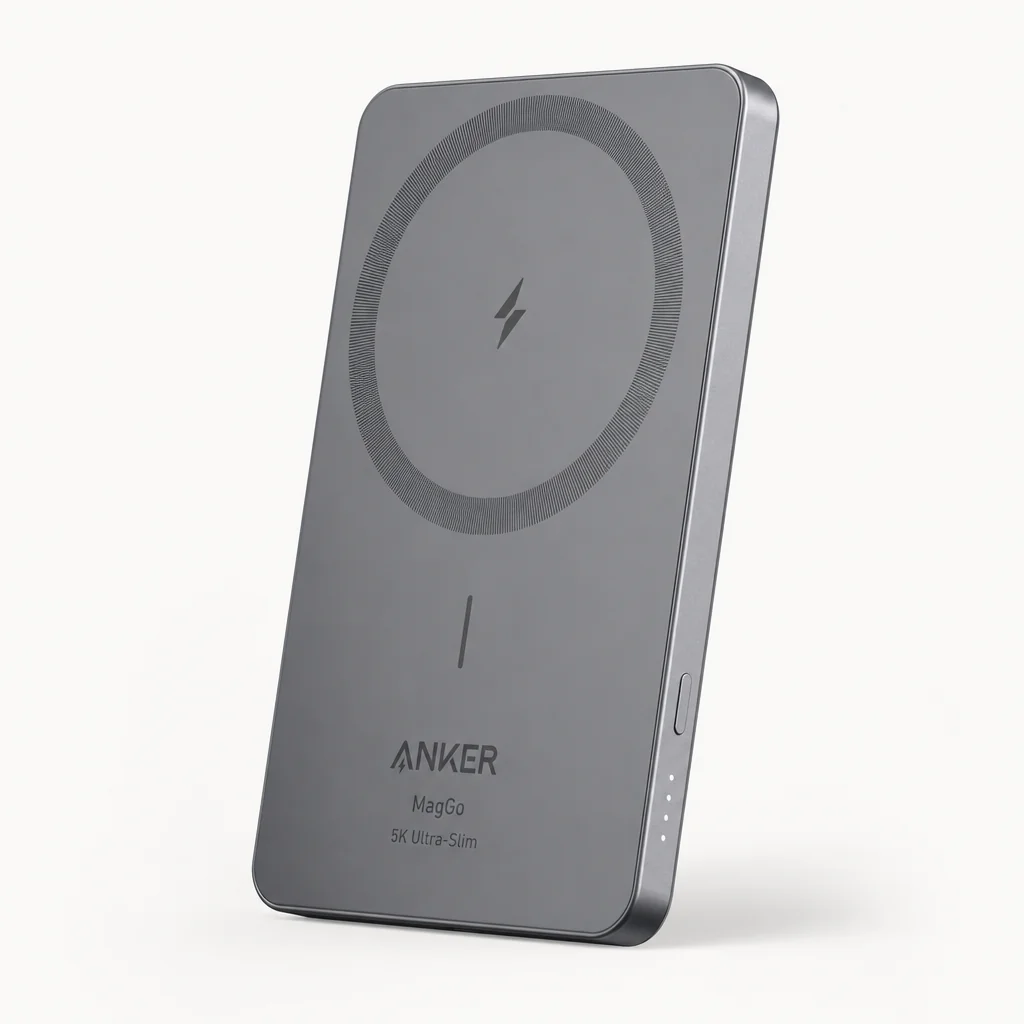
The 5,000mAh capacity, 15W Qi2 charging and 0.3-inch thickness are for iPhone users who value a light, magnetic backup more than all-day capacity.
Choose Baseus PicoGo AM52 if wireless speed matters
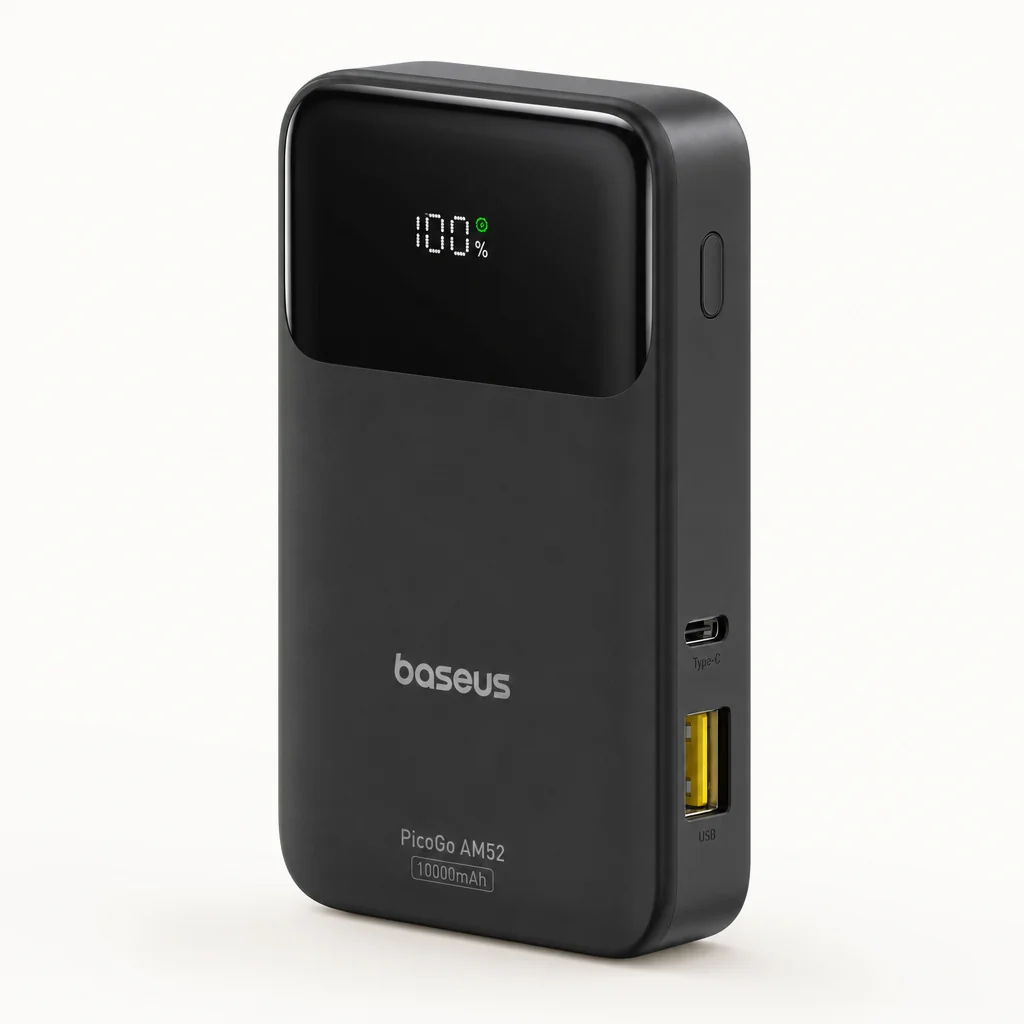
It combines 10,000mAh with 25W Qi2.2 wireless charging, 45W wired charging and a 16mm profile. It is the specification-led magnetic choice.
Choose UGREEN Nexode 25,000mAh 200W for powerful value

See UGREEN Nexode 25,000mAh 200W on Amazon UK
Check today's price & availability on Amazon UK
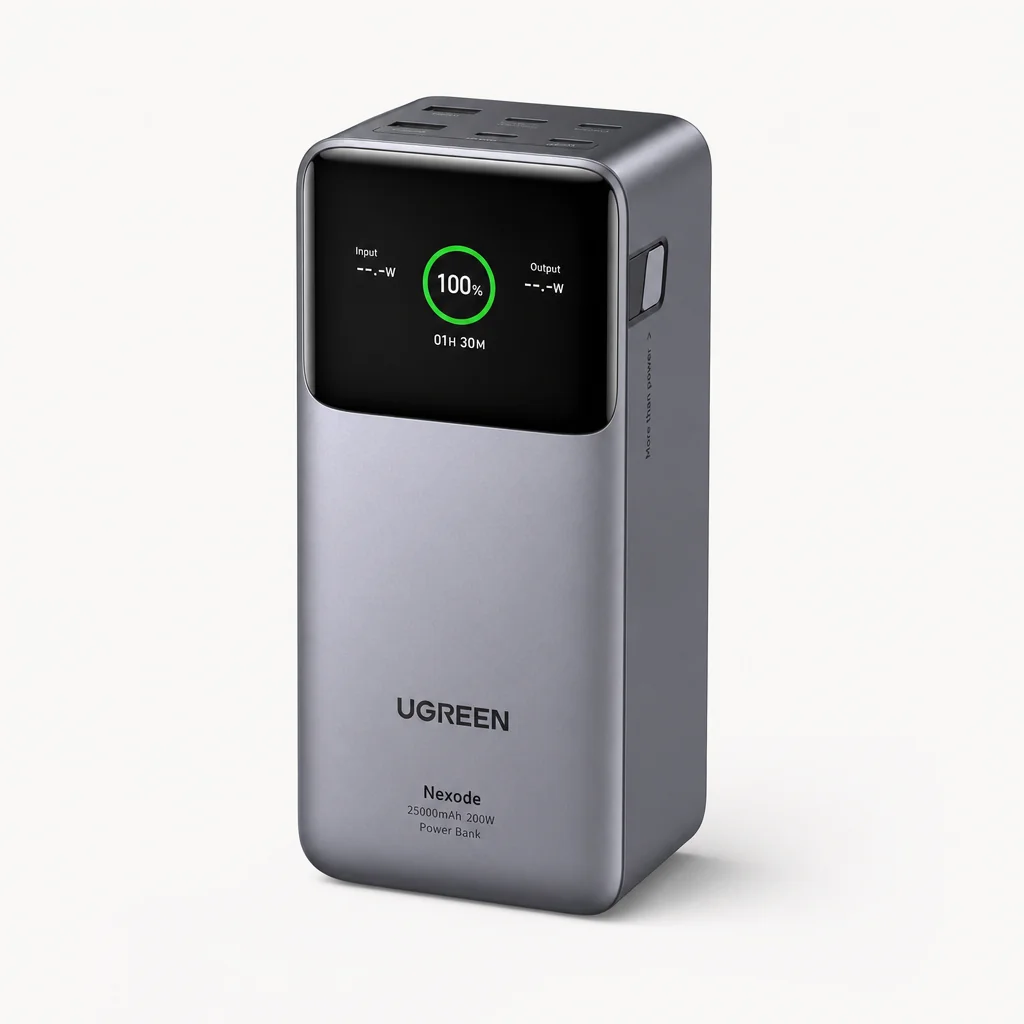
PD 3.1, dual 100W USB-C ports, a smart TFT display and a $109.99 listed price make it the strongest all-round high-power value proposition.
Choose Anker Prime 26K if maximum output is the priority
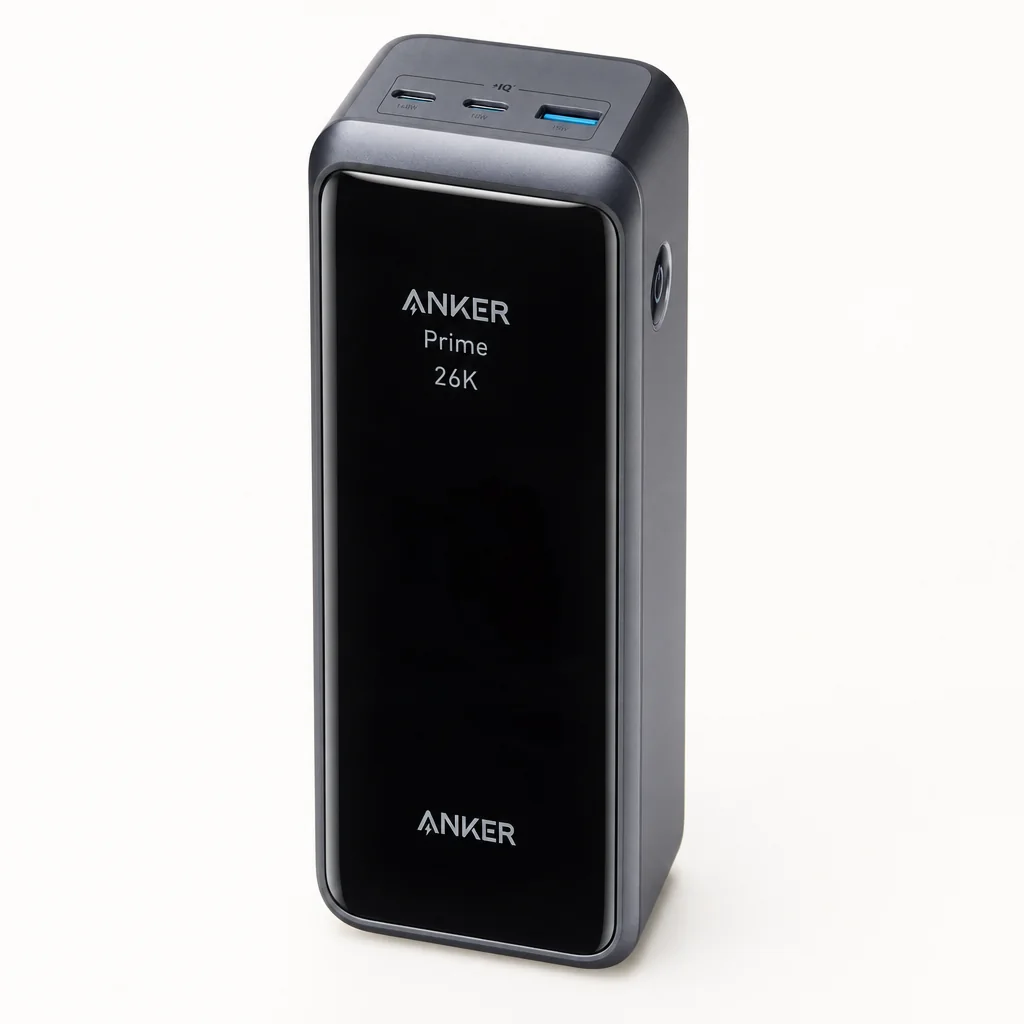
With 26,250mAh, 300W total output and two 140W USB-C ports, it is for multi-device users who genuinely need the highest confirmed portable output here.
Choose Baseus EnerFill FC11 if you hate carrying cables
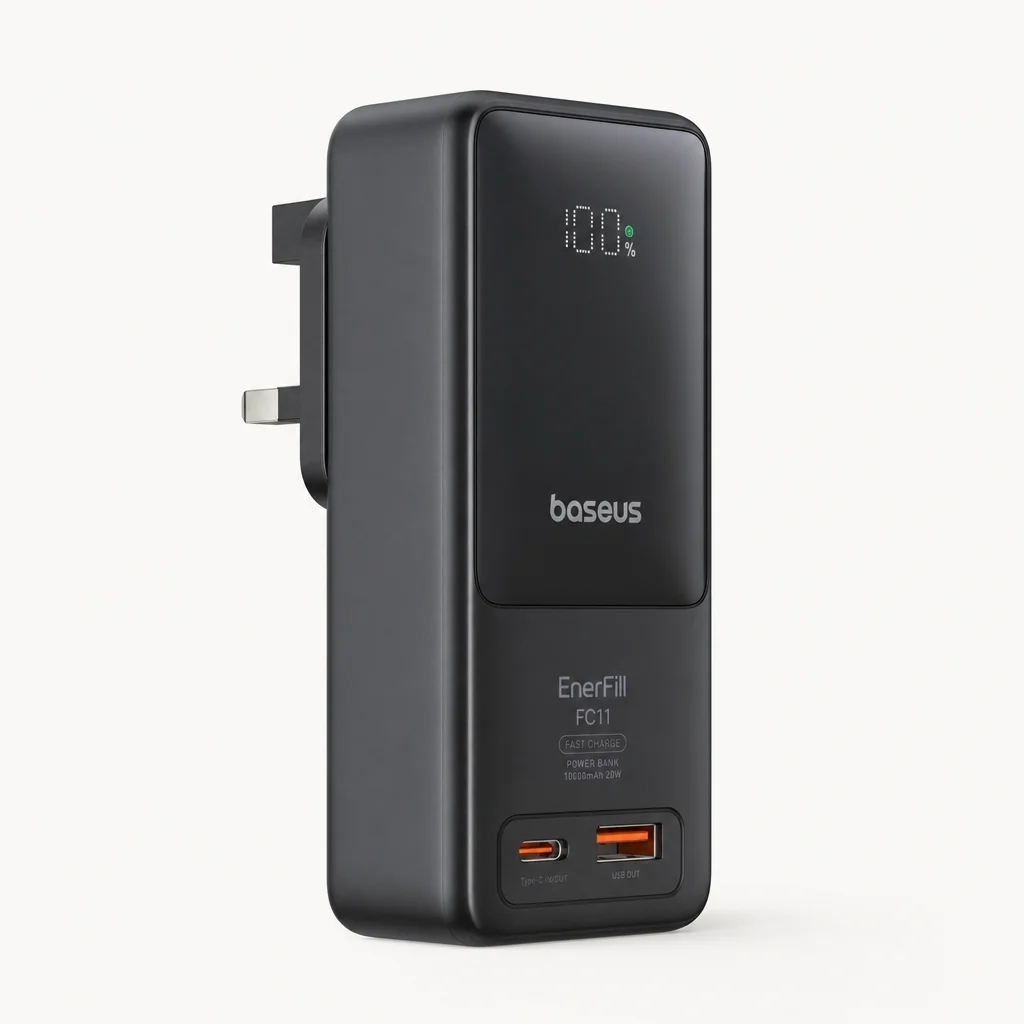
Its 20,000mAh capacity, 45W output and two built-in braided USB-C cables make it an unusually straightforward everyday travel companion.
Choose UGREEN Nexode 20,000mAh 145W for a work-focused middle ground

See UGREEN Nexode 20,000mAh 145W on Amazon UK
Check today's price & availability on Amazon UK
The three-port design, smart display and stated laptop charging examples give it a strong briefcase-friendly balance of capacity and power.
There are also a few easy "do not overbuy" cases. If you only want occasional phone charging, Anker's 533 PowerCore 10K or Nano 10K is much more logical than a 25,000mAh flagship. If you want the largest energy reserve for a long trip and do not need huge output, Baseus Blade 30,000mAh's 65W output may make more sense than a 200W or 300W product. If you want a magnetic pack but also charge multiple things in a bag, UGREEN PB567's 20,000mAh and four-device capability are more relevant than thinness.
The brand choice becomes easy once you remove brand loyalty from it. Anker is best at making you feel that no charging situation can surprise you. Baseus is best at making the everyday act of charging less fiddly. UGREEN is best at making high-power USB-C capability feel like a sensible purchase rather than a luxury purchase.
Verdict: The Better Buy Depends on the Bag You Carry
After looking across capacity, outputs, displays, cables, wireless charging and current pricing, there is no honest single champion for every buyer. There is, however, a very clear set of winners by use case. That is better news than a blanket recommendation, because it means you can spend for the features you will actually use instead of buying somebody else's ideal power bank.
Anker wins power; Baseus wins clever convenience; UGREEN wins the high-power value sweet spot.
If you need the most capable portable charging station, Anker Prime is the answer. If you want the most attractive mix of integrated cables, thin magnetic hardware and everyday-friendly design, Baseus has the most compelling ideas. If you want strong laptop-grade output, PD 3.1 support and a smart display without immediately climbing to flagship pricing, UGREEN is the safest place to start.
Buy Anker if you are a demanding multi-device traveller, if you want the highest 300W output, or if you prefer the polished magnetic choice of MagGo. The Prime 26K and Prime 27,650mAh are specialist products, but they are specialists in a genuinely useful way. The Nano 10K and MagGo options also prove that Anker understands smaller, everyday power banks rather than only chasing big numbers.
Buy Baseus if design and cable convenience affect whether you will actually use the thing. The EnerFill FC11, PicoGo AC22 Ultra Mini and 25,000mAh 145W model show a consistent instinct for reducing friction. The PicoGo AM52 is particularly strong for buyers wanting cutting-edge magnetic charging: 25W Qi2.2, 45W wired output, 10,000mAh capacity and 16mm thickness is a very tidy brief.
Buy UGREEN if you want your money to go primarily on meaningful wired performance. The Nexode 25,000mAh 200W is the stand-out: dual 100W USB-C, PD 3.1, smart TFT display and sharp listed pricing. The 20,000mAh Nexode options are also easier to recommend than many over-specified alternatives because they cover 100W, 130W and 145W needs without asking every buyer to carry a giant battery.
The right winner is the bank that matches your devices, your journeys and the amount of cable-related nonsense you are willing to tolerate.
My final advice is delightfully unglamorous: look at the devices in your bag today, check their charging needs, then choose the smallest power bank that can comfortably cover them. Anker, Baseus and UGREEN all make excellent options. The mistake is not picking the "wrong" logo. It is buying 300W for a phone, or buying a slim 5,000mAh magnetic pack for a week of laptop work, then acting surprised when it behaves exactly as designed.
- UGREEN Nexode 25,000mAh 200WView on Amazon
- UGREEN Nexode 20,000mAh 145WView on Amazon