
Tesla and SpaceX Confirm $16.8bn Texas Terafab Chip Factory
The companies have confirmed Grimes County as the home of their first Terafab phase, promising a vast AI-chip complex powered by its own gas plants.
What you need to know
- Tesla and SpaceX have confirmed a $16.8bn first phase for their Terafab semiconductor complex in Texas.
- The planned factory will cover more than 100 million square feet and target more than one terawatt of compute output per year.
- Local residents have raised concerns over water, power, noise, light pollution and tax incentives.
Tesla and SpaceX have formally confirmed that their jointly developed Terafab semiconductor complex will be built in Grimes County, Texas, with a first-phase investment of more than $16.8 billion.
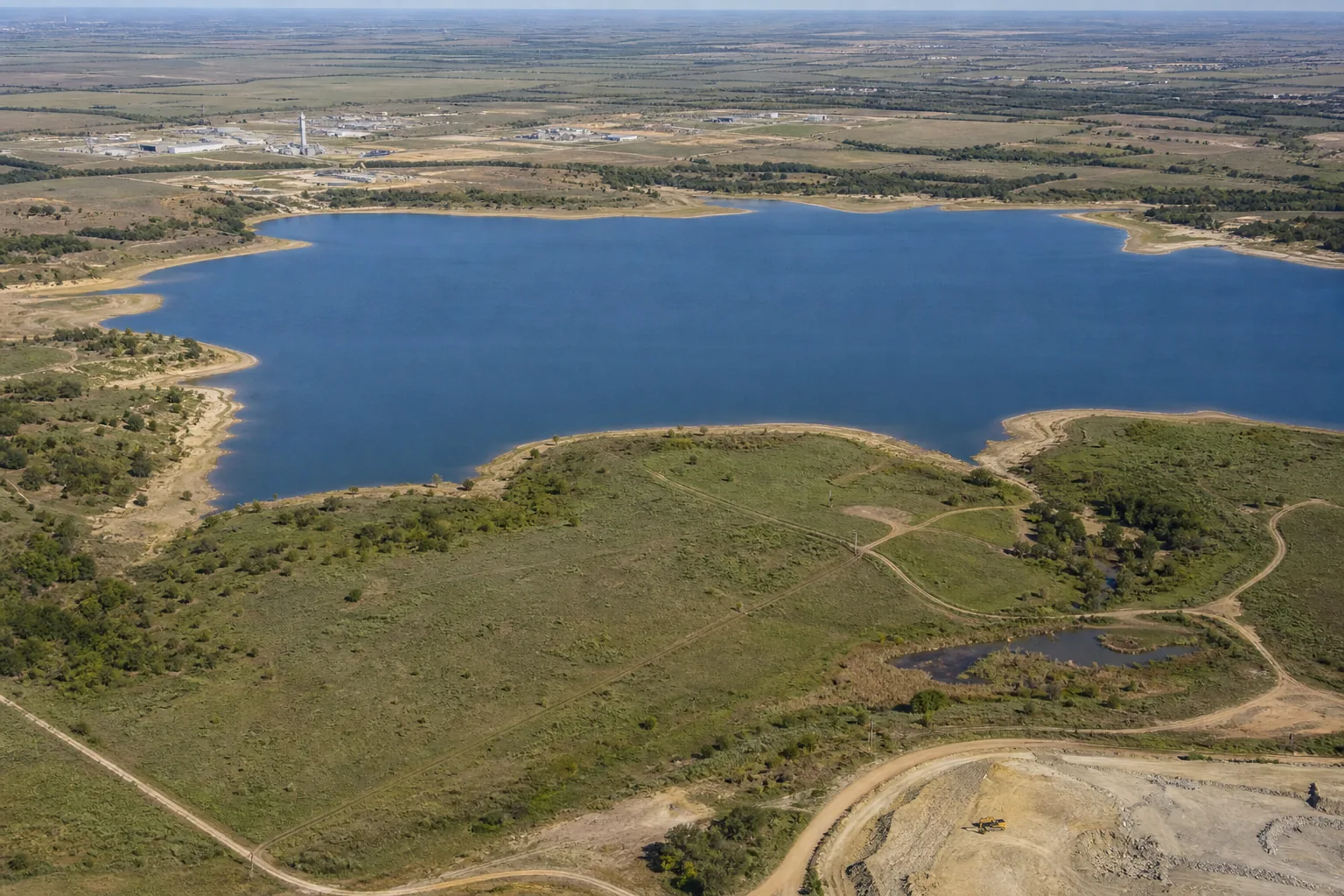
The announcement, made on Thursday 6 August, settles the location of the project Elon Musk first teased in March. Terafab had originally been pitched for Austin, with Tesla’s Giga Texas campus presented as the likely site and an early price estimate of $20 billion to $25 billion. It will instead be developed at Gibbons Creek Reservoir, around an hour north-west of Houston.
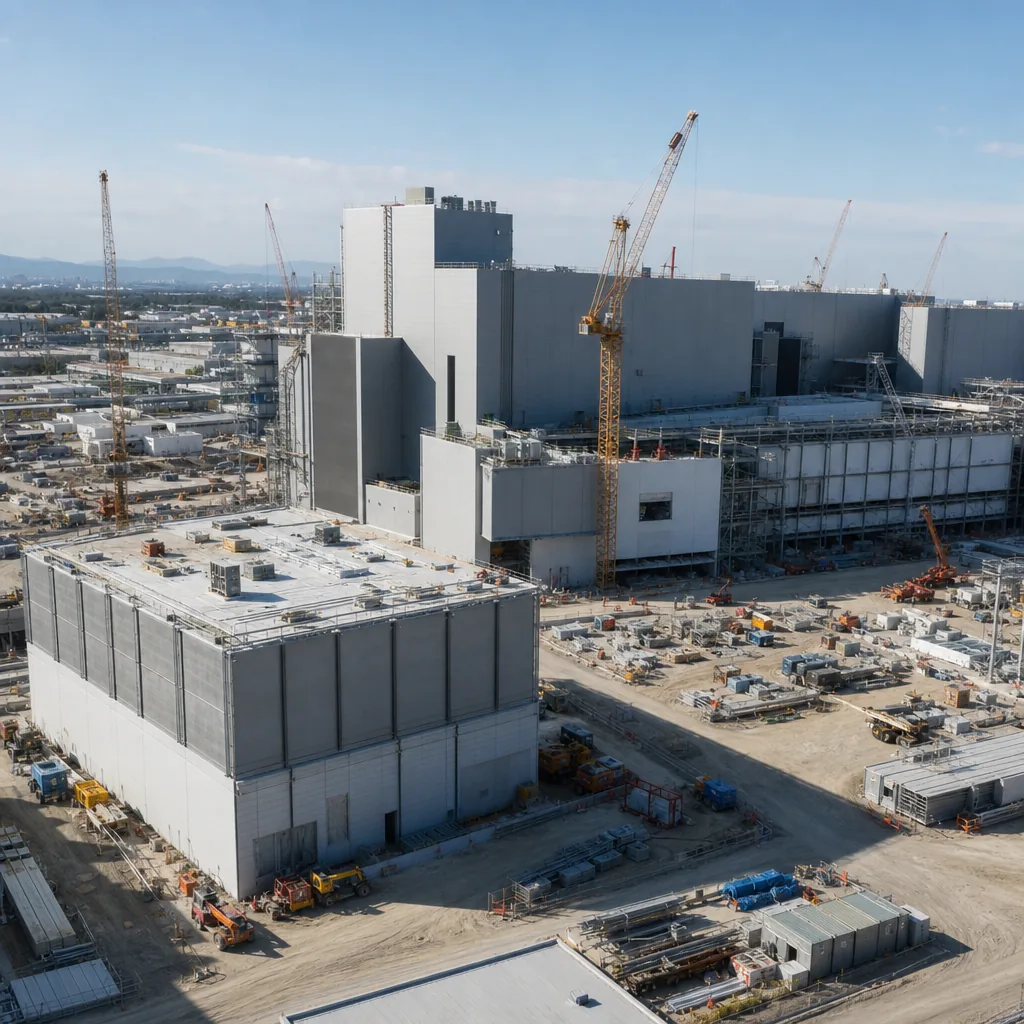
SpaceX says the facility will provide more than 100 million square feet of manufacturing space. Tesla has set a target of producing more than one terawatt of compute each year, encompassing logic, memory and advanced packaging. Musk has described the planned building as “the largest and most valuable building on Earth by far”, adding: “And it will be stunningly beautiful.”
A fab designed for AI on Earth and in space
Terafab is intended to address what SpaceX calls the divide between current global chip supply and future compute demand. In a company statement, Musk said: “We’re now embarking on the most epic chip-building effort — combining logic, memory, and advanced packaging all under one roof — in Grimes County, Texas.”
He said the complex would enable Tesla and SpaceX to produce AI chips at scale for uses “on Earth and in space”. Musk’s estimate is that around 25% of Terafab’s AI-compute output will go to Tesla’s Optimus robot programme, with roughly 75% destined for AI spacecraft.
The companies say the site will employ at least 3,000 people from Grimes County and nearby Brazos County. Musk has said that figure applies only to the first of 10 phases. Intel has also said it will contribute to the project, although its precise role has not been detailed. Earlier reporting said Musk had claimed the fab would use Intel’s 14A manufacturing process.
The confirmed $16.8 billion figure is specifically for the first phase. That is lower than the $25 billion headline figure attached to Terafab when it was first outlined in March. A May SpaceX filing proposed a substantially larger initial investment of $55 billion, potentially rising to $119 billion if additional phases are completed, but that filing characterised the scheme as a general framework rather than a binding commitment.
Gas power and reservoir water
SpaceX says it will build its own natural-gas plants to power Terafab rather than drawing electricity from the ERCOT grid. The company has committed that the project will not raise electricity bills for ratepayers, deplete local water resources or dry up the Navasota River.
Water is set to come from Gibbons Creek Reservoir rather than local groundwater. Terafab representative Riley Trennell told a local meeting: “We definitely did not pick this location for groundwater. We picked this location for its ability to store wa[ter].”
The absence of any announced terrestrial solar-power plan is notable given Tesla’s involvement in the project. The power proposal instead follows Musk’s more recent focus on natural gas for major compute infrastructure.
Texas has backed the development with a $30 million Texas Enterprise Fund grant extended to SpaceX, while the project also qualifies for the state’s Jobs, Energy, Technology, and Innovation programme. Locally, the arrangements have been contentious. A SpaceX attorney said the county tax abatement is roughly 78%, rather than the 100% figure reported earlier.
Under the deal described at a county meeting, SpaceX will pay Grimes County a fixed $20 million annually for 35 years, totalling $710 million. The company is also required to spend at least $5 billion by 2030 and create at least 1,800 full-time jobs by 2035.
Residents remain unconvinced
The confirmation followed a heavily attended county meeting on Wednesday, where hundreds of residents voiced concerns. Nearly 900 people signed a petition calling for stronger safeguards before incentives or tax breaks were approved for large industrial developments.
Critics have repeatedly pointed to potential light and noise pollution, pressure on water and power infrastructure, and the use of public incentives for a project tied to one of the world’s wealthiest individuals. One unnamed resident, quoted by Reuters via Data Center Dynamics after an earlier hearing, said: “They sold out Grimes County.”
County commissioners voted 4-1 in June to approve the relevant tax proposals despite the opposition. Related JETI agreements have since been signed by the local school districts, SpaceX and the Texas Governor’s office, according to representatives at this week’s meeting.
For UK buyers, Terafab does not bring an immediate product, price or availability announcement. Optimus, Cybercab and the AI spacecraft cited by Musk are not being sold in the UK as part of this project. Its relevance is longer term: the scheme is an unusually large bet on bringing chip design, fabrication, memory and packaging closer together for AI systems. Whether it can meet its vast output target — and do so while satisfying local concerns — remains the central question.
Why it matters
There is no UK product launch attached to Terafab, but the project illustrates the vast investment now being directed at AI-chip supply and advanced manufacturing. If it delivers on its stated ambitions, it could eventually affect the availability of compute used in robotics, vehicles and AI infrastructure, though Tesla and SpaceX have not set out a direct UK benefit. The scale of the incentives and local opposition also underline the practical cost of building the infrastructure behind the AI boom.