
Nvidia RTX Spark laptops arriving this autumn from Dell, HP, Microsoft
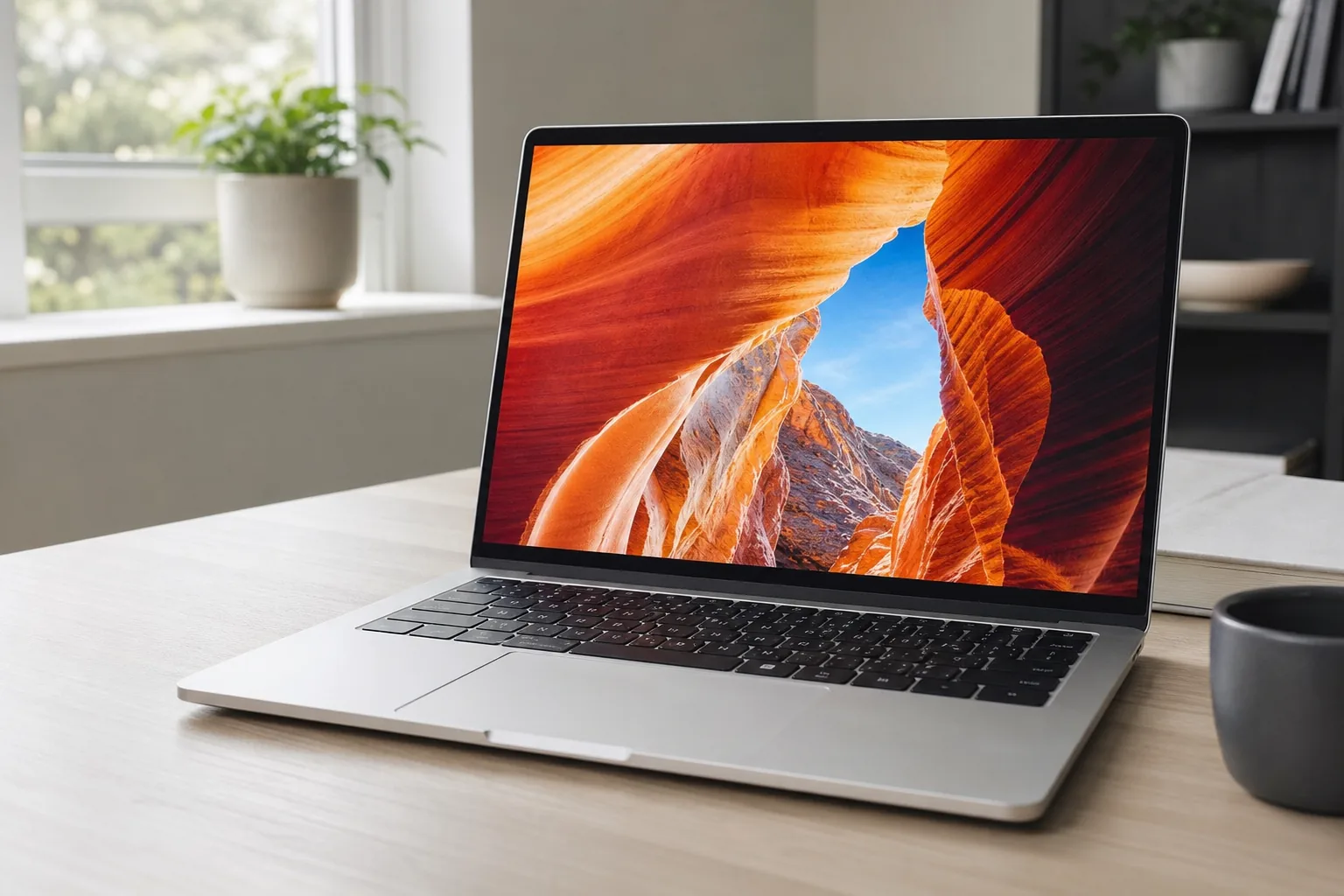
Eight confirmed Windows laptops powered by Nvidia's new RTX Spark superchip will land this autumn, with more than 30 designs expected at launch.
What you need to know
- Nvidia and Microsoft unveiled RTX Spark on 31 May 2026; eight confirmed laptops arrive this autumn from ASUS, Dell, HP, Lenovo, Microsoft, and MSI
- The flagship N1X chip pairs a 20-core Arm CPU with a Blackwell RTX GPU, up to 128 GB of unified memory, and one petaflop of FP4 AI performance
- No UK pricing has been announced; US analyst estimates point to roughly $2,899 for N1X models and $1,799 for the lower-tier N1
Nvidia plants its flag in the Windows PC market
Nvidia and Microsoft announced RTX Spark on 31 May 2026 at Nvidia GTC Taipei during Computex, and CEO Jensen Huang made the ambitions crystal clear in his keynote the following day.
"The PC is being reinvented," Huang said. "For forty years, you launched apps… With RTX Spark and Microsoft Windows, you ask — and the PC does the work. RTX Spark brings everything NVIDIA has built — CUDA, RTX, our AI platform — into a single superchip."
Huang went further, comparing the shift to the arrival of the smartphone: "This reinvention of the computer is as big of a deal as the reinvention of the phone into what we now know as the smartphone." Whether the hardware lives up to that billing will become clearer this autumn, when the first RTX Spark laptops reach shelves.
What is RTX Spark, and what does it actually do?
RTX Spark is a superchip that fuses an Nvidia Grace CPU and a Blackwell RTX GPU onto a single package using Nvidia's NVLink-C2C chip-to-chip interconnect. The flagship N1X configuration carries a 20-core Arm processor — 10 high-performance Cortex-X925 cores paired with 10 efficiency-focused Cortex-A725 cores — co-developed with Taiwan's MediaTek, alongside a Blackwell GPU packing 6,144 CUDA cores and fifth-generation Tensor Cores with FP4 precision. The whole thing is built on a 3 nm process at TSMC.
Rather than splitting system RAM and video RAM into separate pools, RTX Spark shares up to 128 GB of LPDDR5X memory between CPU and GPU over NVLink-C2C, with bandwidth peaking at 600 GB/s. Nvidia rates the platform at up to one petaflop of FP4 AI performance. The N1X operates within a 45–80 W power envelope, and Nvidia says its graphics performance is roughly equivalent to a current RTX 5070 laptop GPU.
A lower-tier N1 variant is also confirmed. It uses a 12-core CPU and a GeForce RTX 5050 GPU, with support for up to 64 GB of unified memory. Nvidia has not officially confirmed the full N1 specification at the time of writing.
Performance claims from Nvidia include the ability to render 3D scenes larger than 90 GB, edit 12K 4:2:2 video, run 120-billion-parameter large language models locally with up to one million tokens of context, and play AAA games at 1440p at over 100 frames per second. RTX Spark laptops are also designed to deliver consistent performance whether plugged in or running on battery — a characteristic shared with Apple Silicon and Qualcomm Snapdragon-based machines.
The first wave of laptops
Eight devices have been confirmed for the first launch wave this autumn:
- Microsoft Surface Laptop Ultra (15-inch, mini LED PixelSense Ultra display, 2,000-nit peak brightness)
- ASUS ProArt P16
- ASUS ProArt P14
- Dell XPS 16 Creator Edition
- HP OmniBook Ultra 16 (rear height of just 15.73 mm, two Thunderbolt 4 ports, support for four simultaneous 4K displays)
- HP OmniBook X 14
- Lenovo Yoga Pro 9n
- MSI Prestige N16 Flip AI+
Microsoft is also launching the Surface RTX Spark Dev Box, a compact developer system using RTX Spark with 128 GB of unified memory and a 100-watt thermal envelope, aimed at developers and engineers.
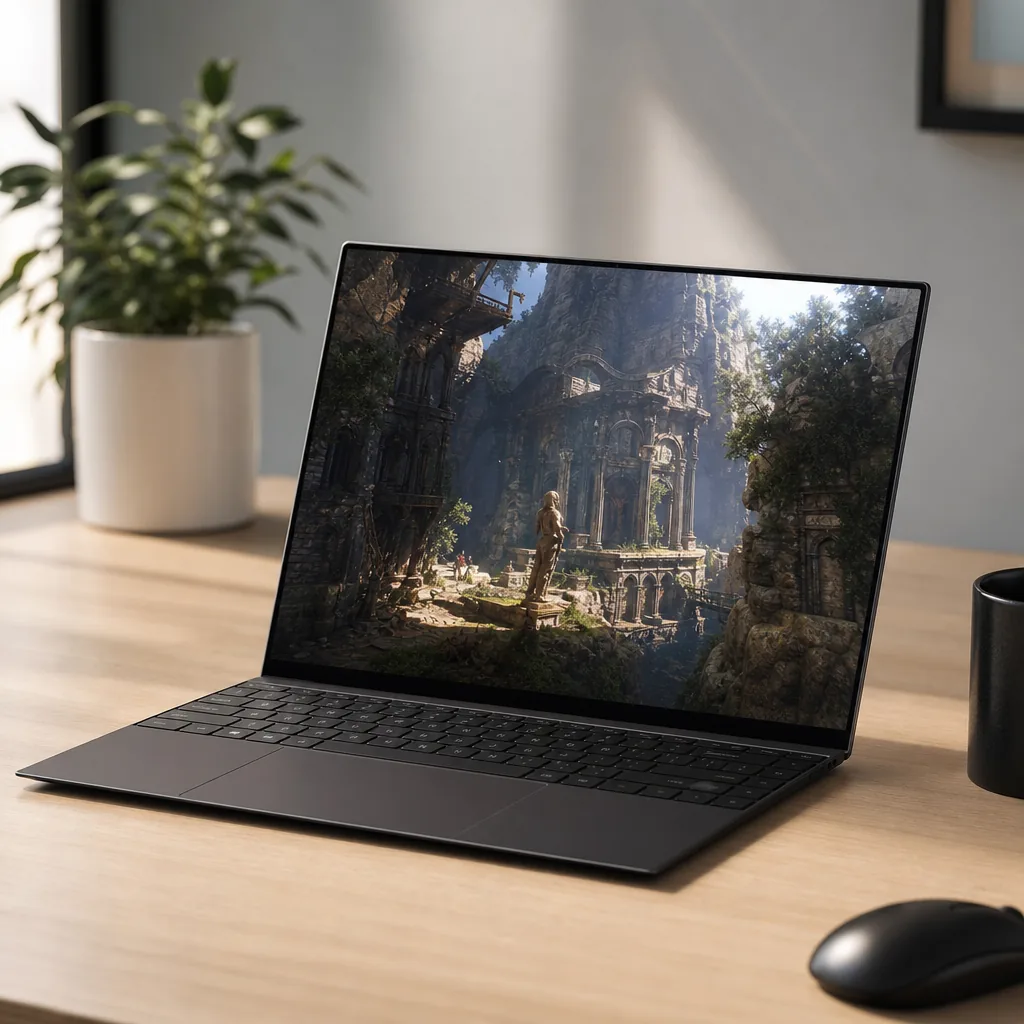
Nvidia says more than 30 laptop designs and around 10 desktop PCs will be available at launch overall, from ASUS, Dell, HP, Lenovo, Microsoft Surface, and MSI, with Acer and GIGABYTE set to follow. RTX Spark laptops will span 14- to 16-inch sizes, engineered to be as slim as 14 mm and as light as approximately 1.36 kg, with precision-machined aluminium chassis and colour-accurate tandem OLED displays featuring Nvidia G-SYNC.
Software and AI features
RTX Spark machines will join Microsoft's Copilot+ PC category. Windows 11 on RTX Spark includes the Windows 11 Prism emulator for 32-bit and 64-bit x86 applications, the Microsoft Power and Thermal Framework for thermal and power management, and new security primitives developed alongside NVIDIA OpenShell for running AI agents locally. Nvidia confirmed Windows support at launch but has not confirmed or denied Linux support.
Adobe is rearchitecting Photoshop and Premiere from the ground up for RTX Spark, targeting 2x faster AI and graphics performance. Blackmagic Design, Blender, CapCut, ComfyUI, and OTOY have also partnered with Nvidia on platform support.
Pricing and availability
Laptops arrive this autumn. No UK sterling pricing has been announced by any manufacturer. Andrew Hill, corporate vice president of Surface at Microsoft, confirmed the autumn window but said: "We're not ready to talk about pricing yet until we get closer to availability."
Analyst estimates from Morgan Stanley, based on channel checks with PC brands at Computex, suggest N1X machines will need to price around US$2,899, with N1 models around US$1,799. A separate source at Computex told PCWorld that N1X devices could start at US$2,500 and N1 models around US$2,000. Both sets of figures are unconfirmed and, as the analyst note itself acknowledged, likely to shift before retail availability. UK buyers should treat any dollar figures as rough indicators only until manufacturers publish sterling prices.
Why it matters
RTX Spark is the most direct challenge yet to Apple Silicon's grip on the premium thin-and-light market, and it lands on Windows — meaning UK buyers who need creative software like Photoshop, Premiere, or Blender on a portable machine may finally have a serious alternative to the MacBook Pro. If real-world performance matches the headline numbers and the Windows on Arm compatibility story holds up at launch, this could reshape what professionals expect from a Windows laptop. Pricing, when it arrives, will be the decisive factor: at the rumoured $2,899 entry point for the top-spec N1X, these will not be impulse purchases.