
Sony's Xperia 1 VIII makes a deliberately old-school case for a proper headphone socket, expandable storage and a physical camera shutter key.
Sony Xperia 1 VIII Review: The Last Phone With a Headphone Jack Worth Buying
A very expensive flagship with a very specific mission: give audiophiles and creators the things every other premium phone quietly removed.
We link to the exact model on Amazon UK. Prices change often, so check the live price before you buy. As an Amazon Associate we earn from qualifying purchases.
Sony Xperia 1 VIII review: a rare flagship with a point of view
Shop Sony Xperia 1 VIII review on Amazon UK
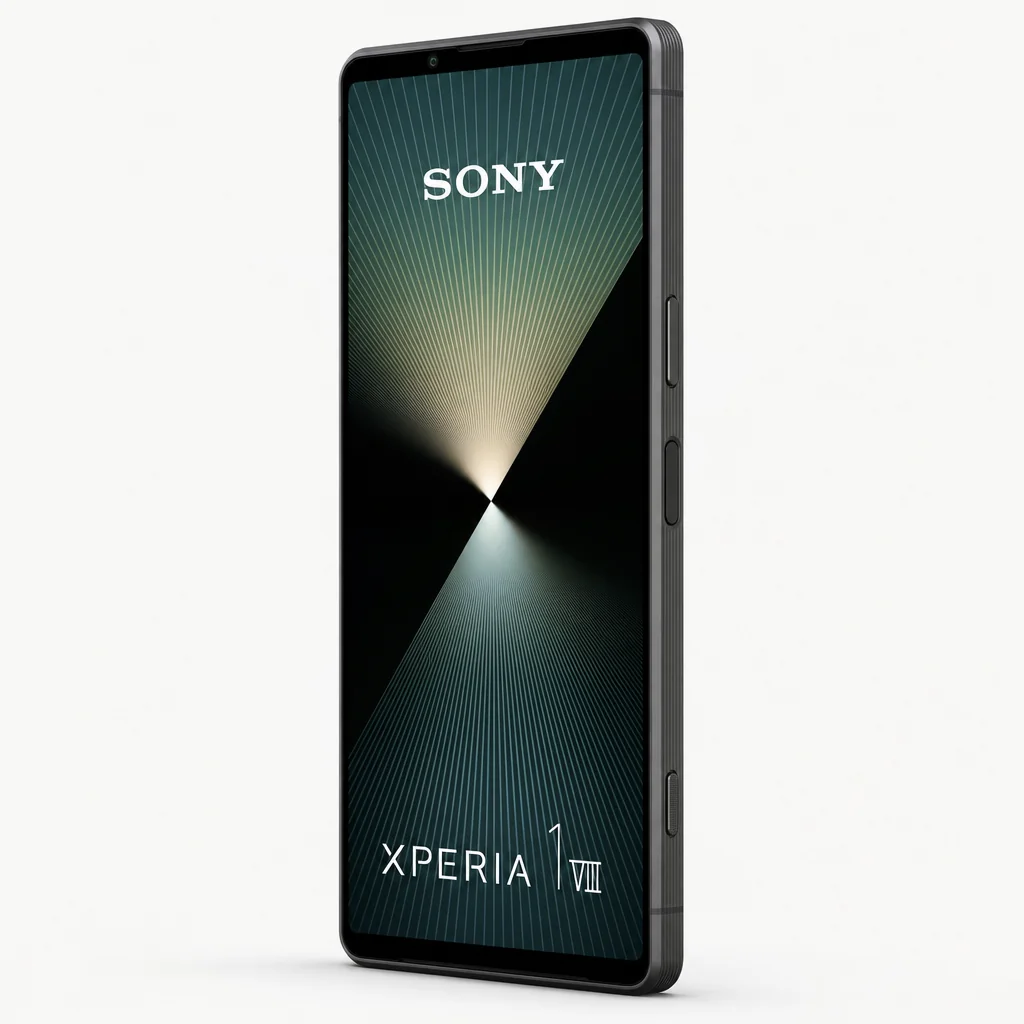
The 3.5mm headphone jack had become a fossil in flagship phones. Apple removed it from the iPhone in 2016, Samsung's Galaxy line lost it in 2019, and Google's Pixels followed in 2022. In 2026, Sony had not merely kept it alive: it had built a £1,399 phone around the idea that some people still care about wired sound, removable storage and proper camera controls. Radical stuff, apparently.
The Sony Xperia 1 VIII is not trying to charm everyone. It is expensive, tall, occasionally warm under pressure and still stubbornly slow to charge. It also has a 3.5mm socket, a microSD slot supporting cards up to 2TB, front-facing stereo speakers, a two-stage shutter button, USB-C Power Delivery and a clean-feeling Android build. Those features make it feel less like another glass rectangle and more like a compact creative tool that happens to make calls.
At the heart of it is Qualcomm's Snapdragon 8 Elite Gen 5, backed by either 12GB or 16GB of RAM. The chip brought enormous burst performance: Geekbench 6 results of 3,364 single-core and 9,652 multi-core, plus 4,010,000 in AnTuTu v11. It is properly fast. Unfortunately, it is also properly hot when pushed for long enough. Sony's vapour chamber helped, but it did not repeal physics.
There is plenty more here besides the ports. The rear camera system uses three 48MP sensors, including a 24mm Exmor T main camera, a larger 70mm telephoto and a 16mm ultrawide. ZEISS T* coating, Alpha camera integration, eye tracking and 4K at up to 120fps give it genuine creator credentials. Android 16 arrived out of the box, with four major Android versions and six years of security updates promised.
So this is the short version before we disappear into the weeds: the Xperia 1 VIII was not the easy flagship recommendation of 2026. It was the enthusiast's choice. If you live in Bluetooth earbuds and automatic photo modes, there are simpler ways to spend £1,399. If your phone is also your music player, portable media drive and camera bag, Sony remained almost comically alone.
What you get in the box — and how it feels in hand
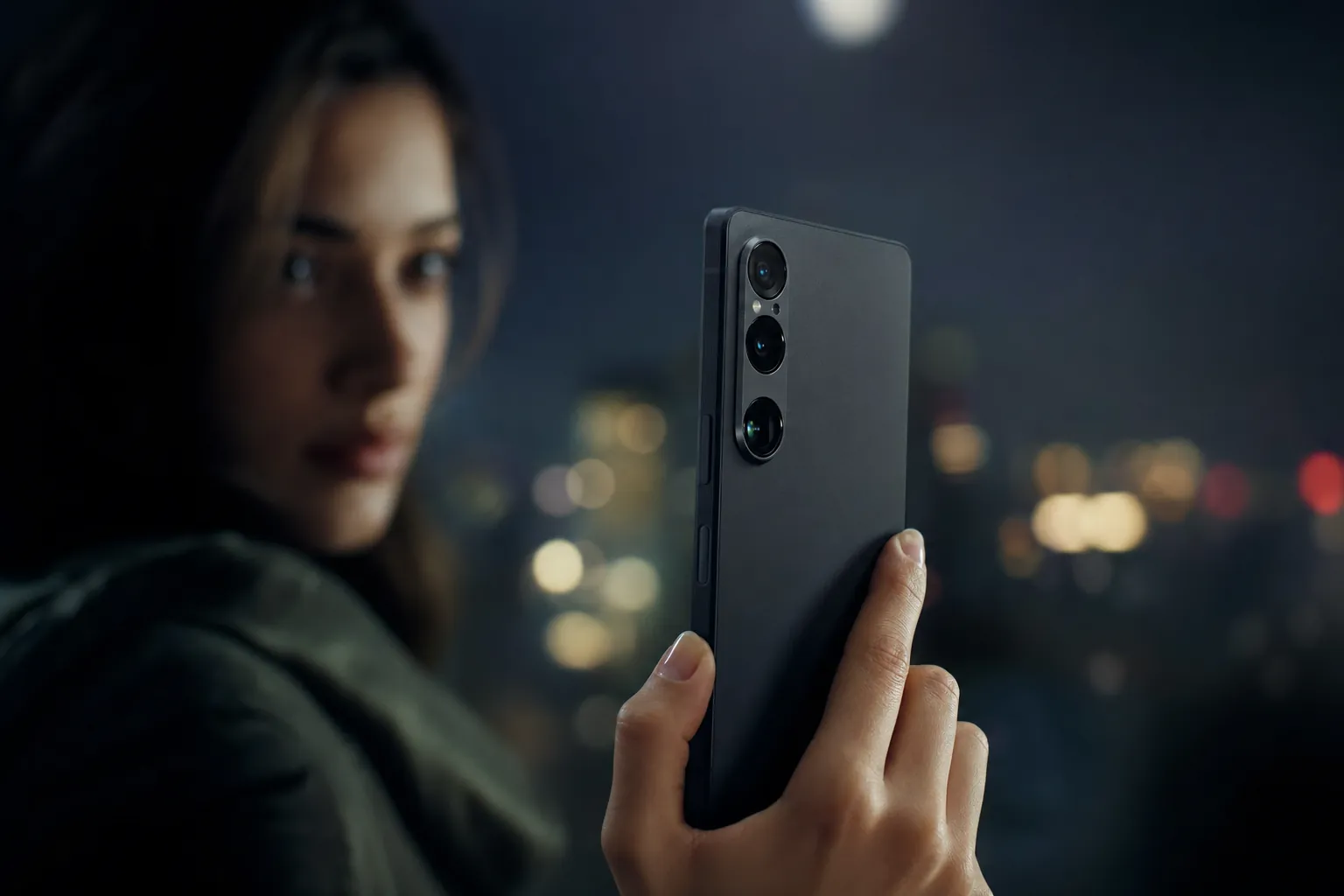
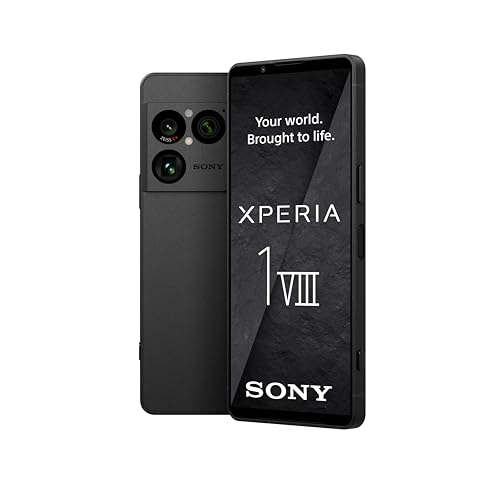
The Xperia 1 VIII measured 162.0 x 74.0 x 8.3mm and weighed 200g. Those numbers tell an important story. It is not a tiny phone, because a 6.5-inch screen does not permit that sort of magic, but its 74mm width kept it notably easier to grip than many wide-screened flagships. The 19.5:9 shape makes the Sony tall rather than squat. In a pocket, that is manageable. Reaching the very top of the screen one-handed still requires a shuffle of the hand, because thumbs remain tragically finite.
The front used Gorilla Glass Victus 2, with standard Gorilla Glass Victus on the rear, joined by an aluminium frame. Sony also retained IP65/IP68 dust and water resistance, so the handset was dust-tight and rated for immersion in up to 1.5 metres of water for 30 minutes. It felt like a flagship because it was one: dense, rigid and reassuring rather than featherweight.
The most divisive part of the exterior was Sony's new "ore texture" finish on the glass rear. It gave the phone a granular, mineral-like look under light rather than the usual glossy slab routine. It was certainly distinctive. Not everyone liked it. Several people found it looked a bit dirty at first glance, which is not generally the mood one hopes for after spending £1,399. I can see both sides: it has more character than polished mirror glass, but it is a design you should inspect in person if you can.
More important than the texture is the layout. Sony kept the side-mounted fingerprint reader, a practical choice that makes unlocking feel naturally tied to picking up the device. The physical two-stage camera shutter key also remained on the side. A light press focuses; a full press takes the shot. Once you have used it while framing a photo in bright daylight, tapping a vague on-screen shutter button feels rather second-rate.
The Xperia's tall, narrow body prioritises grip, while the side shutter button is a genuinely useful control rather than a decorative extra.
The practical advantage
The Xperia's shape is not just a Sony quirk. At 74mm wide, it gives you a more secure hold while shooting, scrolling or using the physical shutter key. The trade-off is a long reach to the top of the panel, especially if you use the phone one-handed.
A display built for movies, editing and split-screen work
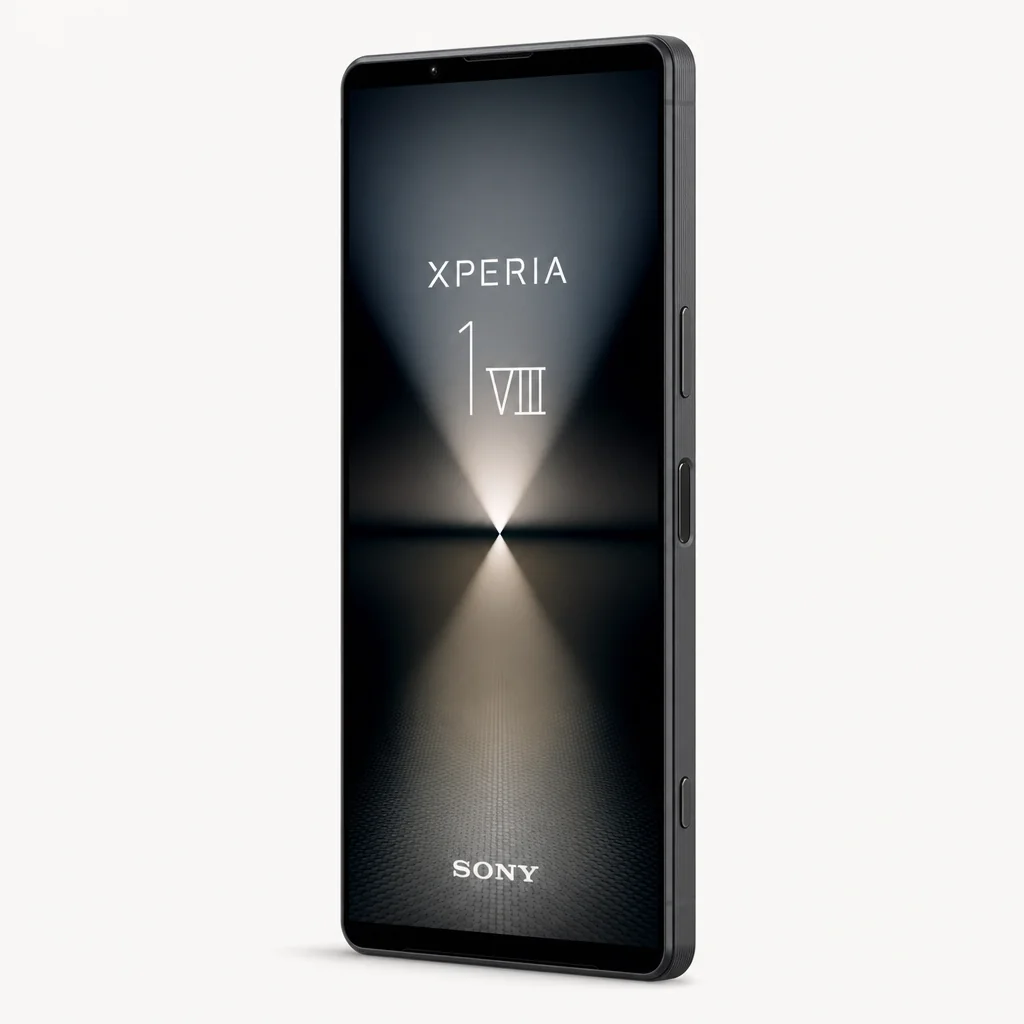
Sony fitted a 6.5-inch LTPO OLED display with a 120Hz adaptive refresh rate, HDR support and Gorilla Glass Victus 2 protection. It is a good panel: smooth in motion, suitably rich with HDR material and protected by one of Corning's tougher mobile glasses. The 86.5% screen-to-body ratio was competitive, if not class-leading, and Sony's approach to bezels was deliberate rather than careless.
Those slim strips above and below the display accommodated front-facing stereo speakers. This mattered. Front-facing speakers project sound towards you rather than into your palm or the tabletop, and that makes casual video watching, gaming and spoken-word playback feel more direct. It is exactly the sort of small usability decision Sony still makes whilst much of the market chases a fraction more screen percentage.
The 19.5:9 aspect ratio had a slightly different feel from Sony's older, extremely narrow 21:9 Xperia philosophy. It was still tall enough to suit cinematic material, and it gave you useful vertical room for timelines, web pages and split-screen work. Running a camera viewfinder above another app is not a normal Tuesday afternoon for everyone, admittedly, but creators who use their phone as a working device will appreciate the space.
For ordinary social apps, the shape was less romantic. Portrait video, feeds and web pages can feel tall rather than naturally spacious, while one-handed use is compromised by the reach to the top. That is not a deal-breaker. It is simply a reminder that Sony designed this panel around media and productivity as much as thumb gymnastics.
| Feature | Sony Xperia 1 VIII | Apple iPhone 17 Pro | Samsung Galaxy S26 Ultra |
|---|---|---|---|
| 3.5mm headphone jack | Yes | No | No |
| microSD card slot | Yes, up to 2TB | No | No |
| Rear camera sensor approach | Three 48MP sensors | Smaller ultrawide and telephoto sensors | Smaller ultrawide and telephoto sensors |
| Dedicated two-stage shutter button | Yes | — | — |
The table makes Sony's case rather neatly. It does not say the Xperia wins every category; it says the Xperia is built for a category of buyer other flagships largely stopped serving. If internal storage, wireless audio and automated photography are enough, the Sony's distinctions may not matter. If they are not enough, they matter a great deal.
Snapdragon 8 Elite Gen 5: raw power with a heat problem
Shop Snapdragon 8 Elite Gen 5 on Amazon UK
The Snapdragon 8 Elite Gen 5 gave the Xperia 1 VIII lavish amounts of power. Its CPU used two Oryon V3 Phoenix L cores clocked at up to 4.6GHz and six Oryon V2 Phoenix M cores reaching up to 3.62GHz, with an Adreno 840 GPU handling graphics. That is elite-tier silicon in every meaningful sense, and Sony claimed around 20% better processing performance than the previous Xperia generation.
The numbers backed up the broad claim. Geekbench 6 results reached 3,364 in single-core and 9,652 in multi-core testing. AnTuTu v11 landed at 4,010,000 points. For daily use, this means the phone had no difficulty with demanding camera apps, multitasking, high-resolution media and the general pile-up of browser tabs, messages and background jobs that can make lesser handsets feel wheezy.
Gaming was equally impressive in shorter bursts. Genshin Impact at maximum settings stayed smooth after roughly 10 minutes, maintaining the 120Hz display experience without stuttering. Frame rates generally sat above 100–120fps. That is a formidable result from a phone that was also trying to remain relatively slim and portable.
Then came the caveat, and it is not a tiny one. Sustained CPU throttling testing showed a substantial gradual performance drop. The Xperia's vapour chamber was large, but the Snapdragon 8 Elite Gen 5 generated enough heat to overwhelm it over extended heavy loads. The surface became fairly toasty. You could still hold it, but this was not the sort of warmth that disappears into the background.
There is a difference between "the benchmark curve falls" and "the game becomes unplayable". The Xperia mostly lived on the right side of that line. Throttling was real, but it barely damaged the observed frame-rate experience in Genshin Impact. For a typical gaming session, photo edit or 4K clip capture, the phone remained extremely capable. It is long, repeated stress that exposes its limits.
Performance reality check
The Xperia 1 VIII was brilliant at burst performance and still smooth in demanding games, but it was not a cool-running endurance champion. If your weekend involves hours of maximum-settings gaming or lengthy processing work, expect a warm handset and some throttling rather than miracles.
The Snapdragon 8 Elite Gen 5 gives the Xperia enormous short-burst power, although extended workloads made the aluminium-framed phone noticeably warm.
ZEISS triple-48MP cameras: Sony's Alpha DNA in your pocket
Sony's camera strategy was refreshingly coherent. Instead of treating the secondary cameras like apologetic add-ons, the Xperia 1 VIII used three 48MP rear sensors: a 24mm main camera with an f/1.9 lens and 1/1.35-inch Exmor T sensor; a 16mm ultrawide with an f/2.0 lens and 104-degree field of view; and a 70mm telephoto with an f/2.8 lens and 1/1.56-inch sensor.
That telephoto sensor was especially important because it was meaningfully larger than the Xperia 1 VII's equivalent arrangement. The resulting 2.9x optical view sat in a very useful place. It is not a wild long-range zoom intended for photographing the moon from your back garden. It is the focal length you use for architecture without leaning backwards into traffic, for street portraits with more flattering perspective, and for isolating details in a landscape.
The main 24mm camera is the obvious everyday workhorse. Sony's mobile imaging has long appealed to people who prefer a natural, restrained interpretation rather than images that look as though they had been marinated in saturation and sharpened with a garden rake. The Xperia 1 VIII continued that character. There is room for taste here, of course. Some users prefer a brighter, instantly punchier image. Sony's approach generally rewards a little care and gives creators a more sensible starting point for editing.
ZEISS optics with T* anti-reflective coating were another key part of the package. In practical terms, the coating is intended to reduce flare and ghosting in high-contrast scenes. Think evening street lights, a window behind a subject, or the sun lurking just beyond the frame. It cannot change the laws of optics, but it helps preserve contrast and avoid distracting internal reflections when you deliberately shoot difficult light.
The 16mm ultrawide gave a genuinely broad 104-degree view. That is useful for UK city breaks, cramped interiors, architecture and group shots when there is simply nowhere else to stand. The fact that Sony equipped it with a 48MP sensor rather than treating it as an afterthought helped the whole system feel balanced. The same applies to the telephoto: Sony had built three cameras you might actually choose between, not one good camera with two emergency backups.
24mm Exmor T main camera
48MP, f/1.9 and a 1/1.35-inch sensor for the everyday shooting role.
16mm ultrawide
48MP, f/2.0 and a 104-degree field of view for interiors, landscapes and travel.
70mm telephoto
48MP, f/2.8, 1/1.56-inch sensor and 2.9x optical zoom for more useful reach.
Creator video credentials
4K recording at up to 120fps, Alpha integration and eye tracking make this more than a point-and-shoot phone.
Video is where the Xperia's broader identity comes into focus. The rear cameras supported 4K recording at up to 120fps, while the 12MP front camera could also record in 4K. Pair that with the shutter key, the tall display and the option to move clips to a microSD card, and the Xperia begins to make sense as a pocket production device. It is not pretending to replace a dedicated Alpha camera. It is making a serious effort to work alongside one.
There is one note of caution. Sony's AI Camera Assistant was inconsistent. That does not undermine the hardware, but it does mean the clever automatic layer was not always the most dependable part of the experience. This remains a phone for people who like to be involved in their photography, not one that always wants to guess what you meant.
All three rear cameras use 48MP sensors, with the 70mm telephoto giving the Xperia a more capable mid-range perspective for portraits and travel shots.
A camera for people who like cameras
The Xperia's strength is control and consistency across focal lengths. It is best suited to somebody who values natural output, a physical shutter button and Sony Alpha integration more than one-tap AI theatrics.
The headphone jack and Hi-Res Audio: still worth the fight
Yes, the 3.5mm jack is still worth caring about. No, it is not merely nostalgia for tangled white earbuds and a cracked iPod Classic. A wired connection gives you a simple, reliable route to your own headphones without a dongle hanging from the USB-C port, without a separate battery to charge and without the low-level faff that often appears just as you are about to board a train.
Sony backed the socket with its Walkman audio heritage: Hi-Res Audio support, LDAC, DSEE Ultimate upscaling, 360 Reality Audio and Dolby Atmos. The experience was rounded out by stereo speakers and Bluetooth 6.0. This is not a phone that treats audio as a footnote. It treats it as one of the reasons the product exists.
For audiophiles, the appeal is straightforward. You can connect compatible wired headphones directly to the phone and retain the USB-C port for charging or other duties. You can also carry a substantial local music library on microSD rather than constantly negotiating storage space with 4K video, apps and offline downloads. A 2TB card support ceiling is absurdly useful if you have a serious lossless library. Most people do not. The people who do will know exactly why it matters.
Wireless listeners were not ignored. LDAC is Sony's high-resolution Bluetooth format, and the Xperia works naturally with Sony's own ecosystem, including the WH-1000XM6 headphones that were included as a pre-order bonus. Whether you listen wired or wirelessly, the Xperia has a stronger audio identity than the average flagship, which tends to assume you will use whatever earbuds came free with your broadband contract.
The bigger win is flexibility. The headphone jack does not force you to abandon wireless headphones, and LDAC does not force you to abandon wires. The Xperia lets you choose the connection that suits the headphones, the journey and the music you are listening to.
It is also worth remembering the creators' perspective. A 3.5mm socket can be useful when monitoring audio, checking an edit privately or simply working without commandeering the USB-C port. It is not glamorous. It is practical. Sony's entire argument with this phone is that practical features should not have been treated as unfashionable in the first place.
Battery life and charging: strong stamina, slow refuelling
The Xperia 1 VIII used a 5,000mAh battery. Sony rated it for up to two days of use and said it would retain healthy capacity for four years. The claim is ambitious, and the real story is more nuanced. In GSMArena's standardised active-use test, the phone reached 17 hours and 47 minutes. That was a substantial gain over the Xperia 1 VII's 15 hours and 32 minutes: an improvement of 2 hours and 15 minutes, or roughly 14.4%.
That is good endurance. It is the sort of result that should comfortably handle a normal busy day involving messaging, browsing, music, photos and a commute. It also gives you useful breathing room if your routine includes a longer day out with camera use. But it did not make the Xperia a dependable two-day phone for every pattern of use, particularly if you lean heavily on the power-hungry parts of the hardware.
4K recording, extended camera sessions, GPS navigation, gaming and continuous streaming all ask more of the battery than quieter tasks. That is not a surprise, but it is worth saying because the Xperia encourages exactly these activities. A morning shooting clips around London, navigating between locations, listening to music and using mobile data is a much tougher test than a day spent mostly on Wi-Fi sending messages.
Charging is the stubborn compromise. Wired charging topped out at 30W using PD3.0/PPS, while wireless charging was 15W. Both figures were unchanged for the fourth year in a row. In an expensive 2026 flagship, 30W felt cautious. It is perfectly serviceable if you charge overnight or have a predictable routine. It is less comforting when you have been out shooting, the battery is lower than expected and you need a rapid top-up before heading back out.
The 5,000mAh battery improved notably on the Xperia 1 VII in standardised testing, but heavy 4K recording and gaming remain demanding jobs.
Charging verdict
Battery life was solid and clearly improved, but charging was not competitive with the fastest flagships. Treat the Xperia as an overnight-charge phone and it works well; treat it as a handset that can rescue any chaotic day with a brief plug-in, and it is less convincing.
Android 16 and Sony's software layer
Shop Android 16 and Sony's software layer on Amazon UK
The Xperia 1 VIII shipped with Android 16, putting it among the early flagship launches to arrive with Google's current software already on board. Sony's interpretation remained relatively close to stock Android, which is a compliment. There are meaningful additions tied to the cameras, audio and creator tooling, but the phone does not bury basic use beneath a heavy visual overhaul.
That approach suits the hardware. The Xperia is already a product with a lot of specialist features, so it benefits from software that does not make a performance of itself. The combination of a clean interface, side fingerprint reader, shutter button and expandable storage makes the handset feel direct. You pick it up, unlock it, shoot or listen or work. There is less ceremony than on phones that try to turn every small action into a branded experience.
Sony promised four major Android versions and six years of security updates. That is a respectable commitment, especially compared with the shorter support windows flagship buyers once accepted without complaint. It did fall short of the seven-year software promises associated with Samsung and Google's Pixel line, though. For a phone costing £1,399, that gap deserves acknowledgement.
Still, six years of security updates gives the Xperia a credible long-term ownership case. It also matters more here than it might on a generic phone, because the microSD slot, wired audio support and robust physical build invite you to keep using it. This is not a handset designed to feel disposable after two years. Sony was clearly pitching it as equipment.
Android 16 from launch
A current Android foundation from day one rather than a flagship beginning its life one step behind.
Six years of security updates
A meaningful long-term support commitment for a premium phone intended to be kept.
Four major Android versions
Enough platform upgrades to keep the core experience moving forward over several years.
Purposeful Sony additions
Camera, Alpha and Walkman-focused tools add capability without turning Android into a cluttered theme park.
Sony Xperia 1 VIII value: expensive, but not interchangeable
Shop Sony Xperia 1 VIII value on Amazon UK
Check today's price & availability on Amazon UK
The 12GB RAM and 256GB storage Xperia 1 VIII cost £1,399 in the UK. The 16GB and 1TB edition, available in Native Gold as a Sony online store exclusive, cost £1,849. European prices were €1,499 for the 12GB/256GB model and €1,999 for the 1TB version. Sony did not launch the Xperia flagship in the US, continuing its absence from that market since 2023.
There is no pretending the base price is easy to swallow. £1,399 is a serious investment, and the £1,849 configuration crosses into the territory where people reasonably expect almost every specification to be best-in-class. The Xperia cannot quite make that claim. Its charging is modest, its display is good rather than category-leading and sustained performance is compromised by heat.
But value is not only a checklist. For somebody who would otherwise buy a flagship, add a quality USB-C DAC, carry adapters, pay for cloud storage or juggle files to preserve internal capacity, the Xperia's integrated convenience has real worth. It puts the jack, microSD slot and creator controls in one IP65/IP68-rated device. There is less clutter, less compromise and fewer little accessories to forget at home.
Availability was limited to the UK, Europe and Asian markets, with shipments having begun on 19 June 2026 after the 13 May announcement. That regional focus is frustrating for enthusiasts elsewhere, but it also reflects Sony's unusually targeted position. This is a phone for a devoted audience, not a volume-chasing product designed to be everywhere.
Pros
- One of the very few flagship phones with both a 3.5mm headphone jack and microSD expansion up to 2TB.
- Three substantial 48MP rear cameras, including a more capable 70mm telephoto sensor.
- Physical two-stage shutter key, Alpha integration and 4K 120fps recording suit serious creators.
- Excellent burst performance from the Snapdragon 8 Elite Gen 5.
- Front-facing stereo speakers, LDAC and Walkman-focused audio features add real personality.
- Battery endurance improved to 17 hours 47 minutes in standardised active-use testing.
Cons
- £1,399 was a steep entry price for the 12GB/256GB model.
- 30W wired and 15W wireless charging lag behind flagship expectations.
- Sustained load caused substantial throttling and a noticeably warm chassis.
- The display was strong but not among the category leaders.
- The new ore-texture rear finish will divide opinion.
- Four Android version upgrades trailed Samsung and Google's seven-year commitments.
The Xperia's case for its premium price is not a single benchmark or headline feature; it is the uncommon combination of audio, storage, camera and physical controls.
Who should buy the Sony Xperia 1 VIII?
This is where the Xperia makes the most sense. It is not "best for everyone", and frankly that is healthier than pretending every £1,399 phone should be. Sony made a flagship for people with specific requirements that mainstream handsets no longer address.
Best for audiophiles
Choose the Xperia if you want proper wired playback without a dongle, alongside Hi-Res Audio, LDAC, DSEE Ultimate, Dolby Atmos and a microSD library that can grow far beyond internal storage.
Best for mobile creators
The triple-48MP camera system, ZEISS T* coating, 4K 120fps recording, Alpha integration and physical shutter button make this the standout pick for hands-on shooting.
Best for local-storage fans
If cloud storage feels like renting a cupboard you already own, the up-to-2TB microSD slot is a rare and compelling reason to buy the Sony.
Best for short-burst gaming
The Snapdragon 8 Elite Gen 5 and Adreno 840 deliver very high frame rates, though serious marathon players should account for the warmth and throttling under sustained load.
Best for a narrower flagship grip
At 74mm wide, the Xperia is easier to hold than many broad premium slabs, even if its tall 162mm height still asks a lot of smaller hands.
Not best for convenience-first buyers
If your priorities are the fastest possible charging, the coolest sustained gaming performance and effortless AI-led photography, the Xperia's specialist appeal may not justify its price.
For the right buyer, these are not marginal differences. They are the entire purchase decision. A professional or enthusiast who already owns wired headphones and shoots a lot of video will notice the Xperia's advantages every day. Someone who streams everything, uses wireless buds and takes a handful of photos at weekends may notice mostly that it costs a lot.
Sony Xperia 1 VIII FAQ
The Xperia 1 VIII is at its best when used as a complete creative companion: camera, local media library, wired audio player and powerful Android handset in one device.
Final verdict: buy it for the features nobody else kept
The Sony Xperia 1 VIII was a niche flagship in the most flattering sense. It did not chase every trend, and it did not always win the conventional spec-sheet war. Its display was good rather than class-leading, charging remained slow, and the Snapdragon 8 Elite Gen 5 could make the phone uncomfortable under prolonged stress.
Yet Sony delivered something rivals did not: a truly premium Android phone that combined a headphone jack, microSD expansion up to 2TB, front-facing speakers, a physical shutter key, serious triple-48MP cameras and creator-focused video features. Add Android 16, six years of security updates and excellent burst performance, and the Xperia's logic becomes clear.
Buy the Xperia 1 VIII if wired audio, expandable storage and hands-on camera control are non-negotiable. Skip it if you want the fastest charging, the coolest sustained gaming phone or the easiest possible £1,399 flagship experience. For everyone else, Sony's wonderfully stubborn phone remains the last headphone-jack flagship genuinely worth buying.
- Sony Xperia 1 VIII valueView on Amazon