
MediaTek Dimensity 8500 vs Snapdragon 8 Elite Gen 5: What the Chip Gap Means for Buyers
The Motorola Edge 70 Pro+ and Sony Xperia 1 VIII prove that a phone's processor is not a tiny line on a spec sheet. It shapes the sort of phone you can realistically expect to own.
The Dimensity 8500 Extreme in Motorola's Edge 70 Pro+ and Qualcomm's Snapdragon 8 Elite Gen 5 in Sony's Xperia 1 VIII sit in very different performance classes.
This is not a tidy, same-price, same-tier silicon fight. The Dimensity 8500 Extreme is a high-performing mid-range chip, while the Snapdragon 8 Elite Gen 5 is Qualcomm's flagship platform. But if you are deciding between the Motorola Edge 70 Pro+ and Sony Xperia 1 VIII, that mismatch is precisely the point. One phone spends its money on getting you a capable modern platform at a far lower Indian price; the other spends lavishly on outright speed, graphics headroom and top-end connectivity.
See Motorola Edge 70 Pro+ on Amazon UK
Two Chips, Two Worlds: Why This Comparison Matters
It is tempting to look at processor names and assume the newer number wins. That is a very efficient route to buying the wrong phone. The Dimensity 8500 and Snapdragon 8 Elite Gen 5 were both current silicon in 2026, but they were designed for completely different budgets and ambitions.
MediaTek announced the Dimensity 8500 on 5 January 2026. Its Dimensity 8500 Extreme version powered the Motorola Edge 70 Pro+ and Edge 70 Pro. This was a chip built to make demanding everyday use feel quick: fast app launches, brisk switching between tasks, modern memory support and gaming performance that is far beyond the old idea of "mid-range". It was not designed to beat the fastest mobile processor in the world at every job. Nor should it be judged as though it had been.
The Snapdragon 8 Elite Gen 5 took a more extravagant route. It used Qualcomm's custom Oryon Gen 3 CPU cores at much higher clocks, an Adreno 840 GPU, substantial cache resources and a much more ambitious modem and wireless feature set. Its benchmark results were enormous. So was its potential power draw. There is no free lunch in silicon, sadly. There is only a more expensive lunch with a very fast dessert.
The useful way to read this comparison: the Snapdragon was not merely a little faster. In the tested Geekbench 6 results, it scored 3,649 single-core points against 1,709 for the Dimensity 8500, and 10,682 multi-core points against 6,532. That gap changed the experience most clearly in heavy, sustained and graphics-intensive work—not necessarily in checking messages or ordering a sandwich.
The named-phone context matters. Motorola listed the Edge 70 Pro+ at ₹47,999 for its 12GB/256GB configuration in India. Sony's Xperia 1 VIII started at £1,399 in the UK for 256GB, with the 16GB/1TB Native Gold edition at £1,849 / €1,999. These were never direct substitutes on price alone. Yet they can absolutely be alternatives in intent: a buyer may want a polished premium handset and need to decide whether enormous silicon headroom is worth stepping into a dramatically higher spend.
That is why I would not reduce this to "fast versus slow". The Dimensity 8500 was not slow. Its expected AnTuTu range of 2.2 million to 2.3 million was a serious result. The Snapdragon's 4,033,382-point result simply sat in another league. The question is whether your day actually visits that league often enough to pay admission.
The short version
The Edge 70 Pro+ was the rational choice for someone who wanted plenty of speed and a much lower entry price in India. The Xperia 1 VIII was the specialist choice for buyers who could exploit flagship CPU, GPU and wireless capability—and who were comfortable with a flagship price that reflected it.
Silicon Spec Sheet: Anatomy of Each Processor
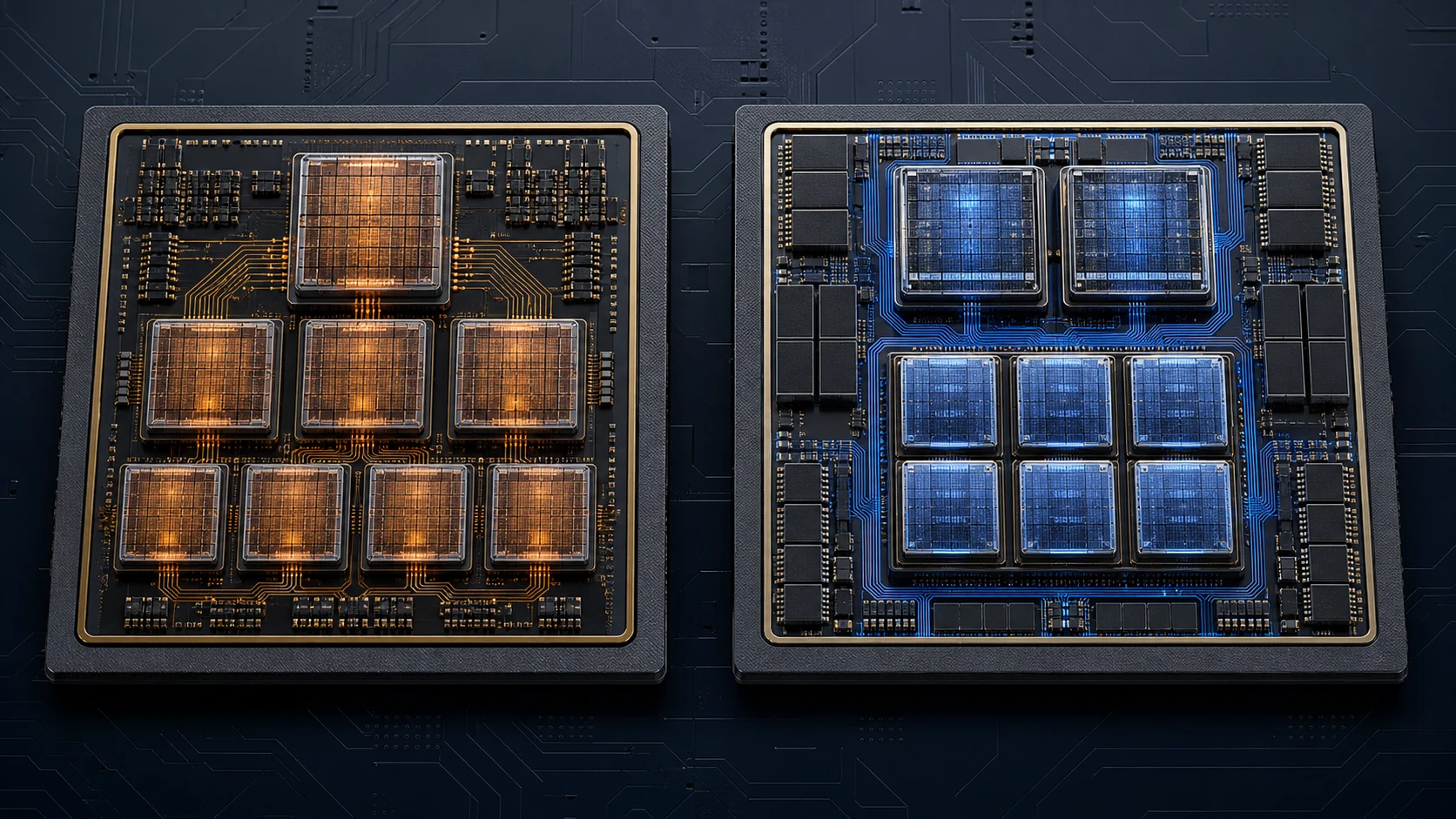
Start with the CPU design, because this is where the philosophical split is easiest to see. The Dimensity 8500 used eight ARM Cortex-A725 cores. One ran at 3.4GHz, three at 3.2GHz and four at 2.2GHz. It was an all-A725 arrangement rather than the traditional mix of one huge core, several performance cores and a separate cluster of little efficiency cores. That gave it a coherent, modern CPU foundation, with the four 2.2GHz cores doing the quieter background work.
The Snapdragon 8 Elite Gen 5 used Qualcomm's own Oryon Gen 3 design: two Prime cores at 4.61GHz and six Performance cores at 3.63GHz. Those numbers are startling in phone terms. Qualcomm also split Level 2 cache into two 12MB clusters, added an 8MB system-level cache serving the whole SoC, and included 18MB of High Performance Memory cache dedicated to the GPU. It is a far more lavish hardware arrangement, and the benchmark results showed why.
Both platforms supported UFS 4.1 storage, which is worth underlining. A phone's day-to-day responsiveness comes from more than a CPU score. Storage speed, memory capacity, software behaviour and how a manufacturer has tuned the device all matter. The shared UFS 4.1 support meant neither chip started with a storage-generation handicap.
Memory specifications need a little care, too. The Dimensity supported LPDDR5X-9600, with MediaTek claiming a 12% bandwidth increase. Qualcomm listed LPDDR5X support up to 5300MHz for the Snapdragon 8 Elite Gen 5. Numbers written in different ways can make a neat one-line "winner" misleading, so I would not turn that row into a simplistic victory lap. What matters for buyers is that both were fitted for speedy modern storage and memory, while Qualcomm's much stronger CPU and graphics architecture created the overall performance divide.
| Specification | MediaTek Dimensity 8500 Extreme | Snapdragon 8 Elite Gen 5 |
|---|---|---|
| Process technology | 4nm | 3nm |
| CPU arrangement | 1× 3.4GHz + 3× 3.2GHz + 4× 2.2GHz Cortex-A725 | 2× 4.61GHz Oryon Gen 3 Prime + 6× 3.63GHz Oryon Gen 3 Performance |
| GPU | Mali-G720 MC8 | Adreno 840 |
| Storage support | UFS 4.1 | UFS 4.1 |
| Modem peak download | Up to 5.17Gbps | Up to 12.5Gbps |
| Wireless highlights | — | Wi-Fi 7, UWB and Bluetooth 6.0 |
The key architectural contrast is simple: the Dimensity 8500 uses eight Cortex-A725 cores, while the Snapdragon 8 Elite Gen 5 relies on Qualcomm's much higher-clocked Oryon Gen 3 cores.
Raw Power on the Clock: CPU Benchmark Breakdown
Benchmarks are not your life. They are still useful when the difference is this large. AnTuTu is a broad, whole-system-style benchmark rather than a pure CPU test, and it captures the general scale of these platforms well. The Snapdragon 8 Elite Gen 5 posted 4,033,382 points in 91Mobiles testing. The Dimensity 8500 was expected in the 2.2 million to 2.3 million range. On that basis, Qualcomm's flagship held roughly a 76% advantage.
That is not a marginal lead you notice only after three cups of coffee and a microscope. It is the difference between "this is a very quick phone" and "this is an absurdly quick phone". But it needs translating. Opening a browser, scrolling through social media, navigating, messaging and moving around standard apps should be well within the Dimensity 8500's comfort zone. A benchmark lead does not make the Xperia's keyboard twice as good or an email twice as readable. Thankfully. We are not quite at that point.
Where it mattered was in jobs that loaded one core hard, loaded all the cores together, or ran for long enough to expose the space between these chips. The Snapdragon's Geekbench 6 single-core result was 3,649, against 1,709 for the Dimensity 8500: a lead of around 114%. Single-core performance mattered when software could not spread work neatly across every core, and it was a major reason the Snapdragon felt so over-provisioned for normal phone work.
On Geekbench 6 multi-core, Snapdragon scored 10,682 to MediaTek's 6,532. That was around a 64% lead. Multi-core figures are the more relevant of the two when you are juggling demanding workloads, processing lots of data at once or running applications that can genuinely use all available CPU resources. The Edge 70 Pro+ did not become incapable here. It simply reached the point where the Xperia 1 VIII had a much bigger reserve tank.
It is also worth separating the Dimensity 8500 from the Dimensity 8500 Ultra result that was tested at 2,136,906 in AnTuTu after its March 2026 launch. That score was a real measured result for the Ultra variant, while the standard 8500 figure was an expected range. They are close enough to show the class of performance we are discussing, but they are not identical chips and should not be presented as interchangeable.
For a buyer, the conclusion is pleasingly straightforward. If your phone is mainly a communications tool, camera, maps machine, music player and app launcher, the Dimensity had ample muscle. If you expect your phone to function as a compact high-performance computer, the Snapdragon was in a different bracket before you even got to graphics.
Geekbench 6 made the CPU gulf particularly clear: Snapdragon's 3,649 single-core and 10,682 multi-core scores were far ahead of the Dimensity 8500's 1,709 and 6,532.
Peak Speed Is Not the Same as Sustained Speed
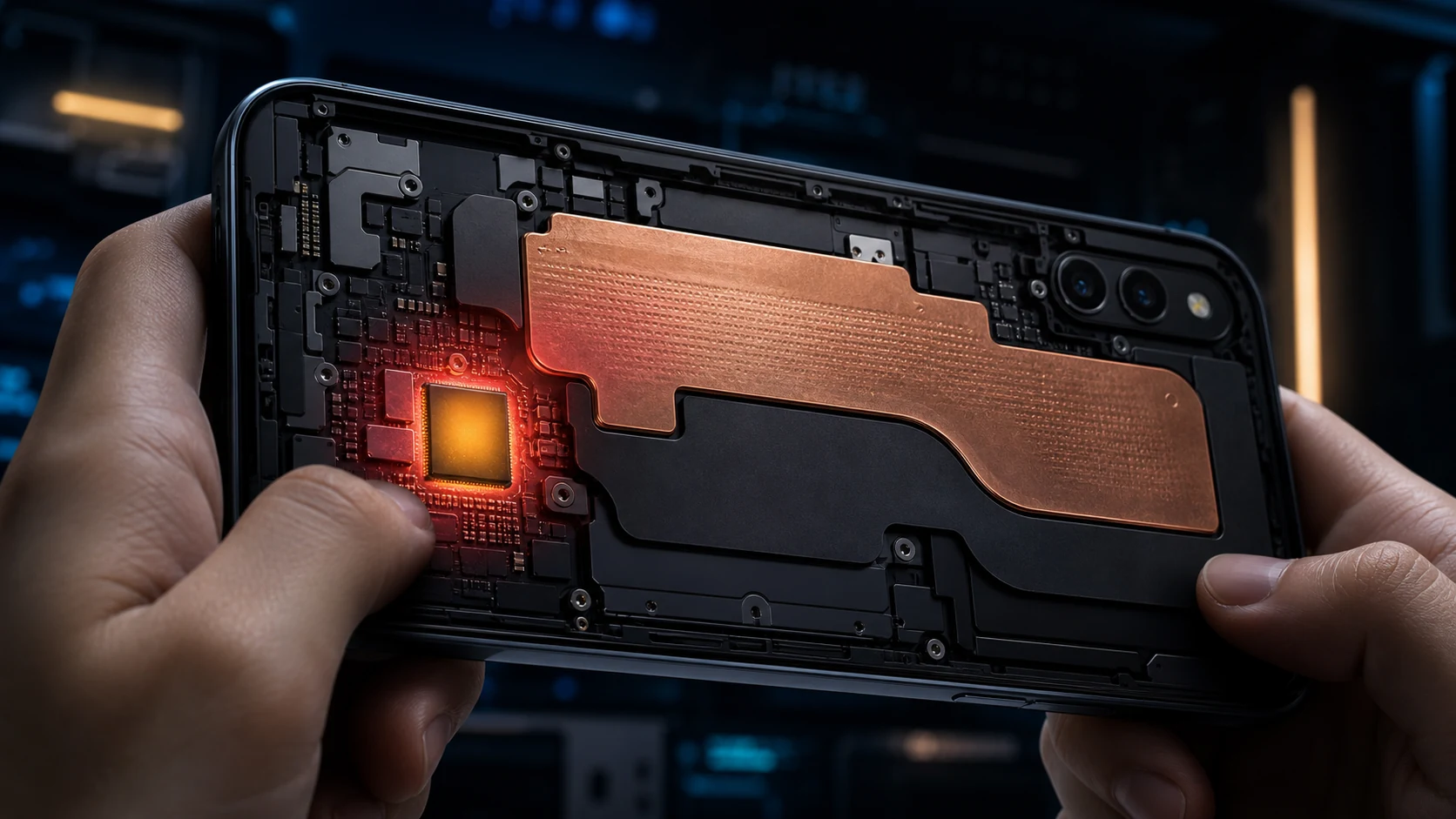
Here is the bit that benchmark charts often tuck behind the sofa: phones are very small computers with very limited room to throw heat around. Peak numbers describe what a chip can do in a short, cool burst. Sustained performance tells you how much of that ability remains after the processor has been working for a while. For serious gaming, long recording sessions, extended processing or repeated intensive tasks, this distinction is not a footnote. It is the story.
The Snapdragon 8 Elite Gen 5 throttled to 73% of its maximum performance in a 15-minute CPU stress test. It also reached a reported 22W peak draw, with a 75% GPU performance drop under sustained heat. Those figures do not erase its huge performance lead, but they do provide a sensible corrective to the idea that 4.61GHz makes a phone permanently desktop-like. It does not. Physics remains stubbornly unimpressed by marketing slides.
Qualcomm claimed 35% CPU-side power savings and 16% whole-SoC power savings versus the preceding 8 Elite. It also claimed a 23% performance uplift and up to 20% lower GPU power draw. Those are useful generation-on-generation claims, but they do not mean a flagship chip consumes little power under maximum demand. Its very high ceiling allowed it to draw far more power when pushed hard.
MediaTek positioned the Dimensity 8500 around a 25% performance increase and 20% power-efficiency improvement against the Dimensity 8400/8450 generation. The GPU claims included a 20% reduction in peak-load power consumption and up to 30% gaming power savings. The company also claimed stable gaming above 110fps at 35°C outdoor temperatures. That describes a platform aiming to make demanding play more sustainable without chasing the headline peak of a flagship monster.
What the Dimensity approach did well
- Its claimed efficiency gains were aimed squarely at the sort of long gaming sessions where heat and battery use become annoying.
- The 2.2GHz Cortex-A725 cluster gave it lower-clocked cores for background and lighter workloads.
- Its expected 2.2–2.3 million AnTuTu class was still exceptionally strong for a phone priced far below the Xperia 1 VIII.
What the Snapdragon approach had to manage
- A 22W reported peak draw was enormous for a thin mobile device.
- Its 73% CPU stress-test result and reported GPU drop under sustained heat showed peak performance was not endlessly maintainable.
- Buyers paid a substantial premium for capability they might not use every day.
There is no universally "better" thermal result without looking at the entire phone's cooling design and the workload in question. What we can say with confidence is that the Snapdragon gave the Xperia 1 VIII far more performance to lose before it fell back toward ordinary phone territory. The Dimensity started lower, but it was designed with lower power demands in mind. For someone who plays in long bursts, that distinction can matter as much as a single benchmark run.
Pixels Under Pressure: GPU and Gaming Performance
This is the least balanced category of the lot. The Mali-G720 MC8 inside the Dimensity 8500 was an improved GPU, and MediaTek's claims were not modest: 25% better performance over the prior generation, 20% lower peak-load power use and up to 30% gaming power savings. That is good news for the Edge 70 Pro+ buyer. It meant MediaTek had not treated graphics as an afterthought.
The Adreno 840 inside Snapdragon 8 Elite Gen 5 was still a much more ambitious graphics engine. Qualcomm claimed a 23% performance uplift and up to 20% lower power draw compared with its previous GPU. In 3DMark Wild Life Extreme, the Gen 5 delivered a 20% uplift over the prior Elite chip and a 14% improvement over Dimensity 9400. In Solar Bay ray tracing, it was 25% faster than its predecessor and 16% ahead of Dimensity 9400.
Those rival comparisons are useful because they show the Snapdragon's place at the sharp end of 2026 graphics. They do not give us a directly tested Dimensity 8500-versus-Adreno 840 3DMark score, so I would not invent one just to produce a cleaner chart. The CPU and overall-system figures already made the practical direction obvious: the Xperia had much more graphics headroom.
What does "headroom" mean in ordinary English? It means more scope to keep performance high as games get more demanding, to accommodate visual effects, and to retain speed when the GPU is given a serious workout. It also means that a demanding title which made the Dimensity work hard could leave the Snapdragon comparatively relaxed—until heat catches up, naturally.
| Graphics comparison | Snapdragon 8 Elite Gen 5 | Previous Snapdragon 8 Elite | Dimensity 9400 |
|---|---|---|---|
| 3DMark Wild Life Extreme | 20% higher | Baseline | Gen 5 was 14% higher |
| Solar Bay ray tracing | 25% higher | Baseline | Gen 5 was 16% higher |
| GPU identity | Adreno 840 | Adreno GPU | Immortalis-G925 MC12 |
Gaming buyer reality check
The Dimensity 8500's claimed 110fps-plus stability at 35°C was a strong efficiency-focused message. The Snapdragon 8 Elite Gen 5 was the right chip for buyers who wanted the greatest raw graphics ceiling. They are different promises: one prioritised a powerful, manageable experience; the other chased the very top of the performance ladder.
Graphics was the Snapdragon's clearest technical advantage: its Adreno 840 led Qualcomm's previous Elite chip by 20% in 3DMark Wild Life Extreme and by 25% in Solar Bay ray tracing.
The AI Arms Race: Capability Without the Hype Fog
Every processor launch now arrives wearing an AI badge. Some of that is useful. Some of it is the technology equivalent of putting "artisan" on a packet of crisps. Both the Dimensity 8500 and Snapdragon 8 Elite Gen 5 included dedicated AI processing capabilities, but neither platform's published information here gave a directly comparable TOPS figure. That means there is no honest "TOPS winner" table to draw from these specifications.
Qualcomm's Snapdragon 8 Elite platform was positioned around on-device AI and the broader ambition of making mobile hardware capable of more substantial local model work. The Snapdragon 8 Elite Gen 5 carried Qualcomm's AI Engine and Hexagon NPU heritage into its flagship tier. The important buyer takeaway is not a mysterious acronym. It is that Qualcomm designed this tier for demanding on-device workloads as part of its premium-platform proposition.
MediaTek's Dimensity 8500 included the company's APU, or AI Processing Unit. Its public positioning leaned into camera and gaming uses: night-mode processing, scene recognition, portrait segmentation and frame-rate stabilisation. That is a very sensible focus for a mid-range platform, because those are the AI functions people can meet every day without ever opening an "AI" menu.
In practical terms, the more expensive Qualcomm platform had the stronger overall compute foundation for ambitious local AI work, simply because it had the much larger CPU and GPU performance envelope around its AI hardware. The Dimensity's case was more about making familiar phone features work briskly and efficiently. Neither story is inherently wrong. One is broader and more future-facing; the other is more tied to immediate, everyday phone behaviours.
MediaTek Dimensity 8500: camera-focused intelligence
MediaTek highlighted AI use in night-mode processing, scene detection and portrait segmentation—features that support photography without requiring the buyer to become an amateur machine-learning engineer.
MediaTek Dimensity 8500: gaming assistance
Frame-rate stabilisation sat alongside the platform's efficiency claims, matching its broader pitch of more consistent gaming performance.
Snapdragon 8 Elite Gen 5: flagship AI foundation
Qualcomm's AI Engine and Hexagon NPU sat within a platform built for substantially more demanding on-device AI ambitions, backed by the chip's far greater general compute performance.
The sensible buyer should avoid buying either phone based on a theoretical AI number alone. What matters is which actual features the manufacturer makes available in its software, how well they work and whether you use them. But if you are choosing on raw technical scope, the Xperia 1 VIII's Snapdragon platform had the more generous ceiling. If you just want intelligent camera processing and stable play, the Edge 70 Pro+ had the more cost-conscious route to it.
Signal Strength and the Wireless World
Connectivity is one of those specs that looks dull until it saves you ten minutes. Then it becomes extremely exciting indeed. The Dimensity 8500 integrated modem offered connection speeds up to 5,170Mbps. That was plenty on paper for a modern 5G handset. The Snapdragon 8 Elite Gen 5's X85 modem-RF went much further, with peak downloads up to 12.5Gbps and uploads up to 3.7Gbps. Its theoretical download ceiling was more than double MediaTek's figure.
Of course, neither phone will routinely pull those figures from the air because networks, spectrum, signal quality, location and your data plan get a vote. A very loud vote. The important thing is the platform capability: Snapdragon's modem had more headroom, along with support for 5G Advanced across mmWave and sub-6GHz.
The Qualcomm platform also brought FastConnect 7900 with Wi-Fi 7 and Multi-Link Operation, plus UWB and Bluetooth 6.0. Wi-Fi 7 Multi-Link Operation can use multiple bands for higher throughput and lower latency where the network setup supports it. It is exactly the sort of future-facing flagship feature that you may not notice on day one but could value over a longer ownership period.
The Dimensity 8500's published modem figure tells us it was no connectivity slouch. A 5.17Gbps peak is a huge number. But the provided platform specifications did not put it in the same wireless feature class as Qualcomm's package. Here, as with CPU and graphics, the Snapdragon was built to be the no-compromise option.
| Connectivity feature | Dimensity 8500 | Snapdragon 8 Elite Gen 5 |
|---|---|---|
| Peak modem download | Up to 5.17Gbps | Up to 12.5Gbps |
| Peak modem upload | — | Up to 3.7Gbps |
| 5G Advanced | — | Supported by X85 modem-RF |
| mmWave and sub-6GHz | Sub-6GHz, mmWave | Supported |
| Wi-Fi | Wi-Fi 6E | Wi-Fi 7 with Multi-Link Operation |
| Additional wireless hardware | — | UWB and Bluetooth 6.0 |
The Snapdragon X85 modem-RF was a genuine flagship differentiator, offering a 12.5Gbps peak download figure and Wi-Fi 7 with Multi-Link Operation through FastConnect 7900.
Motorola Edge 70 Pro+ vs Sony Xperia 1 VIII: The Phone Context
It would be easy to call this a comparison between a "mid-range phone" and a "flagship phone" and leave it there. That would be technically neat but not especially helpful. The Edge 70 Pro+ brought the Dimensity 8500 Extreme into a handset priced at ₹47,999 for 12GB of RAM and 256GB of storage in India. That is the key context for its silicon. At that price, the chip's expected 2.2–2.3 million AnTuTu territory looked very competitive.
The Xperia 1 VIII, meanwhile, was priced from £1,399 in the UK for its 256GB model. Sony also sold a 16GB/1TB Native Gold edition at £1,849 / €1,999. Its premium was not subtle, and neither was the chipset beneath it. Snapdragon's massive scores, advanced modem, Wi-Fi 7, UWB, Bluetooth 6.0, 4K-at-120Hz display support and external display support up to 4K at 120Hz or 8K at 30Hz all made sense in a no-compromise flagship proposition.
This does not mean the Motorola was "cheap" in the dismissive sense. It means its hardware priorities were more grounded. The Dimensity 8500 Extreme offered UFS 4.1, LPDDR5X-9600 support, a strong modern CPU and a GPU with meaningful claimed efficiency gains. Put bluntly: most people could use this phone all day without ever encountering the limit of its processor. The Xperia buyer was paying to make that limit much, much harder to find.
Motorola Edge 70 Pro+
12GB RAM / 256GB storage configuration in India, powered by the Dimensity 8500 Extreme.
Sony Xperia 1 VIII
UK starting price for the 256GB model, powered by Snapdragon 8 Elite Gen 5.
Sony Xperia 1 VIII Native Gold
16GB RAM / 1TB storage edition.
There was also a wider availability difference. Sony did not officially launch Xperia flagships in North America after 2023, so the Xperia 1 VIII did not have an official US release. The Motorola Edge 70 Pro+ pricing listed here was for India. Those details matter before anyone gets carried away comparing direct currency conversions, which are rarely a useful substitute for an actual local retail price anyway.
For buyers who had pre-ordered the Xperia 1 VIII, Sony bundled WH-1000XM6 headphones. A bundle can soften a purchase, but it does not alter the underlying fact: the Sony was a vastly more expensive platform. The chipset gap was part of what that extra money bought, but it was not the only factor. Treating the Snapdragon alone as a reason to spend more than twice as much would be overly simplistic.
Named-phone pricing puts the processor gap in perspective: Motorola's Edge 70 Pro+ was listed at ₹47,999 in India, while the Xperia 1 VIII began at £1,399 in the UK.
What the Performance Gap Means in Everyday Use
For the ordinary buyer, the first lesson is reassuring: a 76% AnTuTu gap does not translate to a phone that is 76% better at ordinary life. There is no unit of measurement for "how much nicer replying to Mum is". Both phones had enough modern processor capability for the basic work of a smartphone.
The Dimensity 8500's eight Cortex-A725 cores and UFS 4.1 support meant the Motorola Edge 70 Pro+ began from a strong place. Its score range put it well beyond the performance level where routine use becomes a chore. Switching apps, web use, maps, messaging, music and the usual pile of background tasks should not be the reason to spend on the Xperia.
The Xperia 1 VIII made more sense when your use became repetitive, heavy or impatient. Its 114% single-core lead in Geekbench 6 mattered to bursty, responsive tasks that lean hard on one core. Its 64% multi-core lead mattered when a workload could spread out properly. Its superior graphics platform mattered when visual workloads got serious. Its modem and Wi-Fi package mattered when you had compatible networks and wanted the highest possible ceiling.
There is also an emotional angle, and I say this with affection for everyone who has ever bought a flagship chip "just in case". Snapdragon's performance reserve can be satisfying. A device that rarely feels near its limit is a lovely thing. But buying that reserve makes most sense if you value it. If your usual day does not include long gaming sessions, demanding local work or a need for leading-edge wireless, the Dimensity 8500's lower-cost approach was arguably the smarter bit of engineering.
Messaging, web and everyday multitasking
The Dimensity 8500 was already comfortably in high-performance territory. The Snapdragon's benchmark lead was unlikely to transform basic phone tasks in proportion to its score advantage.
Heavy, parallel workloads
The 10,682 Geekbench 6 multi-core score of Snapdragon 8 Elite Gen 5, versus 6,532 for Dimensity 8500, gave the Xperia a materially larger reserve for work that can engage many CPU cores.
Demanding gaming and graphics
The Adreno 840 was the outright performance choice, while the Dimensity's gaming message was more focused on efficient, stable play.
Future-facing connectivity
The Xperia's Snapdragon platform had the stronger specification with 5G Advanced, Wi-Fi 7 Multi-Link Operation, UWB and Bluetooth 6.0.
Rival Context: Where Snapdragon 8 Elite Gen 5 Sat in 2026
It is useful to look sideways for a moment. The Snapdragon 8 Elite Gen 5 did not merely outgun the Dimensity 8500, which was a different-tier part. It also held a measured lead over the Dimensity 9400 in the graphics tests listed for it: 14% in 3DMark Wild Life Extreme and 16% in Solar Bay ray tracing. That is meaningful because Dimensity 9400 was a much more natural flagship-level rival than the 8500.
Against Qualcomm's own prior Snapdragon 8 Elite, Gen 5 was 20% ahead in Wild Life Extreme and 25% ahead in Solar Bay ray tracing. Qualcomm's stated graphics uplift of 23% and up to 20% lower GPU power draw broadly framed the same generational ambition. This was a flagship chip improving on a chip that had already been at the top end.
Meanwhile, the Dimensity 8500 Ultra reached 2,136,906 in AnTuTu testing. That puts a real measured number around the broader Dimensity 8500 family's performance class and reinforces the tier separation. The standard 8500's expected 2.2–2.3 million range was potent, but the Snapdragon's 4,033,382 result was still dramatically beyond it.
| Measured / stated comparison | Snapdragon 8 Elite Gen 5 | Snapdragon 8 Elite | Dimensity 9400 |
|---|---|---|---|
| 3DMark Wild Life Extreme position | 20% higher than previous Elite | Reference point | Gen 5 was 14% higher |
| Solar Bay ray-tracing position | 25% higher than previous Elite | Reference point | Gen 5 was 16% higher |
| Relevant takeaway | Flagship-leading graphics position | Prior Qualcomm flagship | Flagship-tier comparison point |
The important caveat is that these are chip-level comparisons, not a promise that every phone will behave identically. Cooling, software and device tuning influence what you see in the hand. Still, they make one thing abundantly clear: if pure graphics performance was your shopping priority, the Snapdragon 8 Elite Gen 5 was not merely relying on an easy win against mid-range silicon. It was genuinely at the leading edge of its own class.
Best For: Which Phone and Chip Suited Which Buyer?
This is where the comparison gets useful rather than tribal. There is no prize for buying the most powerful chip if you never ask it to do anything difficult. Equally, there is no prize for saving money on a phone that leaves you wishing you had bought more headroom. Your best pick depends on whether you value sensible performance per rupee, maximum mobile horsepower, advanced connectivity or a balanced middle ground.
Motorola Edge 70 Pro+
See Motorola Edge 70 Pro+ on Amazon UK
The Dimensity 8500 Extreme delivered a modern 4nm platform, UFS 4.1 support, LPDDR5X-9600 support and a very strong expected 2.2–2.3 million AnTuTu class at ₹47,999 for 12GB/256GB in India.
Sony Xperia 1 VIII
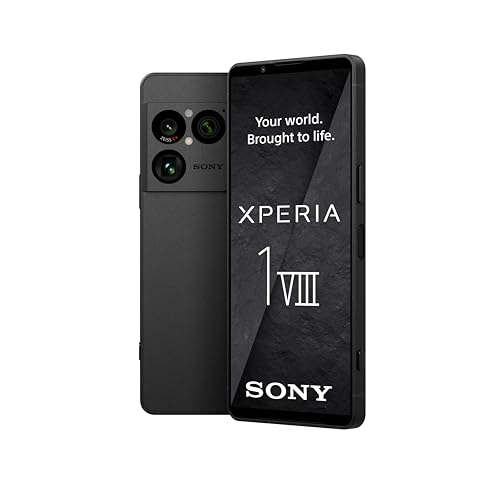
See Sony Xperia 1 VIII on Amazon UK
£1399.00price at 23 Aug, may change
Snapdragon 8 Elite Gen 5 was the clear pick for maximum CPU speed, graphics headroom and wireless specification, with 4,033,382 AnTuTu points and 10,682 Geekbench 6 multi-core points.
Sony Xperia 1 VIII
The Adreno 840 was the stronger graphics engine. Its results against the prior Snapdragon Elite and Dimensity 9400 showed a genuine flagship lead, although sustained heat remained a real consideration.
Motorola Edge 70 Pro+
MediaTek's claims of lower GPU power consumption, up to 30% gaming power savings and 110fps-plus stability at 35°C made the Dimensity's pitch compelling for buyers who valued capable, efficient performance.
Sony Xperia 1 VIII
The X85 modem-RF, 5G Advanced support, Wi-Fi 7 Multi-Link Operation, UWB and Bluetooth 6.0 gave the Snapdragon platform the more expansive future-facing wireless feature set.
Motorola Edge 70 Pro+
For people who do not need a phone to be a pocket benchmark machine, the Dimensity 8500 Extreme had more than enough modern performance without the Xperia's steep flagship price.
The right answer depends on your priorities: the Edge 70 Pro+ made a strong performance-per-price case, while the Xperia 1 VIII bought dramatically more CPU, GPU and connectivity headroom.
Frequently Asked Questions and Final Verdict
The final buying decision is less about which chip wins a chart and more about whether you need the Xperia 1 VIII's enormous performance reserve or the Edge 70 Pro+'s more sensible balance.
Bottom line: buy the capability you will actually use
Choose the Motorola Edge 70 Pro+ if you want the more sensible performance-per-price proposition. Its Dimensity 8500 Extreme was a thoroughly capable 2026 platform, with a powerful all-Cortex-A725 CPU, modern storage support and an efficiency-minded gaming story. At ₹47,999 for 12GB/256GB in India, it did not need to beat Qualcomm's flagship to make sense.
Choose the Sony Xperia 1 VIII if you want the fastest processor, the stronger graphics system and the widest connectivity feature set. Snapdragon 8 Elite Gen 5's 4,033,382 AnTuTu score, 3,649/10,682 Geekbench 6 results, Adreno 840 GPU, 12.5Gbps modem ceiling and Wi-Fi 7 package made it the clear technical winner. Just remember that it carried a dramatically higher price, and sustained heat meant its spectacular peak figures were not an unlimited supply.
So there is no single absolute winner. The Xperia 1 VIII was the performance champion. The Edge 70 Pro+ was the smarter choice for buyers who wanted a very fast phone without paying for performance they would mostly admire from a distance.