
Is It Worth Upgrading from a Steam Deck to a Steam Deck 2?
We weigh the rumoured performance, battery and screen gains of a future Steam Deck against the very capable machine you can already buy today.
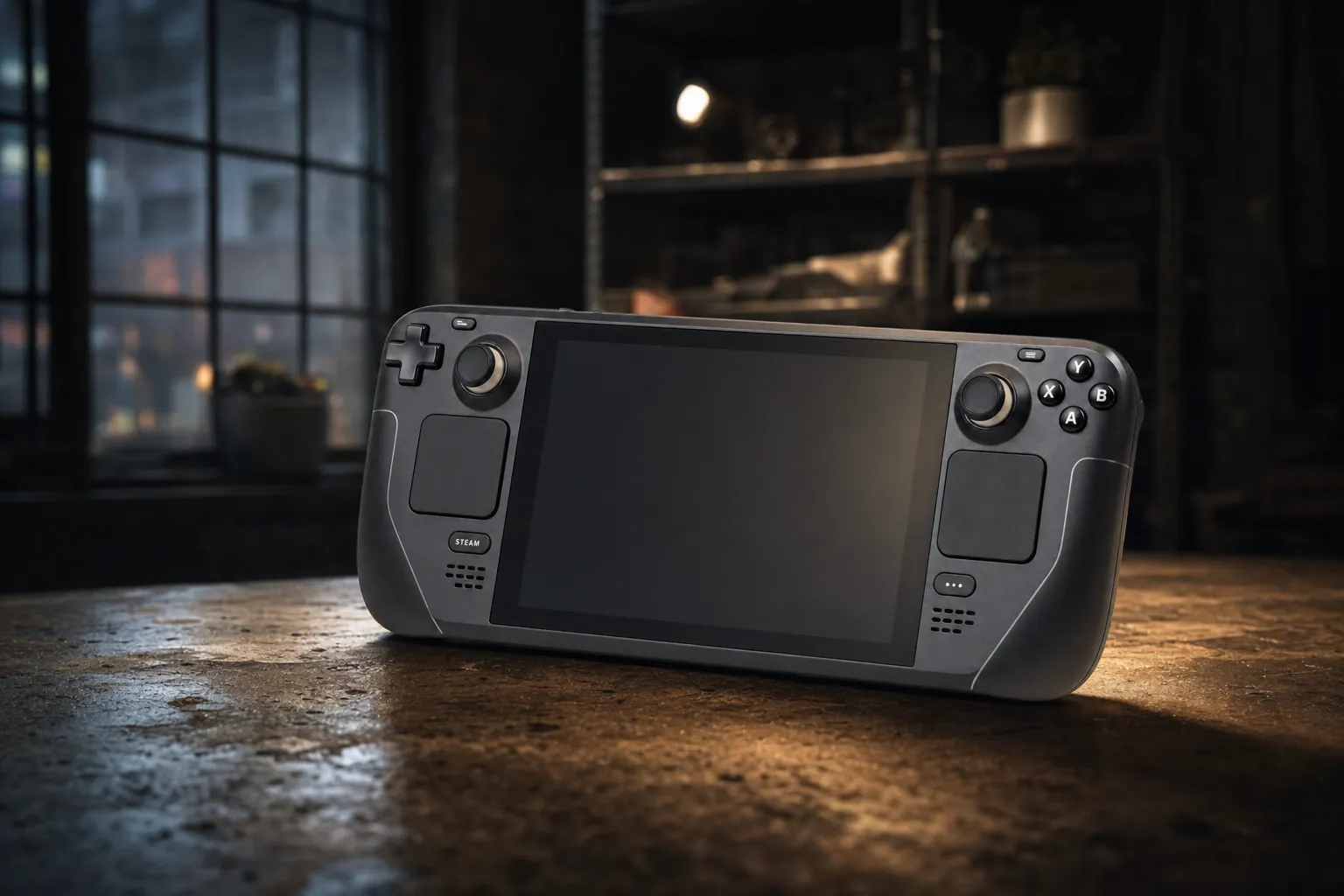
The Steam Deck OLED remains Valve's flagship handheld — and the benchmark any successor will be measured against.
See ASUS ROG Ally X on Amazon UK
First, Let's Clear the Air: There Is No Steam Deck 2 Yet
I want to start here because it shapes everything that follows. As things stand, Valve has not announced a Steam Deck 2. There's no name, no release date, no price, and crucially no confirmed specifications. The company has openly confirmed it's working on "next-generation" hardware — that part is real — but it has deliberately avoided committing to anything you could circle on a calendar.
That's not me being coy. It's the actual state of play. So when you see breathless headlines comparing the "Steam Deck 2" to the current model with neat little spec tables, treat them with a healthy pinch of salt. Those tables are built on leaks, wishlists and educated guesswork, not on anything Valve has put its name to. My job here is to help you separate what's solid from what's hopeful.
Valve's SteamOS designer Pierre-Loup Griffais stated in January 2025 that the company wasn't "thinking about new hardware until next year at least." In plain terms, that places serious planning in 2026 and has no confirmed release date; 2027–28 is analyst speculation — not imminently.
So the real comparison this article can make isn't "Steam Deck vs Steam Deck 2" as two devices on a shelf. It's "the excellent handheld you can own today" versus "a hypothetical machine that may arrive in a couple of years." Once you frame it that way, the upgrade question becomes far easier to reason about.
What You're Actually Comparing Against: The Steam Deck OLED
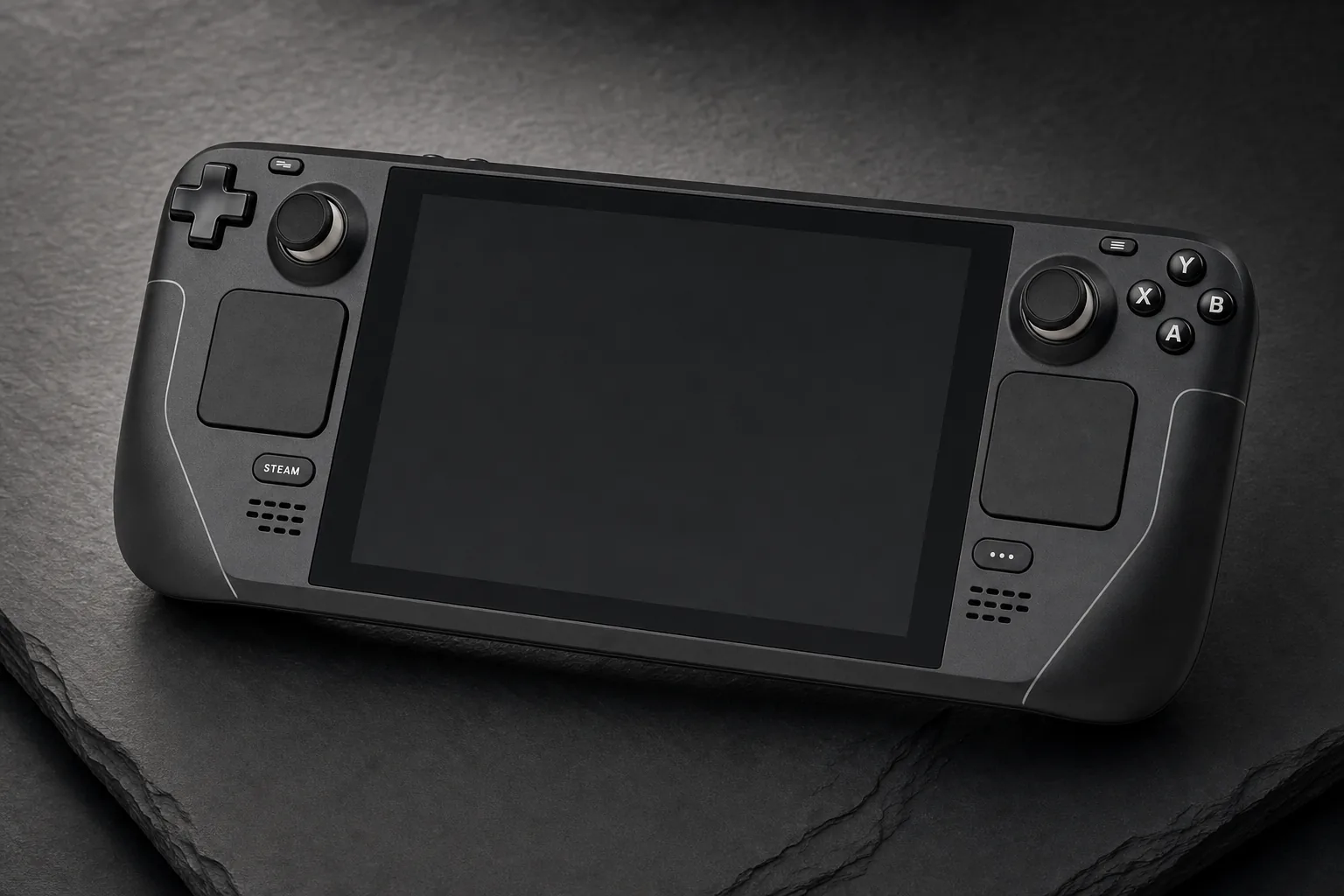
The device anyone considering an "upgrade" is really comparing to is the Steam Deck OLED, which launched in October 2023 (announced the month before) and remains Valve's flagship handheld in active production. It's the model I'd point almost anyone towards today, and it's the realistic baseline a successor will have to beat.
The original LCD model — the one that kicked the whole handheld PC revolution into the mainstream back in February 2022 — was discontinued in December 2025. So the current line-up is effectively the OLED in two storage flavours, with refurbished LCD units still floating about for bargain hunters.
The headline figures tell a clear story. That 7.4-inch HDR OLED panel runs at a native 1280×800 and a buttery 90Hz refresh rate, with the kind of perfect black levels only OLED delivers. Under the bonnet sits the 6nm "Sephiroth" APU pairing Zen 2 CPU cores with an RDNA 2 GPU, tuned to operate efficiently in the 4–15W range that handheld battery life depends on. The faster 6400 MT/s memory is a genuine, if quiet, advantage over the older LCD board.
That 7.4-inch HDR OLED panel with a 90Hz refresh rate is the single biggest reason the current Deck still feels premium.
Battery Life: The Standout Real-World Win
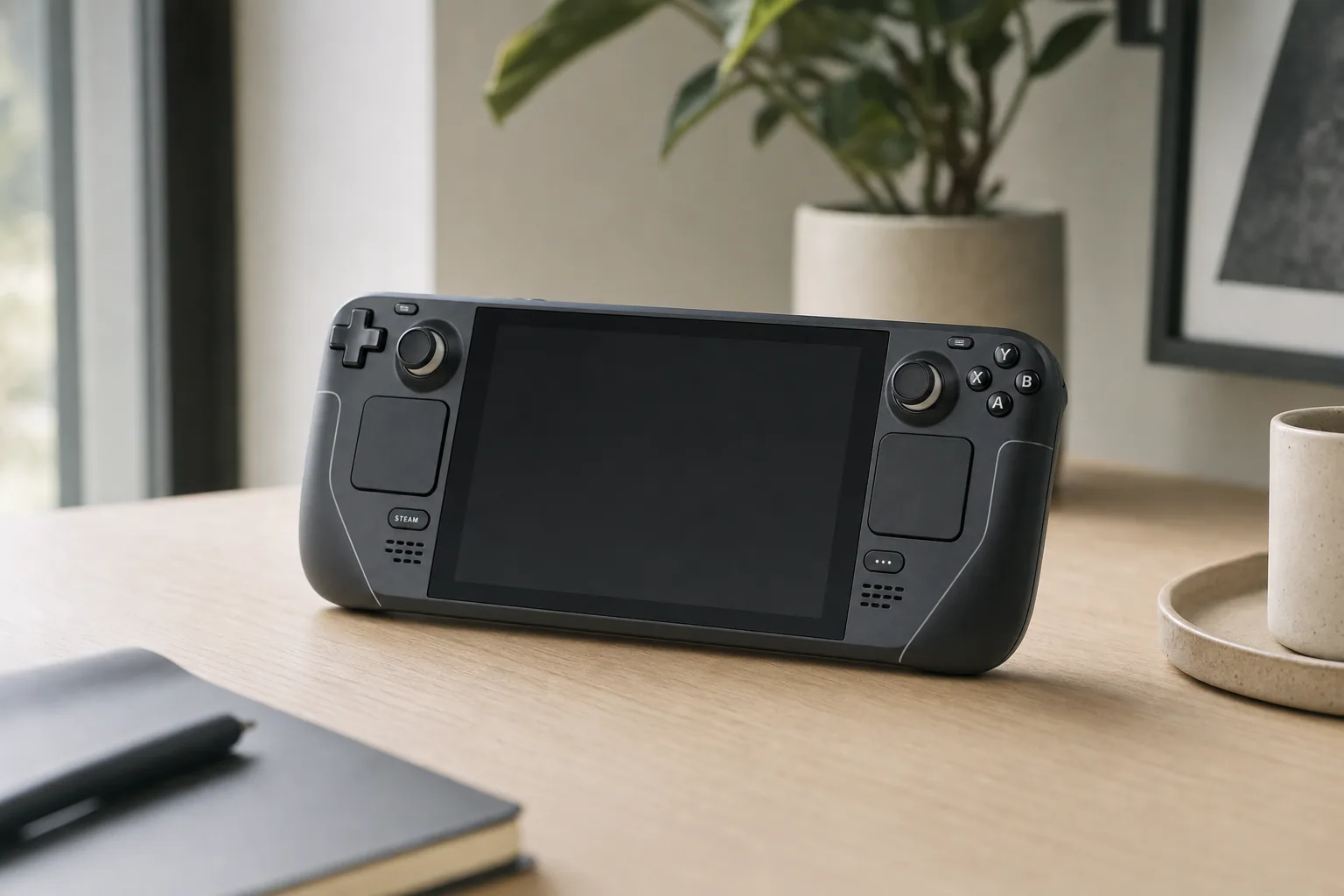
If there's one area where the current OLED genuinely shines in everyday use, it's battery endurance. Valve claims 3–12 hours depending on what you're playing and how hard you push it, versus 2–8 hours on the old LCD. That's not just marketing — it holds up under testing, and it's the spec I'd weigh most heavily if you're deciding whether the machine you've got is "good enough."
In my experience the lighter your games, the more dramatic the gains. Running something like Dead Cells, the OLED comfortably clears eight hours of continuous play — roughly 36% longer than the LCD managed with the same game. That's the difference between a single charge lasting a whole evening or a long train journey, and a device you're constantly reaching for the cable to feed.
Push into demanding AAA territory and reality bites: high settings will drain you in two to two-and-a-half hours regardless. But that's true of every handheld in this class. Tellingly, in the Cyberpunk 2077 comparison at 800p medium, the Deck OLED's 2–3 hours edges out the ROG Ally's 1.5–3 hours — and it does so on a chip that's deliberately conservative on power.
Pro Tip
The OLED also charges roughly 30% faster than the old LCD model, and it ships with a longer 2.5m charging cable (up from 1.5m). That extra reach sounds trivial until you're trying to game from a sofa with a distant plug socket — it genuinely changes how you use the thing.
Performance: Where the Honesty Has to Come In
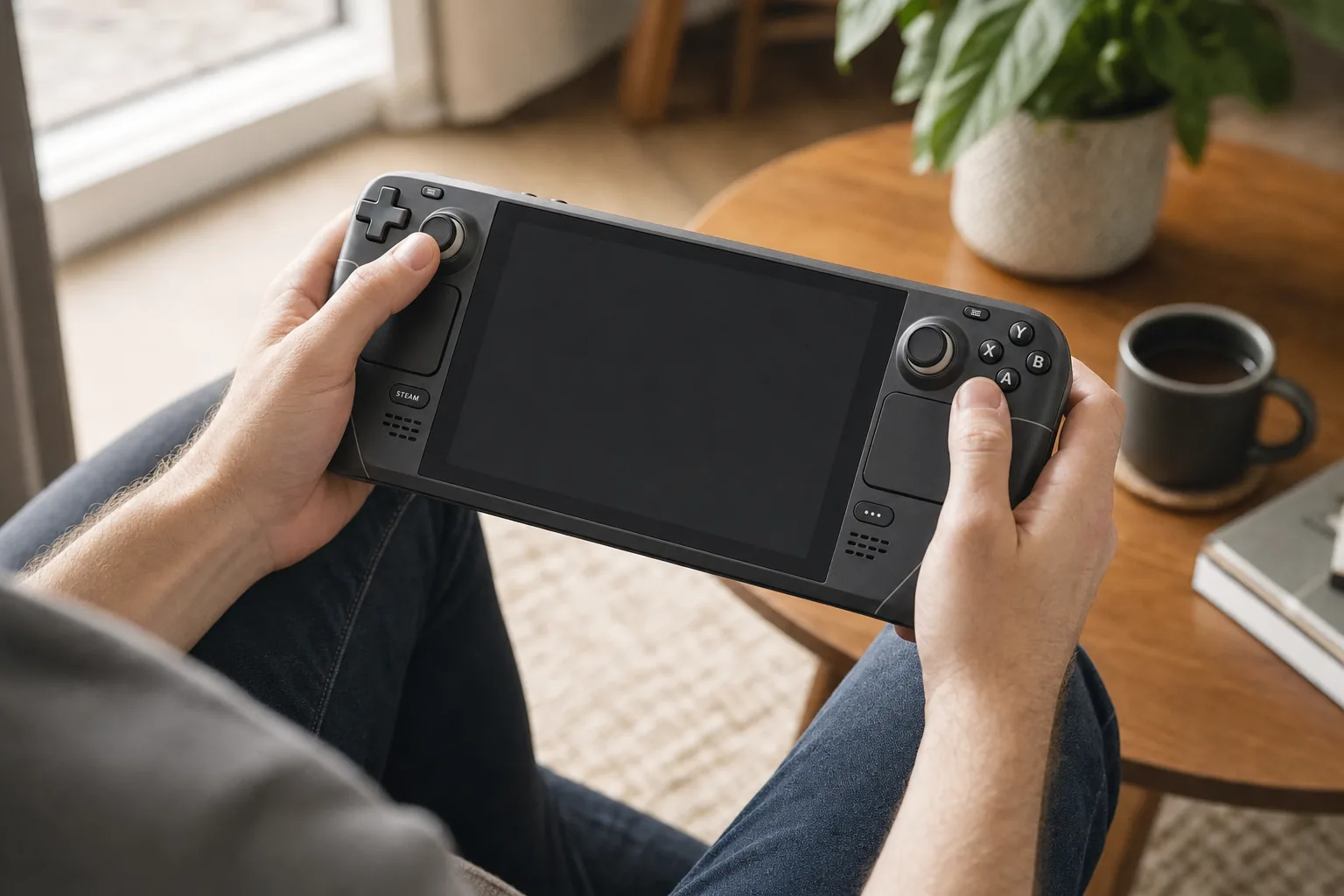
Here's where I have to manage expectations, both for the current OLED and for any future model. The jump from the LCD Deck to the OLED Deck delivered only single-digit performance improvements in benchmarks. That's because the OLED's gains came from more efficient hardware — a smaller, cooler-running process and faster memory — rather than a brute-force leap in raw horsepower.
Now, single digits doesn't sound exciting, but it's not meaningless either. In practice it can be the difference between a stable 30FPS and a frame rate fluctuating around 25FPS — and anyone who's played a game hovering on the wrong side of that line knows how much smoother locked-30 feels. Small numbers, real-world impact.
Why this matters for the upgrade question
If the LCD-to-OLED transition taught us anything, it's that Valve prioritises efficiency, battery and screen quality over chasing benchmark headlines. Whatever a future Steam Deck turns out to be, I'd expect the same philosophy: meaningful but measured gains, wrapped around battery life and comfort rather than a desktop-class performance explosion.
This is the crux of the upgrade dilemma. If you're hoping a "Steam Deck 2" will magically run every AAA game at high settings for six hours straight, history suggests you'll be disappointed. Handheld physics — thermals, battery density, power draw — don't bend just because a new model number arrives. The current OLED is already a thoughtfully balanced machine, and that balance is hard to dramatically improve without sacrificing something else.
The Quality-of-Life Improvements You Actually Feel
Where the OLED Deck pulls genuinely ahead of its predecessor isn't in a spec-sheet bragging right — it's in the dozens of small refinements that add up to a nicer thing to live with. These are exactly the sort of gains a future model would need to push further to justify an upgrade.
A display that genuinely impresses
The HDR OLED panel offers striking contrast, a larger picture, richer colours, pure blacks and excellent motion handling. It's the upgrade you notice the instant you switch it on, and it's the hardest one to give up once you've experienced it.
Cooler, calmer thermals
A bigger fan and updated thermal design mean the OLED runs cooler than the LCD during demanding sessions. Less heat at the grips makes long play sessions far more comfortable.
WiFi 6E for faster everything
The move to WiFi 6E (from WiFi 5) brings downloads up to three times faster and more stable online play. A third antenna also improves Bluetooth performance for your wireless headphones and controllers.
Easier to live with long-term
Torx-type rear screws with metal threads make disassembly and repair noticeably friendlier — a quietly important point if you plan to keep the device for years and swap the SSD or battery down the line.
Lighter in the hands
At around 640g, the OLED shaves roughly 30g (about 5%) off the LCD's weight. It doesn't sound like much, but over a two-hour session your wrists will thank you.
The full SteamOS package
A capacitive multi-touch display and an enormous library of a large but constantly changing verified/compatible catalogue; check the current Steam and ProtonDB listings. This software-hardware harmony is Valve's real moat.
Cooler thermals, a bigger fan and easier-to-service Torx screws make the current Deck a device built to be kept for years.
What the Rumours Say About a Steam Deck 2 — and How Seriously to Take Them
Right, let's get into the speculation, because it's what's making people hesitate. I'll be upfront about the credibility of each claim rather than presenting rumour as fact.
On timing, the picture is genuinely murky. The most credible estimates cluster around a Q4 2027 or early 2028 release. That aligns neatly with Valve's own public stance — Griffais's "not until next year at least" comment from January 2025 points to planning through 2026 and a launch in the 2027–2028 range. That's the version I'd bet on.
Beyond that, the estimates fan out considerably. The most recent rumour, from leaker KeplerL2, points to a 2028 release — though it's worth stressing that even that account admits it lacks hard data to back the claim. At the other end, some leaks have floated a Q3 or Q4 2026 launch, but those directly conflict with Valve's official statements, which makes me deeply sceptical of them.
Notice what's missing from every one of these rumours: confirmed specifications. No verified chip, no display details, no battery figures, no price. Anyone presenting a tidy "Steam Deck 2 spec sheet" right now is filling in blanks with imagination. I won't do that to you.
So the honest summary is this: has no confirmed release date; 2027–28 is analyst speculation, and we don't know what's in it. If you're waiting, you're potentially waiting a long time for a machine whose actual capabilities are entirely unknown. That's a tough thing to plan a purchase around.
The Current Deck Against Its Rivals
See ASUS ROG Ally X on Amazon UK
Since a head-to-head against an unreleased device isn't possible, the more useful comparison is how today's Steam Deck OLED stacks up against the handheld it actually competes with, and against the generation it replaced. This is the realistic decision in front of you.
| Feature | Steam Deck OLED | Steam Deck LCD (discontinued) | ROG Ally |
|---|---|---|---|
| Display | 7.4" HDR OLED, 90Hz, perfect blacks | 7" IPS LCD, 60Hz | LCD handheld |
| APU | 6nm "Sephiroth" | 7nm "Van Gogh" | Windows-based handheld |
| Battery | 50Wh | 40Wh | 80Wh, up to 10 hours |
| Cyberpunk @ 800p medium | 2–3 hours | — | 1.5–3 hours |
| Connectivity | WiFi 6E / BT 5.3 | WiFi 5 / BT 5.0 | Wi-Fi 6E, Bluetooth 5.2 |
| Weight | ~640g | ~669g | 608 grams |
| Operating system | SteamOS (power-optimised) | SteamOS | Windows |
| Verified library | ~a large but constantly changing verified/compatible catalogue; check the current Steam and ProtonDB listings | ~a large but constantly changing verified/compatible catalogue; check the current Steam and ProtonDB listings | — |
What jumps out is how the OLED's advantages cluster around the things you actually experience minute-to-minute: the screen, the battery, the wireless, the weight. Against the ROG Ally specifically, the Deck's tighter integration between SteamOS and its hardware gives it a real efficiency edge — and that comparable-or-better battery life in Cyberpunk, despite the conservative chip, is a neat illustration of why optimised software matters as much as raw silicon.
Against rivals, the Deck's real advantage is the marriage of power-optimised SteamOS to purpose-built hardware.
The Honest Pros and Cons of Buying Now
Let's lay it out plainly. If you're weighing the current Steam Deck OLED against the idea of waiting, these are the trade-offs as I see them.
Pros
- Gorgeous HDR OLED display with striking contrast, larger picture, richer colours, pure blacks and excellent motion
- Significantly longer battery life across every kind of game, from 8+ hour indie sessions to competitive AAA endurance
- SteamOS is genuinely optimised for low power consumption — software and hardware working in harmony
- Enormous verified library of a large but constantly changing verified/compatible catalogue; check the current Steam and ProtonDB listings
- Excellent ergonomics and build quality, plus easier servicing thanks to metal-threaded Torx screws
- Runs cooler and lighter than the model it replaced, with WiFi 6E for faster downloads
- Available to buy right now — no indefinite waiting for an unannounced device
Cons
- Performance gains over the previous generation were only single-digit — this is not a powerhouse leap
- Demanding AAA games at high settings still drain the battery in roughly 2–2.5 hours
- A May 2026 price increase has eroded the value proposition, removing the large price cushion the Deck once enjoyed over rivals
- If you already own the OLED, there's little compelling reason to "upgrade" to anything currently available
- A genuine successor is coming, even if it's likely years away
My take on the pricing situation
I'd be doing you a disservice not to flag it: the OLED saw a notable price rise in May 2026, with Valve citing component costs and global logistical challenges. The practical upshot is that the Deck no longer trounces rivals on price the way it once did — so the decision now rests more squarely on the screen, battery and ecosystem strengths than on it simply being the cheap option. If you're shopping, it's worth checking the latest figures and any current bundles before you commit.
Thinking of Buying?
See Valve Steam Deck OLED on Amazon UK
Prices on the Steam Deck OLED have shifted recently, so it pays to confirm the current cost before you commit. Check the latest price and any current bundles on Amazon.
How I Rate the Current Steam Deck OLED
Since the realistic decision is about today's machine, here's where I land on it as the device you'd actually buy or keep. These scores reflect the OLED as it stands in mid-2026, factoring in that recent price climb.
The display, ecosystem and battery carry it to a high overall score. Performance and value are where the points come off — the former because the gains are evolutionary rather than revolutionary, the latter purely because of that recent price rise. Take away the increase and the value score would climb meaningfully; the hardware itself hasn't gotten any worse.
Who Should Buy Now, and Who Should Wait
This is ultimately a personal calculation, but a few clear profiles emerge. Find yourself below and you'll have your answer.
Buy the OLED now if…
You don't own a Deck yet and want to play your Steam library on the go. There's no good reason to wait years for an unspecified device when an excellent one exists today. You'll get thousands of hours of enjoyment before any successor is even confirmed.
Keep your LCD Deck if…
Your original LCD model still does what you need. The OLED is lovely, but the performance gain is single-digit. If battery and screen quality aren't paining you, your money is better saved for an eventual true generational leap.
Upgrade LCD to OLED if…
You play a lot of indie and 2D titles, value long unplugged sessions, and want that gorgeous HDR screen. The 8+ hour battery life and 90Hz OLED panel are the most tangible day-to-day improvements you can get right now.
Wait if…
You already own an OLED and are chasing a meaningful performance jump. There's nothing currently available worth upgrading to, and a genuine successor is most likely a 2027–2028 affair. Patience is the rational choice here.
Frequently Asked Questions
The Verdict
So, is it worth upgrading from a Steam Deck to a Steam Deck 2? The most useful answer I can give is that you can't upgrade to a device that doesn't exist yet — and based on everything credible, that successor is most likely a 2027 or 2028 prospect with no confirmed specifications to plan around.
What you can do is make a smart decision about what's actually on the table. The Steam Deck OLED remains a genuinely excellent handheld: a stunning 7.4-inch HDR 90Hz OLED display, class-leading battery life that stretches past eight hours in lighter games, WiFi 6E, cooler thermals, a lighter chassis and the unmatched convenience of SteamOS and aa large but constantly changing verified/compatible catalogue; check the current Steam and ProtonDB listings. Its only real weak points are evolutionary performance gains and a recent price rise that has trimmed its value advantage.
My advice is simple. If you don't own a Deck, buy the OLED — you'll be playing for years before any successor arrives. If you're on the original LCD and crave that screen and battery life, the OLED is a worthwhile step up. But if you already own the OLED and want a true generational leap, hold tight. There's nothing currently worth upgrading to, and the patient gamer will be rewarded when Valve finally shows its hand.