Galaxy Z Fold8 vs Z Fold 8 Ultra: Which New Fold Is Right for You?
One is a compact, landscape-first tablet that happens to fold. The other is a tall, camera-heavy flagship with an 8-inch canvas. The £200 gap is only the beginning.
We link to the exact model on Amazon UK. Prices change often, so check the live price before you buy. As an Amazon Associate we earn from qualifying purchases.
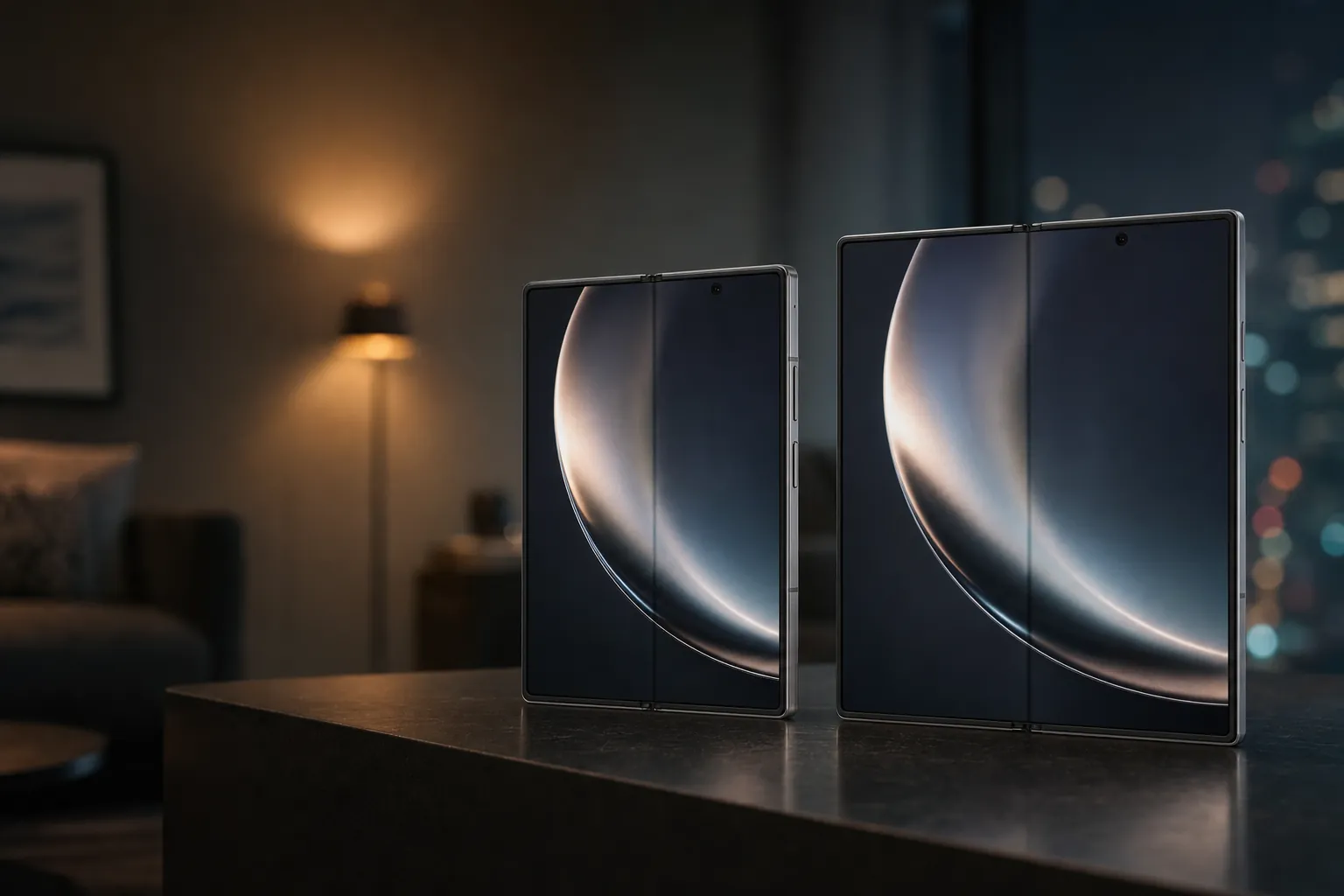
Samsung's two-pronged Fold 8 approach comes down to shape: the shorter, broader Wide beside the taller and narrower Ultra.
Samsung had not simply made one Galaxy Z Fold 8 bigger and more expensive. It had split its book-style foldable idea in two. The Galaxy Z Fold8 (SM-F971) is the genuinely interesting curveball: a short, wide 4:3 tablet designed around landscape work and video. The Galaxy Z Fold 8 Ultra (SM-F976) is the familiar tall foldable taken to its logical premium conclusion, with a larger inner screen and a far more ambitious camera system.
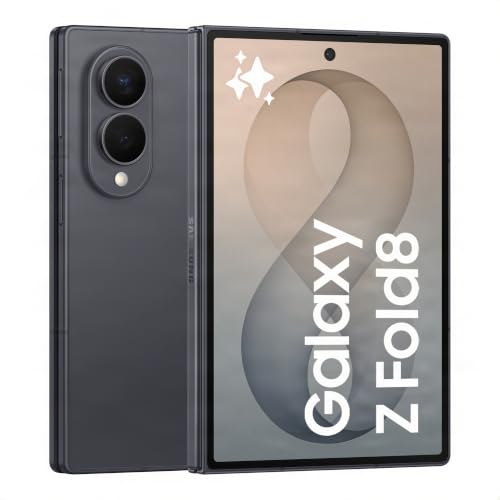
See Galaxy Z Fold8 on Amazon UK
Check today's price & availability on Amazon UK
Galaxy Z Fold8 vs Z Fold 8 Ultra: Two Visions of the Fold
It is very easy to look at these names and assume the Ultra is merely the Wide with extra bits. That would miss the point. These are two different answers to the same question: what should a phone become when you open it?
The Galaxy Z Fold8 is a 7.6-inch 4:3 device with a 5.4-inch, unusually broad cover screen. Folded, it is only 123.9mm tall, but it is 81.9mm wide. That makes it look less like a conventional smartphone and more like a thick, compact notebook or a business-card case with serious computing ambitions. Open it and the goal is clear: more horizontal space for two apps, wider browser pages, video and actual work.
The Galaxy Z Fold 8 Ultra goes in the other direction. Its 6.5-inch cover display is tall and phone-like, while the 8-inch internal OLED opens into a larger portrait-oriented canvas. It is the evolution of the tall Galaxy Fold formula, rather than a clean-sheet rethink. Crucially, it also brings the headline-grabbing 200MP main camera, 50MP ultrawide and dedicated 10MP 3x telephoto. The Wide makes do with two 50MP rear cameras and skips optical zoom altogether.
There is a neat logic to the £200 difference. At £1,699 for the 256GB Galaxy Z Fold8 and £1,899 for the 256GB Galaxy Z Fold 8 Ultra, Samsung is asking you to decide whether more screen, a traditional phone shape and the superior camera package matter more than the Wide's distinctly more practical folded height. Neither choice is obviously wrong. That is rather the good news.
The short version
Choose the Galaxy Z Fold8 if you want the foldable screen to feel like a small tablet and you care about a short, pocket-friendly device. Choose the Galaxy Z Fold 8 Ultra if cameras, a conventional outer screen and the biggest possible inner display are worth £200 and a little extra weight.
Spec Sheet Showdown: Every Important Number Side by Side
Specifications do not tell the whole story with foldables, because a millimetre in the wrong direction can make a device irritating every time you put it in a pocket. Still, the numbers explain exactly why these two phones will suit different people.
Both use OLED displays with a 1–120Hz adaptive refresh rate and HDR10+ certification. Both have the same Snapdragon 8 Elite Gen 5 for Galaxy chip, fast LPDDR5X memory, UFS 4.0 storage, Wi-Fi 7, Bluetooth 6.0, UWB, NFC, DeX, stereo speakers and side-mounted fingerprint readers. The fundamentals are remarkably even. The split appears in physical proportions, camera hardware, display size and battery capacity.
| Feature | Galaxy Z Fold8 | Galaxy Z Fold 8 Ultra |
|---|---|---|
| UK price, 256GB | £1,699 | £1,899 |
| Inner display | 7.6-inch OLED, 4:3, 403ppi | 8-inch LTPO OLED |
| Cover display | 5.4-inch OLED, 4.7:3, 432ppi | 6.5-inch LTPO OLED |
| Refresh rate / HDR | 1–120Hz, HDR10+ | 1–120Hz, HDR10+ |
| Peak brightness | Up to 2,600 nits | Up to 3,600 nits inner display |
| Folded dimensions | 123.9 × 81.9 × 9.7mm | 158.4 × 72.8 × 8.9mm |
| Unfolded dimensions | 123.9 × 161.4 × 4.5mm | 158.4 × 143.2 × 4.5mm |
| Weight | 201g | About 210g |
| Rear cameras | 50MP main + 50MP ultrawide | 200MP main + 50MP ultrawide + 10MP 3x telephoto |
| Front cameras | Two 10MP cameras | Two 10MP cameras |
| Battery | 4,800mAh | 5,000mAh |
| Wired charging | 45W | 45W |
| Water and dust rating | IP48 | IP48 |
| Buy | Check price | Check price |
There is no performance-class divide hiding in the storage options. Both models are offered with 256GB, 512GB or 1TB of UFS 4.0 storage, alongside 12GB or 16GB of LPDDR5X RAM. Neither has microSD expansion, so buy storage for the photos, downloaded media and games you genuinely keep.
The numbers tell a revealing story: the Wide is shorter and broader, whilst the Ultra is taller, narrower and slightly thinner when closed.
Screen Shape Changes Everything: 4:3 Wide vs 8-Inch Ultra
The display argument is not really about 7.6 inches versus 8 inches. A 0.4-inch diagonal gap sounds minor, and on paper it is. The important bit is the shape.
The Galaxy Z Fold8's 4:3 inner panel is a proper landscape-first workspace. It is near enough to a small tablet's proportions that familiar tablet jobs make immediate sense: putting a document beside a browser, keeping a chat open next to a calendar, or using a spreadsheet without every column becoming a tiny suggestion of a column. With a traditional tall foldable, two apps side by side often feel like two compromised phone windows. The Wide is designed to make them feel more like two narrow desktop panes.
Video is another quiet win. Much mainstream video is landscape, so a broad inner screen uses its space naturally. You still need to accept the shape of the material you are watching — no screen magically eliminates black bars for every film and television programme — but the Wide's basic orientation suits horizontal content without constantly asking you to rotate the device and rethink your grip.
Browser pages should also feel less like enlarged phone pages. Wider layouts have room for more of a site's desktop structure, and web-based tools tend to breathe better. Anyone who has wrestled with a travel booking site, a cloud spreadsheet or a particularly stubborn work portal on a narrow phone will understand the appeal. It is a boring use case. It is also a real one.
The Galaxy Z Fold 8 Ultra's 8-inch screen is not inferior; it is simply a different tool. Its taller format suits reading long articles, scrolling social feeds, editing a vertical image and working through a document from top to bottom. It also gives you a larger overall canvas. If you regularly read ebooks, review portrait photos or use an unfolded phone as an enormous version of a normal handset, the Ultra's familiar geometry will feel immediately intuitive.
Samsung's crease work matters here as well. Both models brought the most significant display improvement in the Fold line's history, with markedly reduced crease visibility. The Wide's crease had been described as matching the Oppo Find N6's reduced-crease appearance, while the Ultra uses dual-layer Ultra-Thin Glass with a laser-drilled metal support plate. In plain English: the centre line should be less of a visual and tactile distraction than it was on older folds. Thank goodness. We have all pretended not to notice a foldable crease at least once.
Wide: the multitasking shape
The 4:3 7.6-inch panel gives split-screen apps a more natural, desktop-like proportion. It is the better fit for spreadsheets, browser work and side-by-side reference material.
Ultra: the reading shape
The taller 8-inch canvas lends itself to long documents, portrait apps and vertical scrolling. It is closer to the large-phone experience Fold buyers already know.
Ultra: the brightness advantage
The Ultra's inner panel reaches up to 3,600 nits, against up to 2,600 nits on the Wide. That is a material advantage for bright outdoor viewing.
Both: adaptive smoothness
Both OLED display systems run from 1Hz to 120Hz and support HDR10+, so neither side forces a compromise on scrolling fluidity or HDR compatibility.
Do not shop diagonals alone
If your current phone life is mostly vertical scrolling, messages and reading, the Ultra's taller displays will feel normal from minute one. If you bought a fold because you want a usable little tablet, the Wide's 4:3 screen is the more convincing reason to make the leap.
Pocketability and Portability: Which Actually Fits Your Life?
The Wide is 34.5mm shorter when folded. That one number is the whole story in miniature. The Galaxy Z Fold8 measures 123.9mm tall; the Ultra measures 158.4mm. The Wide is not a little phone exactly — its 81.9mm width and 9.7mm thickness make that obvious — but it occupies a completely different sort of pocket.
For jacket pockets, bags, compact cross-body cases and front trouser pockets, length is often what turns an expensive phone from "I barely notice it" into "yes, that is definitely there". The Wide's compact height is its strongest real-world argument. It is 34.5mm shorter than the Ultra whilst weighing 9g less at 201g. That difference may not sound dramatic from a product page; it is much harder to ignore when you carry a phone all day.
The trade-off is width. At 81.9mm wide closed, the Wide is broader than the Ultra's 72.8mm. If you have smaller hands or prefer typing one-handed, width is never an abstract concept. The Wide's 5.4-inch cover display uses a very broad 4.7:3 ratio, which can be more comfortable for compact tasks because it is not a narrow, elongated strip. Yet the Ultra's 6.5-inch outer display is more like a conventional phone, and its narrower chassis makes it easier to wrap your fingers around.
The Ultra is the cleaner choice if you want one outer screen that behaves like your current slab flagship. At 158.4mm tall and 72.8mm wide, it is built around that familiar long-phone silhouette. It is actually thinner when folded at 8.9mm versus the Wide's 9.7mm, although it is still a folded device rather than a wafer-thin rectangle. No amount of marketing poetry changes the physics of two screens and a hinge.
The Galaxy Z Fold8 trades height for width, making it radically shorter in a pocket than the conventional tall-fold Ultra.
Camera Clash: Galaxy Z Fold 8 Ultra Goes Big
This category is much less nuanced than the display debate. The Galaxy Z Fold 8 Ultra is the camera phone. The Galaxy Z Fold8 has a competent-looking dual-camera setup, but it is not trying to compete with the Ultra's flexibility.
On the Wide, you get a 50MP f/1.8 main camera with optical image stabilisation and a 50MP f/1.9 ultrawide. That is a sensible, high-resolution pairing for everyday photography. A 50MP ultrawide is especially welcome on paper because ultrawide cameras have too often been treated as the cheap seat in smartphone camera systems. The Wide also has two 10MP f/2.2 front cameras and supports 4K at 60fps from all cameras, with 8K at 30fps available on the primary and ultrawide cameras.
What it does not have is a telephoto camera. For distant subjects, portraits that benefit from a longer focal length, children on a sports pitch, stage performances or travel shots where you cannot physically move closer, that is a meaningful omission. Digital crop can be useful. It is not the same thing as a dedicated 3x optical camera.
The Ultra adds precisely that: a 10MP telephoto with 3x optical zoom. It also carries the same 50MP f/1.9 ultrawide specification, two 10MP f/2.2 front cameras and the same 4K 60fps / 8K 30fps video capabilities. The headline, however, is its 200MP main camera on a 1/1.3-inch sensor, matching the Galaxy S26 Ultra's main-camera hardware direction.
That represents four times the headline resolution of the Wide's 50MP main camera. Resolution is not a magic quality number by itself — lens quality, processing, stabilisation and lighting remain stubbornly important — but the 200MP sensor is not merely a spec-sheet flourish. It gives the Ultra much more room for detailed stills and cropping, alongside a dedicated optical zoom path the Wide cannot offer.
The practical question is simple: how much do you use your phone as a camera? If it is your primary travel camera, family camera and going-out camera, the £200 premium suddenly looks fairly modest. If you mostly photograph receipts, pets at close range, food, the odd landscape and the occasional video clip, the Wide's two 50MP cameras may be all you need. Do not pay for a lens you will never point at anything beyond the garden fence.
Galaxy Z Fold8 cameras
See Galaxy Z Fold8 on Amazon UK
Check today's price & availability on Amazon UK
- 50MP main camera with f/1.8 aperture and OIS.
- 50MP f/1.9 ultrawide avoids an obvious low-resolution secondary camera.
- 4K at 60fps from all cameras and 8K at 30fps on primary and ultrawide.
- Simpler dual-camera system suits buyers who value the tablet shape more than zoom.
Galaxy Z Fold8 camera compromises
- No dedicated telephoto camera or 3x optical zoom.
- 50MP main camera cannot match the Ultra's 200MP headline resolution.
- Less compelling choice for travel, portraits and long-distance subjects.
- The £200 saving buys fewer photographic options, not merely a smaller screen.
For camera-first buyers, the Ultra has the rare sort of upgrade that changes what you can shoot: not just more pixels, but a third rear camera with 3x optical zoom. That matters more than most annual camera-spec inflation.
Performance and Software: No Chip-Based Winner Here
Sometimes a comparison needs a winner. Sometimes the correct answer is that there is no contest because the two products are genuinely the same where it counts. Performance is one of those categories.
Both the Galaxy Z Fold8 and Galaxy Z Fold 8 Ultra use Qualcomm's Snapdragon 8 Elite Gen 5 for Galaxy. This was the fastest mobile platform available at launch, and Samsung had not carved out a slower chip for the lower-priced Wide. That is excellent news, because the Wide's more unusual form factor deserves flagship-grade muscle behind it. Split-screen multitasking, DeX, high-refresh-rate UI and big-screen games are not side features on a foldable; they are much of the point.
Memory and storage are similarly aligned. The 256GB and 512GB variants pair 12GB of LPDDR5X RAM with UFS 4.0 storage, while the 1TB option has 16GB of LPDDR5X RAM. UFS 4.0 matters because it keeps large apps, games and media files moving briskly, whilst the RAM tiers should give both phones enough headroom for Samsung's multi-window workflow.
Android 17-based One UI 9.0 and Galaxy AI features arrive on the Ultra, and the Fold 8 family shares the underlying Samsung software environment. You also get Wi-Fi 7, Bluetooth 6.0, 5G, UWB, NFC, USB-C using USB 3.2 Gen 1, Samsung Pay, stereo speakers and DeX on both. If you need to connect a phone to a larger display and turn it into a lightweight work station, there is no reason to spend more solely for the Ultra.
Neither fold supports microSD. At these prices, that will annoy some people, especially photographers and heavy offline-download users. The sensible response is to take the storage tier seriously. The 256GB model may be fine for a messaging-and-streaming life; it is less relaxing if you plan to record 8K video, keep several enormous games installed and treat the device as your sole camera on holiday.
Performance verdict
Do not let "Ultra" convince you it is faster. The processor, 12GB/16GB RAM structure and UFS 4.0 storage options are shared. Pick between these phones for their screens, cameras and physical shape — not because you expect the Ultra to open apps more quickly.
Both Fold 8 models use the Snapdragon 8 Elite Gen 5 for Galaxy, so the more affordable Wide is not a performance compromise.
Battery and Charging: A Small Gap, Not a Guaranteed Runtime Gap
The Ultra has a 5,000mAh battery. The Wide has a 4,800mAh battery. That is a 200mAh difference, or roughly 4.2%, which is useful but hardly a knockout punch.
Capacity is only half of the battery story anyway. The Ultra also powers a larger 8-inch screen capable of up to 3,600 nits on its inner display. The Wide powers a slightly smaller 7.6-inch inner display with up to 2,600 nits. Screen shape, brightness, refresh rate, signal strength, camera use and your particular split-screen habits all influence endurance. A person who lives on the Ultra's outer 6.5-inch display might see a different result from someone who spends all day in two apps on the wide inner panel.
What is more encouraging is that both models support 45W wired charging. That is a genuine step up from the Galaxy Z Fold 7's 25W wired charging. Foldables have historically been treated as the premium gadgets that somehow still need a long sit by the plug. A 45W ceiling does not make charging a non-event, but it should make a lunchtime top-up much more useful.
The Ultra also supports 15W wireless charging and is Qi2 Ready. That makes it the tidier choice for buyers already invested in magnetic-compatible charging accessories and desk stands. Wireless charging remains a convenience feature rather than the fastest way to refill a 5,000mAh phone, but convenience is not nothing. The best charger is often the one sitting where you naturally put the phone down.
Galaxy Z Fold8: 4,800mAh
The Wide gives away only 200mAh, despite its smaller body and lower 201g weight. Its 7.6-inch inner panel remains a major power draw when used extensively.
Galaxy Z Fold 8 Ultra: 5,000mAh
The Ultra has the larger battery, but also the larger 8-inch display and a brighter 3,600-nit inner panel. Bigger capacity is an advantage, not a blanket runtime guarantee.
Both: 45W wired charging
Each Fold 8 supports 45W wired charging, moving beyond the Galaxy Z Fold 7's 25W ceiling.
Ultra: 15W Qi2 Ready wireless charging
The Ultra's confirmed 15W Qi2 Ready support gives it the clearer wireless-charging proposition of the pair.
Durability and Build: Both Are Better, Neither Is Invincible
Both phones carry an IP48 rating. The "8" water rating means protection for submersion up to 1.5 metres for 30 minutes. That is reassuring for rain, spills and the sort of kitchen mishap that begins with a glass of water and ends with everyone going silent. It does not mean either Fold has become a toy for the swimming pool.
The "4" part of IP48 is equally worth understanding. It means protection against solid objects larger than 1mm, not full dustproofing. Fine sand, grit and dust remain a concern for folding mechanisms. A foldable has moving parts and a flexible display. Treating it like a sealed rugged slab phone is a fine way to turn an expensive purchase into an expensive lesson.
The Wide's cover display uses Gorilla Glass Victus 2. Both models share the IP48 rating and the key hinge/display progress that has reduced crease visibility. On the Ultra, the dual-layer Ultra-Thin Glass structure and laser-drilled metal support plate are particularly central to that improvement. There is a difference between a crease being technically present and a crease constantly catching your eye; Samsung's work here aims squarely at the latter.
No S Pen support is expected on either device. For some long-time Fold fans, that will be the lingering limitation. A broad 4:3 display practically invites quick sketching, markup and handwritten notes, so the absence lands especially hard on the Wide. The Ultra is no different, but its camera-first positioning makes that omission slightly easier to mentally file away.
A sensible foldable-care rule
IP48 is good protection, not a licence to ignore sand, grit or a dirty pocket. If you spend lots of time at the beach, on building sites or outdoors in dusty conditions, a protective case and a little hinge awareness are sensible rather than fussy.
Both Fold 8 designs combine IP48 protection with major crease improvements, but a folding hinge still deserves more care than a sealed slab phone.
Value and Price: What Does the Extra £200 Actually Buy?
The base Galaxy Z Fold8 costs £1,699 in the UK. The Galaxy Z Fold 8 Ultra begins at £1,899. This is not a cheap-versus-expensive comparison. It is a very expensive-versus-even-more-expensive comparison, so it is worth being brutally clear about where the extra £200 goes.
With the Ultra, you get a bigger 8-inch inner display, a much larger 6.5-inch cover display, up to 3,600 nits inner brightness, a 5,000mAh battery, a confirmed 15W Qi2 Ready wireless-charging setup, a 200MP main camera and a dedicated 10MP 3x telephoto. You also get the conventional tall Fold experience that many people will find easier to use as their only phone when it is closed.
With the Wide, you save £200, drop roughly 9g, and gain the more radical 4:3 tablet format plus a folded height that is 34.5mm shorter. That is not "the cheaper version" in the usual sense. It is the more specialised device, and for spreadsheet users, frequent split-screen multitaskers and anyone fed up with giant phones poking out of a pocket, it may be the superior design even if money is no object.
The wrong way to make this decision is to ask which model has the biggest numbers. That is plainly the Ultra. The right way is to ask what job your foldable needs to do on a Tuesday afternoon. If it needs to replace a conventional smartphone and a serious camera, Ultra. If it needs to make documents, video and two-app work feel genuinely tablet-like without carrying a tall 158.4mm device, Wide.
Galaxy Z Fold8
256GB base model. The value choice for buyers who want Samsung's flagship chip and an unconventional 4:3 foldable screen.
Galaxy Z Fold 8 Ultra
256GB base model. The £200 premium buys the 200MP main camera, 3x telephoto, larger displays and 5,000mAh battery.
Fold 8 Range vs the Closest Reference Points
Samsung's new pair makes more sense when set against the limited reference points that matter. The Galaxy Z Fold 7 is important because both Fold 8 models move to 45W wired charging from its 25W figure, whilst retaining its IP48 dust and water rating. Oppo's Find N6 is relevant because the Wide's reduced crease visibility had been put in the same conversation. And the Galaxy S26 Ultra matters because the Fold 8 Ultra's 200MP main camera follows that flagship-camera direction.
These are not direct substitute-for-substitute comparisons. They are context. The Fold 8 Wide's proposition is not "cheaper Fold 8 Ultra"; it is a different shape entirely. The Ultra is the model that borrows more directly from Samsung's Ultra camera ambitions, whilst both Fold 8 models address a long-standing charging frustration.
| Reference feature | Galaxy Z Fold8 | Galaxy Z Fold 8 Ultra | Relevant rival / predecessor |
|---|---|---|---|
| Wired charging | 45W | 45W | Galaxy Z Fold 7: 25W |
| Dust and water rating | IP48 | IP48 | Galaxy Z Fold 7: IP48 |
| Main camera resolution | 50MP | 200MP | Galaxy S26 Ultra: 200MP |
| Crease comparison | Reduced visibility | Reduced visibility | Oppo Find N6: matching reduced-crease visibility reference for Wide |
The Ultra follows Samsung's Galaxy S26 Ultra camera ambition, whilst the Wide's standout rival is really the conventional tall-fold form factor itself.
Best For: The Right Fold 8 Buyer at a Glance
There is no universal Fold 8 winner, and pretending otherwise would make this decision less useful. The two phones reward different habits. Start with your most frequent use rather than the occasional fantasy use. Nearly everyone imagines editing a film on a foldable. Far fewer people actually do it.
Galaxy Z Fold8
Shop Galaxy Z Fold8 on Amazon UK
Check today's price & availability on Amazon UK
At £1,699, it is the lower-priced route to the same Snapdragon 8 Elite Gen 5 for Galaxy chip, 45W charging, IP48 rating and Samsung foldable software. You give up camera reach, not raw speed.
Galaxy Z Fold 8 Ultra

See Galaxy Z Fold 8 Ultra on Amazon UK
Check today's price & availability on Amazon UK
For £1,899, the Ultra is the no-compromise camera and display choice: 200MP main sensor, 3x optical telephoto, 8-inch inner screen and 5,000mAh battery.
Galaxy Z Fold8
Its 7.6-inch 4:3 screen is the better fit for side-by-side apps, laptop-style web layouts, spreadsheets and landscape video. This is the one for people who will actually use the unfolded screen.
Galaxy Z Fold 8 Ultra
The 200MP main camera and 10MP 3x telephoto make it the obvious choice for travel, portraits and shots where getting physically closer is not an option.
Galaxy Z Fold8
At 123.9mm folded height, it is 34.5mm shorter and 9g lighter than the Ultra. It is still broad, but it is much easier to live with if tall phones annoy you.
Galaxy Z Fold 8 Ultra
The 6.5-inch cover display and 72.8mm folded width make the Ultra the natural pick for anyone who wants the closed device to behave most like a familiar flagship phone.
Galaxy Z Fold8 vs Z Fold 8 Ultra FAQs
The final choice is less about which Fold 8 has the biggest specification and more about whether your daily life is shaped around a camera, a conventional phone screen or a compact tablet.
Final Verdict: Pick the Shape You Will Use
Buy the Galaxy Z Fold8 if you want the more interesting foldable. Its 4:3, 7.6-inch inner display makes a much stronger case for a phone that becomes a tablet, and its 123.9mm folded height is genuinely distinctive. It is the better buy for split-screen multitasking, landscape media, productivity and buyers who dislike tall, heavy phones. At £1,699, it also saves £200 without sacrificing flagship performance, 45W charging or IP48 protection.
Buy the Galaxy Z Fold 8 Ultra if you want Samsung's most complete all-round flagship fold. Its 8-inch inner display, 6.5-inch cover display, 3,600-nit peak inner brightness, 5,000mAh battery and 200MP-plus-3x-zoom camera system make the extra £200 easy to justify for photographers and anyone replacing a conventional premium phone. It is the safer choice. The Wide is the more characterful one.
My advice? If you open a foldable to work in two apps or watch video, choose the Wide. If you mostly want a brilliant phone that occasionally unfolds into a giant screen — and you care about camera flexibility — choose the Ultra. Two very different folds. Happily, two very clear audiences.
- Galaxy Z Fold8View on Amazon
- Galaxy Z Fold 8 UltraBest For: The Right Fold 8 Buyer at a GlanceView on Amazon