
Best Nest Thermostat 4th Generation UK
The honest truth about why Google's flagship learning thermostat isn't coming to Britain — and the smarter alternatives I'd actually fit in my own home this year.
We link to the exact model on Amazon UK. Prices change often, so check the live price before you buy. As an Amazon Associate we earn from qualifying purchases.
The Nest Learning Thermostat 4th Gen launched in the US in late 2024 — but it won't be heading to UK homes.
A modern smart thermostat typically pays for itself within 18 months on a UK heating bill.
What's in this guide
- Why the 4th Gen isn't UK-bound
- The 6 best alternatives for 2026
- Full comparison table
- What the 4th Gen actually offers
- Real-world picks by use case
- Installation and C-wire myths
- FAQ — your top questions
- Final verdict and ratings
OpenTherm compatibility: support depends on the exact thermostat kit, boiler model, wiring and installer configuration. A boiler brand or the presence of two thermostat wires alone does not prove modulating OpenTherm operation; confirm both manuals or use a qualified heating engineer.
The 4th Gen UK Problem, Explained
Let's get the elephant out of the room first. When Google quietly unveiled the Nest Learning Thermostat 4th Generation, plenty of UK enthusiasts (myself included) immediately started refreshing the Google Store. But the listing never appeared on the UK site — and it won't.
There are three intertwined reasons for this. First, European Nest thermostats have historically relied on a small accessory called the Heatlink, which sits near your boiler and communicates wirelessly with the wall-mounted dial. The 4th Gen abandons that architecture entirely, connecting directly through its baseplate to a 24V HVAC system — the kind of low-voltage forced-air setup you find across North America, not the 230V combi or system boiler arrangements typical in British homes.
Second, there's the hot water question. UK Nest thermostats can switch your hot water cylinder on and off — vital if you've got a regular boiler with a tank in the airing cupboard. The 4th Gen drops that capability, because most US homes don't have it.
The bottom line: Even if you imported a 4th Gen Nest from the United States, it would not physically work with a typical UK boiler. There is no adapter, no firmware fix, and no Heatlink retrofit. It is hardware-incompatible.
Third, and most significant strategically: Google has formally said it is stepping away from new European thermostat hardware. The existing 3rd Generation and Nest Thermostat E remain on sale in the UK while stock lasts, but the development roadmap for "Nest 4th-gen capability" in Britain effectively belongs to other brands now. So this guide is reframed accordingly — we're looking at the best thermostats that deliver that flagship experience for UK households in 2026.
The Six Best Smart Thermostats for UK Homes
I've ranked these based on UK availability, installation friendliness on British boilers, ecosystem maturity, energy-saving performance, and what I'd genuinely recommend to a friend depending on their setup. Here's the shortlist.
1. tado° Smart Thermostat V3+ / tado° X — The All-Rounder

See tado° Smart Thermostat V3+ on Amazon UK
Check today's price & availability on Amazon UK
If you ask me to recommend a single smart thermostat to the average UK homeowner in 2026, tado° is my answer. The V3+ has been the quiet workhorse of the British smart heating scene for years, and the newer Matter-ready tado° X range builds on that foundation.
What makes it special is OpenTherm modulation. Rather than just switching your boiler on and off like a traditional thermostat, OpenTherm lets the thermostat tell the boiler to run at, say, 35% of its capacity — gently coasting up to your target temperature instead of slamming on full whack and overshooting. The energy savings tado° has documented sit in the range of 10–22%, depending on your home and habits. On a typical UK gas bill, that's genuinely meaningful money.
Add geofencing (it knows when you've left and turns the heat down automatically), open-window detection, multi-room TRV support, Apple HomeKit, Google Home and Alexa integration, and a DIY install that most people knock out in around 30 minutes, and you've got the closest thing to a "Nest-class" experience the UK actually has.
The tado° wireless smart thermostat is arguably the most refined UK-native option, with deep OpenTherm support.
2. Google Nest Learning Thermostat 3rd Generation — Still the Most Beautiful

See Google Nest Learning Thermostat 3rd Generation on Amazon UK
Check today's price & availability on Amazon UK
Launched back in 2015, the 3rd Gen Nest is now over a decade old, and yet it still looks more premium on a hallway wall than any rival. That brushed metal ring, the colour-shifting screen that fades to ambient white when you walk past — it's industrial design at its absolute best.
Functionally, it still does the "learning" thing brilliantly. You manually adjust the temperature for a week or so, and the thermostat builds a schedule around your habits. Pair that with a Heatlink for boiler control, hot water scheduling, and the Google Home app, and you have a tidy, capable system. It's not as efficient as tado° on OpenTherm-equipped boilers, and the Google Home app is still recovering from years of being neglected, but it remains a credible buy if you want the Nest aesthetic.
The 3rd Gen Nest is still sold via the Google Store UK and Amazon UK, but stock is finite. Google has not committed to a UK successor, so treat this as a "last of its kind" purchase.
3. Hive Active Heating — The "Just Works" Choice
See Hive Active Heating on Amazon UK
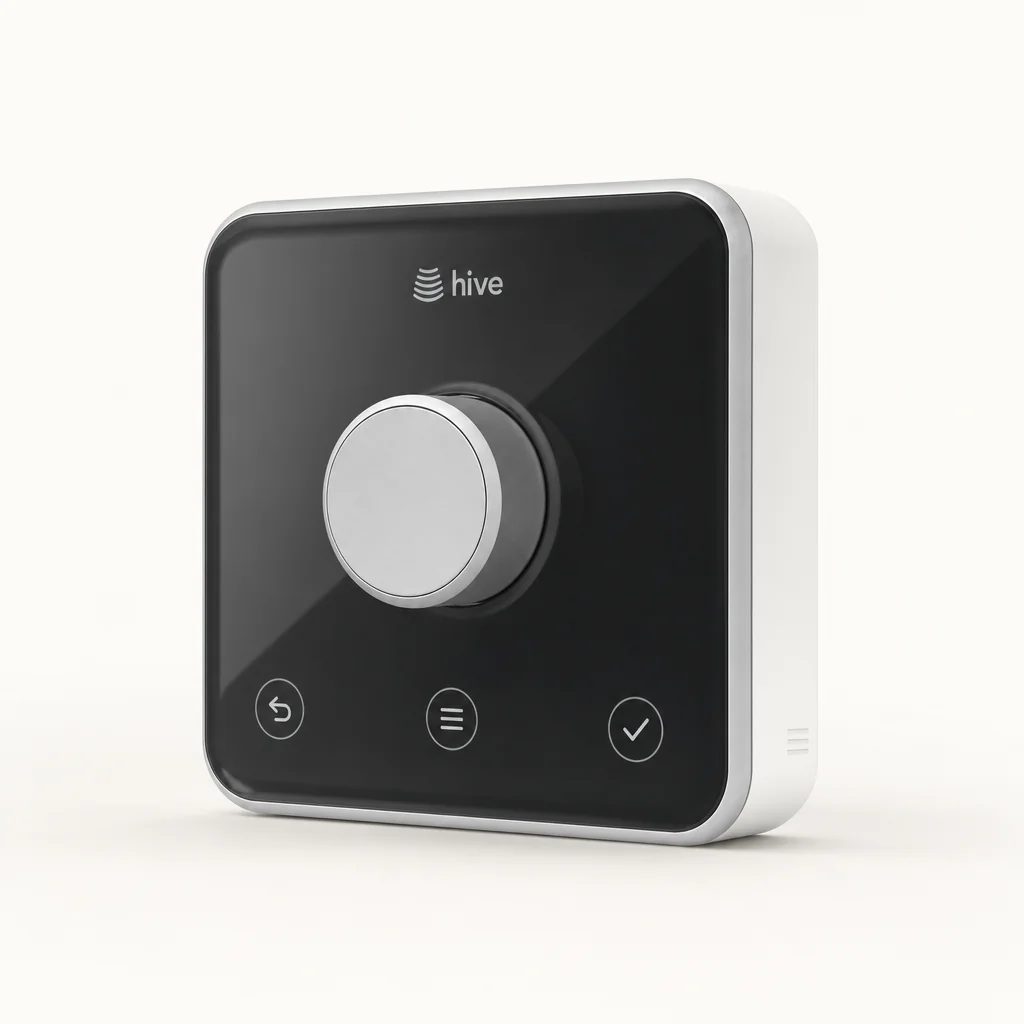
Hive, owned by British Gas, is the smart thermostat your dad has probably already got. And there's a reason it sells in such enormous volumes: it is utterly painless. No subscriptions. No premium features locked behind a paywall. No ecosystem politics. You buy the kit, the engineer fits it in under an hour, and you control your heating from your phone forever.
The newer Thermostat Mini is a cracking little unit for replacing an old wireless wall stat, and the app supports schedules, holiday mode, hot water control on regular boilers, and basic geolocation. It's not as energy-clever as tado°, and the design is functional rather than beautiful, but for sheer accessibility it's hard to beat.
4. Drayton Wiser Kit 1 — The Multi-Zone Bargain
See Drayton Wiser Kit 1 on Amazon UK
Check today's price & availability on Amazon UK
See Drayton Wiser Kit 1 on Amazon UK
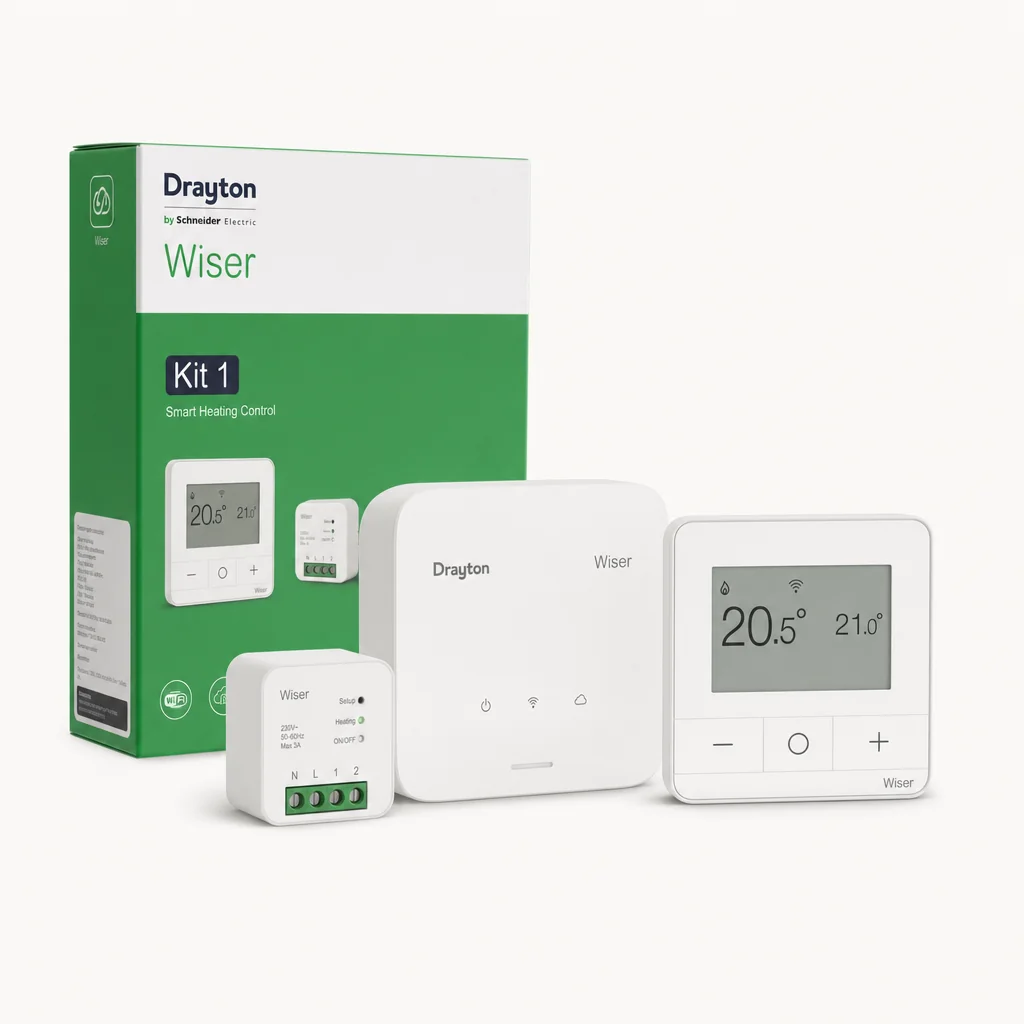
Drayton has been making heating controls in Britain for longer than most of us have been alive, and the Wiser system — built by parent company Schneider Electric — is the surprise hit of the past few years. The Kit 1 bundle is the entry point: one room thermostat, one heating hub, and the ability to add up to 16 smart TRVs as you go.
That last bit matters. Most UK homes have a single thermostat in the hallway controlling the entire house, which is why your bedroom is freezing while the living room is sweltering. Wiser turns each radiator into its own micro-zone. Combine that with full OpenTherm support, IFTTT, Alexa, Google Assistant and HomeKit, and the value is exceptional for the asking price.
5. Honeywell Home T6R — The Installer's Favourite

See Honeywell Home T6R on Amazon UK
Check today's price & availability on Amazon UK
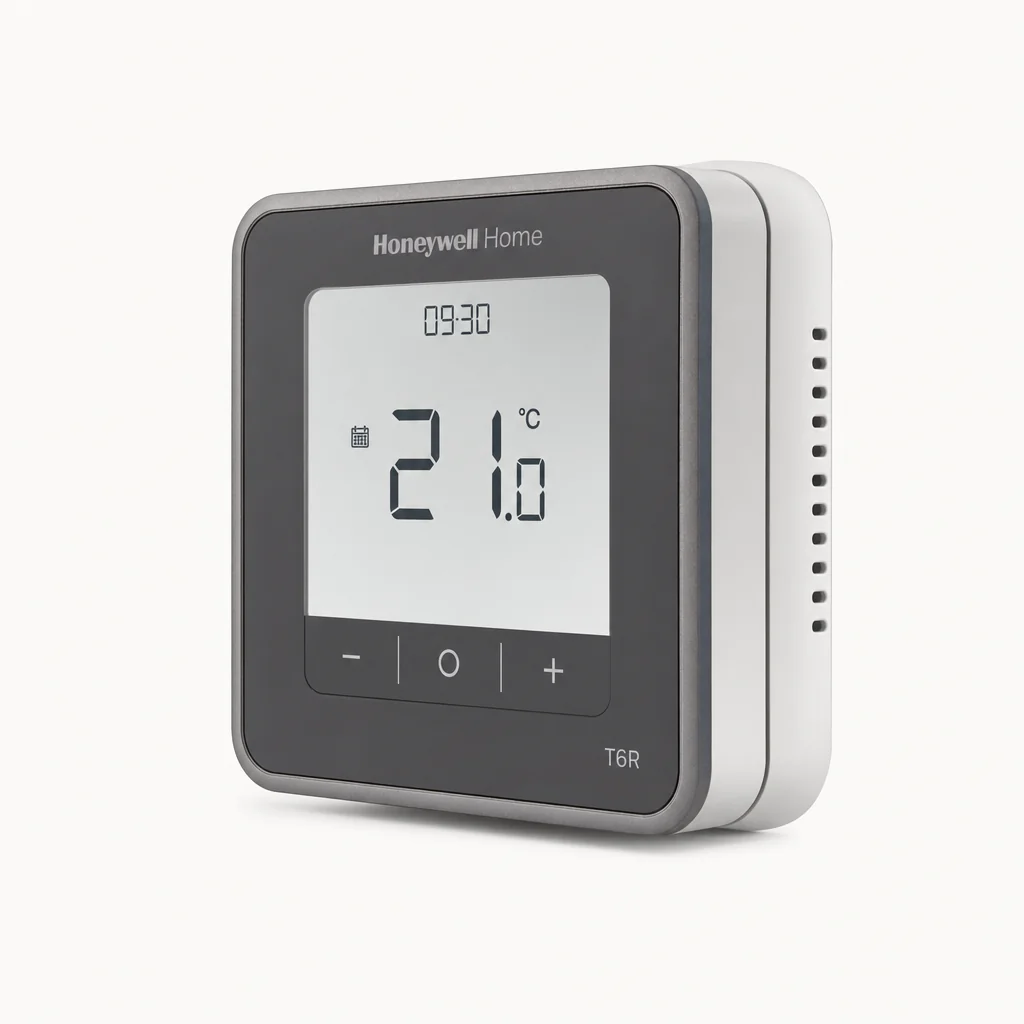
If you ask a Gas Safe engineer what they fit, half of them will say "Honeywell." The T6R is the professional's pick — boring in the best way. It works with virtually every UK heating system, including tricky two-zone setups, underfloor heating and unvented cylinders. It supports geofencing, scheduling, holiday mode, OpenTherm where the boiler allows, and integrates with Alexa, Google and IFTTT.
It doesn't "learn" the way a Nest does. It's not as pretty. But it is dependable in a way that more fashionable competitors sometimes aren't, and that counts for a lot when it's January and the heating must just work.
6. Google Nest Learning Thermostat 4th Generation — The Reference (Not Available UK)
See Google Nest Learning Thermostat 4th Generation on Amazon UK
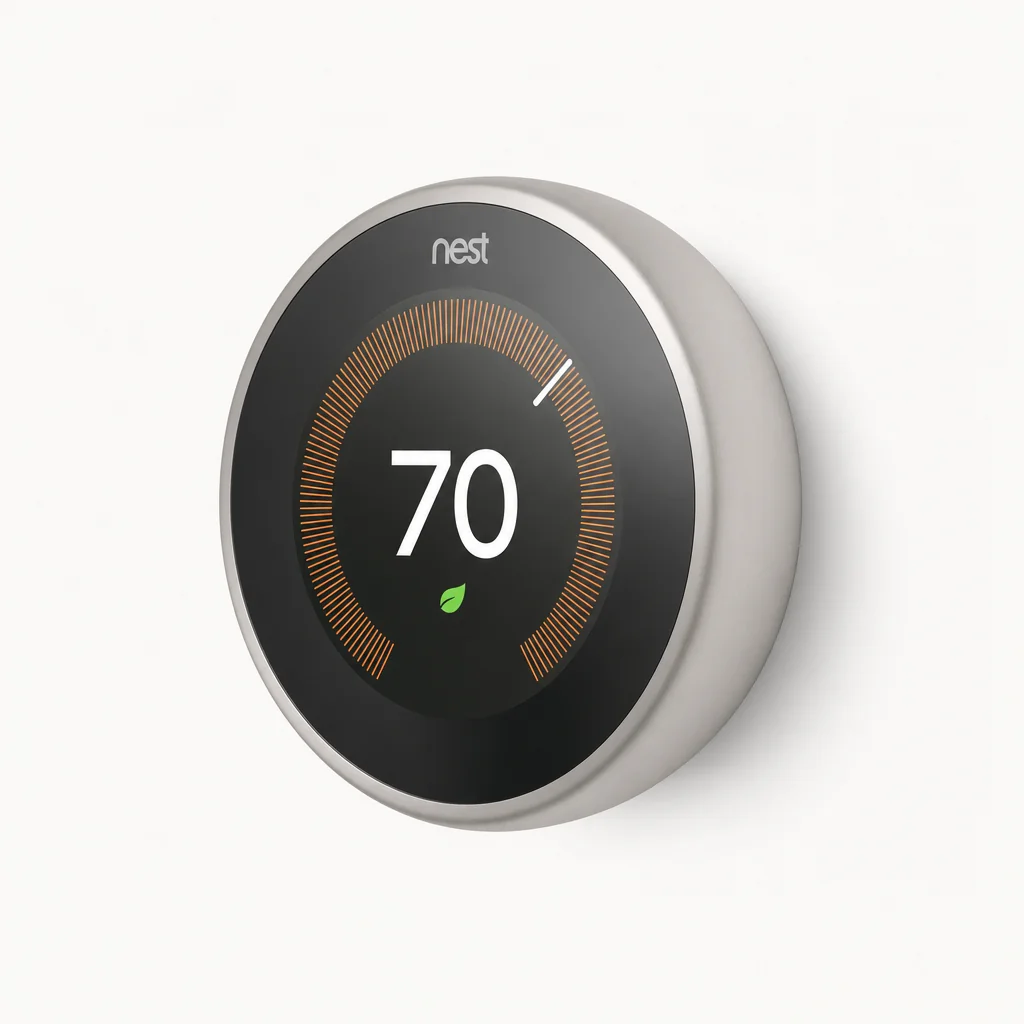
Included here so you know exactly what you're missing. This is the model that triggered the whole "is it coming to Britain?" question, and it's worth understanding because it sets the bar for where smart thermostats are going globally.
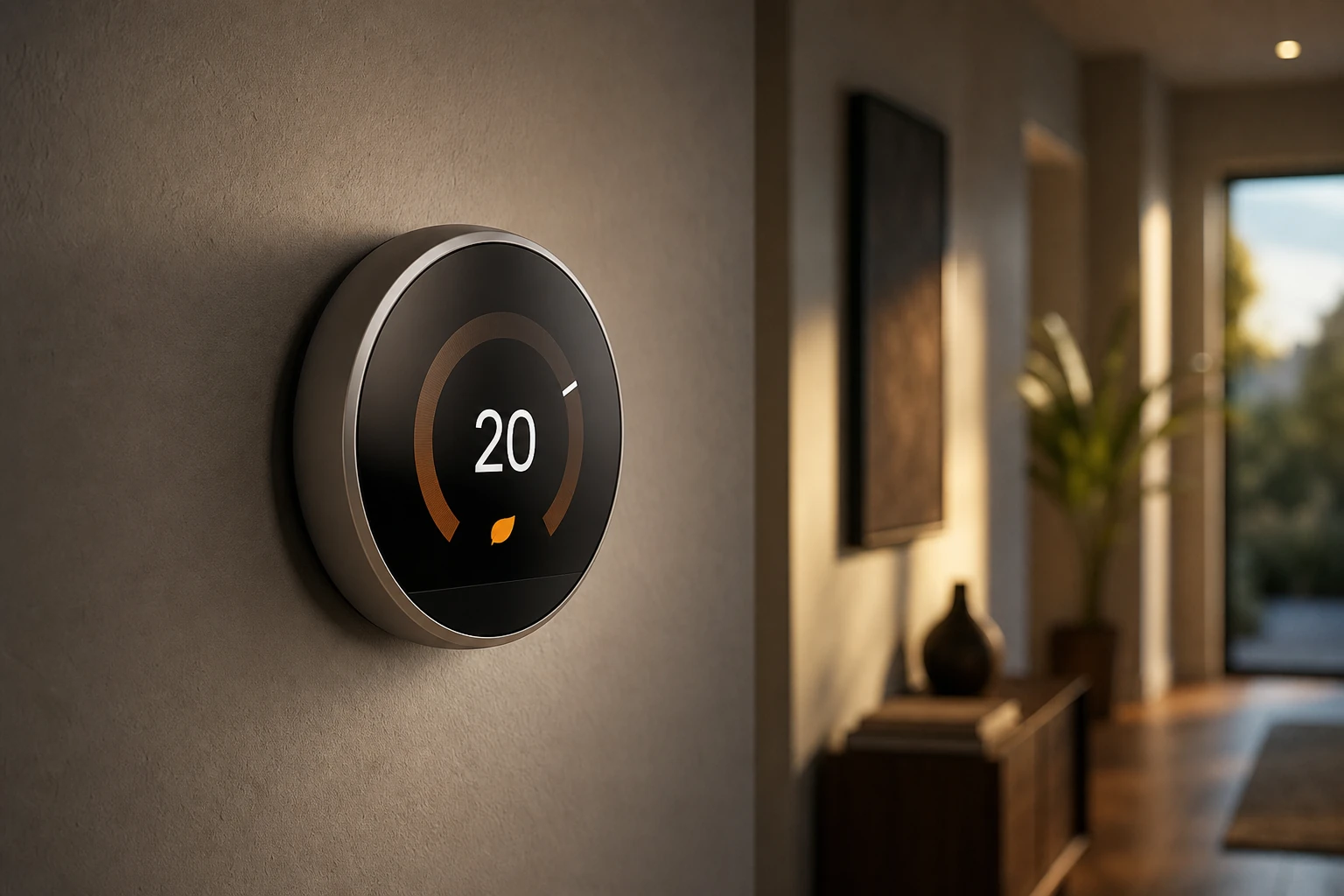
The 4th Gen Nest in its polished glass housing — the design benchmark for the category.
What the 4th Gen Actually Offers
The 4th Generation is the biggest redesign Nest has ever done. The dial is gone — well, sort of. The body now hides behind a domed crystal LCD with nearly all-screen glass, the bezel buried under layers of mirror and coloured film for that seamless, jewel-like finish. The display itself is 2.7 inches, around 60% larger than the previous generation, and it sits in a refined trio of polished finishes.
Under the glass, the 4th Gen is a properly modern device. It supports OpenTherm (the same modulating protocol tado° leans on), Matter and Thread for cross-ecosystem smart-home work, and it bundles motion, temperature, humidity and ambient light sensors. It ships with a Nest Temperature Sensor in the box — handy for rooms a long way from the main unit — alongside a trim plate and steel mounting plate.
Power is delivered through your HVAC system with a built-in rechargeable battery as backup, and there's a USB-C port on the back if you ever want to charge it off the wall. The battery itself is made from 100% recycled cobalt, and the bundle as a whole uses at least 48% recycled materials. It's ENERGY STAR certified and uses Nest's patented Power Sharing technology, meaning a C-wire is not required in most American homes — which is itself a quirk of US wiring conventions that doesn't directly translate to the UK.
On the HVAC side it controls heating in up to three stages (W1, W2, W3), cooling in three stages (Y1, Y2, Y3), heat pumps with up to two stages of auxiliary or emergency heat, plus fan, humidifier, dehumidifier and ventilation. That's seriously comprehensive — but it's also exactly the kind of forced-air, multi-stage equipment that almost no UK home owns.
Why the spec sheet matters anyway
Even though you can't buy a 4th Gen Nest in Britain, knowing what it offers tells you what to demand from a UK alternative. The headline features — OpenTherm modulation, Matter and Thread support, intelligent presence detection, a beautiful display, and a remote temperature sensor — are all available individually from the brands listed above. The trick is choosing the one that combines the right blend for your home.
Full UK Smart Thermostat Comparison
| Feature | Nest 4th Gen (US ref) | tado° V3+ / X | Nest Learning 3rd Gen UK | Drayton Wiser |
|---|---|---|---|---|
| UK availability | No | Yes | Yes (limited stock) | Yes |
| Hot water control | No | Yes | Yes | Yes |
| OpenTherm modulation | Yes | Yes | Limited | Yes |
| Matter / Thread | Yes | Yes (X range) | No | Partial |
| Geofencing | Yes | Yes | Yes | Yes |
| Multi-zone TRVs | Add-on | Yes | No | Up to 16 |
| Apple HomeKit | Via Matter | Yes | No | Yes |
| Learning schedule | Yes | Partial | Yes | Partial |
| Subscription required | No | Optional (Auto-Assist) | No | No |
| Buy | Check price | Check price |
Smart TRVs turn every radiator into a controllable zone — a feature the 3rd Gen Nest never offered in the UK.
Easy-to-reach manual control matters more than people expect - app-only thermostats frustrate visitors.
Energy Savings — Who Actually Cuts Your Bill?
This is the bit that justifies the upfront cost. Smart thermostats only really pay for themselves if they meaningfully reduce your gas consumption, and the differences between models are larger than the marketing suggests. Here's a rough comparison of typical real-world heating energy reductions based on published figures and field reports for UK homes.
The pattern is clear: thermostats that support full OpenTherm modulation and per-room control consistently deliver the biggest savings. A traditional on/off "bang-bang" controller, however clever the app, is fundamentally limited by the boiler's own behaviour. This is part of why I rate tado° and Wiser so highly — they exploit the boiler's capabilities rather than just toggling it.
The Honest Pros and Cons
Every smart thermostat involves trade-offs. Here's how I'd summarise the strengths and weaknesses of the category as it stands in the UK in 2026, with the 4th Gen Nest as the imaginary benchmark.
What UK Buyers Get Right Now
- Excellent OpenTherm-capable options (tado°, Wiser) with proven 10–22% savings
- Mature ecosystems with Apple HomeKit, Google Home and Alexa all well supported
- True multi-zone control via smart TRVs — a feature Nest 4th Gen actually lacks natively
- Hot water scheduling for regular and system boilers, retained across British brands
- DIY installation possible for confident owners; Gas Safe engineer still recommended for combi work
- Competitive pricing across multiple price tiers — entry-level kits exist for under £150
What We're Missing
- The 4th Gen Nest's domed glass display is genuinely a step beyond anything else on the UK market
- No UK device currently combines learning behaviour, OpenTherm and that level of design polish in one unit
- Google's wider hardware ecosystem (Nest Hub, Nest Aware, Pixel) is fractured for UK heating users
- Matter and Thread support remains inconsistent — fine on paper, patchy in practice
- Some premium features (tado° Auto-Assist) are behind a small monthly subscription
- British retrofit can require a Heatlink, gateway or hub depending on brand — not as clean as the US-style baseplate install
Real-World Picks by Use Case
The "best" thermostat depends entirely on your home and your priorities. Here's how I'd match buyer to product.
Buy tado° if…
You want maximum energy savings, OpenTherm modulation, and a clean Apple HomeKit / Google Home / Alexa experience. The default recommendation for most UK homes.
Buy Nest 3rd Gen if…
You care deeply about how the device looks on the wall and you live within the Google ecosystem. Beautiful, learning-capable, and still relevant — just don't expect a UK successor.
Buy Drayton Wiser if…
You want whole-home multi-zone control on a sensible budget. The ability to scale up with smart TRVs as funds allow is genuinely brilliant value.
Buy Hive if…
You hate fiddling with technology, are already a British Gas customer, or you want an installer to fit something and never think about it again. Brilliantly simple.
Buy Honeywell T6R if…
You have an unusual heating system, an underfloor zone, or your installer recommends it. The most universally compatible option on the list.
Skip the 4th Gen if…
You live in the UK. Full stop. It will not work with your boiler, it will not control your hot water, and Google will not be supporting it locally.
Choosing the right system depends on your boiler type, your existing wiring, and whether you want per-room control.
Key Features to Demand in 2026
If you're spending the money on a smart thermostat this year, here's what your shortlist absolutely must include. Anything missing more than two of these is starting to look outdated.
OpenTherm modulation
Lets your boiler ramp gently to the target temperature rather than firing flat-out and cycling. Worth up to 22% on a typical gas bill when properly configured.
Geofencing
Detects when the last person has left the house and automatically lowers the temperature, then warms things up again as you head home. The single biggest "set it and forget it" win.
Open-window detection
A sudden temperature drop triggers the heating to pause. Stops you literally heating the garden when the kids leave the patio doors open.
Matter and Thread support
The future of smart-home compatibility. Matter lets one device talk to Apple, Google and Amazon ecosystems simultaneously, while Thread provides a more reliable low-power mesh than Wi-Fi for TRVs.
Hot water control
Non-negotiable if you have a regular or system boiler with a cylinder. Set schedules, boost on demand, and avoid heating water you don't need.
Smart TRV compatibility
Per-radiator control transforms the way a UK home heats. Pay more for the right TRVs upfront and you'll save more every winter that follows.
Installation, C-Wires and UK Realities
One of the most frequently confused topics in this category is the "C-wire" question. American thermostat reviews obsess over it because US wiring conventions often leave older homes without a "common" wire to power the thermostat continuously. The 4th Gen Nest's patented Power Sharing technology specifically addresses this — clever, but largely irrelevant in Britain.
UK installations follow a different model. Your thermostat communicates with the boiler via a relay or a wireless receiver (Nest's Heatlink, Hive's Hub, tado°'s Extension Kit, Wiser's HeatHub). The receiver is wired in at the boiler end, and the thermostat itself usually runs on internal batteries or a small mains connection at the wall. This is actually more flexible than the US approach, because it lets you place the thermostat anywhere in the house without dragging cabling.
Should you DIY the install? If you're swapping a like-for-like wireless thermostat (battery-powered, no boiler wiring touched), most people manage it in 30 minutes following the app's setup video. If the install involves wiring at the boiler, replacing a programmer, or connecting to a hot water cylinder, you should hire a Gas Safe registered engineer. It's also worth checking whether the work affects your boiler warranty.
Final Ratings — How They Stack Up
Pulling everything together, here's how I'd score the top UK alternatives against the criteria that matter most.
Whichever route you choose, expect a noticeably more comfortable home — and a lower gas bill come spring.
Frequently Asked Questions
The Verdict
The Google Nest Learning Thermostat 4th Generation is a stunning piece of design, and on paper it's the thermostat any UK enthusiast would love to fit. But Google has explicitly stepped away from new European thermostat hardware, and the 4th Gen's architecture is fundamentally incompatible with British boilers regardless. Importing one isn't a solution; it's a guarantee of disappointment.
For 2026, my recommendation for the average UK homeowner is straightforward: buy a tado° V3+ or tado° X. It delivers the OpenTherm modulation, the multi-platform smart-home support, the geofencing and the documented energy savings that Nest aspires to — and it's built specifically for the kind of plumbing you actually own.
If multi-zone control matters more than design, choose the Drayton Wiser Kit 1. If you want the simplest possible experience, go for Hive Active Heating. And if you still desperately want that beautiful brushed-metal dial on the hallway wall while you can, the Nest Learning Thermostat 3rd Generation remains a credible — if increasingly nostalgic — choice.
Whichever path you take, the upgrade is genuinely worthwhile. A properly configured smart thermostat is one of the very few home-tech purchases that genuinely pays for itself, and in a winter where every kilowatt-hour counts, that's something worth getting right.
Some images in this article are illustrative scenes generated by AI for editorial context. Photos of named products are real product photography. The brands and models discussed are unaffiliated with the imagery.
 tado° Smart Thermostat V3+View on Amazon
- Drayton Wiser Kit 1View on Amazon
- Honeywell Home T6RView on Amazon