
Best Budget Tablets for Streaming and Reading in Bed
Affordable Fire and Android slates that earn their keep on the bedside table — no iPad money required.

A budget tablet is arguably at its best propped up against a pillow at 11pm.
See Amazon Fire Max 11 on Amazon UK
£229.99 · 23% offprice at 23 Aug, may change
I've spent a good while living with these tablets in exactly the way most people actually use them — not benchmarking them into the ground, but watching Netflix in bed, flicking through Kindle samples, and occasionally letting them gather crumbs on the kitchen worktop. The conclusions below are honest, warts and all. Some of these devices punch well above their price, and some have compromises you'll want to know about before parting with your cash.
What this guide covers
- Why budget tablets suit bedtime use
- The full Fire tablet lineup explained
- Detailed specs for each model
- Real-world battery and performance
- Fire OS vs proper Android
- Best Android alternatives
- Head-to-head comparison
- Pros, cons and ratings
- Who should buy what
- FAQs and final verdict
Why a Budget Tablet Makes Perfect Sense in Bed
Here's the thing about using a tablet in bed: the use case is forgiving. You're not editing 4K video or running demanding games. You're streaming compressed video, turning pages in a reading app, and maybe scrolling through a browser. None of that requires a flagship chipset or an OLED panel. What it requires is a decent-enough screen, comfortable ergonomics, speakers that don't sound like a tin can, and battery life that survives a binge without you scrabbling for the charger.
That's precisely the brief that budget tablets are built to. And whilst you'll hear plenty of people sneer at cheap slates, the reality is that for relaxed, horizontal, half-asleep media consumption, the difference between a £60 tablet and a £600 one is far smaller than the price gap suggests. The expensive one will be snappier and prettier, but the cheap one will still get you through that episode of whatever you're currently hooked on.
Pro Tip
If reading is your primary night-time activity, prioritise a smaller, lighter tablet over a big-screen one. An 8-inch model is genuinely more comfortable to hold one-handed for an hour than an 11-inch slab, which gets heavy fast when you're lying down.
The Fire Tablet Lineup, Decoded
Amazon's Fire tablets dominate the budget end for a simple reason: they're cheap, they're everywhere, and they're tuned specifically for media consumption from Amazon's own ecosystem. The lineup splits cleanly into four tiers, and understanding where each one sits is half the battle.
Fire 7 — The Pocket-Money Option
The cheapest tablet Amazon makes, with a 7-inch 1024×600 display (171ppi), a 2.0GHz quad-core processor and 2GB of RAM. Its 16GB or 32GB of internal storage takes a microSD card, which Amazon specifies up to 1TB, and it added USB-C charging in the 2022 update. Amazon claims the processor is around 30% faster than the previous generation.
Fire HD 8 (2024) — The Sweet Spot for Bedtime
An 8-inch HD display, a hexa-core MediaTek MT8169A processor, and a choice of 3GB or 4GB of RAM with 32GB or 64GB of storage. It weighs 337g and adopts a grippier, granular plastic finish in the 2024 model.
Fire HD 10 — The Big-Screen Streamer
A 10.1-inch 1080p (1920×1200) display, an octa-core processor, 3GB of RAM and 32GB or 64GB of storage. It weighs 433g, supports dual-band Wi-Fi and hands-free Alexa, and is built with recyclable materials carrying a Climate Pledge Friendly badge.
Fire Max 11 (2023, 13th Gen) — The Premium Pick
An 11-inch 2000×1200 display, a 2.2GHz octa-core processor, 4GB of RAM, and 64GB or 128GB of storage. It steps up to a partially recycled aluminium rear, Wi-Fi 6, Dolby Atmos-tuned dual speakers, fingerprint unlock on the power button, and optional keyboard and stylus support.
The Fire range scales from a 7-inch reader all the way up to the 11-inch Fire Max 11.
See Amazon Fire Max 11 on Amazon UK
£229.99 · 23% offprice at 23 Aug, may change
Fire HD 8 (2024): The Specs at a Glance
See Fire HD 8 (2024) on Amazon UK
£84.99 · 32% offprice at 23 Aug, may change
The Fire HD 8 is the model I'd point most people towards for bedtime use, so it's worth laying out exactly what you get. It hits a lovely balance between screen size, weight and price, and the 2024 refresh sharpened up the design considerably.
The MediaTek MT8169A inside pairs six Arm Cortex-A55 cores running at 2.0GHz with an Arm Mali-G52 GPU. That's not a barnstorming chip — these are efficiency-focused cores rather than performance ones — but for streaming and reading it's perfectly adequate. The granular plastic finish on the 2024 model is a genuine improvement, too; it's grippier in the hand, which matters when you're holding it loosely above your face in bed and trying not to drop it on your nose.
The Fire HD 8 comes in a refined range of colours and dimensions that make it easy to slot into a one-handed grip — at 137mm high and 201mm wide, it's compact enough to feel more like a chunky paperback than a laptop substitute.
Performance and Battery: The Honest Numbers
Let's be candid about where these tablets sit on raw performance, because it's the area where budget compromises are most visible. Geekbench 6 results for the Fire HD 8 land at roughly 265 single-core and 900 multi-core. Those are modest figures, and you'll feel them if you try to multitask aggressively or load a heavy webpage. For the gentle pace of bedtime use, though, they're fine.
Step up to the Fire HD 10 and things improve. Recent Geekbench 6 results put it at roughly 690 single-core and 1,700 multi-core — a meaningful jump that translates into snappier app launches and smoother scrolling. Here's how the budget field stacks up:
See Amazon Fire HD 10 on Amazon UK
£99.99 · 33% offprice at 23 Aug, may change
The headline takeaway is that the Lenovo Idea Tab Pro comfortably outperforms the Fire tablets on raw benchmarks, scoring 1,449 single-core and 4,609 multi-core. The Redmi Pad 2 Pro also benchmarks higher than the Fire HD 8. So if pure horsepower is your concern, the proper Android tablets win. But — and this is the crucial caveat — benchmark numbers don't tell you how it feels to watch a film in bed, and on that measure the Fire tablets hold up far better than their scores suggest.
Battery is where the Fire range genuinely shines. In streaming tests, the Fire HD 8 ran for over eight hours of continuous YouTube playback before dropping to 2%. Real-world use is even more reassuring: after several days of occasional gaming, browsing and video, one Fire HD 8 still showed 27% remaining, and watching an entire film left it with 5–10% to spare. The Fire HD 10 is rated for a 13-hour battery life and the Fire Max 11 stretches to 14 hours. For context, an 8-inch Onn. tablet is rated up to 15 hours, and a TCL Nxtpaper 11 dropped just 18% over three hours of 1080p YouTube at full brightness — implying around 15 hours of playback.
What This Means for You
Battery anxiety simply isn't a thing with these tablets. Even the worst-case streaming figures comfortably exceed a typical evening's viewing, so you can charge once every few days rather than nightly. That's a genuine convenience for a bedside device.
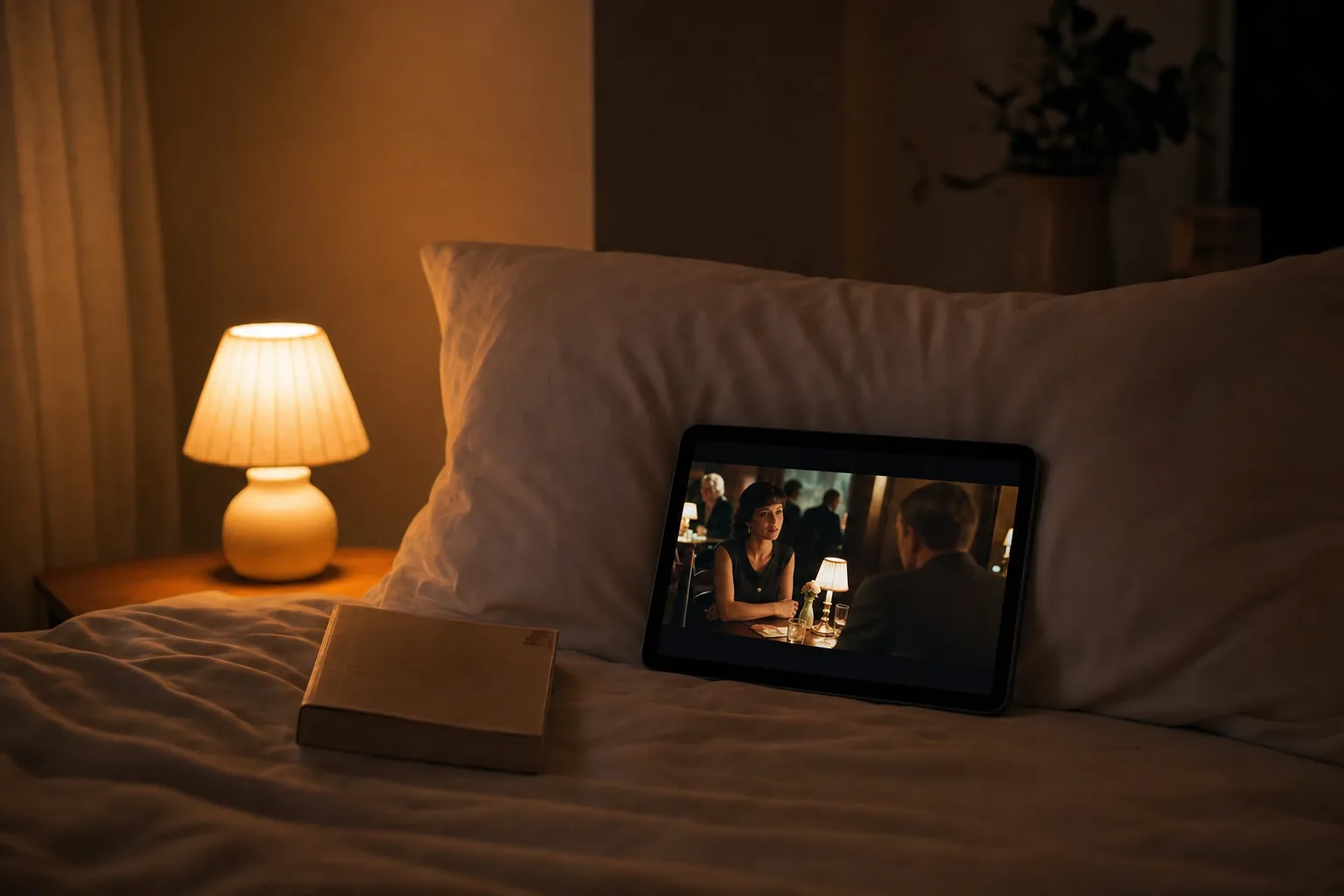
Streaming battery life is the budget tablet's quiet superpower — a full evening's binge barely makes a dent.
Fire OS vs Proper Android: The Big Decision
This is the single most important thing to understand before buying a Fire tablet, and it's the area where I see the most buyer's remorse. Fire tablets run Fire OS, which is built on Android but heavily reskinned around Amazon's services. There's no Google Play Store out of the box — you get the Amazon Appstore instead, which has most of the big apps but is patchier for niche ones. The interface nudges you constantly towards Prime Video, Audible, the Kindle store and Amazon's other properties.
For someone deeply embedded in the Amazon ecosystem — Prime subscriber, Kindle reader, Audible listener — Fire OS is honestly rather pleasant. Everything you want is one tap away. But if you live in Google's world, or you want a specific banking or streaming app that isn't in the Amazon Appstore, the friction adds up. This is precisely why proper Android tablets exist as alternatives, and why they're worth the premium for some people.
Fire OS Strengths
- Seamless with Prime Video, Kindle and Audible
- Hands-free Alexa built in, right across the range
- Dead simple, clutter-free for casual users
- Excellent value tied to frequent Amazon sales
- Parental controls and Kids editions are genuinely good
Fire OS Limitations
- No Google Play Store out of the box
- Amazon Appstore lacks some niche apps
- Persistent nudging towards Amazon services
- Slower chips than equivalently priced Android rivals
- Lock-screen adverts on standard models
The Android Alternatives Worth a Look
If Fire OS doesn't appeal, the budget Android tablet market has matured nicely, and these are the names I'd steer you towards. They cost more than Fire tablets, but you get the full Google Play Store and, generally, snappier performance.
OnePlus Pad Go 2
Frequently cited as one of the best budget Android tablets going, this is the pick for people who want a clean, full-fat Android experience without flagship pricing. The 8GB/128GB Wi-Fi configuration is the natural sweet spot.
Honor MagicPad 4
Remarkably thin and light, with a massive battery that comfortably lasts well beyond a full day. If endurance and portability are your priorities, this one's hard to beat.
Redmi Pad 2
Xiaomi's budget line offers genuine value, with the Redmi Pad 2 listed at £169 RRP in the UK and frequently discounted to around £149. The Redmi Pad 2 Pro variant also benchmarks ahead of the Fire HD 8, making it a strong cross-shop for performance-minded buyers.
If you specifically want a bigger-screen Android tablet with a more premium feel, the Samsung Galaxy Tab S10 FE sits just above this budget tier in the 8GB/128GB Wi-Fi configuration — a sensible step up if your wallet stretches that far.

Proper Android tablets like the OnePlus Pad Go 2 trade higher prices for the full Google Play experience.
The Stretch Option: the Standard iPad
Every tablet so far runs Fire OS or Android, and for most bedtime budgets that is the right place to look. But the standard 11-inch iPad comes up so often in this context that it deserves an honest answer rather than a polite omission — and the honest answer has two halves.
Bought new, it is not a budget tablet. Apple lists the 11-inch iPad with the A16 chip at £429 in the UK, against £299.99 for the Fire Max 11 at the time of writing. That is roughly forty per cent more, not the small top-up people often assume, and if your budget genuinely stops at the Fire range then the Fire HD 8 remains the better answer for reading in bed.
Where it gets interesting is refurbished. Amazon Renewed regularly lists the same A16 iPad, 128GB Wi-Fi, at around £329 — roughly thirty pounds more than a new Fire Max 11, and covered by Amazon's renewed guarantee. That is the version of "barely more than a Fire" that actually holds up, and it is the route I would point most people at.
The apps are the real argument
Kindle, Apple Books, Libby for library loans, Netflix, iPlayer and Disney+ all arrive on day one and stay updated. On Fire OS you are working around the Play Store's absence; on iPadOS the question never comes up.
An 11-inch Liquid Retina display
Text is noticeably crisper than anything in the Fire range, which matters more for reading than for streaming. Touch ID sits in the top button, so unlocking one-handed in the dark is straightforward.
No lock-screen adverts, ever
Apple charges more up front, but there is no ad-supported tier to pay your way out of, and software support runs for years rather than the Fire range's shorter horizon.
The catch worth knowing: an iPad is heavier than a Fire HD 8, and weight is the thing you notice when you are holding a tablet above your face at midnight. If your main use really is reading in bed rather than everything else as well, the lighter, cheaper Fire is not the compromise it looks like on paper.
Head-to-Head: Fire HD 8 vs the Field
Here's how the most popular bedtime-friendly Fire model stacks up against its bigger siblings and the obvious Google Play alternative. I've kept this to the facts that actually matter for streaming and reading.
| Feature | Fire HD 8 (2024) | Fire HD 10 | Fire Max 11 | Redmi Pad 2 |
|---|---|---|---|---|
| Display | 8" HD | 10.1" 1920×1200 | 11" 2000×1200 | 11" 2560×1600, 90Hz |
| Processor | Hexa-core MT8169A | Octa-core | Octa-core 2.2GHz | Octa-core |
| RAM | 3GB / 4GB | 3GB | 4GB | 4GB / 8GB |
| Storage | 32GB / 64GB | 32GB / 64GB | 64GB / 128GB | 128GB / 256GB |
| Expandable storage | microSD to 1TB | microSD to 1TB | microSD to 1TB | microSD |
| Weight | 337g | 433g | 490g | 510g |
| Battery life | Up to 13 hrs | Up to 13 hrs | Up to 14 hrs | 9,000mAh cell |
| Audio | Dual speakers | Dual speakers | Dolby Atmos dual speakers | Quad speakers, Dolby Atmos |
| Wi-Fi | Dual-band | Dual-band | Wi-Fi 6 | Dual-band |
| Ports | USB-C | USB-C | USB-C | USB-C |
| Hands-free Alexa | Yes | Yes | Yes | No |
| Google Play | No | No | No | Yes |
| Build | Granular plastic | Recyclable materials | Recycled aluminium | Aluminium |
| Geekbench multi | ~900 | ~1,700 | Not published | Not published |
| UK price | From £125 | From £150 | From £229 | £169 RRP |
| Buy | Check price |
What the table makes clear is the trade-off ladder. The Fire HD 8 is the lightest and most pocketable, which makes it the most comfortable pure reader. The Fire HD 10 nearly doubles your benchmark muscle and gives you a proper 1080p screen for streaming. The Fire Max 11 adds aluminium construction, Dolby Atmos audio and Wi-Fi 6 — turning it into something you could almost use as a light productivity device with the optional keyboard.
Our Verdict Rating — Fire HD 8 (2024)
I'm rating the Fire HD 8 here because it's the model that best matches this guide's brief: cheap, light, and brilliant for streaming and reading in bed. It won't win any benchmark shootouts, but as a bedtime companion it's hard to fault for the money.
Pros
- Light 337g body that's comfortable for one-handed reading
- Outstanding streaming battery — over 8 hours of continuous YouTube
- Grippier granular finish on the 2024 model
- 3GB or 4GB RAM options for a little extra headroom
- Superb value, especially during Amazon's frequent sales
Cons
- Modest Geekbench scores (265 single / 902 multi)
- Fire OS lacks the Google Play Store
- HD rather than full 1080p panel
- Android rivals like the Redmi Pad 2 Pro benchmark higher
Where Each Model Sits on Price
One of the Fire range's biggest draws is that it's genuinely affordable, and Amazon runs frequent discounts of typically 20–40% on these tablets a few times a year. Here's roughly how the lineup is priced.
Fire 7
The pocket-money entry point
Fire HD 8
Our bedtime pick — often discounted in Amazon sale events
Fire HD 10 Kids
Rugged kids edition
Fire Max 11
The premium 11-inch flagship
Prices on these tablets shift constantly, and Amazon's sale events can knock a third or more off the RRP.
Check the latest price and any current bundles on AmazonWho Should Buy Which?
The Bedtime Reader
Go for the Fire HD 8. At 337g it's the lightest of the practical options, comfortable to hold for an hour, and Kindle integration is seamless.
The Binge-Watcher
Choose the Fire HD 10. Its 1080p screen and stronger 1,701 multi-core score make it the better streaming canvas without breaking the bank.
The Light Multitasker
The Fire Max 11 is your pick, with Dolby Atmos audio, Wi-Fi 6, aluminium build and optional keyboard and stylus support.
The Google Loyalist
Skip Fire OS entirely. The OnePlus Pad Go 2 or Redmi Pad 2 give you the full Play Store for a modest premium, and the Pad 2 Pro variant benchmarks ahead of the Fire HD 8.
Frequently Asked Questions
The Final Verdict
If you want one tablet for streaming and reading in bed and you don't want to spend much, the Fire HD 8 (2024) is the one I'd reach for. It's light at 337g, the battery shrugs off an evening's binge with hours to spare, and the granular finish makes it pleasant to hold. Yes, its Geekbench scores of 265 single-core and 902 multi-core are modest, and Fire OS won't suit everyone — but for the gentle pace of bedtime media, none of that matters much.
Want more screen for films? The Fire HD 10 nearly doubles the multi-core performance to 1,701 and gives you a proper 1080p panel. Crave a more premium feel and Dolby Atmos sound? The Fire Max 11 delivers. And if Fire OS is a dealbreaker, the OnePlus Pad Go 2 and Redmi Pad 2 offer the full Google Play experience for a sensible premium. Whichever you choose, the key takeaway is that you genuinely don't need to spend iPad money to enjoy a film and a few chapters before lights out.
For relaxed bedtime streaming and reading, the right budget tablet does everything you need — and then some.