
Best 90W+ Fast Chargers for Motorola, OnePlus and Xiaomi Phones
The awkward truth about ultra-fast charging: the number on the plug matters, but the protocol behind it matters rather more.
A 100W charger is not automatically a 100W charger for your phone. That sounds needlessly philosophical for a little wall brick, I know, but it is the difference between a genuinely rapid top-up and a very expensive way to get ordinary USB-PD speeds. Motorola, OnePlus and Xiaomi each play by slightly different rules. Here are the chargers worth buying when you want the rules to work in your favour.
Why Your New Motorola, OnePlus or Xiaomi Phone Deserves a Better Charger
Phone charging used to be wonderfully simple. You bought a more powerful plug, used a decent cable, and your handset generally charged faster. In 2026, the basic principle still applies, but the detail has become a small jungle of proprietary handshakes, current limits and cable recognition chips. Nobody wants a degree in electrical engineering just to make a phone less dead before leaving the house. Yet here we are.
The good news is that Motorola, OnePlus and Xiaomi phones had pushed charging hardware to properly useful levels. A quick burst while you make tea can now make a meaningful dent in a depleted battery. The less-good news is that the familiar, broadly compatible USB Power Delivery approach does not always unlock those headline numbers. It may be perfectly safe and still leave a lot of speed on the table.
That gap is especially noticeable once you cross the 90W line. Xiaomi's HyperCharge equipment uses its own high-current profiles. OnePlus SuperVOOC relies on a proprietary handshake. Motorola TurboPower builds on USB PD and PPS, but asks for unusual current levels that many third-party GaN units do not negotiate. So a generic 100W or 140W charger can be a brilliant laptop accessory whilst behaving more like a 45W or 60W charger with a compatible Motorola handset. Fast, certainly. Full-speed fast, not necessarily.
The short version
Buy for the phone protocol first and the wattage badge second. A native Xiaomi HyperCharge or OnePlus SuperVOOC adapter has a practical advantage over a higher-rated generic brick if your goal is the maximum speed your phone can actually request.
A high-wattage charger only delivers its promise when the phone, charger and cable agree on the same charging language.
Do not treat a high maximum wattage as a command. The phone controls what it accepts. A 90W or 100W adapter is designed to negotiate a suitable level; it does not force that power into the battery.
The Protocol Problem: What "90W" Actually Means on These Three Phone Brands
There are really three separate buying guides hiding inside this one. The products may all be chargers, but the charging ecosystems are not interchangeable. If that sounds irritatingly closed-off, it can be. It is also why a little homework avoids a lot of buyer's remorse.
Motorola TurboPower: close to USB-PD, but not quite ordinary

See Motorola TurboPower on Amazon UK
£26.99price at 23 Aug, may change
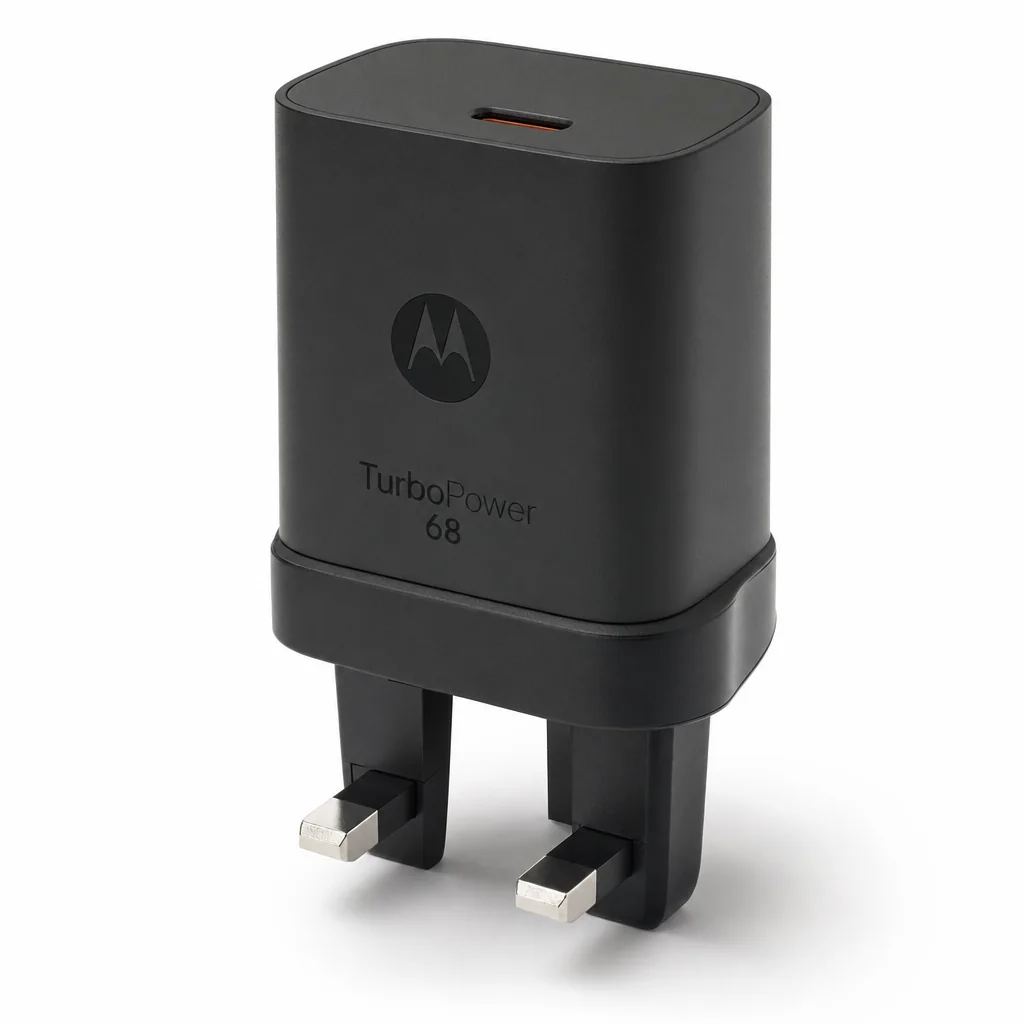
Motorola TurboPower uses USB Power Delivery and PPS as part of its approach, which is better news for cross-device flexibility than a completely sealed proprietary system. The catch is its appetite for non-standard currents at otherwise recognisable voltages. A 125W implementation can request 20V at 6.25A, while roughly 68W can involve 11V at 6.2A.
Those current levels are outside what many familiar multi-port GaN chargers offer through their ordinary PPS profiles. In practice, third-party chargers commonly fall back to around 45W to 60W with a Motorola device that supports TurboPower. That is still plenty for everyday charging, and there is no shame in it. It simply is not the same experience as using the matching TurboPower hardware.
Xiaomi HyperCharge: the cable is part of the charger

See Xiaomi HyperCharge on Amazon UK
£28.64price at 23 Aug, may change
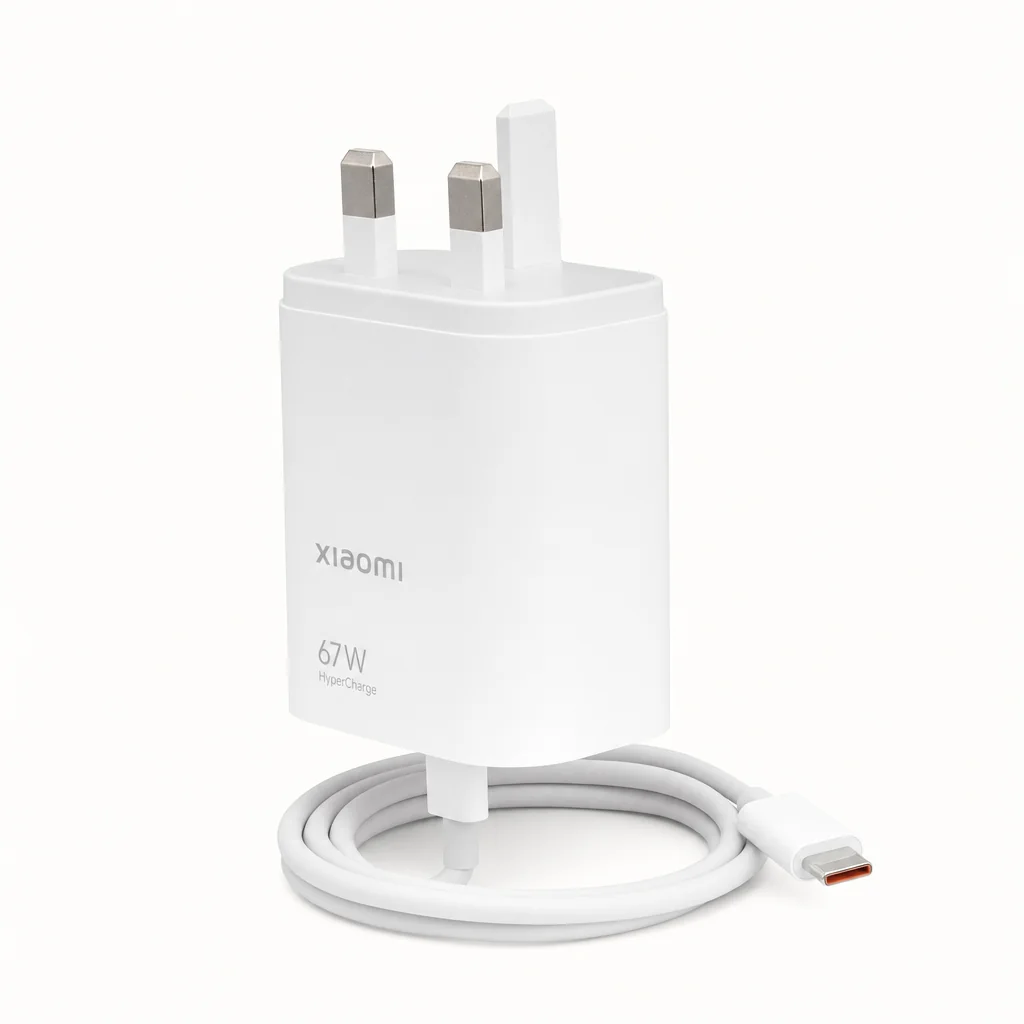
Xiaomi's HyperCharge system is even more particular. Its high-output profiles include 20V at 6A and 10V at 12A, which are not the sort of thing a random USB-C lead should be asked to carry on a whim. Xiaomi's 6A cable has a recognition chip, and that cable forms part of the system's fast-charge conversation.
Swap it for a standard USB-C cable and the phone can drop into a 27W to 67W range, irrespective of the giant number printed on the adapter. That is why "I bought a 100W cable" is not necessarily the end of the discussion. For top Xiaomi charging, use the supported Xiaomi cable as well as the correct charger. This is one of those dull details that makes an extremely un-dull difference.
OnePlus SuperVOOC: native hardware wins
See OnePlus SuperVOOC on Amazon UK
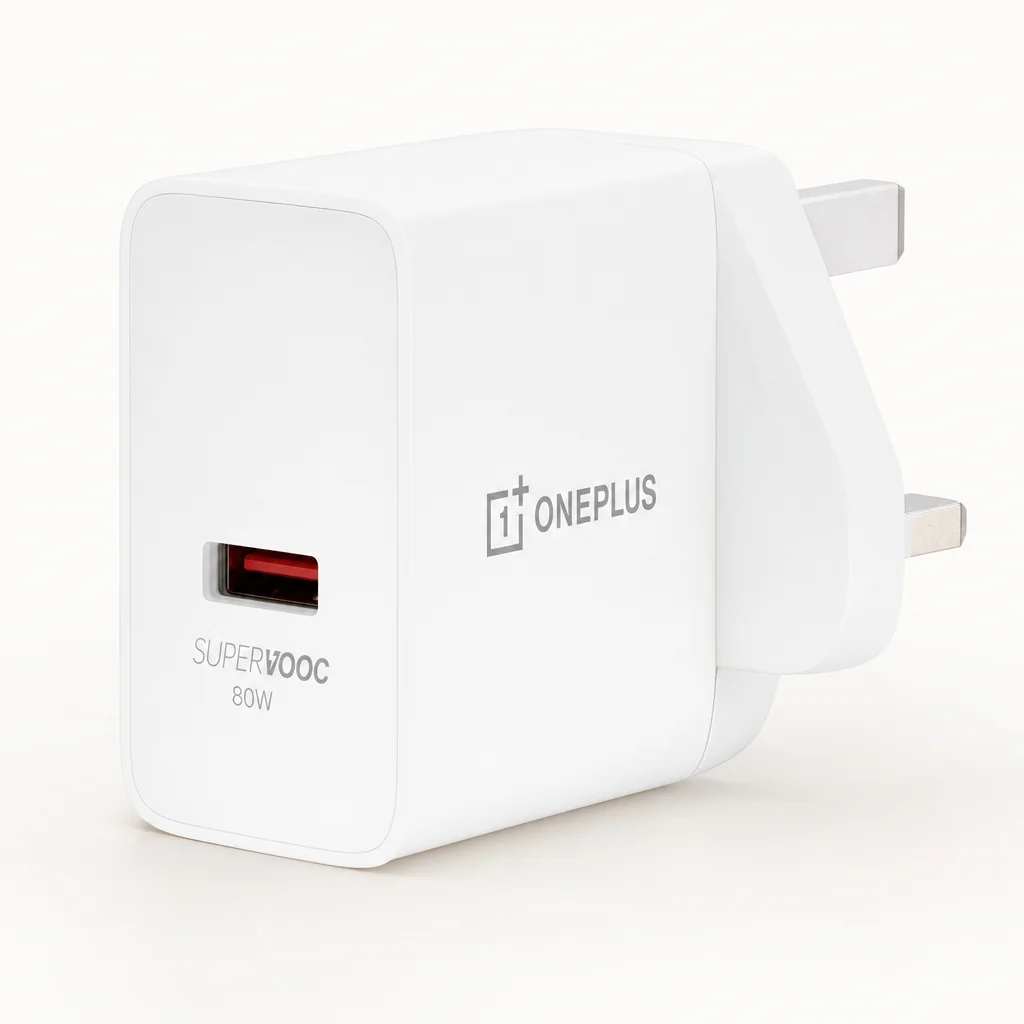
OnePlus SuperVOOC similarly requires a proprietary handshake. Standard USB-C PD chargers can charge a OnePlus phone, of course, but the fallback can sit between 18W and 45W depending on the model. The separately sold OnePlus 100W GaN Adapter supports UFCS, PPS at up to 55W, and PD or QC at up to 36W. Useful compatibility, then, but not an alternative route to full SuperVOOC performance.
The OnePlus SuperVOOC 100W Dual Ports Power Adapter is the native answer. It supports up to 100W SuperVOOC from one port, with up to 65W PD and 63W PPS support for devices that speak more conventional USB-C. In short: choose it for a OnePlus phone first; enjoy its laptop-friendly versatility second.
Do not confuse compatibility with full speed
A charger can be compatible because it charges your phone safely, whilst still being unable to trigger the phone maker's fastest mode. For most people, that distinction is the entire buying decision.
The proprietary fast-charge cable is not an optional accessory in Xiaomi's highest-speed HyperCharge setup; it is an active part of the arrangement.
How to Read Charging Claims Without Getting Caught Out
There is a healthy dose of common sense required when comparing charger claims. Rated output describes what an adapter can provide under its supported conditions. It does not mean a phone's battery receives that exact figure uninterrupted from 0% to 100%. Battery management deliberately tapers charging as the cell fills, partly for heat control and partly for longevity. The headline number is most relevant in the earlier part of a charge.
Measured output is useful because it adds a reality check. The Xiaomi 90W HyperCharge Combo, model MDY-15-EK, has been measured by third-party testers at 19.07V and 3.91A, or 74.55W. Figures like this depend on the device, cable, state of charge and temperature, and on whether the reading was a sustained or momentary one. That does not make it a bad 90W charger. It demonstrates why sensible buyers should view a "90W maximum" as a ceiling negotiated between the charger, cable, phone state and charging conditions, not a permanent reading.
Likewise, a quoted phone charging time is a whole-system result. Xiaomi reported the Xiaomi 15 Pro reaching 50% in 18 minutes and 80% in 32 minutes with its original 90W charger, then fully charging in 53 minutes. OnePlus stated that the OnePlus 11, with its 5,000mAh battery, could reach 100% in about 27 minutes with the SuperVOOC 100W Dual Ports Power Adapter. Those figures are helpful reference points, not a promise that every battery at every temperature will do exactly the same thing.
Look for the supported protocol
HyperCharge, SuperVOOC and TurboPower compatibility tell you more about likely phone speed than a large generic wattage figure alone.
Match the cable to the charger
Xiaomi's highest HyperCharge speeds need its 6A recognition-cable arrangement. OnePlus also needs the correct SuperVOOC cable to reach its top mode.
Read multi-port ratings carefully
With more than one device connected, power is shared. The Xiaomi three-port model can provide up to 67W on USB-C1 plus 15W across C2 and USB-A when all three are active.
Expect a charging taper
The final part of a full charge is deliberately slower than the early sprint. A charger is not broken merely because it is no longer drawing its maximum number at 80%.
The Best 90W+ Fast Chargers: Our Ranked Picks
These are ranked for the job they actually do rather than for the most impressive number on the box. That naturally favours native charging hardware. A really good generic GaN charger remains an excellent buy for mixed devices, but it cannot magically impersonate every phone maker's private charging protocol. Sadly, there is no universal adapter that speaks fluent everything. Not yet, anyway.
1. Xiaomi 90W HyperCharge Power Adapter (3-Port) — Best for Xiaomi Multi-Device Users
Shop Xiaomi 90W HyperCharge Power Adapter on Amazon UK
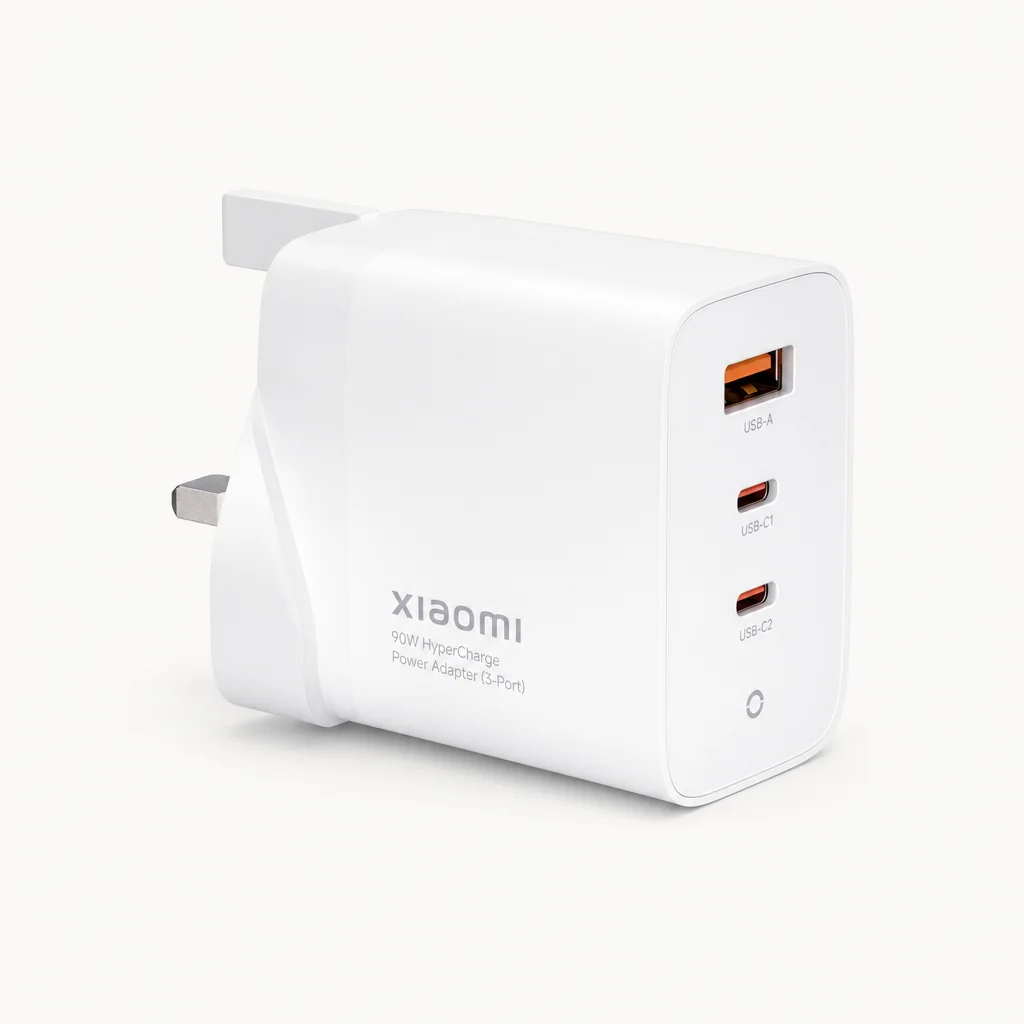
This is the most rounded Xiaomi choice in the group because it combines native HyperCharge support with a genuinely useful three-port layout: two USB-C ports and one USB-A port. On its own, either USB-C port can reach 90W. With all three ports working, it can provide up to 67W through USB-C1 and 15W across USB-C2 and USB-A. That is the sort of flexibility that makes a charger easier to keep on a desk rather than hide in a drawer until a travel emergency.
It supports Xiaomi's proprietary charging protocol alongside PD with PPS and QC. The dimensions are 55.5 × 74.8 × 30mm, excluding prongs, and it weighs 130g. For Xiaomi 15 Pro owners using the correct high-current cable, this is the sensible one-plug answer for a phone plus a secondary accessory. Just remember that it remains a Xiaomi-first product; it will not unlock OnePlus SuperVOOC or Motorola's bespoke TurboPower current profiles.
Pros
- Native HyperCharge support with up to 90W from a single USB-C port.
- Two USB-C ports plus USB-A make it the most adaptable Xiaomi pick.
- Can split output as up to 67W on C1 plus 15W across the other outputs.
Cons
- Full Xiaomi speed still depends on the appropriate 6A cable.
- Does not activate OnePlus SuperVOOC.
- Motorola TurboPower phones fall back to standard compatible charging behaviour.
The Xiaomi three-port HyperCharge adapter is the practical choice when one wall socket needs to cover a phone and smaller devices at the same time.
2. OnePlus SuperVOOC 100W Dual Ports Power Adapter — Best for OnePlus Phones
Shop OnePlus SuperVOOC 100W Dual Ports Power Adapter on Amazon UK
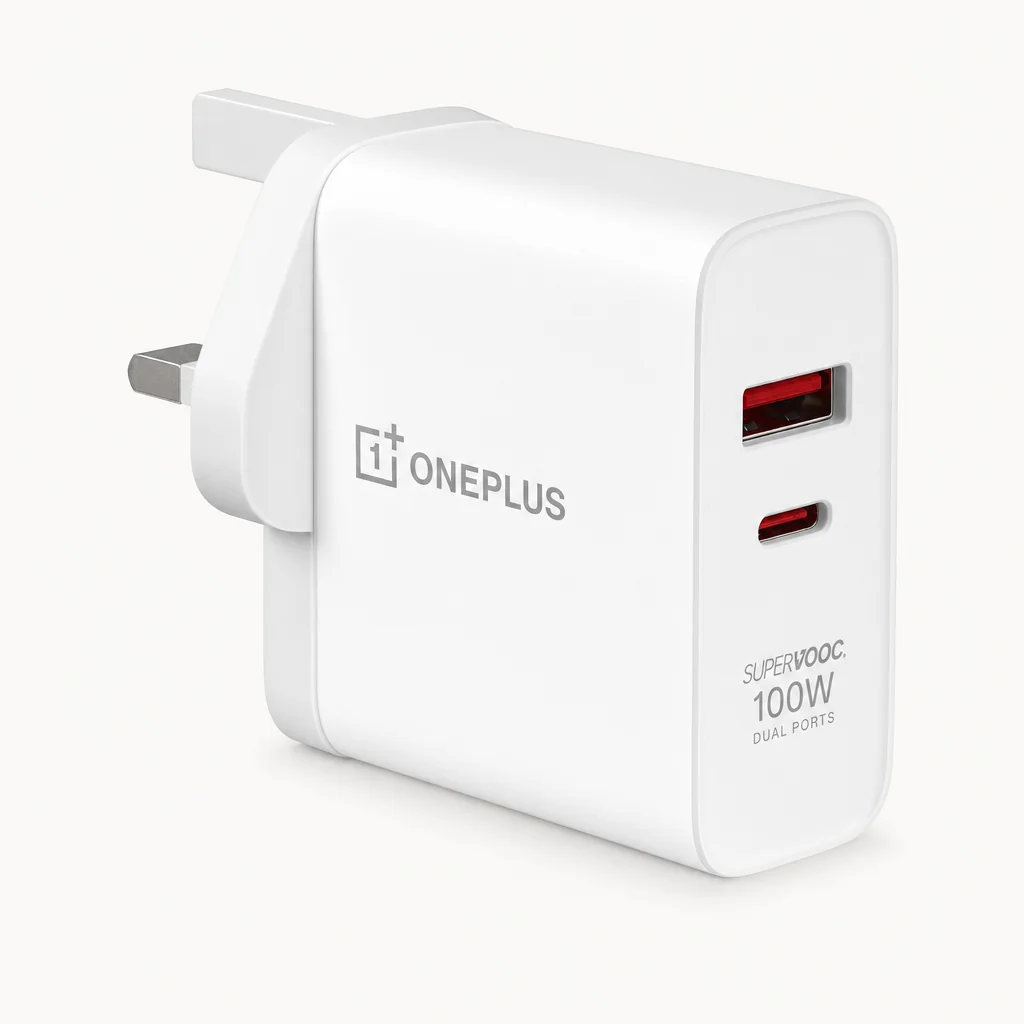
If your priority is making a compatible OnePlus phone charge as quickly as its hardware allows, start here. The OnePlus SuperVOOC 100W Dual Ports Power Adapter delivers up to 100W SuperVOOC from a single port and uses both a USB-A and USB-C connection. It also has unusually respectable standards support for a proprietary charger: QC up to 30W, PD up to 65W and PPS up to 63W.
It is not merely a one-device speed demon, either. In dual-port mode, the adapter can provide 50W plus 50W, which makes a phone-and-laptop pairing far more realistic than with a typical bundled brick. OnePlus quoted a full charge for the 5,000mAh OnePlus 11 in about 27 minutes. The exact outcome depends on the handset and conditions, naturally, but the point is clear: this is the proper route to SuperVOOC rather than a hopeful approximation of it.
Pros
- Up to 100W native SuperVOOC from one port.
- Dual-port 50W plus 50W output is useful for charging two substantial devices.
- Up to 65W PD gives it a credible second life with compatible laptops.
Cons
- Top OnePlus speed requires the correct SuperVOOC cable.
- Its 100W SuperVOOC mode does not translate into Xiaomi HyperCharge.
- Motorola phones use standard compatible PD/PPS behaviour instead of full TurboPower.
3. Xiaomi 90W GaN "Small Pudding" Charger — Best Compact Single-Port Xiaomi Charger
Shop Xiaomi 90W GaN "Small Pudding" Charger on Amazon UK
"Small Pudding" is a frankly excellent name for a charger that measures just 34 × 34 × 45mm and weighs 88g. It is a single-port USB-C GaN charger rated for up to 90W, with PD, PPS and QC support. This is the one to choose when desk versatility matters less than carrying the smallest practical charger that can still deliver serious power.
Xiaomi said it charged a Xiaomi 15 Pro to 83% in 30 minutes. In the same period, it charged an iPhone 16 Pro Max to 55% and a Vivo X100 Pro to 97%. Those cross-device results make a useful point: whilst Xiaomi's own phone benefits most from the matching ecosystem, the charger still has real value beyond Xiaomi hardware because it supports mainstream PD, PPS and QC protocols.
Charger only
Chinese launch price for the 90W GaN Small Pudding charger.
Charger with 1.5m cable
Chinese launch bundle including a 1.5-metre cable.
Pros
- Very small 88g GaN design for a 90W-rated charger.
- USB-C with PD, PPS and QC support adds useful multi-brand flexibility.
- Strong quoted 30-minute result with Xiaomi 15 Pro.
Cons
- Only one USB-C port.
- It cannot charge two devices simultaneously.
- For Xiaomi's very highest proprietary speed, cable choice remains important.
4. OnePlus 100W GaN Adapter — Best for OnePlus Owners Who Also Use USB-C PD
Shop OnePlus 100W GaN Adapter on Amazon UK
The OnePlus 100W GaN Adapter is the more flexible OnePlus route if you want a compact high-wattage adapter that understands more than one charging language. Its maximum output is 100W, and it supports OnePlus' proprietary SuperVOOC approach alongside UFCS, PPS up to 55W, and PD or QC up to 36W. That makes it more accommodating than a SuperVOOC-only brick when your daily kit includes other USB-C gear.
For a OnePlus 15, the difference over the included 80W SuperVOOC charger was a matter of trimming a few minutes from full charging. The included 80W charger reached 68% in 30 minutes and completed a charge in 45 minutes. It is a useful reminder that chasing maximum wattage does not always transform the result by the dramatic amount the marketing might suggest. If you already have the 80W charger, this is a convenience and flexibility upgrade rather than an emergency purchase.
Pros
- 100W maximum in a GaN design.
- Supports UFCS and PPS up to 55W.
- Can use native OnePlus charging behaviour with compatible OnePlus hardware.
Cons
- PD and QC compatibility top out at 36W.
- Standard PD/PPS charging on OnePlus 15 can sit around 36W to 55W.
- Not the native choice for Xiaomi HyperCharge or Motorola TurboPower.
OnePlus' 100W GaN approach makes more sense for a mixed USB-C kit than for someone seeking a universal replacement for every proprietary fast-charge system.
5. Xiaomi 90W HyperCharge Combo (MDY-15-EK) — Best for Dedicated Xiaomi HyperCharge
See Xiaomi 90W HyperCharge Combo on Amazon UK
£28.64price at 23 Aug, may change
The Xiaomi 90W HyperCharge Combo is the focused option. It has one USB-A port, uses proprietary pins, and needs the matching 6A USB-C cable with its recognition chip for full HyperCharge behaviour. It is not elegant in the modern "everything must be USB-C" sense, but it is built for the thing Xiaomi owners care about: getting a compatible phone charging at the intended top rate.
The adapter accepts 100–240V input and measures 49.3 × 73 × 28mm excluding prongs. Its specified output spans from 15W at 3.6–5V and 3A up to 90W across its higher current profiles. It supports QC3+, QC3.0, QC2.0, PD3.0, PD2.0 and MI FC 2.0. On the Xiaomi 15 Pro, Xiaomi's original 90W arrangement was quoted at 50% in 18 minutes, 80% in 32 minutes and a full charge in 53 minutes.
The important measured figure is 74.55W at 19.07V and 3.91A. Rather than dismissing it for not sitting at 90W, read that as a real-world illustration of charging negotiation and battery management. It remains the right kind of charger for someone who prioritises a single Xiaomi phone over multi-device convenience.
Pros
- Designed for Xiaomi's high-speed HyperCharge ecosystem.
- Supports a wide list of Xiaomi and Qualcomm charging standards.
- Single-purpose layout keeps the choice simple for a dedicated Xiaomi phone.
Cons
- USB-A output rather than USB-C.
- The proprietary 6A cable is essential for full-speed operation.
- Not a sensible choice for unlocking OnePlus or Motorola native top speeds.
6. Motorola TurboPower 125W Duo Charger — Best for Motorola TurboPower Users

See Motorola TurboPower 125W Duo Charger on Amazon UK
£45.99price at 23 Aug, may change
Motorola's TurboPower range included 33W, 68W and 125W options, with the TurboPower 125W Duo Charger being the relevant choice for buyers looking at the top end of Motorola charging. The obvious reason to choose Motorola's own high-output hardware is protocol matching. A third-party charger may deliver solid standard PD or PPS charging, but it is less likely to negotiate the unusual current profiles required for maximum TurboPower behaviour.
That makes the TurboPower 125W Duo Charger the conservative recommendation for a Motorola owner who bought a phone specifically because it supported rapid charging. It is not the most exciting answer, admittedly. Sometimes the right answer is simply the manufacturer's own accessory because it speaks the same slightly peculiar dialect as the phone. Fast charging is not a place where optimism and a random cable from a kitchen drawer make a particularly strong team.
Pros
- Part of Motorola's 125W TurboPower charging family.
- The logical match for Motorola's proprietary high-current charging requests.
- Avoids relying on third-party PPS fallback for a TurboPower handset.
Cons
- Third-party chargers usually offer only around 45W to 60W with TurboPower phones.
- TurboPower-specific benefits do not unlock OnePlus SuperVOOC.
- It is a Motorola-first purchase rather than a protocol-universal one.
Head-to-Head: The Chargers Compared at a Glance
There is no single winner for every phone. The table below deliberately prioritises the information that changes a buying decision: maximum output, ports, mainstream protocol support and whether the unit speaks the native language of Xiaomi or OnePlus hardware. Motorola's 125W option belongs in a different category because the available specification centres on its TurboPower family rating rather than a complete port-by-port output chart.
| Charger | Maximum rated output | Ports | Confirmed protocol support | Native high-speed focus | Dimensions / weight |
|---|---|---|---|---|---|
| Xiaomi 90W HyperCharge Power Adapter (3-Port) | 90W single USB-C | 2 × USB-C, 1 × USB-A | HyperCharge, PD with PPS, QC | Xiaomi HyperCharge | 55.5 × 74.8 × 30mm; 130g |
| OnePlus SuperVOOC 100W Dual Ports Power Adapter | 100W SuperVOOC; 65W PD; 63W PPS | USB-A, USB-C | SuperVOOC, QC, PD, PPS | OnePlus SuperVOOC | — |
| Xiaomi 90W GaN "Small Pudding" Charger | 90W | 1 × USB-C | PD, PPS, QC | Xiaomi-compatible single-port charging | 34 × 34 × 45mm; 88g |
| OnePlus 100W GaN Adapter | 100W | USB-C | SuperVOOC, UFCS, PPS 55W, PD 36W, QC 36W | OnePlus SuperVOOC | — |
| Xiaomi 90W HyperCharge Combo (MDY-15-EK) | 90W | 1 × USB-A | QC3+, QC3.0, QC2.0, PD3.0, PD2.0, MI FC 2.0 | Xiaomi HyperCharge with 6A cable | 49.3 × 73 × 28mm |
| Motorola TurboPower 125W Duo Charger | 125W | — | TurboPower family | Motorola TurboPower | — |
For the Xiaomi three-port adapter, connecting all three devices changes the available power split: USB-C1 can deliver up to 67W, while USB-C2 and USB-A share 15W. That is exactly what a multi-port charger should do, but it is worth knowing before assuming every port stays at full speed.
The comparison is less about declaring one charger universally best and more about choosing the right protocol match for the phone in your pocket.
Cable, Port and Multi-Device Buying Advice
If you take one practical lesson from this guide, make it this: do not separate your cable decision from your charger decision. At ordinary 20W or 30W speeds, almost any decent USB-C lead can feel interchangeable. At 90W and above, the cable is part of the performance specification.
Xiaomi makes this unusually explicit. Its highest HyperCharge modes rely on the 6A cable's recognition chip. Using a different standard USB-C cable can reduce charging to 27W–67W. That is still respectable charging, but it could be dramatically less than what you bought the adapter to achieve. A Xiaomi HyperCharge charger with the wrong cable is a little like buying a sports car and fitting it with a lawnmower's fuel line. It will move. You will not get the point.
OnePlus owners should similarly retain the appropriate SuperVOOC cable where possible. The OnePlus dual-port adapter can do 100W SuperVOOC from a single port, but native fast charging needs the correct ecosystem. In dual-port use, it can supply 50W plus 50W, which is a very handy division for two phones or a phone and another USB-C device.
For Motorola, the issue is less about a named cable recognition feature in the information here and more about the charger's ability to support TurboPower's unusual current requests. A generic PPS charger can remain useful, but it should be purchased for flexible standard charging rather than with the assumption that its large wattage badge guarantees 125W TurboPower.
Who Should Buy Which Charger?
Buying the right charger gets easier once you stop trying to make every option serve every scenario. Start with your main phone, then think about whether you need one plug for a desk full of devices or a small single-port adapter for a bag.
Best all-rounder for Xiaomi
Xiaomi 90W HyperCharge Power Adapter (3-Port). Choose it for native Xiaomi charging plus two additional ports for a watch, earbuds or second device.
Best for OnePlus speed
OnePlus SuperVOOC 100W Dual Ports Power Adapter. This is the direct route to up to 100W SuperVOOC and still offers practical PD support.
Best compact travel pick
Xiaomi 90W GaN "Small Pudding" Charger. At 88g and 34 × 34 × 45mm, it is the compact option that has not forgotten the power.
Best for Motorola's top mode
Motorola TurboPower 125W Duo Charger. Pick the native TurboPower family charger if maximum Motorola charging is the whole point.
Best mixed OnePlus kit
OnePlus 100W GaN Adapter. It suits an owner who values SuperVOOC alongside UFCS and PPS support up to 55W.
Best dedicated Xiaomi setup
Xiaomi 90W HyperCharge Combo (MDY-15-EK). Pair it with the required 6A cable when one Xiaomi phone is the priority.
Fast Charging Safely and Sensibly
Modern fast charging is designed around negotiation and battery protection. The phone and charger agree on an appropriate profile, then battery management adjusts power as the charge level rises. You do not need to hover anxiously over a 100W charger as though it is a miniature power station in your kitchen. Use compatible equipment and let the devices do their job.
That said, a little discipline goes a long way. Use the cable intended for the fast-charge system, especially for Xiaomi HyperCharge and OnePlus SuperVOOC. Avoid treating a visibly damaged cable as "probably fine". If your charger has multiple ports, assume its maximum single-port figure will change once additional devices are connected, then check the stated split. The Xiaomi three-port model's 67W plus 15W allocation is a good example of transparent shared-power behaviour.
Finally, decide what you actually need. If your phone spends every night on a bedside table, a full 90W setup is a convenience rather than a necessity. If you frequently leave home at 20%, it becomes one of the most useful accessories you can own. The best charger is not the one with the biggest printed number. It is the one that gets your particular phone ready when life is already running late.
For a fast-charge setup that behaves as intended, keep the charger and cable matched to the phone's supported charging protocol.
Frequently Asked Questions
No. OnePlus' highest charging speeds rely on the SuperVOOC handshake and the appropriate cable. Standard USB-C PD or PPS charging can work, but OnePlus phones can fall back to lower rates. The OnePlus 100W GaN Adapter supports PPS up to 55W and PD up to 36W, while the SuperVOOC 100W Dual Ports Power Adapter is the native option for up to 100W SuperVOOC.
Xiaomi HyperCharge's highest modes use a 6A cable with a recognition chip. A standard USB-C lead can cause charging to fall back into a 27W–67W range, even if the charger itself has a 90W rating. For maximum HyperCharge performance, use the correct Xiaomi cable and compatible adapter together.
Usually not at the full TurboPower level. Motorola's system uses USB PD and PPS but can request unusual current profiles, such as 20V at 6.25A for 125W. Third-party chargers commonly fall back to roughly 45W–60W via standard PPS behaviour. For maximum TurboPower, the matching Motorola option is the safer choice.
No. The Xiaomi 90W HyperCharge Combo was measured at 19.07V and 3.91A, equalling 74.55W. Real charging power changes with battery level, temperature, cable and the negotiated profile. The rated 90W figure is a maximum capability, not a fixed reading that must appear throughout a complete charge.
Yes, but its power is shared when all ports are occupied. With three devices connected, it can provide up to 67W through USB-C1 and 15W across USB-C2 and USB-A. It is therefore ideal for a fast-charging Xiaomi phone plus smaller accessories, rather than three devices all demanding maximum power simultaneously.
The OnePlus SuperVOOC 100W Dual Ports Power Adapter is the strongest fit here because it supports dual-port operation at up to 50W plus 50W, as well as PD up to 65W from a single port. The Xiaomi 90W HyperCharge Power Adapter (3-Port) is better suited to a Xiaomi phone plus lower-power accessories.
No, provided you use compatible, properly functioning equipment. The phone negotiates the charging level it accepts and manages charging as the battery fills. High-rated adapters offer headroom; they do not simply push their maximum output into every connected phone.
The Bottom Line
For Xiaomi owners, the Xiaomi 90W HyperCharge Power Adapter (3-Port) is the best all-round choice because it combines 90W single-port capability with useful three-device flexibility. For OnePlus, the SuperVOOC 100W Dual Ports Power Adapter is the easy recommendation: it is built to unlock the charging system your phone actually uses.
Motorola is the awkward one, in the nicest possible sense. Its TurboPower implementation may fall back to around 45W–60W on generic PD/PPS equipment, so the Motorola TurboPower 125W Duo Charger is the sensible buy when maximum Motorola speed matters. If portability is your priority, Xiaomi's 88g 90W GaN "Small Pudding" Charger proves that a serious charger need not occupy half your bag.
Choose the native protocol, keep the right cable with it, and the impressive number printed on your phone's charging specification finally starts to mean something in real life.