
Apple Unveils M6 Mac mini and M5 Ultra Mac Studio
Apple’s updated desktop line-up brings the new M6 chip to Mac mini and an M5 Ultra option to Mac Studio, with UK availability from 22 September.
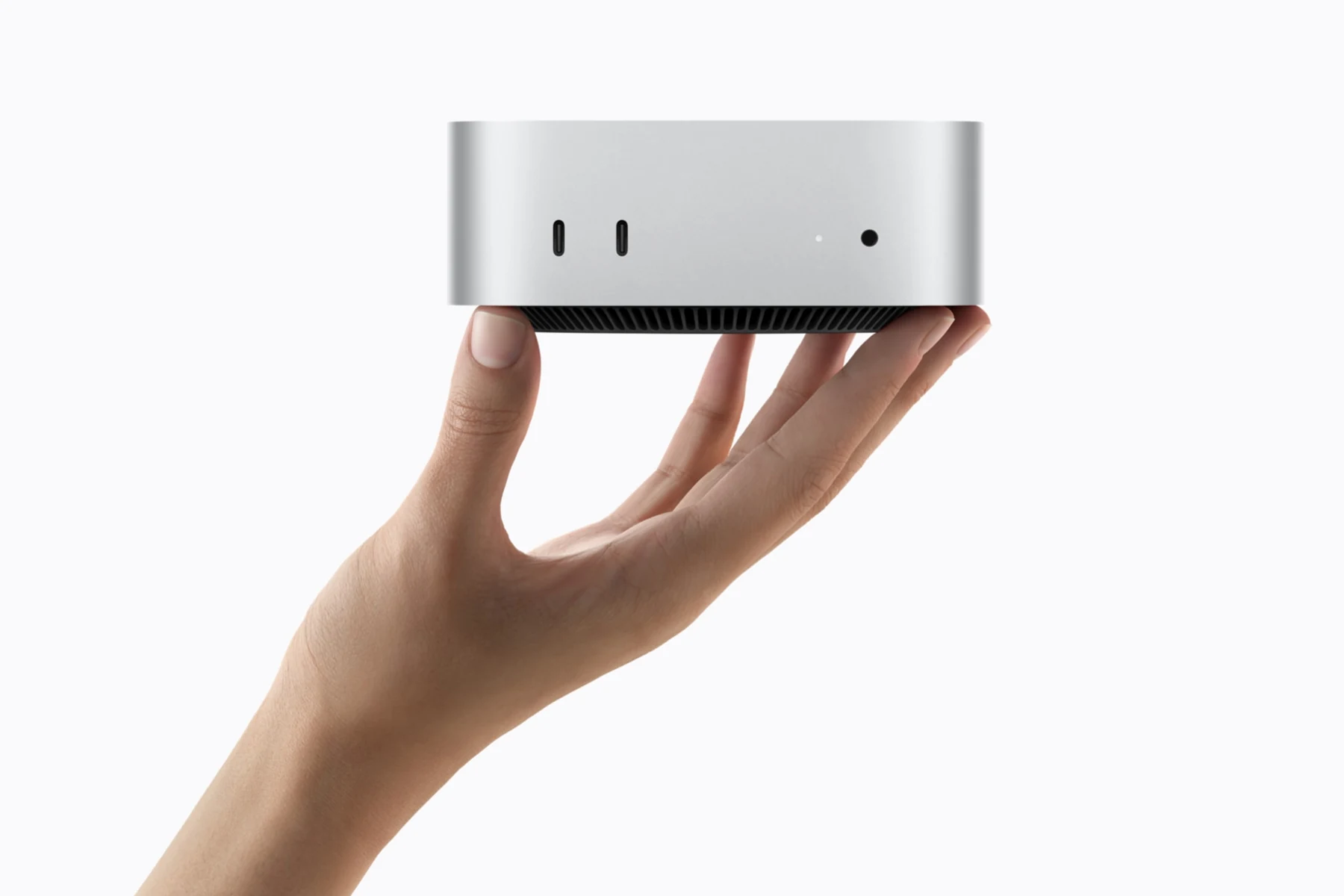

What you need to know
- Apple announced new Mac mini models with M6 or M5 Pro chips on 25 August.
- Mac Studio now comes with M5 Max or the new M5 Ultra, which Apple calls its most powerful Mac to date.
- UK pre-orders are open, with availability beginning on 22 September; exact UK prices by configuration remain unconfirmed.
Apple has announced refreshed Mac mini and Mac Studio desktop ranges, led by the new M6 chip and M5 Ultra respectively. Pre-orders opened on Tuesday 25 August, with the machines due to begin arriving with customers and appearing in UK Apple Stores and authorised resellers on 22 September.
The Mac mini is available with either Apple’s new M6 chip or the previously introduced M5 Pro. The Mac Studio moves to M5 Max or the new M5 Ultra, which Apple describes as its most powerful Mac to date.
Mac mini gets M6 and M5 Pro options
The standard M6 Mac mini has a 12-core CPU and 12-core GPU, 16GB of unified memory as standard and support for up to 32GB. It has three Thunderbolt 4 ports, Wi-Fi 7, Bluetooth 6, 2.5-gigabit Ethernet and support for up to three external displays.
Apple claims the M6 model offers up to 40% faster CPU performance, twice the graphics performance and four times faster AI performance than an M4 Mac mini. Those are Apple’s own comparisons, rather than independent benchmarks.
The higher-end M5 Pro version can be configured with up to an 18-core CPU, 20-core GPU, 64GB of unified memory and 8TB of storage. It also replaces Thunderbolt 4 with three Thunderbolt 5 ports.
Mac Studio targets demanding professional work
The M5 Max Mac Studio has an 18-core CPU, up to a 40-core GPU and up to 128GB of unified memory. Apple says it can deliver up to 3.9 times faster AI performance than the previous-generation Mac Studio, alongside claimed gains in DaVinci Resolve Studio and Maxon Redshift.
The M5 Ultra model raises the ceiling substantially: it can be configured with up to a 36-core CPU, an 80-core GPU, 512GB of unified memory and 1.2TB/s of memory bandwidth. It supports up to eight displays and uses Thunderbolt 5, with up to 120Gb/s bandwidth.
Apple says the M5 Ultra is built by connecting two dual-die M5 Max chips using its UltraFusion technology. Its media engine can simultaneously play up to 33 streams of 8K ProRes 422 video at 30fps, a capability aimed at high-end video and post-production workflows.
“Mac Studio is the ultimate desktop for on-device AI and the world’s most demanding pro workflows,” said Johny Srouji, Apple’s chief hardware officer.
UK pricing is not yet clear by model
Apple’s UK buying page lists the Mac mini from £899 and the Mac Studio from £2,499. Those are range-level starting prices; the selected chip, memory and storage configuration determines the final price shown at checkout.
For context, US prices start at $899 for the M6 Mac mini, $1,699 for the M5 Pro Mac mini, $2,499 for the M5 Max Mac Studio and $5,499 for the M5 Ultra Mac Studio. The M5 Ultra base configuration includes 96GB of unified memory and 1TB of storage.
A Mac Studio configuration with 512GB of unified memory is scheduled for late October, rather than the main 22 September release date.
What happens next
Orders can now be placed through Apple’s online store and Apple Store app. Buyers considering a Mac mini have a more conventional upgrade path, with extra CPU, GPU and AI capability in the same compact desktop category. The M5 Ultra Mac Studio, by contrast, is designed for people with unusually intensive local AI, video, graphics or multi-display workloads.
Why it matters
The refresh gives buyers clearer choices between a compact general-purpose desktop and a far more expandable workstation for demanding creative and AI workloads. The M6 Mac mini’s higher standard memory and claimed gains in graphics and AI performance could matter to buyers moving up from older Intel or Apple silicon Macs, while the M5 Ultra is aimed squarely at specialists whose work can justify its likely high cost. UK shoppers should be cautious about choosing a configuration until Apple confirms model-by-model sterling pricing.
Sources and evidence (7)
- Apple (manufacturer)
- Apple (manufacturer)
- Apple UK (manufacturer)
- macrumors.com (other)
- macrumors.com (other)
- techcrunch.com (other)
- macrumors.com (other)