
US Blocks New Chinese Humanoid Robot Imports Over Security Fears
The FCC’s immediate restrictions cover new, unapproved foreign humanoid and quadruped robots, citing data collection, remote-control and infrastructure risks.
What you need to know
- New foreign humanoid and quadruped robot models cannot gain US authorisation under the FCC action.
- Existing approved robots, devices already bought and federal government purchases are not affected.
- Unitree is likely to be most exposed after planning a North American launch for 12 August.
The US has blocked new foreign-made humanoid and quadruped robot models from entering its market after the Federal Communications Commission added “advanced robotic devices” to its Covered List on 29 July. The move, which took effect immediately, follows a White House-convened national security determination made the previous day.
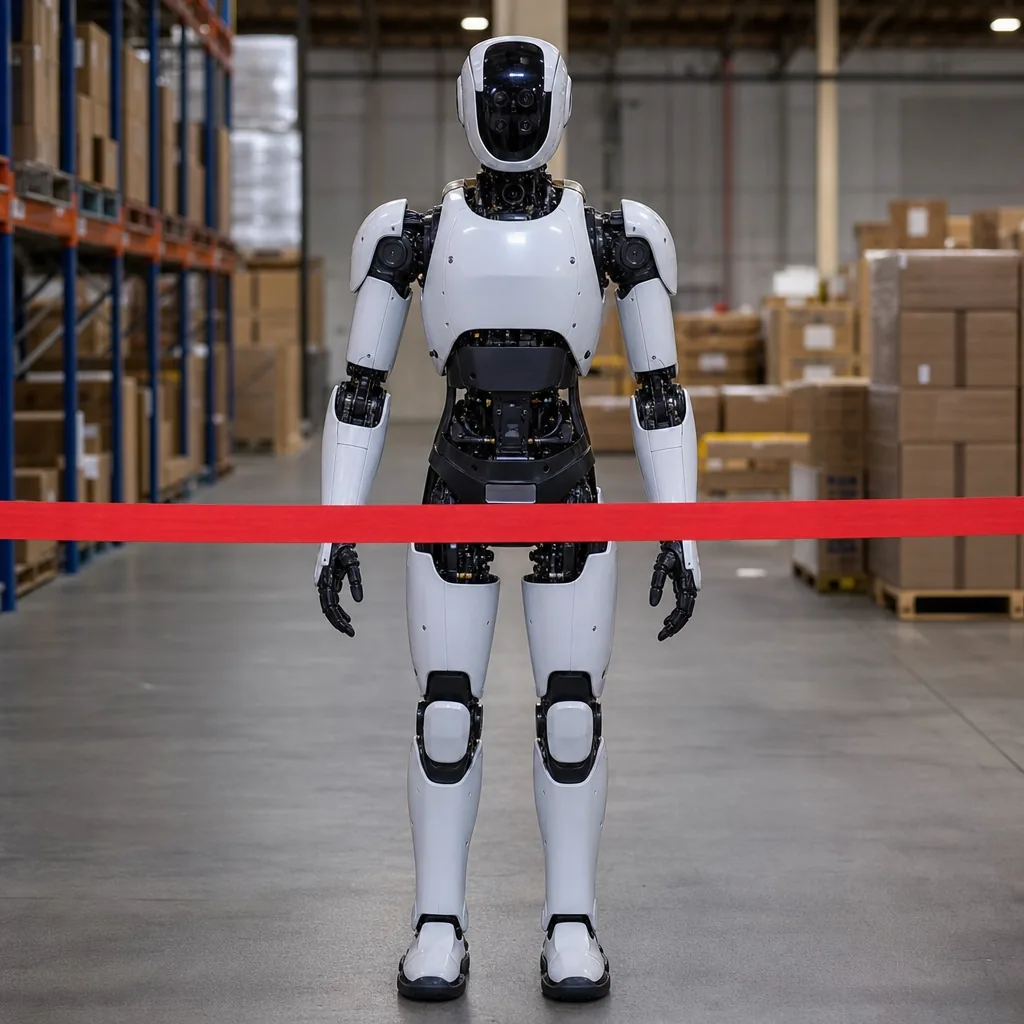
The FCC said internet-connected robots pose potential data privacy and cybersecurity threats, including the possibility that they could be used to collect information, support foreign intelligence services or be remotely commandeered. While the restriction is framed around foreign-produced advanced robotics, Chinese manufacturers are expected to bear the biggest impact because China dominates the humanoid robot market.
It is not a recall, nor a blanket ban on every robot already in the country. The rules apply to new models that have not yet been authorised for sale in the United States. Previously approved models, devices already purchased and existing deployments are unaffected. The federal government can also continue to buy and use foreign robots, while companies can seek conditional approval for covered devices.
What the FCC has changed
The FCC updated its Covered List under Section 2 of the Secure Networks Act. That list identifies equipment and services judged to pose an “unacceptable risk” to US national security or the safety of US persons.
Alongside advanced robotic devices, the agency added connected power inverters: equipment used to link solar panels, batteries and data-centre hardware to the electricity grid. Chinese companies Huawei and Sungrow Power Supply are the two largest inverter manufacturers.
“Advanced robotic devices collect data that could be leveraged by malign actors to surveil Americans, enhance the capabilities of foreign intelligence services, or to remotely commandeer the robots,” the FCC said in its determination.
The agency also said such devices could create supply-chain vulnerabilities capable of disrupting US economic and national security, as well as cybersecurity risks to critical infrastructure.
FCC chair Brendan Carr said the agency was acting “in lock step with our national security agencies” following President Donald Trump’s leadership. In a post on X, Carr said the FCC included exemptions for devices that, based on a finding by the Department of War or Department of Homeland Security, pose no unacceptable threat.
Unitree faces the clearest immediate setback
Hangzhou-based Unitree Robotics is likely to be the most conspicuous company caught by the decision. The company launched its H1 Pro humanoid commercially in Europe on 22 July, describing it as the first Chinese-made humanoid to enter Western commercial markets. It had planned Asian deployment from 5 August and a North American launch on 12 August.
That North American route is now closed for new models under the FCC designation. Unitree’s catalogue includes the G1 humanoid, listed at $13,500, the R1 from $4,900, the Go2 robot dog from $1,600 to $4,500 plus shipping, the H1 at $90,000 and the H2 at $29,900. UK pricing has not been confirmed.
According to Omdia, Chinese companies accounted for the vast majority of approximately 13,000 humanoid robot shipments worldwide in 2025. Unitree shipped more than 5,500 units, while US companies Tesla, Figure AI and Agility Robotics each shipped about 150 humanoids. TrendForce projects Unitree will account for nearly half of total humanoid production in 2026, with rival Agibot at around 30%.
The Pentagon has also recently put Unitree and several other major Chinese technology firms on a list of companies it said have ties to or aid the Chinese military. The new restrictions could also complicate US-China technology collaborations: Nvidia revealed a humanoid robot reference design in June using Unitree’s humanoid chassis.
Security concerns have a specific history
The US decision arrives after researchers reported serious vulnerabilities affecting Unitree products. In March 2025, researchers disclosed CVE-2025-2894, known as the “CloudSail” backdoor, in Unitree’s Go1 quadruped. The flaw used a service operated by Chinese firm Zhexi Technology to create a persistent peer-to-peer tunnel, potentially allowing complete remote control without an owner’s knowledge.
Researchers later confirmed vulnerable robots were operating on networks at MIT, Princeton, Carnegie Mellon University and the University of Waterloo. No firmware patch has been issued for that vulnerability, according to the research cited in the security findings.
A separate flaw, dubbed UniPwn, was disclosed on 20 September 2025 by cybersecurity researchers Andreas Markis and Kevin Finnisterre. It affected the Go2 and B2 quadrupeds and the G1 and H1 humanoids. The Bluetooth Low Energy vulnerability could give an attacker root-level wireless access and allow one compromised robot to infect others nearby. As of May 2026, independent researchers had documented no patch, with the underlying authentication architecture still present in production firmware.
Independent researchers also confirmed in 2026 that Unitree G1 and H1 robots send telemetry to servers in China at roughly five-minute intervals during normal operation.
What happens next
China has condemned the move. Foreign Ministry spokesperson Mao Ning said protectionism would not make the US more competitive and would instead hurt American companies and consumers. China’s commerce ministry said the escalating FCC restrictions “severely damages China-US economic and trade stability”, urged the US to withdraw the decision and threatened countermeasures.
For now, the practical consequence is sharply defined: newly proposed covered robot models cannot secure US approval, while installed and previously approved machines remain in place. The policy also strengthens the position of US-based humanoid developers including Tesla, Figure AI, Agility Robotics and Boston Dynamics, as Washington pushes companies to expand advanced manufacturing in the country.
Why it matters
This is chiefly a US import restriction, so it does not stop UK buyers from accessing Chinese robotics products. But it may still reshape the fast-growing humanoid market: China accounts for roughly 85% of global humanoid robot supply, and a US block could affect pricing, software partnerships and the speed at which new models reach Western markets. For buyers and businesses, the reported vulnerabilities are also a timely reminder that a networked robot is a powerful connected computer, not simply a machine with legs.