
OpenAI's first home device is a screenless, moving AI speaker
A new Bloomberg report reveals OpenAI is building a camera-equipped, motorised smart speaker it sees as a new kind of home computer — though a lawsuit from Apple could yet derail its plans.
What you need to know
- OpenAI is developing a screenless, motorised AI speaker with a camera, environmental sensors and a rechargeable battery
- It runs GPT-Live, an expanded version of ChatGPT Voice Mode that can listen and speak simultaneously
- Priced at roughly $200–$300 (US); no UK price confirmed — and an Apple lawsuit could delay the 2027 launch
OpenAI's surprise first product: a speaker that moves on its own
On 14 July 2026, Bloomberg reported that OpenAI's long-awaited consumer hardware push will begin not with a phone or a wearable, but with a screenless, motorised smart speaker designed to function as a new kind of home computer for the AI era. The device has not been officially announced, and an OpenAI spokesperson declined to comment on the report.
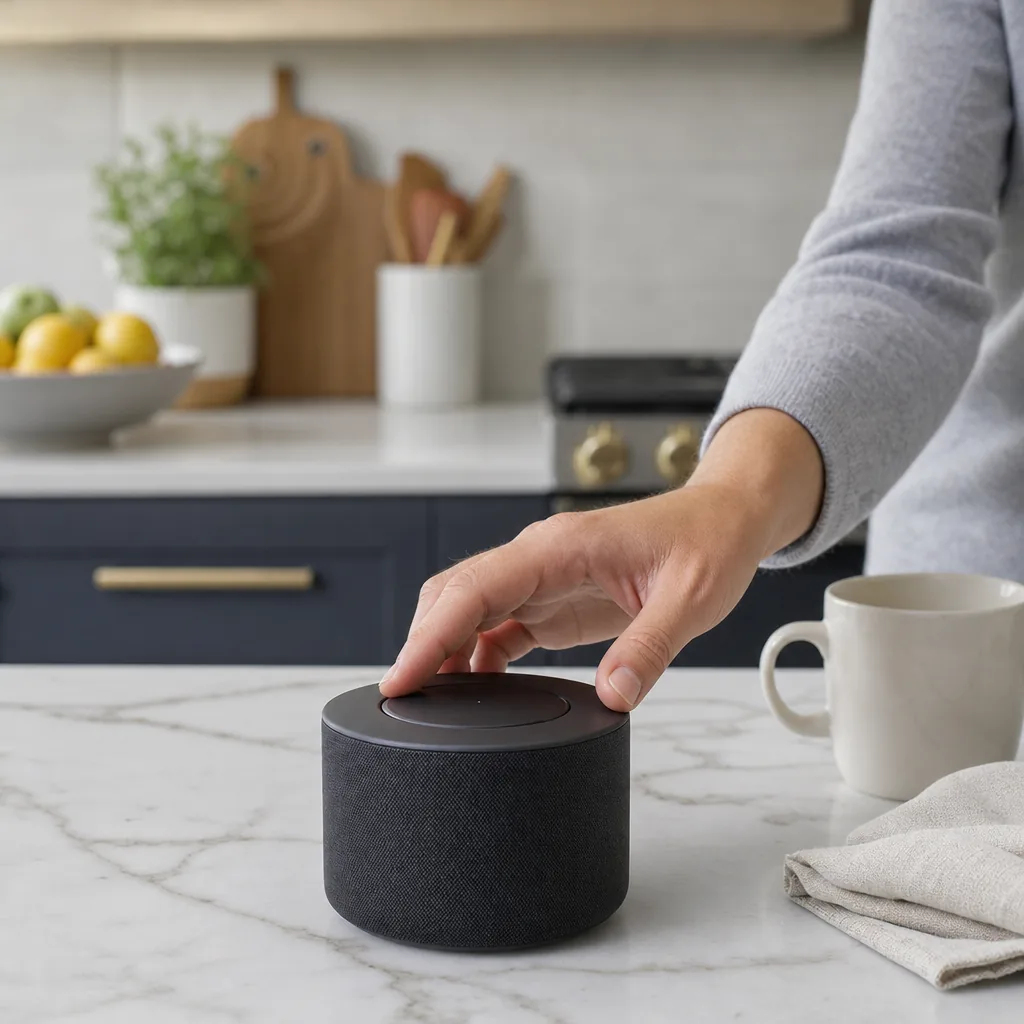
The timing is notable. Bloomberg's story landed just one day before OpenAI's first piece of shipping hardware — the Codex Micro, a developer macro pad built with boutique keyboard maker Work Louder — reached its first customers. That device is aimed squarely at programmers. The speaker, by contrast, is OpenAI's opening move in the living room.
What the device actually does
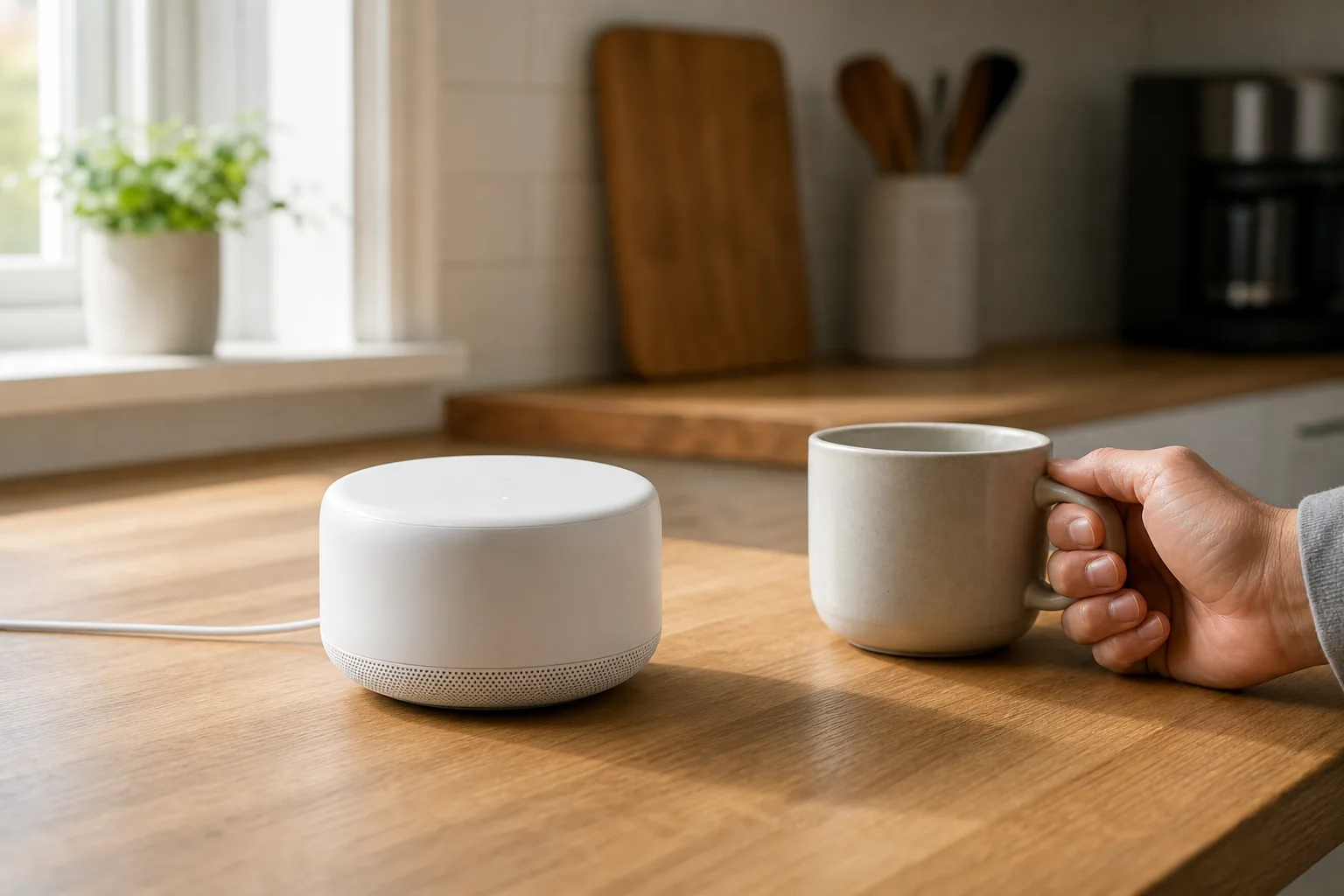
According to the Bloomberg report, the speaker carries a camera and environmental sensors, and runs on a rechargeable battery so it can be carried between rooms without hunting for a socket. Its most striking feature is a set of motorised parts that move on their own — an explicit design choice intended to make the device feel alive rather than like an object waiting to be commanded.
Voice interaction runs on GPT-Live, an expanded version of ChatGPT Voice Mode that OpenAI introduced just days ago. Unlike earlier voice assistants, GPT-Live can listen and speak at the same time, allowing the speaker to respond more naturally mid-conversation rather than waiting for a pause.
The device is also designed to become more useful the longer you own it. OpenAI envisions it growing increasingly personalised and proactive, building a deeper understanding of its owner over time — including by drawing on personal information such as emails. The company wants the speaker to anticipate needs and surface relevant information before you think to ask for it. More practically, it will control smart-home appliances, play media, answer questions and respond to messages.
Internally, OpenAI does not see the product as a conventional smart speaker. The company describes it as a new type of home computer for the AI age — a companion that lives in the home rather than a voice-activated search box on a shelf.
Price and availability: what's confirmed
According to two people with knowledge of the device, cited by The Information and relayed by 9to5Mac, the speaker is likely to be priced somewhere between $200 and $300 in the United States. No UK sterling price has been confirmed.
On timing, OpenAI CFO Sarah Friar told the Associated Press in April 2026:
"We have consumer hardware that will come towards the end of this year."Similarly, Chief Global Affairs Officer Chris Lehane said at Davos in January that OpenAI was "on track" to unveil its first device in the second half of 2026. However, Bloomberg now reports that the company is aiming to unveil the speaker later this year with a release target of 2027 — a schedule that has already slipped from earlier 2026 ambitions, and one that depends partly on the outcome of a courtroom battle. Earlier reports indicated the speaker would not begin shipping before February 2027. No UK availability has been confirmed.
The Apple lawsuit: a serious complication
On 10 July 2026, Apple filed a lawsuit against OpenAI alleging trade secret theft and breach of contract. The complaint is pointed and specific. Apple alleges that OpenAI Chief Hardware Officer Tang Tan — a former head of iPhone product design — used Apple's confidential project code names during recruiting, asked job candidates to bring in Apple hardware components to interviews, coached departing Apple employees on how to evade the company's security procedures, and sought details about unannounced products. Apple further alleges that OpenAI asked manufacturing partners to replicate a metal finishing technique that Apple invented, while misleading those partners into believing they had Apple's permission.
Apple's statement was blunt:
"Recently, significant evidence has emerged suggesting individuals employed by OpenAI wrongfully took Apple's secret and confidential information regarding our unreleased technologies, processes, and products."
The company is seeking an injunction that could delay OpenAI's device sales. OpenAI has denied the allegations. In a statement, the company said it took Apple's claims "seriously" but was "not aware of any evidence that this complaint has merit," adding:
"We have no interest in other companies' trade secrets. We remain focused on building innovative technology that empowers people everywhere."
The legal complaint also notes that over 400 former Apple employees now work at OpenAI — a figure that underlines how thoroughly OpenAI has recruited from its rival's design and engineering ranks.
The team building it
The device is being developed by a dedicated hardware team of more than 200 employees assembled largely from Apple alumni. OpenAI spent $6.5 billion last year to acquire io Products, a startup co-founded by Apple design legend Jony Ive, whose studio LoveFrom is helping shape the broader product lineup. Evans Hankey, Apple's former head of industrial design, is leading development of the speaker. Tang Tan, a co-founder of io Products and former head of iPhone product design, serves as OpenAI's Chief Hardware Officer. More recently, OpenAI hired Paul Meade, a senior Apple executive who led development of the Vision Pro headset and future smart glasses.
What comes next
The speaker is the first of roughly five products currently in development, according to Bloomberg. Further down the line, OpenAI is exploring a mobile device capable of replacing the smartphone, wearables including a pendant, and home robotics. Sam Altman has reportedly told staff OpenAI aims to ship 100 million devices faster than any company has ever done so with a new product category — an extraordinarily ambitious target for a company that, as of this week, has only just shipped its very first piece of hardware.
Whether that ambition survives contact with Apple's lawyers, a slipping timeline, and the considerable challenge of persuading British households to rethink what a smart speaker can be, remains to be seen.
Why it matters
For UK buyers already surrounded by Amazon Echos and Google Nests, OpenAI's speaker represents the most ambitious attempt yet to make a home AI feel genuinely intelligent rather than just reactive. If it delivers on its promise of learning your habits, tapping your emails and acting before you ask, it could redefine what a smart speaker is expected to do — though the Apple lawsuit, an unconfirmed UK price, and a launch that has already slipped from 2026 to 2027 mean there is plenty of reason to watch carefully before getting excited.