
Intel Posts Fastest Revenue Growth Since 2011 on AI Server Surge
Intel’s second-quarter revenue rose 25% to $16.128 billion as demand for Xeon server processors and AI infrastructure accelerated.
What you need to know
- Intel reported $16.128 billion in Q2 revenue, up 25% year on year and $1.8 billion above the midpoint of its own forecast.
- Data Center and AI revenue climbed 59% to $6.3 billion, led by Xeon 6 demand and expanding AI server deployments.
- Intel expects supply constraints to continue, with server CPU demand unlikely to be fully met before the end of 2026.
Intel beats its own forecast as AI demand lifts server chips
Intel reported its fastest quarterly revenue growth since 2011 on 23 July, with second-quarter 2026 revenue rising 25% year on year to $16.128 billion. The result was $1.8 billion above the midpoint of the company’s own guidance range, as demand for server processors used in AI infrastructure surged.
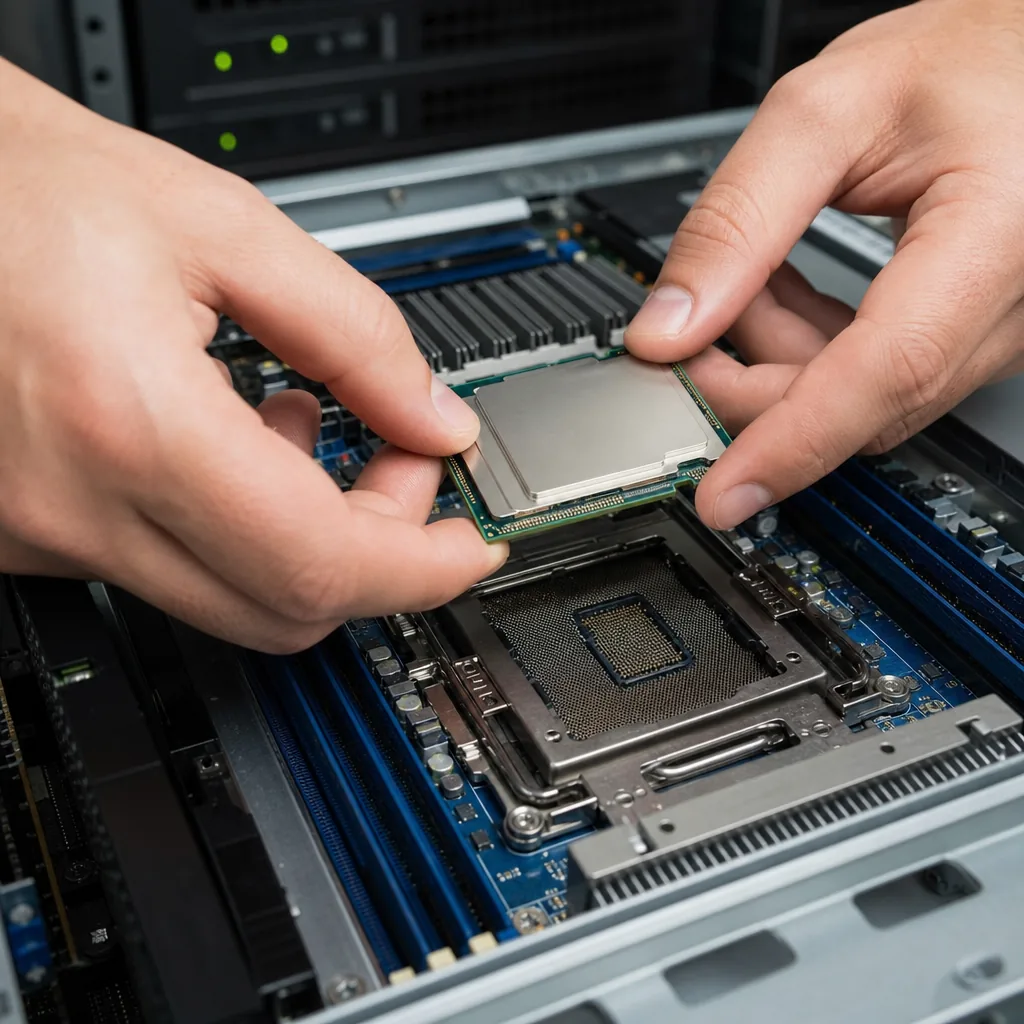
The chipmaker also delivered adjusted earnings per share of 42 cents, double the 21 cents Wall Street had expected. Analysts had forecast revenue of $14.42 billion. Intel’s guidance for the current quarter also came in ahead of expectations, suggesting the company expects the momentum to continue despite limits on how many chips it can supply.
“AI is driving unprecedented demand for compute. Our Q2 results represent our strongest revenue growth in more than fifteen years, enabled by greater speed, accountability, and customer focus,” chief executive Lip-Bu Tan said in Intel’s results statement.
The headline number sits alongside a large statutory loss. Intel reported a GAAP net loss of $11 billion, or $2.16 per share, caused chiefly by a $12.5 billion mark-to-market loss on escrowed shares connected to its CHIPS Act agreement with the US government. Intel said that was a non-cash charge tied to the government’s equity stake, rather than a reflection of the underlying quarterly operating performance.
Xeon 6 drives a sharp data-centre recovery
The standout division was Data Center and AI, where revenue rose 59% from a year earlier to approximately $6.3 billion. That was a major acceleration from the segment’s 22% growth in the previous quarter, with revenue increasing from roughly $4 billion in the second quarter of 2025.
Intel attributed the rise largely to demand for Xeon 6 server processors, growing AI server deployments and CPUs supporting agentic AI workloads. Custom-chip revenue within the division nearly tripled, while operating margin expanded from 16.1% to 39.5%.
AI-driven businesses collectively grew by more than 70% year on year and accounted for around 70% of Intel’s total revenue, according to the company. This matters because it indicates AI investment is spreading beyond dedicated accelerators into the CPUs, networking, packaging and manufacturing capacity required to run large-scale systems.
Intel’s Client Computing business, which makes PC processors, also grew. Revenue rose 13% to $8.9 billion, and Intel quietly renamed the unit the Client Computing and Physical AI Group. The company said two-thirds of client revenue now comes from AI PCs.
Non-GAAP gross margin reached 41.8%, 280 basis points above Intel’s guidance. The company said gross margin had recovered to 42%, compared with 2.5% in the year-ago period.
Foundry growth remains costly
Intel Foundry revenue increased 31% to $5.8 billion, but the manufacturing arm remains loss-making. It recorded a $2.1 billion operating loss during the three-month period, while external foundry revenue was $293 million.
Tan told analysts that his confidence in Intel’s foundry process roadmap had “grown significantly” since taking the top job. Investors, however, are still looking for proof that the business can win a major customer for its most advanced manufacturing processes.
Fortinet became Intel’s first named foundry customer under Tan earlier this month, although that agreement uses an older process rather than the advanced nodes Intel is seeking to sell more widely. Intel’s next-generation Xeon 6+ family, internally known as Clearwater Forest, is its first data-centre CPU built on the Intel 18A process. Intel announced the processors on 31 May.
More spending, but supply remains tight
Intel has raised its 2026 capital-expenditure guidance from $18 billion to more than $20 billion, with a significant further increase planned for 2027. The spending is primarily aimed at US-based tooling and capacity expansion, including equipment, clean-room space and substrates.
“AI-driven compute continues to strengthen, and to support expected growth this year and next across products and foundry, we are meaningfully increasing our investments in equipment, clean room space, and substrates,” chief financial officer Dave Zinsner said.
The investment is needed because Intel cannot currently satisfy all demand. The company said its data-centre operation is supply-constrained, with demand for server CPUs exceeding what it can produce. Constraints span wafers, memory and substrates; some bottlenecks may ease between late in the third quarter and the fourth, but Intel does not expect to fully meet server CPU demand before year-end.
Zinsner said Intel had reached 10 long-term agreements and told analysts: “Customers continue to signal a strong and sustainable spending environment.”
What comes next
For the third quarter, Intel expects revenue of $15.8 billion to $16.8 billion, adjusted earnings per share of 38 cents and non-GAAP gross margin of about 42%. That revenue outlook is above the consensus forecast of just over $15 billion, while the earnings forecast exceeds the 27-cent estimate.
PC sales are expected to be flat in the third quarter because of the memory shortage. Intel said commercial refresh cycles and AI PC adoption are supporting profitability in the client business, but rising component costs are also causing some businesses to delay hardware upgrades.
Intel shares initially rose after the results before reversing in extended trading. The move extended a difficult July for the stock, despite it remaining more than 170% higher for the year. The quarter gives Intel a stronger financial argument for its turnaround, but its ability to turn demand into lasting gains will depend on expanding supply and proving its foundry can attract bigger advanced-chip customers.
Why it matters
The AI boom is increasingly lifting the less visible chips that run data centres, not just the accelerators associated with generative AI. For UK buyers, that means Intel’s AI PC branding will become more common in new computers, while constrained supplies of memory and other components could keep PC prices under pressure. Stronger server demand could also affect the capacity behind cloud tools, streaming platforms and AI services used every day.