DJI Flip Review: The Folding-Cage Drone That Vloggers Were Waiting For
Part Mini, part Neo, part transformer toy: the DJI Flip wraps a serious 1/1.3-inch camera in fold-away propeller cages and asks just £369. We've flown it through a British spring to find out exactly who it's for - and the answer is more people than you'd think.
 By Priya Sharma · Phones, Tablets & Cameras Editor · Updated July 01, 2026
1. What the Flip is: the missing middle of DJI's range
DJI's small drones used to force a choice. The Neo line is brilliantly safe and effortless but carries a small sensor on a partial gimbal; the Mini line carries a genuinely good camera but spins naked propellers that demand respect around people. The Flip is the bridge: a 1/1.3-inch, 48MP camera on a full 3-axis gimbal - Mini-class imaging - inside fold-away full-coverage prop guards that make it as sociable as a Neo.
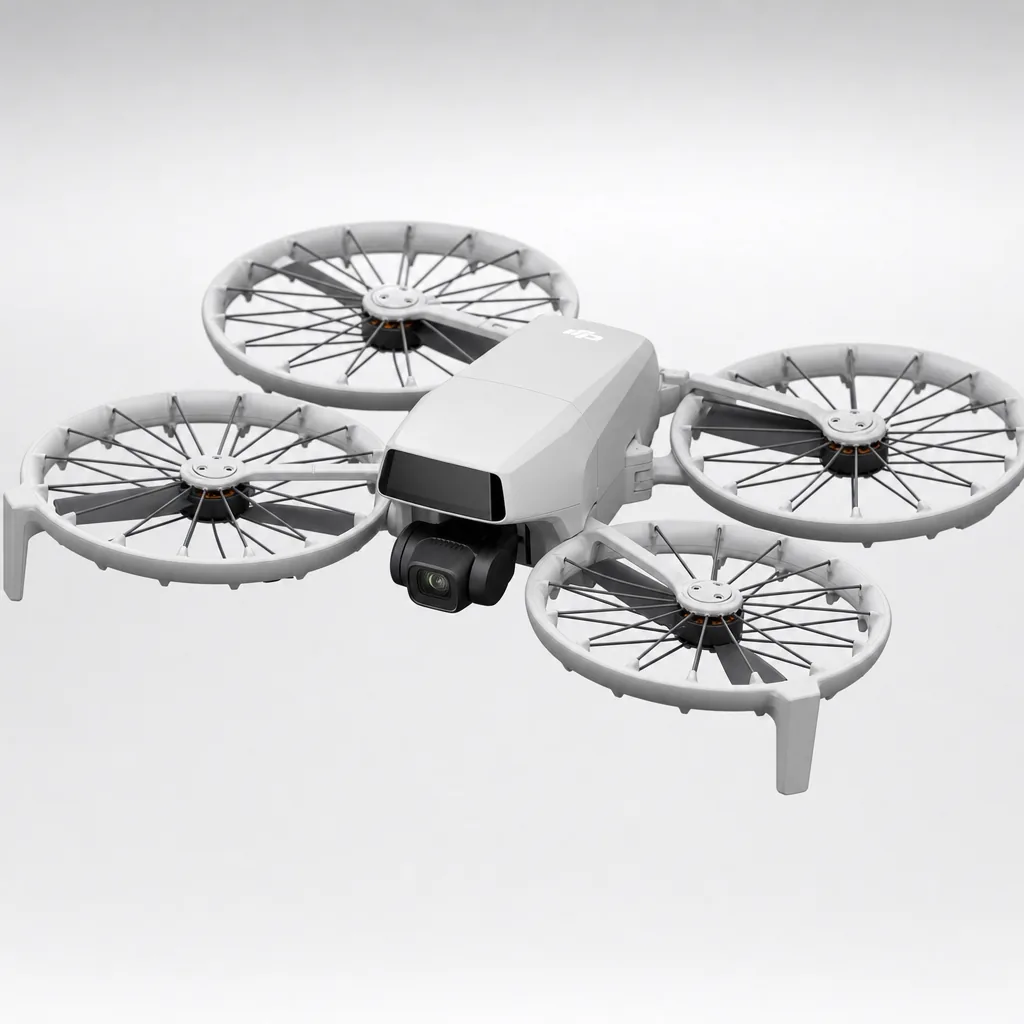
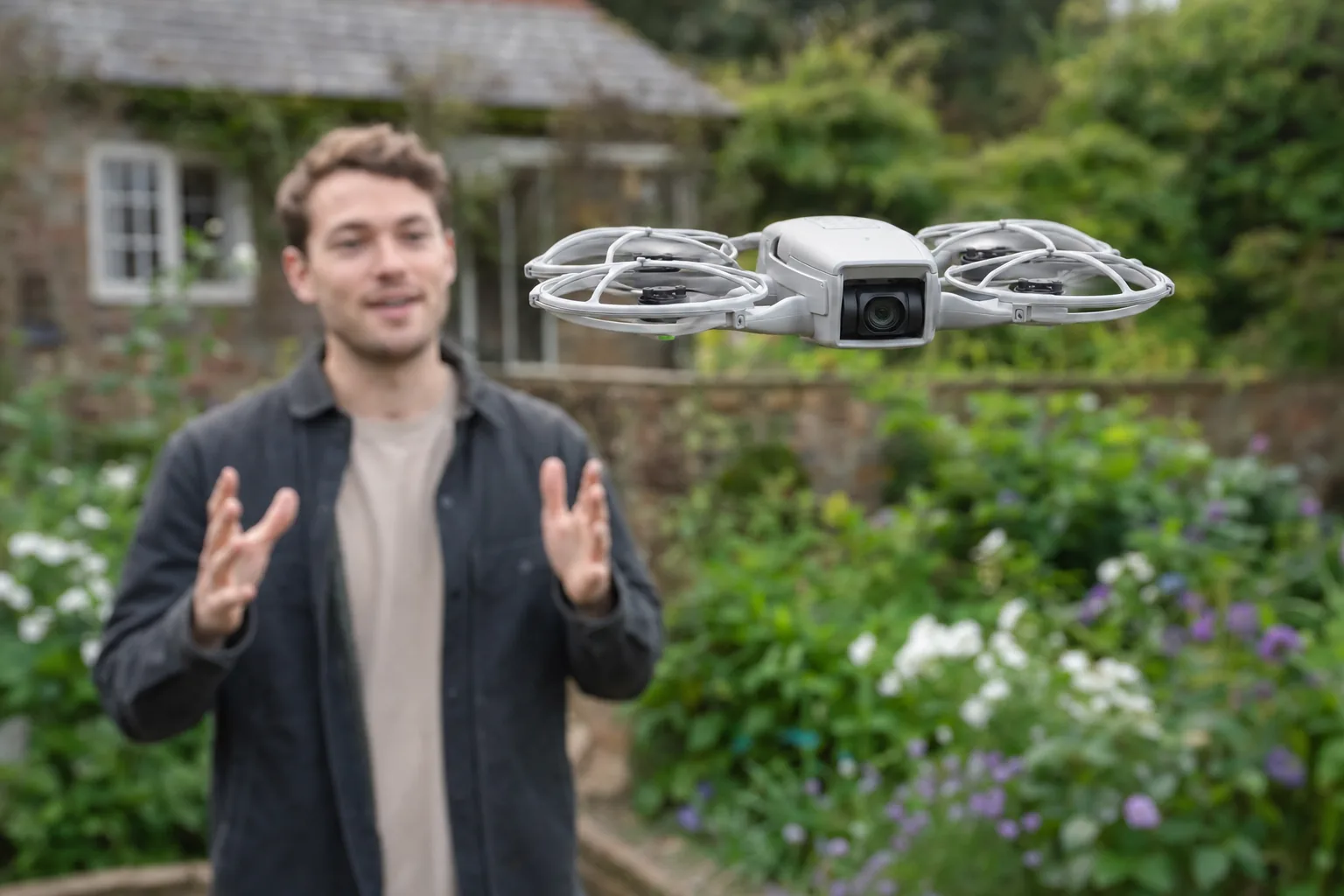
That combination defines its audience with unusual clarity. The Flip is for people who film people: vloggers doing pieces to camera, parents filming sports day, creators who fly in gardens, courtyards and streets where an unguarded drone is a liability. It launches from your palm, tracks subjects automatically, and shoots footage you can colour grade - a sentence no other £369 drone can claim.
Within the family, it sits exactly between the Neo 2 (£209, reviewed alongside this) and the Mini 5 Pro - we'd call it the sweet spot for anyone whose priority is filming themselves or their family rather than landscapes, and our upcoming six-drone comparison will map those boundaries precisely.
2. Design: the folding cage is cleverer than it looks
The Flip weighs under 249g with battery and microSD card - deliberately ducking beneath the UK and EU's 250g regulatory line - and folds via those four hinged propeller cages rather than the usual swing-out arms. Unfolded, it's surprisingly tall; folded, it's a dense little brick that survives being thrown into a rucksack with zero ceremony, no case needed, because the cages protect the props in transit too.
Living with the design teaches you three things:
- The cages change your flying psychology. You stop flying defensively. Doorways, garden trees, filming two feet from a toddler's birthday cake - all routine. The cage takes the scrape, the flight continues, nobody bleeds.
- Wind catches it more than a Mini. All that guard area is sail area. It holds station respectably for its weight, but on properly gusty UK days a Mini 4 Pro of the same weight sits noticeably steadier. Check the forecast before coastal shoots.
- It's louder than a Mini. Air moving through cage mesh adds a slightly raspier note. Noticeable side by side; irrelevant on its own.
UK rules: identical to every sub-250g drone
Under 250g means the friendly category: fly in residential and recreational areas and over uninvolved people (never crowds), no theory test, just a CAA operator ID because it has a camera. Keep line of sight, stay under 120m, respect airport zones. Done.
3. Camera: Mini-class imaging at a vlogger's price
This is where the Flip earns its keep. The 1/1.3-inch 48MP sensor - the same class as the celebrated Mini 4 Pro - shoots 4K/60fps HDR, with 10-bit D-Log M available for anyone who grades their footage. A true 3-axis mechanical gimbal keeps everything floaty and cinematic in conditions that would have a Neo's footage visibly working hard.
Practical picture quality, UK conditions, honestly stated:
- Daylight: superb. Crisp 4K with confident colour straight off the card; 48MP stills hold up to real cropping.
- Golden hour and overcast: this is the upgrade Neo owners feel immediately. The bigger sensor keeps shadow detail and resists noise well past sunset's first act.
- HDR skies: bright cloud over dark land - Britain's default sky - is handled gracefully at 4K/60, where smaller sensors clip to white mush.
- 10-bit D-Log M: the gift to editors. Footage from the Flip intercuts cleanly with bigger DJI drones on the same timeline, which is exactly why semi-pros keep one as a 'people-safe' B-camera.
The honest limits: the fixed f/1.7 aperture and small-ish sensor still can't do true night work - streetlit scenes get soft and painterly - and there's no telephoto, so your framing range is your feet. Neither matters for the Flip's core audience; both are why the Air 3S and Mavic 4 Pro exist further up our series.
4. Flying it: palm launch, subject tracking, and one caveat
The Flip splits into two personalities depending on what's in your hand:
Hands-free mode needs no controller at all. A button on the drone cycles through palm-launch modes - follow, dronie, circle, rocket and friends - then it takes off from your hand, performs, and comes back. It's the Neo's magic with dramatically better image quality, and for vloggers it means the drone is usable ten seconds after the thought occurs.
Controller mode unlocks the full camera drone: proper manual flying, subject tracking with framing control, QuickShots, panoramas and hyperlapses through the familiar DJI Fly app, with DJI's O4 transmission rated to 13km (a number UK line-of-sight rules ensure you'll never legally approach - in practice it means the link is rock-solid at sensible distances).
The one caveat worth knowing before you buy: obstacle sensing is forward-facing 3D infrared plus downward sensors - not omnidirectional. Tracking a subject, the Flip will dodge what it can see ahead, but it can be reversed or side-stepped into trouble in cluttered spaces in a way the (smaller-sensored) Neo 2 won't, because the Neo 2 sees in every direction. The cages turn most such mistakes into a bounce rather than a break - but it's the right reason to keep tracking flights in reasonably open space.
5. Battery, range and the combo question
DJI claims 31 minutes from the 3,110mAh battery; real-world UK flying lands at a dependable 22-25 minutes - comfortably double a Neo 2 and enough that one battery covers a typical filming session. It also charges over plain USB-C in the drone, which travellers will appreciate.
UK buying options, decoded:
- Flip with RC-N3 controller - £369. Uses your phone as the screen. The value pick and the configuration most buyers should choose.
- Flip with RC 2 - £549. DJI's controller with the built-in screen: faster to deploy, better in bright sun, no phone battery drain. Worth it for frequent flyers.
- Fly More Combo - £659. RC 2 plus three batteries and the charging hub: 70+ minutes of combined airtime for day trips.

See the DJI Flip (RC-N3 bundle) on Amazon UK
In stock and price-checked at the time of writing
6. Getting genuinely cinematic footage out of it
The gap between average Flip footage and footage people refuse to believe came from a £369 drone is technique, not luck. The settings and habits that close it:
- Default to 4K/60 HDR for family and travel. It's the best-looking straight-out-of-camera mode, and 60fps gives you the option of gentle slow motion in the edit.
- Switch to D-Log M only when you'll actually grade. Ungraded D-Log M looks washed out and disappoints people who shoot it by accident. If your editor of choice is 'share button', stay in Normal.
- Buy the ND filter set if you grade. DJI's clip-on NDs let you hold cinematic shutter speeds in daylight - the single biggest 'why does mine look like video and yours looks like film' factor.
- Move slower than feels natural. The classic small-drone tell is twitchy framing. Halve your stick inputs, plan one move per shot (push in, orbit, reveal - pick one), and the 3-axis gimbal does the rest.
- Use the cages as a creative licence. Shots no sensible Mini owner attempts - through doorways, under branches, inches over a picnic table - are the Flip's signature. That proximity is what makes its footage feel different, not the resolution.
- 48MP stills are a stealth feature. Shoot stills in 48MP and you can reframe to vertical, square and wide crops from one capture - one flight, every aspect ratio your platforms need.
7. First-week mistakes every new Flip owner makes
We've watched a lot of people learn this drone. The same five mistakes appear every time - skip them and your first month looks like someone's second year:
Trusting the tracking in clutter
The Flip's sensing looks forwards, not sideways or backwards. Subject tracking in open parkland: flawless. Tracking through a wooded path with low branches: that's Neo 2 territory. Know which drone you bought.
Ignoring the Return-to-Home altitude
RTH is set in the app, and the default may be lower than the tallest tree between you and the drone. Set it above everything in your area on day one - it's the setting that saves drones.
Flying the claimed 31 minutes
Plan around 20 useful minutes and land at 20% battery. Cold UK mornings sap lithium cells, the low-battery spiral home is stressful, and batteries kept between 20-80% live far longer.
Cheap microSD cards
4K/60 HDR needs sustained write speed. A no-name card 'works' until it drops frames in the only take that mattered. A genuine U3-rated card from a known brand is £15 of insurance.
Launching with folded-arm complacency
Each cage must click positively into place - a half-seated arm passes a glance but not a take-off. The pre-flight ritual is four clicks, lens wipe, clear palm. Five seconds, every time.
8. Flip vs Neo 2 vs Mini 4 Pro: choosing in 30 seconds
| DJI Flip | DJI Neo 2 | DJI Mini 4 Pro | |
|---|---|---|---|
| Sensor | 1/1.3", 48MP | 1/2", 12MP | 1/1.3", 48MP |
| Top video | 4K/60 HDR, 10-bit D-Log M | 4K/60 (4K/100 slow-mo) | 4K/60 HDR, 10-bit D-Log M |
| Gimbal | 3-axis | 2-axis + EIS | 3-axis (true vertical) |
| Prop protection | Folding full cages | Fixed full guards | None (clip-ons optional) |
| Obstacle sensing | Forward 3D IR + downward | Omnidirectional | Omnidirectional |
| Real flight time | ~22-25 min | ~13-15 min | ~25-30 min |
| UK price from | £369 | £209 | ~£689 |
- Choose the Flip when image quality and people-safety must coexist: vlogging, family, creators filming humans at close range.
- Choose the Neo 2 when effortlessness beats image quality: sport tracking, spontaneous moments, first drone ever, or FPV curiosity at £209.
- Choose a Mini 4 Pro (or the newer Mini 5 Pro, reviewed later in this series) when the subject is the landscape, not a person - longer reach, steadier in wind, true vertical shooting, no cage drag.
9. Test diary: a month of filming people
The Flip spent a month as our default people-camera. Four entries from the log explain it better than any spec:
The piece-to-camera problem, solved
Task: a presenter walking and talking through a garden nursery, camera tracking backwards at face height - the shot that usually needs a gimbal operator walking backwards into pot plants. The Flip flew it in ActiveTrack from a palm launch, held frame through two direction changes, and the cages meant nobody flinched when it slid past a trellis at elbow distance. Three takes, one battery, no crew. This single capability justifies the drone for any content creator.
Sports day, legally and socially
A junior football match - parents lining the touchline, kids everywhere. Sub-250g rules made the flight lawful; the visible cages made it socially acceptable, which matters more. Flying twenty feet up and wide of the pitch, the Flip's 48MP stills (cropped later to follow the action) and steady 4K delivered the kind of coverage parents assume needs a club videographer. Several asked what it was; none asked it to land. A naked-prop drone draws different questions.
The interior surprise
A barn-conversion holiday let, owner wanting interior flythrough footage. The Flip - cages on, sensing forward, nerves steady - flew door-to-door through the property at walking pace, something we would flatly refuse to attempt with a Mini. Output graded cleanly against exterior shots from a bigger drone. The cages aren't just for safety; they unlock locations.
The windy Saturday that taught restraint
And the honest entry: a planned cliff-path shoot abandoned after one battery returned at 40% having fought a crosswind to a visible draw. The cages that make the Flip brilliant indoors make it a kite outdoors past a stiff breeze. We rescheduled; the footage two calm days later was worth the patience. Every Flip owner learns this trade and stops resenting it - it's the price of the party trick.
10. The creator workflow: flight to upload in an hour
The Flip's audience measures success in published content, so here's the workflow that gets footage from sky to feed fastest without looking rushed:
- Shoot 4K/60 Normal for same-day content. The straight-out-of-camera colour is tuned for exactly this; HDR handles mixed skies. Save D-Log M for projects with an edit day.
- One move per clip, five seconds longer than feels right. Push-ins, orbits and reveals cut better with handles. The amateur tell isn't image quality - it's clips that end as the move completes.
- Shoot the vertical deliberately. Frame key moments twice: once horizontal for YouTube, once with the subject centred for a later 9:16 crop (48MP stills cover stills-led verticals natively). Two minutes of discipline doubles your platform coverage.
- QuickTransfer beats the card reader. Phone-to-drone direct transfer at the kettle, edit in your phone app of choice, publish before the tea cools. The full-size files stay on the card for the proper edit later.
- Build a LUT habit early if you grade. DJI's official D-Log M LUT plus one personal tweak saved as a preset means your Flip footage develops a recognisable look - the thing audiences actually remember.
- Name a music-and-pace formula. The creators who post consistently aren't editing faster; they're deciding less. Sixty-second template: launch shot, three story beats, palm-land ending. The Flip's palm landing is a better outro than any transition pack.
11. Ownership: care, transport and the long game
A drone that lives in a rucksack needs different ownership habits than one that lives in a case. What a month teaches:
- The cages are consumable armour, eventually. They shrug off the brushes that would total a Mini, but a hard strike can crack cage segments. Inspect after any real contact; replacement guard assemblies are inexpensive and user-fittable - budget for one set across the drone's life and you'll probably never need the second.
- Fold with intent. The hinge mechanism rewards the deliberate four-click ritual and punishes pocket-stuffing mid-fold. It's the one piece of mechanical complexity on the aircraft; treat it like the moving part it is.
- Battery hygiene = longevity. Store packs at half charge if parking the drone for weeks, keep them off radiators and out of parked cars, and rotate all three combo batteries evenly. Lithium cells age by calendar and abuse, not just cycles.
- Lens before launch, always. A pocket-carried drone collects pocket film on its glass. The two-second microfibre wipe is the highest-value maintenance act in this hobby.
- Insurance reality check: home contents policies sometimes cover drones as portable electronics (check the away-from-home and accidental-damage clauses); dedicated hobby cover via BMFA membership or specialist policies costs little and includes the public liability that flying near people morally demands. The cages reduce the risk; they don't reduce the responsibility.
- Resale is your upgrade fund. Looked-after DJI aircraft with boxes and low hours hold value well in the UK used market. The Flip you buy today is, realistically, a meaningful deposit on whatever 2027's folding marvel turns out to be.
12. Twelve shot recipes that make the Flip sing
Steal these. Each is Flip-friendly, person-safe and proven to lift an edit:
- The palm-launch opener: film the launch from a second phone as your video's first shot, cut to the drone's view rising from the hand. Free production value, every time.
- The walking interview: ActiveTrack at head height, subject walking toward camera and talking. The Flip's signature professional move.
- The doorway reveal: start indoors, fly slowly through the door into the garden as light blooms. Cage-enabled; Minis need not apply.
- The table orbit: a slow circle two feet above a laid table, workshop bench or product display. Close-quarters confidence as composition.
- The follow-from-the-front jog: tracking backwards ahead of a runner or cyclist on open path - energy without risk.
- The 48MP crop-zoom: one high still over an event, three progressively tighter 'shots' cropped in the edit. A zoom lens you didn't carry.
- The vertical fountain: rise straight up from flowers/feet/product to reveal the scene, shot for 9:16. Reels catnip.
- The window check-in: hover outside a (your own) window, wave from inside. The establishing shot every property and Airbnb video wants.
- The crowd-safe high wide: 20m up, 30m back from any gathering - context without intrusion, legal under 250g, gracious always.
- The handover: fly to a second person who palm-lands and re-launches it. Two-location coverage, zero controllers exchanged.
- The golden-hour silhouette track: subject between drone and low sun, tracking sideways. D-Log M keeps both sky and skin gradeable.
- The cage-tap ending: subject gently catches the hovering Flip, lens-first, as the final frame. Only a caged drone ends a film by being caught.
13. The Flip as a business tool: lets, listings and local trade
An underwritten Flip story: it's quietly becoming small businesses' first drone, because its niche - good footage, near people, no drama - is exactly what local commerce films:
- Holiday lets and B&Bs: the doorway-to-garden flythrough, the bedroom-window-to-view reveal, the breakfast-terrace orbit. Sub-250g rules make on-property flying straightforward; the cages make indoor segments possible. Owners we know shoot seasonal refreshes themselves on a single battery - agency dayrates retired.
- Cafés, pubs and venues: the courtyard-on-a-Saturday atmosphere shot, legally flyable over your own involved customers (brief them; involved people can consent) and socially flyable because guards read as friendly. Sixty seconds of golden-hour garden footage outperforms any static photo on local social.
- Estate-agent reality: for the exterior money shot, fine - but mind the boundary: marketing work for clients edges toward obligations (insurance expectations, neighbour privacy, and at scale the question of whether a sub-250g hobbyist posture still fits). Shooting your OWN property: unambiguous. Building a sideline: read our Air 3S review's A2 section first.
- Weddings - with one hard rule: the Flip films preparation gardens, venue exteriors, confetti exits from a respectful hover. It does not fly over the uninvolved crowd, ever, cages or no cages - both for the letter of 'no crowds' law and because nothing ends goodwill like a drone over grandma during vows. The pro pattern: Flip for the close personable moments, hired Air/Mavic operator for the big aerials.
- The invoice-adjacent admin: any paid pattern deserves the grown-up trims - public liability cover (modest cost, instant credibility), a one-line privacy courtesy to neighbours, and footage backups treated like client property. The drone's the cheap part of looking professional.
Frequently asked questions
Is the DJI Flip good for complete beginners?
Yes - arguably the best 'first proper camera drone' there is. Palm-launch modes need no controller skill at all, the folding cages forgive mistakes, and the camera is good enough that you won't outgrow it in a month. The £369 RC-N3 bundle is the sensible starting point.
Do I need a licence for the Flip in the UK?
No test - it's under 250g. You need a CAA operator ID (small annual fee, because it has a camera) shown on the drone, and you must follow the standard rules: line of sight, max 120m, no crowds, no airport zones.
Can the Flip follow me like the Neo 2 does?
It has solid subject tracking and will dodge obstacles it can see ahead - but its sensing is forward-facing only, not omnidirectional like the Neo 2's. Track in open spaces and it's excellent; in dense clutter the Neo 2 is the smarter follower (with a much weaker camera).
How does the Flip handle wind?
Respectably for a caged sub-250g drone, but the guards add sail area: on gusty days it works visibly harder than a Mini and you'll see it in battery drain before you see it in footage, thanks to the 3-axis gimbal. For exposed coastal work, a Mini is the steadier tool.
Is the RC 2 controller worth £180 over the RC-N3?
If you fly weekly, yes - the built-in screen means no phone faff and stays readable in direct sun. If you're an occasional flyer, the RC-N3 bundle at £369 is the better-value buy and the experience is identical once you're airborne.
DJI Flip or DJI Mini 4K for a tight budget?
Different jobs. The Mini 4K (~£269) is a traditional fly-it-yourself landscape camera with no guards and basic sensing. The Flip (£369) is for filming people, safely, with a far better feature set. If your footage will contain humans you know, the Flip is worth the stretch.
Can the DJI Flip fly indoors?
Yes, with sense: the full cages make interior flythroughs genuinely viable - holiday lets, halls, big kitchens - at walking pace with sensing active. It's larger and breezier than a Neo 2 indoors (prop wash flutters paperwork), so the Neo remains the small-room specialist; the Flip owns the doorway-to-garden reveal.
How well do the 48MP photos hold up against a phone?
In good light, the Flip's stills out-detail any phone's main camera at matched sizes and beat every phone on the one axis that matters: the viewpoint. Phones still win at computational night photography. The honest framing: it's a very good 2026 camera in an impossible location, which is the whole point.
What happens if a propeller cage gets damaged in a crash?
The cages are designed as replaceable sacrificial armour: segments crack so the props and gimbal don't. Spare guard assemblies are inexpensive, user-fittable with the supplied tool, and worth keeping one set of in the bag for trips. In our month of testing, deliberate brushes with hedges and door frames never got past cosmetic scuffs.
Does the Flip work with DJI's goggles for FPV?
No - the Flip is a camera drone through and through, with no goggles or motion-controller support. FPV ambitions point at the Neo 2's Motion combo as the budget gateway or the Avata 2 (reviewed later in this series) as the real thing.
Verdict: the people-filming drone, solved
The Flip takes the two things that kept normal people away from good drones - the danger of naked props around faces, and the faff of controllers - and folds them both away. What's left is a 1/1.3-inch, 10-bit camera that launches from your palm and films humans at close range without anyone flinching.
Score: 9/10. Marked down only for forward-only obstacle sensing and its breezy-day manners. For vloggers, families and creators it isn't just the best value at £369 - it's the first drone that treats filming people as the main event rather than a risk to be managed. Pair this review with our DJI Neo 2 review to see both ends of the palm-launch spectrum - and stay tuned: the Mini 5 Pro, Air 3S, Mavic 4 Pro and Avata 2 complete this series, ending in our full six-drone comparison.
Sources & further reading: official DJI Flip specifications · Tom's Guide's Flip review · CAA drone registration · the CAA's drone rules hub.