
Best Car Jump Starters UK 2026: Are the Cheap Ones Really as Good as NOCO?
A £30 jump pack claims more power than a £100 NOCO. So do the budget brands actually live up to the expensive ones? We dug into the specs, the safety, and the marketing to find out — and to help you pick the right one to keep in your boot.
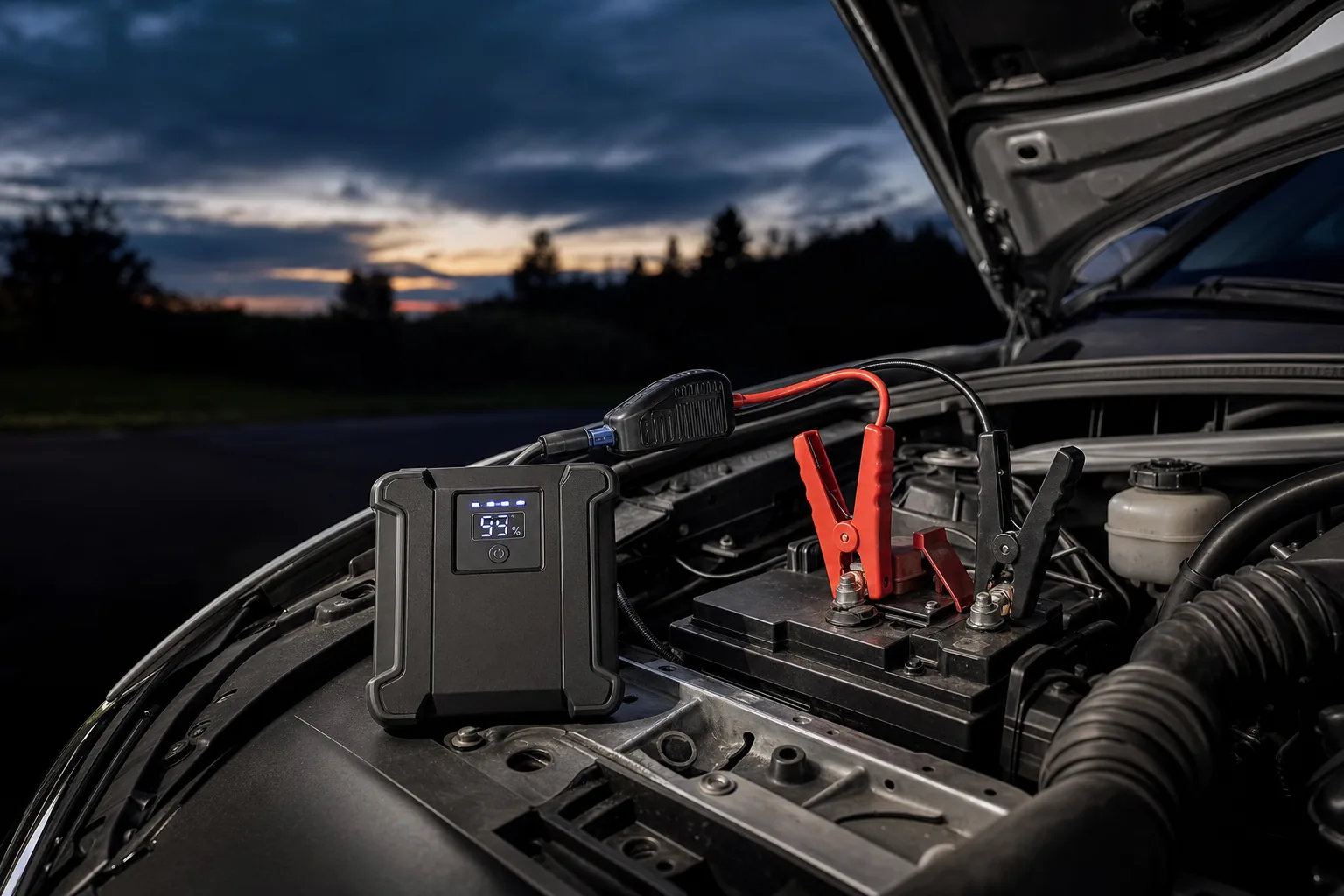

We link to the exact model on Amazon UK. Prices change often, so check the live price before you buy. As an Amazon Associate we earn from qualifying purchases.
There are few things more deflating than turning the key on a cold morning and hearing nothing but a sad click. A flat battery always seems to strike at the worst possible moment — a dark car park, a country lane with no signal, or the school run when you're already late. A modern lithium jump starter fixes that in about 30 seconds, fits in your glovebox, and means you never have to flag down a stranger with jump leads again. The catch? Prices run from around £30 to well over £100, and the cheapest packs often claim the biggest numbers. This guide cuts through that.

See the NOCO Boost GB40 on Amazon UK
Check today's price & availability on Amazon UK
We assessed four of the most popular jump starters on Amazon UK across the full price range — the premium NOCO Boost GB40, the well-rounded TOPDON JS2000 Pro, the value-packed GOOLOO GP2000, and the bargain AstroAI B8 — to answer the question everyone actually asks: is it worth paying three times as much, or does the cheap one do the same job?
The short version
- Yes — the budget packs genuinely work and will start most cars
- "Peak amps" is a marketing number; treat it with suspicion
- The premium tax mostly buys safety, honesty and longevity
- Most can jump a car 20–35 times on one charge
- Diesels and cold mornings demand more — size up
- Bonus: every one doubles as a USB power bank + torch
What is a jump starter — and why you really should own one
A portable jump starter is a battery in a box. Inside is a lithium cell (the same chemistry as your phone or a power bank), a set of clamps, and some clever electronics. When your car battery is too flat to turn the engine over, you clip the jump starter onto the battery terminals, and it delivers a short, massive burst of current straight to the starter motor — enough to fire the engine into life without any help from another vehicle.
It's a world away from the old method. For decades, "jump starting" meant finding a Good Samaritan with a working car, a set of crocodile leads, and the nerve to connect them in the right order (get it wrong and you can fry the electronics in both cars). A lithium jump pack removes the second car, the stranger, and most of the risk. Modern ones are roughly the size of a paperback book and weigh less than a bag of sugar.
So who needs one? Honestly, almost every driver. A jump starter earns its place in the boot if you:
- Do lots of short journeys (the battery never fully recharges, so it slowly dies).
- Have a car that sits unused for days at a time — a weekend car, a campervan, a second car.
- Drive an older vehicle, or one with a battery that's getting on a bit.
- Live somewhere cold — battery capacity drops sharply below freezing.
- Ever leave the interior light, boot light or dashcam draining the battery overnight.
- Want roadside peace of mind without an annual breakdown-cover renewal.
Even electric and hybrid cars benefit: they still have a conventional 12V battery to run the computers and unlock the doors, and when that goes flat (it happens more than you'd think), the car simply won't "boot up". A jump pack revives it just like any petrol car.
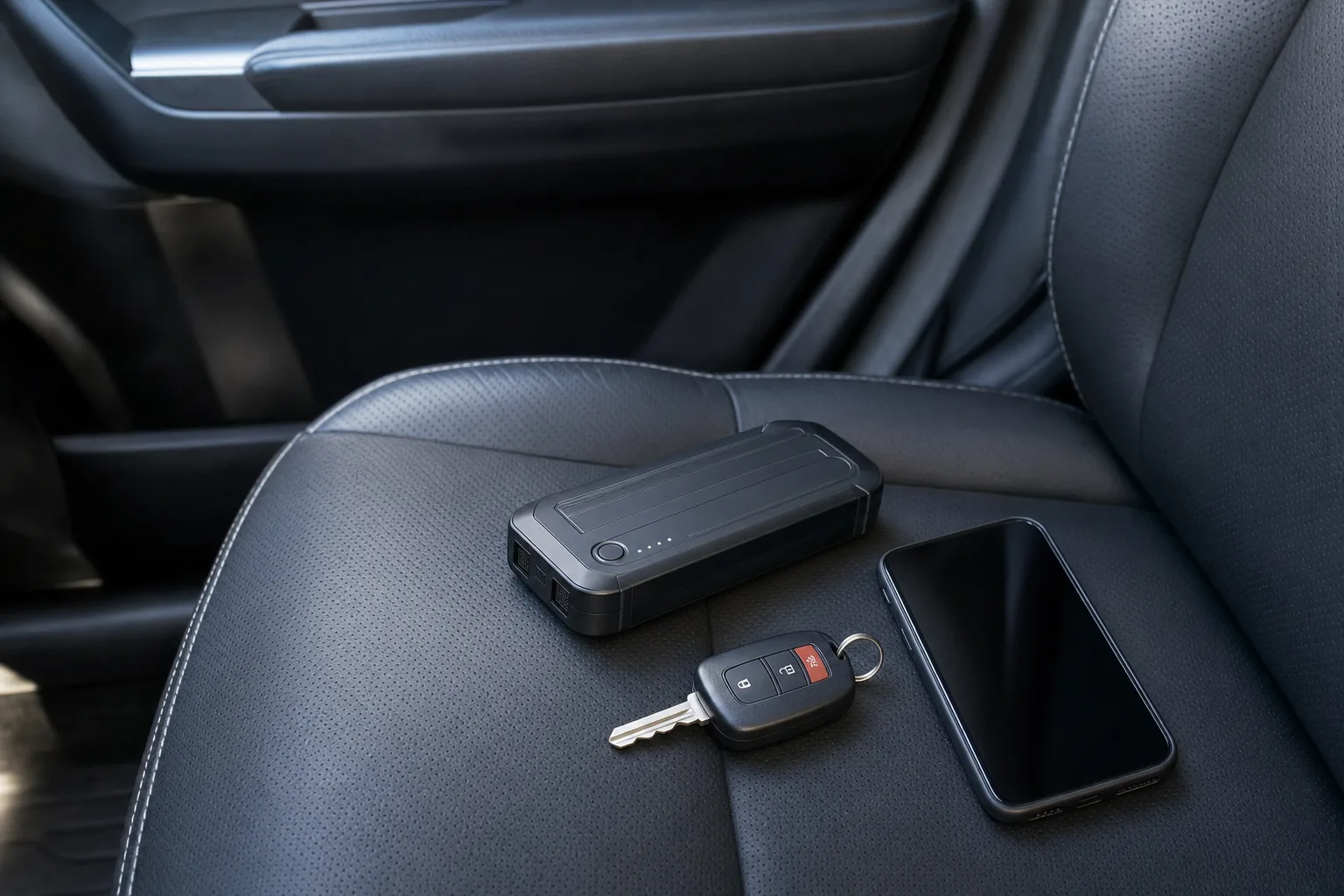
The numbers that matter (and the one that doesn't)
Jump starter listings are a wall of impressive-looking figures. Here's what each one actually means, so you can read a spec sheet like a pro.
Peak amps vs cranking amps — the big marketing trap
Almost every jump starter is sold on its "peak amps" — 1000A, 2000A, 3000A, even 6000A. It's the number printed biggest on the box, and it's the least useful one. Peak amperage is the absolute maximum current the pack can deliver for a tiny fraction of a second under perfect lab conditions. It is essentially unregulated marketing, and there's no UK or EU standard forcing brands to measure it the same way — which is exactly why a £30 pack can advertise "3000A" while a respected £100 unit modestly claims "1000A".
What actually starts your engine is sustained cranking current — the amps the pack can hold steady for the two or three seconds the starter motor is spinning. Premium brands tend to quote conservative, honest figures (or publish the real cranking number); budget brands tend to quote a sky-high peak and stay quiet about the rest. The practical takeaway: don't be seduced by a huge peak-amp figure. A genuine 1000A unit from a reputable brand will out-crank a dubious "2500A" no-name every time.
Engine size: petrol vs diesel litres
This is the spec to actually shop on. Manufacturers rate each pack for a maximum engine size — for example "up to 6.0L petrol / 3.0L diesel". Diesels always get a lower figure because they have higher compression and need far more grunt to turn over, especially when cold. The vast majority of UK cars are under 2.0L, so even an entry-level pack has plenty in hand. But if you run a big diesel 4x4, a van, or a motorhome, size up deliberately and don't buy at the limit of the rating.
Capacity: watt-hours and milliamp-hours
Capacity (quoted in Wh or mAh) tells you how much energy is stored — which decides how many times you can jump start before recharging, and how useful the pack is as a power bank. More capacity also means more reserve for cold-weather starts. Watch out for inflated mAh figures on cheap units; watt-hours (Wh) is the more honest measure because it accounts for voltage.
The number you'll actually feel: jump starts per charge
This is the figure most people care about — and the one you asked about. A good pack will start a typical car somewhere between 20 and 35 times on a single charge. In reality you'll only ever need one or two starts before you can get the car to a charger or a garage, so any of these packs has enormous headroom. The bigger the battery, the more starts (and the more phone charges) you get.
The safety features that separate the good from the dangerous
This is where your money quietly goes on the premium models. Look for:
- Reverse-polarity protection — stops the pack delivering current (and sparking or damaging your car) if you accidentally clip the clamps on the wrong terminals. Non-negotiable.
- Spark-proof / smart clamps — the unit only sends power once it detects a correct, solid connection, so you don't get a bang when the clamps touch.
- Over-current, over-voltage, over-charge and short-circuit protection — protects the pack, the car and you.
- An IP weatherproof rating — handy for a device you'll often use in the rain at the roadside.
The extras worth having
Nearly every modern pack is a 3-in-1: jump starter, USB power bank and LED torch. The better ones add USB-C Power Delivery (so it fast-charges your phone and itself), a bright multi-mode flashlight with SOS/strobe, and a long standby time (how long it holds charge sitting in the boot — the best last a year or two between top-ups).
The four jump starters compared
We picked a deliberate spread: two premium units around £100, and two budget units at £30–£45 that claim to do the same job. Here's how each one stacks up.
1. NOCO Boost GB40 — the trusted benchmark ~£100
NOCO is the name the trade and the reviewers keep coming back to, and the GB40 is its best-selling compact pack. On paper it looks underpowered next to the cheap competition — just 1000A peak, a modest 24Wh battery, and a rating of petrol up to 6.0L / diesel up to 3.0L. Don't be fooled: that 1000A is an honest, conservative figure, and in independent testing the GB40 reliably cranks engines that "bigger-numbered" rivals struggle with.
What you're really paying for is the engineering. The GB40 has NOCO's patented UltraSafe spark-proof and reverse-polarity protection, an IP65 weatherproof rugged casing that shrugs off rain and drops, and a 100-lumen LED with seven modes including SOS. It'll deliver up to 20 jump starts per charge and works as a USB power bank and torch. The honest downsides: it uses an older micro-USB input so it's slow to recharge, the USB output isn't the fastest, and you pay a clear premium for the badge.
Pros
- Honest, dependable real-world cranking
- Genuine UltraSafe spark-proof clamps
- IP65 rugged and weatherproof
- Trusted brand, strong support and warranty
Cons
- Lowest headline power here
- Slow micro-USB recharging
- Most expensive per amp
- Only suits petrol up to 6.0L / diesel 3.0L
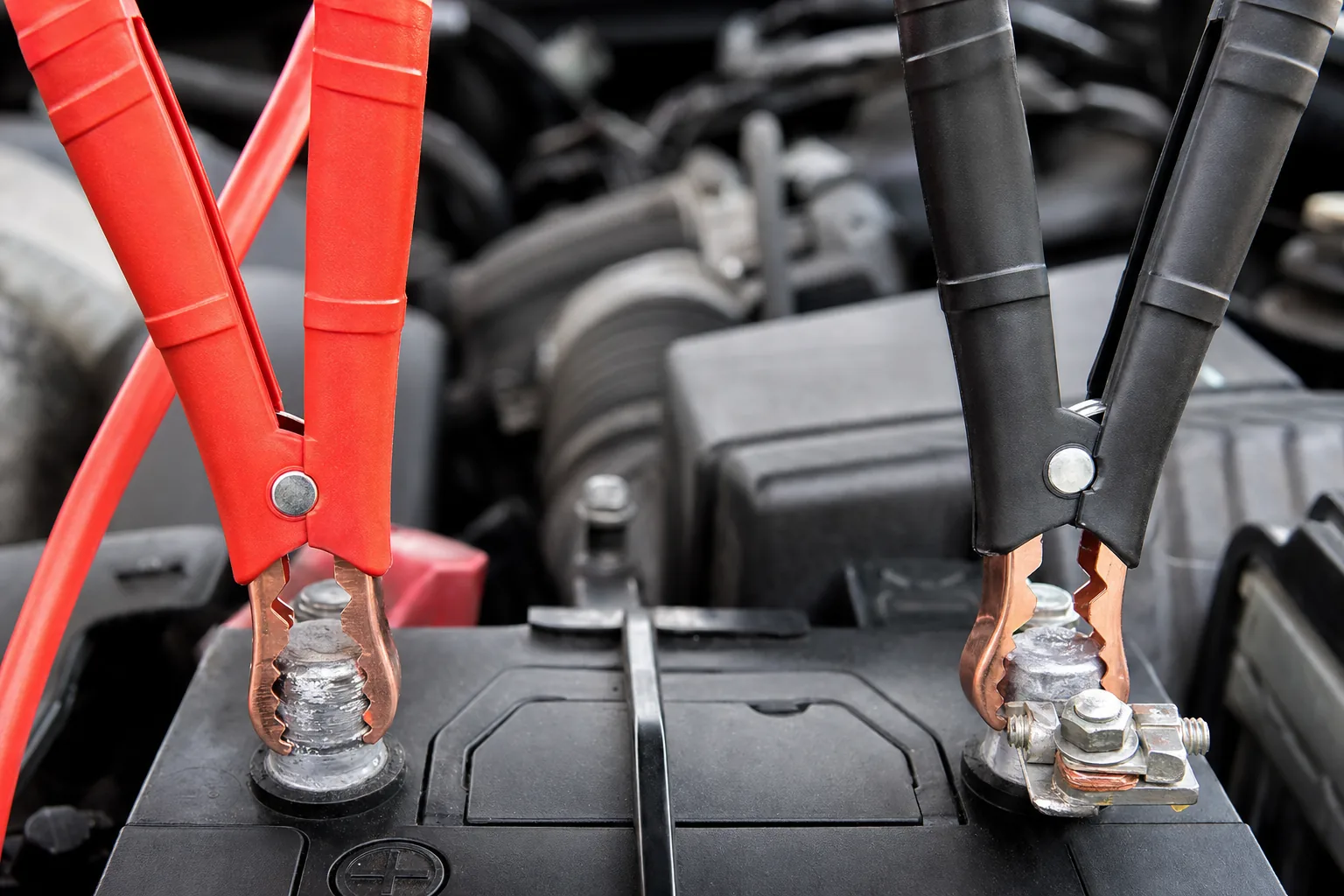
2. TOPDON JS2000 Pro — the well-rounded all-rounder ~£100
TOPDON is best known for professional car diagnostic tools, and that engineering pedigree shows in the JS2000 Pro. It pairs a 2500A peak output with a generous 16,000mAh / 59.2Wh battery, and is rated for petrol up to 8.0L and diesel up to 6.0L — comfortably more than the NOCO on both engine size and capacity, for a similar price.
That bigger battery translates into roughly 35 jump starts per charge and a properly useful power bank with Quick Charge 3.0. You also get a 300-lumen LED with constant, SOS and strobe modes, and a full suite of protections. It's a little chunkier than the others, but if you want premium build quality and the headroom to start a large diesel, this is arguably the most sensible £100 you can spend.
Pros
- Big 59.2Wh battery — ~35 starts
- Handles diesel up to 6.0L
- Reputable diagnostics-tool brand
- Bright 300-lumen torch + QC3.0
Cons
- Bulkier than the compact NOCO
- Premium price like the GB40
- Peak-amp figure still optimistic
3. GOOLOO GP2000 — the value champion ~£45
GOOLOO has built a huge following on Amazon by undercutting the big brands while quoting big numbers, and the GP2000 is its sweet spot. For around £45 you get a 2000A peak unit rated for petrol up to 8.0L and diesel up to 6.0L — on paper matching the £100 TOPDON for engine coverage at less than half the price. It's astonishingly small and light (around half a kilo), has a 44.4Wh battery, a bright 400-lumen flashlight, dual USB power-bank output, and a long ~24-month standby time so it holds its charge in the boot.
Is it as solidly built or as rigorously safety-certified as the NOCO? No. But GOOLOO units have a strong reliability record among owners, include the core protections (reverse polarity, short circuit), and represent genuinely brilliant value. For most ordinary petrol and small-diesel drivers, this is the pack that makes the premium models hard to justify.
Pros
- Outstanding power-for-money
- Tiny and very light
- Petrol 8.0L / diesel 6.0L rating
- Long 24-month standby
Cons
- Build feels less premium than NOCO
- Optimistic peak-amp marketing
- No IP-rated weatherproofing
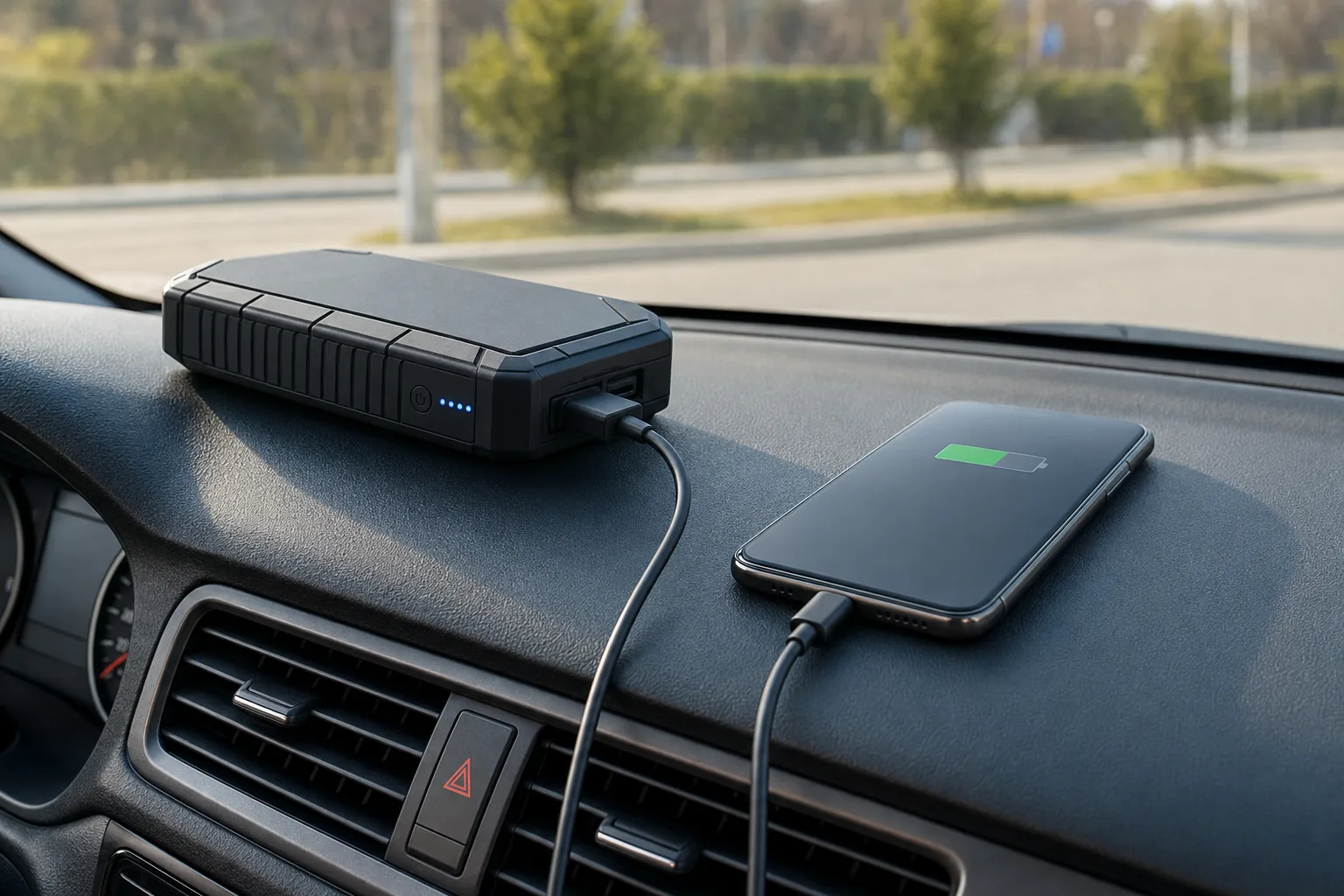
4. AstroAI B8 — the bargain that shouldn't make sense ~£30
At around £30, the AstroAI B8 is the cheapest pack here by a distance — and yet it quotes the highest numbers of the lot: 3000A peak, with a rating of petrol up to 7.0L and diesel up to 5.5L. It comes with USB-C and USB-A power-bank ports, a three-mode LED light and the jumper clamps in the box. On the spec sheet, it makes the £100 NOCO look like a rip-off.
Reality is more nuanced. AstroAI is a reputable budget-electronics brand and the B8 reviews very well for the money — it really will start your car, repeatedly, and doubles as a handy power bank. But that 3000A figure is the most optimistic of the four, the safety engineering and build quality are a step below the premium pair, and longevity over many years is the open question with any ultra-cheap pack. As a back-up you throw in the boot and hope you rarely need, though, it's hard to argue with the price.
Pros
- Remarkable value at ~£30
- Highest headline engine rating here
- USB-C in/out + bundled clamps
- Genuinely capable for everyday cars
Cons
- Most inflated peak-amp claim
- Build and safety a notch below premium
- Long-term durability less proven
Side-by-side: the specs that matter
| Spec | NOCO GB40 | TOPDON JS2000 Pro | GOOLOO GP2000 | AstroAI B8 |
|---|---|---|---|---|
| Typical price | ~£100 | ~£100 | ~£45 | ~£30 |
| Peak amps (claimed) | 1000A | 2500A | 2000A | 3000A |
| Petrol engine | up to 6.0L | up to 8.0L | up to 8.0L | up to 9.0L |
| Diesel engine | up to 3.0L | up to 6.0L | up to 6.0L | up to 7.0L |
| Battery capacity | 24Wh | 59.2Wh (16,000mAh) | 44.4Wh (12,000mAh) | ~16,000mAh |
| Jump starts / charge | up to 20 | up to ~35 | up to ~30 | ~20+ |
| Weatherproofing | IP65 rugged | Splash-resistant | Not IP-rated | Not IP-rated |
| Power bank | USB-A (micro-USB in) | USB QC3.0 | Dual USB | USB-C + USB-A |
| Torch | 100lm, 7 modes | 300lm, 3 modes | 400lm | 3 modes |
| Best for | Reliability buyers | Diesels & big batteries | Best all-round value | Tightest budget |
| Buy | Check price | Check price | Check price | Check price |
| Buy | Check price | Check price | Check price | Check price |
So… do the cheap ones live up to the expensive ones?
This is the heart of it, and the honest answer is: mostly yes — with caveats.
If you simply need to start a normal petrol or small-diesel car a handful of times over the next few years, a £30 AstroAI or a £45 GOOLOO will do that job just as well as a £100 NOCO. They hold charge, they crank the engine, and they throw in a power bank and torch for free. For a lot of drivers, spending £100 instead of £35 buys very little extra capability.
What the premium price actually buys is three things that don't show up in the headline amp figure:
- Honesty. A NOCO rated at 1000A genuinely delivers a strong, consistent crank. A budget pack rated at 3000A is quoting a best-case lab peak; its real sustained output is far lower (and undeclared). You're paying premium brands partly for ratings you can trust.
- Safety and build. Proper spark-proof clamps, certified reverse-polarity protection, an IP65 weatherproof case and quality internal cells matter a great deal for a device that pushes hundreds of amps while you fumble with cold hands in the rain. This is where corners get cut on the cheapest units.
- Longevity. The big unknown with a bargain pack is how it'll behave after three years sitting in a hot or freezing boot. Established brands have the track record (and the warranty) to back the long game; the very cheapest don't yet.
Put bluntly: the cheap ones are brilliant value and will get you out of trouble. The expensive ones are insurance — you're paying for the confidence that it'll work, safely, the one time in five years you desperately need it. Which matters more to you is a personal call, and there's no wrong answer.
How to use a jump starter safely
It takes about a minute, and modern packs make it almost foolproof — but follow the order:
- Make sure the jump starter is charged (check before you store it, and top it up every few months).
- Turn off the car's ignition and all accessories.
- Clip the red clamp to the positive (+) battery terminal.
- Clip the black clamp to the negative (–) terminal (or a clean, unpainted metal point on the chassis).
- Wait for the pack's "ready / connected" indicator. Smart packs won't deliver power until the connection is correct.
- Start the car. If it doesn't fire after a couple of attempts, wait 30 seconds and try again — don't crank continuously.
- Once running, remove the black clamp first, then the red, and stow the pack. Then drive for at least 20–30 minutes to let the alternator put some charge back. Be aware this is not a cure: a deeply discharged or failing battery will not recover from one drive, and if the car needs jumping again soon afterwards it wants a proper mains charger or a new battery rather than another jump.
Looking after your jump starter
A jump pack is only useful if it's charged when disaster strikes — and a lithium battery slowly self-discharges. Recharge it every three to six months, store it somewhere not constantly baking or freezing (extreme heat and deep cold both shorten lithium life), and avoid leaving it fully drained for long periods. Models with a long quoted standby time (a year or two) are far more forgiving if you forget. Give it a top-up before winter and before any long trip, and it'll be ready when you need it.
Frequently asked questions
How many times can a jump starter start a car?
Most of these packs will start a typical car between 20 and 35 times on a single charge, depending on battery size. In practice you'll rarely need more than one or two starts before you can get to a charger, so all of them have huge headroom.
Can it start a completely dead battery?
Usually yes — that's the whole point. A jump starter delivers its own power to the starter motor, so even a battery too flat to crank the engine can be jumped. A physically failed or shorted battery is a different matter and may need replacing.
Will a cheap one start my diesel?
It depends on engine size. Match the pack's diesel rating to your engine — the GOOLOO, TOPDON and AstroAI here cover diesels up to 6–7 litres, while the compact NOCO GB40 is rated to 3.0L. For a big diesel 4x4 or van, choose a pack with a higher diesel rating and plenty of capacity.
Do they work on electric and hybrid cars?
Yes — for the 12V system. EVs and hybrids still have a normal 12V battery that runs the electronics and lets the car power up; when it goes flat the car won't start. EV and hybrid low-voltage jump procedures, approved points and battery locations are vehicle-specific: use the owner's manual and never touch the high-voltage system. (It does not charge the main traction battery.)
Are lithium jump starters safe?
The reputable ones are very safe, thanks to reverse-polarity and spark-proof protection that stop current flowing until the clamps are correctly connected. Buy from a known brand, follow the clamp order, and never bridge the two clamps together.
Is it worth paying extra for a NOCO?
If you value trusted, honest ratings, rugged weatherproof build and long-term reliability — yes. If you just want a capable back-up for an ordinary car at the lowest price, a GOOLOO or AstroAI covers most ordinary cars for a fraction of the money. We would stop short of putting a number on how close they get — a fair comparison needs engine size, battery voltage, ambient temperature, peak and sustained current, and repeated starts, and cold weather is where cheaper packs tend to fall behind.
How long does the charge last in the boot?
Lithium packs slowly self-discharge. The best here quote 18–24 months of standby, but it's good practice to top any of them up every three to six months so it's ready when you need it.
The verdict: which should you buy?
Best overall value — GOOLOO GP2000 (~£45). It's the one we'd put in most drivers' boots: tiny, genuinely powerful enough for the vast majority of petrol and small-diesel cars, long standby time, and less than half the price of the premium pair. For ordinary use it makes the £100 packs hard to justify.
Best for peace of mind — NOCO Boost GB40 (~£100). If you want the reassurance of honest ratings, certified UltraSafe clamps and an IP65 rugged case from the brand the trade trusts, this is the safe, dependable buy — just know you're paying for confidence, not headline power.
Best for diesels & bigger batteries — TOPDON JS2000 Pro (~£100). A larger 59.2Wh battery, ~35 starts and a higher diesel rating make this the premium pick if you run a van, 4x4 or big diesel.
Best on the tightest budget — AstroAI B8 (~£30). The numbers are optimistic and it's not as solidly built as the premium units, but as a cheap back-up that genuinely works, it's superb value — and far better than having nothing in the boot.
Whichever you choose, the real lesson is simple: own one before you need it. A flat battery never gives any warning, and the £30–£100 you spend now is nothing compared to a missed flight, a ruined morning, or a long wait on a cold hard shoulder.
- NOCO Boost GB40View on Amazon
 TOPDON JS2000 ProView on Amazon
 GOOLOO GP2000View on Amazon
 AstroAI B8View on Amazon