
Keysight Results Offer a Fresh Read on the Electronics Supply Chain
Keysight’s Q3 figures were due on 18 August, but its latest verified results already point to strong spending across communications, chips and industrial electronics.

What you need to know
- Keysight’s Q3 FY2026 results release was not available from its official investor pages on 19 August.
- The company previously forecast Q3 revenue of $1.730 billion to $1.750 billion.
- Its Q2 performance showed sharp growth in communications, semiconductors, automotive and industrial electronics.
Keysight Technologies was scheduled to publish its fiscal third-quarter results after the US market closed on Tuesday 18 August, covering the three months to 31 July. But as of Wednesday 19 August, the company’s official investor-relations pages still showed its 28 July announcement of the reporting date rather than a verified Q3 FY2026 results release.
That means the headline numbers investors will want — revenue, profit, orders, segment performance and any revised outlook — cannot yet be treated as confirmed from the official material available. Keysight’s investor-relations site does list an event titled “Q3 FY26 Keysight Technologies Inc. Earnings Conference Call”, scheduled for 18 August, but no verified results release was exposed in the official pages returned by the search.
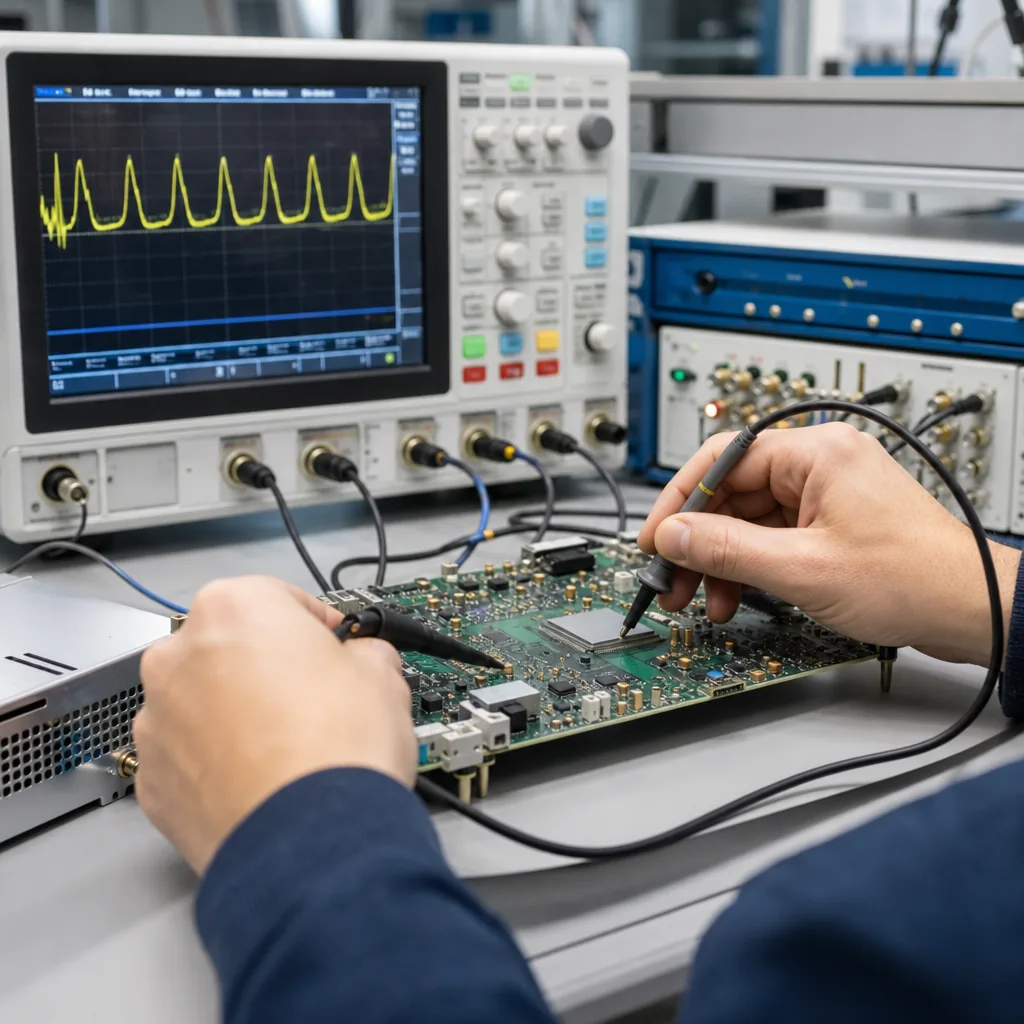
The absence matters because Keysight has become a useful, if indirect, barometer for spending across the electronics industry. It supplies the design, emulation and test systems used to simulate products, validate prototypes, test manufacturing output and optimise networks. Its customers span communications, aerospace and defence, automotive, energy, semiconductors and general electronics.
In other words, Keysight is not a measure of consumer gadget sales. But when businesses buy more of the equipment needed to develop and test sophisticated hardware, it can be consistent with heavier investment further up the technology supply chain.
What Keysight had forecast
Before the missing Q3 release, Keysight had forecast fiscal third-quarter revenue of between $1.730 billion and $1.750 billion, alongside non-GAAP earnings per share of $2.43 to $2.49. At the midpoint, the revenue forecast implied roughly 29% year-on-year growth, according to the company.
Whether it reached, beat or missed that range remains unconfirmed. The eventual release will be closely watched not just for the total, but for the composition of demand: communications and industrial electronics have both been expanding quickly for the company.
For comparison, Keysight reported $1.35 billion in revenue in Q3 FY2025, which was announced on 19 August last year. It recorded GAAP net income of $191 million, or $1.10 per share, and non-GAAP net income of $297 million, or $1.72 per share, in that earlier quarter.
A strong second-quarter baseline
The most recent confirmed update was Keysight’s fiscal second-quarter report, released on 19 May. Revenue reached $1.717 billion, up from $1.306 billion in the same quarter a year earlier. GAAP net income rose to $349 million from $257 million, while non-GAAP net income increased to $497 million from $295 million.
Orders were particularly notable. Keysight reported more than $2 billion of orders in the quarter — $2.051 billion in the company’s filing — compared with $1.316 billion in Q2 FY2025. It also reported $501 million in operating cash flow and $472 million in free cash flow.
Satish Dhanasekaran, Keysight’s president and chief executive, described the period as unusually strong. “Keysight delivered the strongest quarter in the company’s history, capping a record first half with all-time highs in orders, revenue, EPS, and free cash flow,” he said in the May release.
That performance was spread across the company rather than being confined to one end market. The Communications Solutions Group generated $1.231 billion in Q2 revenue, up 35% year on year. Commercial communications grew 40%, while aerospace, defence and government revenue rose 24%.
Its Electronic Industrial Solutions Group brought in $486 million, up 24% year on year. Keysight said automotive and energy, general electronics, and semiconductor markets all delivered double-digit growth.
Supply-chain signals, with limits
Those categories cover several of the areas where increasingly complex electronics need more extensive measurement and validation. Semiconductor companies need test and design tools; automotive and energy businesses are developing electronic systems; and communications companies are investing in networks and related infrastructure. Strong demand for Keysight equipment can therefore provide a read on activity before finished devices reach shops.
It is important not to stretch that conclusion too far. Keysight’s figures cannot confirm whether a particular phone, laptop, television or car will be cheaper, easier to find or delivered sooner in the UK. Retail availability depends on a far wider set of factors, including component supply, manufacturing capacity, logistics and individual brands’ purchasing decisions.
Trade policy is another complication. In its Q2 filing, Keysight recorded a $100 million receivable connected with recovery of certain tariffs previously paid, plus statutory interest, following US court rulings concerning tariffs imposed under the International Emergency Economic Powers Act. It also recorded a $40 million liability for refunds of tariff surcharges collected from customers.
The company has listed tariffs and trade-policy effects, export controls, customer purchasing decisions and order cancellations among the risks that could affect results. Their financial effect during Q3 has not been confirmed.
What to watch next
The next verified Q3 release should show whether the momentum seen through the first half of Keysight’s fiscal year continued into the quarter ending 31 July. The key measures will be revenue against the $1.730 billion-to-$1.750 billion forecast, non-GAAP earnings per share against the $2.43-to-$2.49 range, and any change in orders or forward guidance.
For the wider components market, the most telling detail may be whether growth remains broad-based across communications, semiconductors, automotive and general electronics. Until that official disclosure is available, the strongest evidence remains Keysight’s record Q2 order book — encouraging for industry investment, but not a verdict on the whole electronics supply chain.
Why it matters
Keysight does not sell phones, laptops or TVs, but its equipment is used to design, validate and manufacture the technologies behind them. Rising orders can indicate that companies are investing in new networks, chips, vehicles and electronic products, although one supplier’s figures cannot predict UK gadget prices, stock levels or delivery times. For UK buyers, the useful signal is about the direction of industry investment rather than an immediate change at the checkout.