
Alphabet Lifts 2026 AI Spending to $205bn as Shares Fall 7%
Google’s parent beat earnings forecasts, but a higher AI infrastructure bill and plans for still more spending in 2027 unsettled investors.
What you need to know
- Alphabet raised its 2026 capital expenditure guidance to $195 billion-$205 billion.
- Google Cloud revenue rose 82% year on year to $24.8 billion in Q2.
- Alphabet’s Class C shares closed down approximately 6.84% on 23 July.
Alphabet has raised its planned 2026 capital expenditure to as much as $205 billion, a vast infrastructure commitment aimed largely at AI, despite reporting a stronger-than-expected second quarter. Investors focused on the escalating bill rather than the earnings beat: Alphabet’s Class C shares closed down approximately 6.84% on Thursday 23 July, following an after-hours fall on Wednesday evening.
Google’s parent company released its results after the US market closed on Wednesday 22 July. It reported earnings per share of $9.11 on $119.8 billion in revenue, ahead of Wall Street expectations for $2.95 per share and $116.9 billion in revenue. Revenue rose 24% year on year, marking Alphabet’s 12th consecutive quarter of double-digit growth.
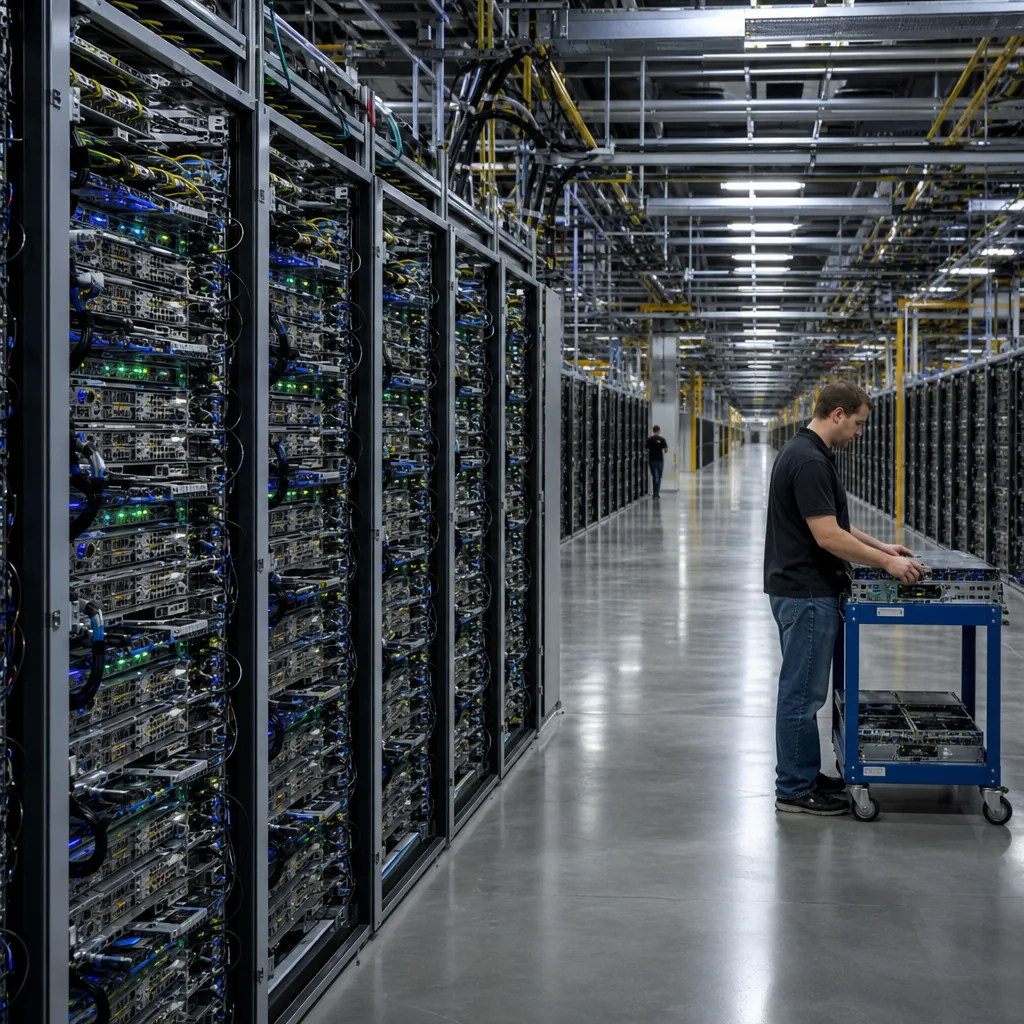
The market-moving detail was the scale of the next phase of investment. Chief financial officer Anat Ashkenazi lifted full-year capital expenditure guidance from $180 billion-$190 billion to $195 billion-$205 billion, while also confirming that spending in 2027 will significantly exceed this year’s level.
“We are updating our full-year 2026 CapEx guidance range to $195 billion–$205 billion, up from our previous estimate of $180 billion–$190 billion,” Ashkenazi said.
A record quarter for infrastructure spending
Alphabet spent a record $44.9 billion on capital expenditure during the April-to-June quarter, up 100% year on year and broadly in line with StreetAccount estimates of $44.8 billion. It has already deployed $78.6 billion during the first half of 2026.
Management said approximately 60% of the quarterly spending would go on servers, with the other 40% directed towards data centres and networking equipment. At the revised $200 billion midpoint, Alphabet’s annual capital spending would be roughly 42% of its annualised revenue run rate — an unusually high level for a business better known for software, advertising and online services.
The company generated $39.1 billion in operating cash flow during the quarter, but free cash flow fell to negative $5.9 billion as spending accelerated. Alphabet ended the period with $242.5 billion in cash and marketable securities, alongside $98.2 billion in long-term debt. To fund investment, it raised $49.6 billion by issuing stock in June and generated $20.3 billion from senior unsecured notes in the second quarter.
The spending is intended to serve demand for cloud computing and AI products. Chief executive Sundar Pichai said: “Alphabet revenue grew 24% year-over-year. Our AI investments are redefining what’s possible across every part of our business.”
Cloud is doing the heavy lifting
Google Cloud was the clearest sign of why Alphabet is willing to spend so aggressively. Revenue climbed 82% year on year to $24.8 billion, driven primarily by Google Cloud Platform. Core GCP, AI solutions and AI infrastructure all contributed, while Alphabet also began recognising revenue from TPU system sales delivered to customer data centres for the first time.
Cloud operating income reached $8.8 billion, up from $2.8 billion a year earlier, and its operating margin more than tripled to 35.6%. The Cloud backlog rose by more than $50 billion sequentially to $514 billion. Alphabet expects to recognise just over half of that backlog as revenue over the next 24 months, with the majority linked to conventional GCP contracts from a broad customer base.
Google Services remained Alphabet’s largest engine, with revenue up 15% to $94.5 billion. Search and other revenue grew 17% to $63.3 billion, YouTube advertising rose 13% to $11.1 billion, and subscriptions, platforms and devices increased 15% to $12.9 billion. Network advertising, however, declined 1% year on year.
Alphabet’s AI usage figures underline the demand it is trying to meet. The Gemini app now has 950 million active users and processes 22 billion API tokens per minute, up from 16 billion last quarter. Nearly 90% of the Fortune 100 is using Gemini Enterprise, while nearly 500 enterprise customers processed more than a trillion tokens each over the past year.
Strong results, nervous investors
The share decline came during a broader US market retreat on Thursday, when the Nasdaq Composite fell 2.15%. Tesla also fell 14% after its results. But Alphabet’s response highlights a particular investor concern: even companies showing clear AI revenue growth may need to keep spending heavily to avoid capacity constraints.
Analyst Alison Porter, portfolio manager at Janus Henderson, told CNBC: “This is one of the strongest revenue growth quarters that Alphabet has had in five years, and Alphabet is a really great barometer for this whole AI wave.” Major banks including Bank of America and Morgan Stanley maintained Buy ratings, arguing that Cloud’s growth demonstrates AI monetisation and that the investment is needed to meet supply-constrained demand.
For ordinary UK users, the immediate effect is less likely to be a dramatic hardware launch than continued investment in the services already used daily. Google says people are adopting a more seamless Search experience across AI Overviews and AI Mode, features already used in the UK. More servers, data centres and networking capacity could support those tools, Gemini and AI-powered advertising, but it also raises the pressure on Alphabet to show that AI features are genuinely useful rather than simply expensive to run.
Alphabet has made its direction clear: it will spend more now to secure AI capacity, with an even larger outlay planned for 2027. The next test is whether Cloud growth, Search engagement and Gemini usage can continue rising quickly enough to persuade investors that the infrastructure gamble is paying off.
Why it matters
For UK users, the spending wave is likely to underpin the AI features arriving across Google Search, Gemini and Google’s wider services, rather than produce an immediate new gadget to buy. The trade-off is that Alphabet is turning a traditionally software-led business into a far more infrastructure-intensive one, betting that demand for AI services will justify the cost. Its ability to turn that investment into useful, reliable consumer tools will matter as much as the scale of the spending.