
Samsung 990 costs 51% more than 990 Pro launch price – and is slower
Samsung’s new mainstream PCIe 4.0 SSD has launched with a £212.19 1TB MSRP, lower peak performance and a shorter warranty than the older 990 Pro.
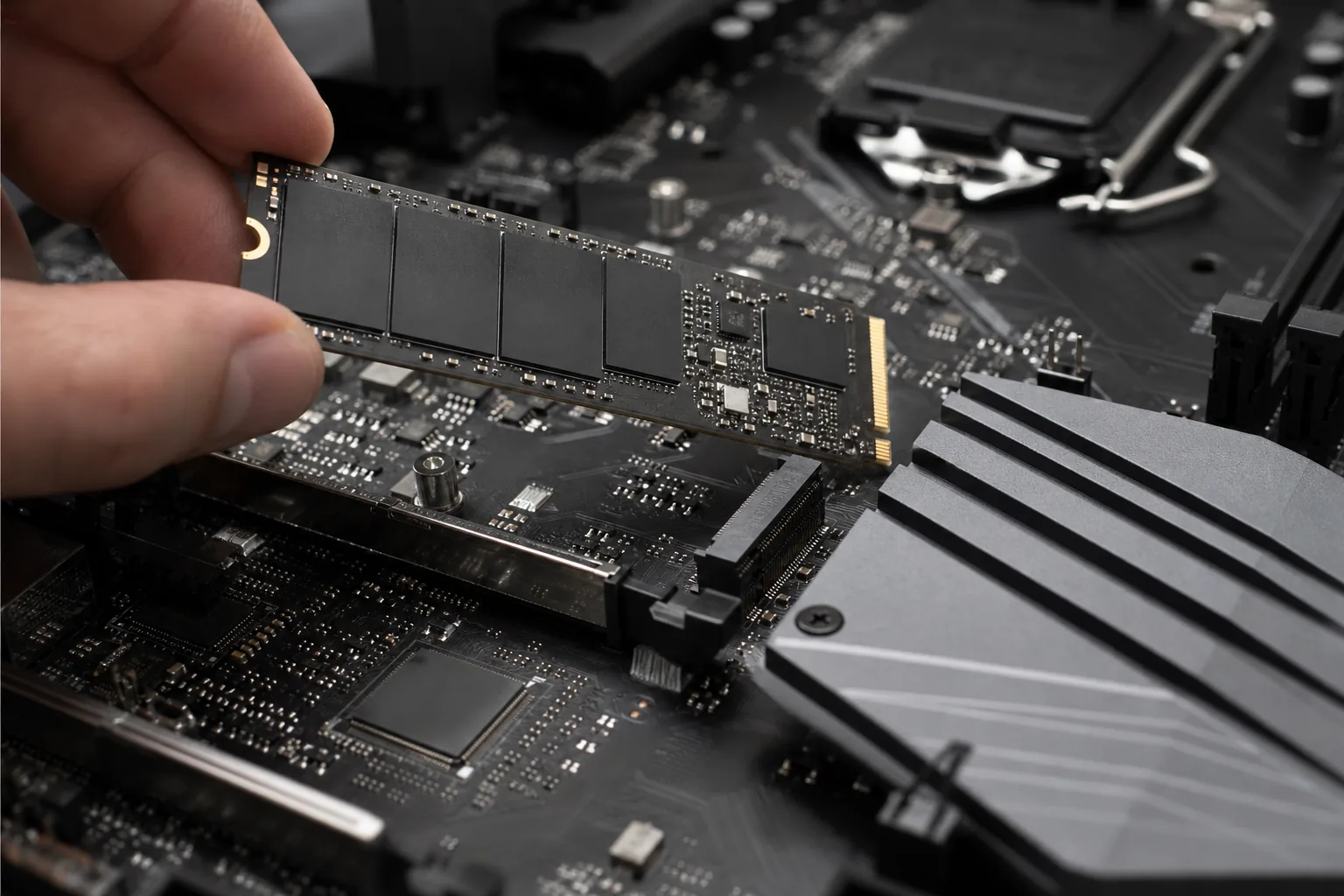
What you need to know
- Samsung introduced the non-Pro 990 PCIe 4.0 SSD on 14 July in 1TB and 2TB capacities.
- Its £212.19 1TB MSRP is 51% above the 990 Pro’s original $179 1TB launch price, despite weaker headline specifications.
- The new drive is DRAM-less and has a three-year warranty, versus DRAM and five years for the 990 Pro.
Samsung added a plain 990 SSD to its consumer storage range on 14 July, positioning the PCIe 4.0 drive as a mainstream option beneath its existing 990 Pro, 990 EVO and 990 EVO Plus models. But its pricing and specifications make for an awkward comparison with the older 990 Pro: the new 1TB model has a UK MSRP of £212.19, carries lower performance ratings, omits DRAM and cuts warranty cover from five years to three.

The 2TB version is listed at £411.99. Samsung has not separately confirmed UK retail availability beyond those MSRP listings, although the drive is available internationally from 14 July in 1TB and 2TB capacities. There is no 4TB model or factory-fitted heatsink version at launch.
More expensive than the Pro’s launch price
The most striking figure is the price. Samsung launched the 1TB 990 Pro in 2022 at $179, while the new standard 990 is priced at $269.99 in the US. That is a 51% increase for a lower-tier drive. The original 2TB Pro launched at $309; the new 2TB 990 is listed at $529.99.
Direct currency comparisons across different years are imperfect, but the product positioning is difficult to ignore. The plain 990 is not a new PCIe generation: it is an M.2 2280 NVMe drive using PCIe 4.0 x4 and NVMe 2.0, with backward compatibility for PCIe 3.0 systems. It sits alongside the Pro rather than replacing it with a faster successor.
Samsung rates the 2TB 990 for sequential reads of up to 7,250MB/s and writes of up to 6,450MB/s, with random performance of up to 850,000 read IOPS and 1.2 million write IOPS. The 1TB model is rated for up to 7,150MB/s sequential reads, 700,000 random read IOPS and 1.1 million random write IOPS.
Those figures are respectable for a PCIe 4.0 SSD, but they trail the 2022 990 Pro’s claimed maximums of 7,450MB/s reads, 6,900MB/s writes, 1.4 million random read IOPS and 1.55 million random write IOPS.
DRAM-less design and reduced endurance
Samsung has used its proprietary Piccolo-Q controller and Samsung V-NAND, but the 990 is a DRAM-less design that relies on Host Memory Buffer technology. The 990 Pro, by contrast, includes capacity-scaled LPDDR4 DRAM, making it better suited to sustained writes and demanding mixed workloads.
Endurance is also lower. The 1TB 990 is rated for 400TBW, while the 2TB model is rated for 800TBW. The 1TB 990 Pro was rated for 600TBW. Samsung’s warranty has similarly fallen from five years on the Pro to three years on the new standard model.
The precise NAND type remains unclear. HotHardware reported that the 990 uses Samsung’s latest QLC V-NAND, while StorageReview said Samsung declined to disclose the component detail beyond “Samsung V-NAND”. StorageReview argued the endurance figures suggested TLC, and NAS Compares reported finding 3-bit TLC memory on inspection. Samsung has not officially settled the question.
There are some technical positives. Samsung says the drive is its most power-efficient SSD yet, claiming up to 38% better power efficiency than the 990 Pro. Its internal 2TB read testing puts the 990 at 1,686MB/s per watt, compared with 1,221MB/s per watt for the Pro. Idle power in L1.2 mode should be around 3mW, while active read and write power for the 2TB model falls in the 3.8W to 4.3W range.
“In a world obsessed with theoretical maximums, our new PCIe Gen 4 SSD is built for the real world. While newer standards chase benchmarks, we've focused on the metrics that actually matter – a perfect balance of speed, power efficiency, and value.”
Samsung’s statement, quoted by PC Perspective, calls the 990 a “Sweet Spot” for mainstream buyers. That case is harder to make at the listed UK price. PCWorld said the drive is not as fast as the still-available 990 EVO Plus and becomes significantly slower than its predecessors once secondary cache is exhausted.
AI demand has changed the SSD market
The 990’s price cannot be separated from the wider NAND shortage. Memory manufacturers including Samsung, SK Hynix and Micron have shifted production capacity towards High Bandwidth Memory for AI accelerators, while enterprise demand is also taking priority for NAND flash.
Contract NAND prices are expected to rise by 70% to 75% quarter-on-quarter in the second quarter of 2026. Micron announced in December 2025 that it would leave the Crucial consumer business to focus capacity on AI and enterprise memory products, with Crucial consumer products ceasing shipments in February.
For UK buyers, the immediate lesson is not that the 990 is unusable; it is a capable PCIe 4.0 drive with modern security support including AES 256-bit encryption, TCG Opal 2.0 and IEEE 1667. But it is an unusually costly proposition for a 1TB mainstream SSD, especially with lower endurance and coverage than Samsung’s older premium model. Shoppers should expect SSD prices to remain under pressure, but should not mistake a higher price for a better class of drive.
Why it matters
The 990 is a sharp illustration of how badly the consumer SSD market has been distorted by AI-led memory demand. UK buyers paying more than £200 for a 1TB PCIe 4.0 drive should look closely at actual availability, warranty, endurance and competing models rather than assuming Samsung’s newest nameplate represents an upgrade. The wider concern is that cheaper Gen 4 and Gen 5 alternatives may not remain cheap if NAND price increases continue.