
Microsoft quietly replaces OpenAI and Anthropic with own MAI models in Office
Tens of thousands of Excel and Outlook AI prompts are now being handled each week by Microsoft's in-house MAI models, not the third-party services users assumed were running under the bonnet.

What you need to know
- Microsoft is replacing OpenAI and Anthropic models in Excel and Outlook with its own MAI family, first reported by Bloomberg on 7 July 2026.
- The in-house models currently handle only a small fraction of total Copilot requests, but Microsoft has stated it wants to cut third-party AI spending over time.
- UK Copilot subscribers pay £16.10/user/month and will see no change to the interface — but have no way to see which model is answering their prompts.
Microsoft has begun quietly swapping out the OpenAI and Anthropic artificial intelligence models that power features in Excel and Outlook, replacing them with its own in-house MAI family. According to a Bloomberg report published on 7 July 2026, tens of thousands of AI prompts in those applications are now being completed each week using Microsoft's own models — a shift that users will not see, but that has significant implications for the company's costs, its relationships with AI partners, and the transparency of a product millions of UK workers rely on every day.
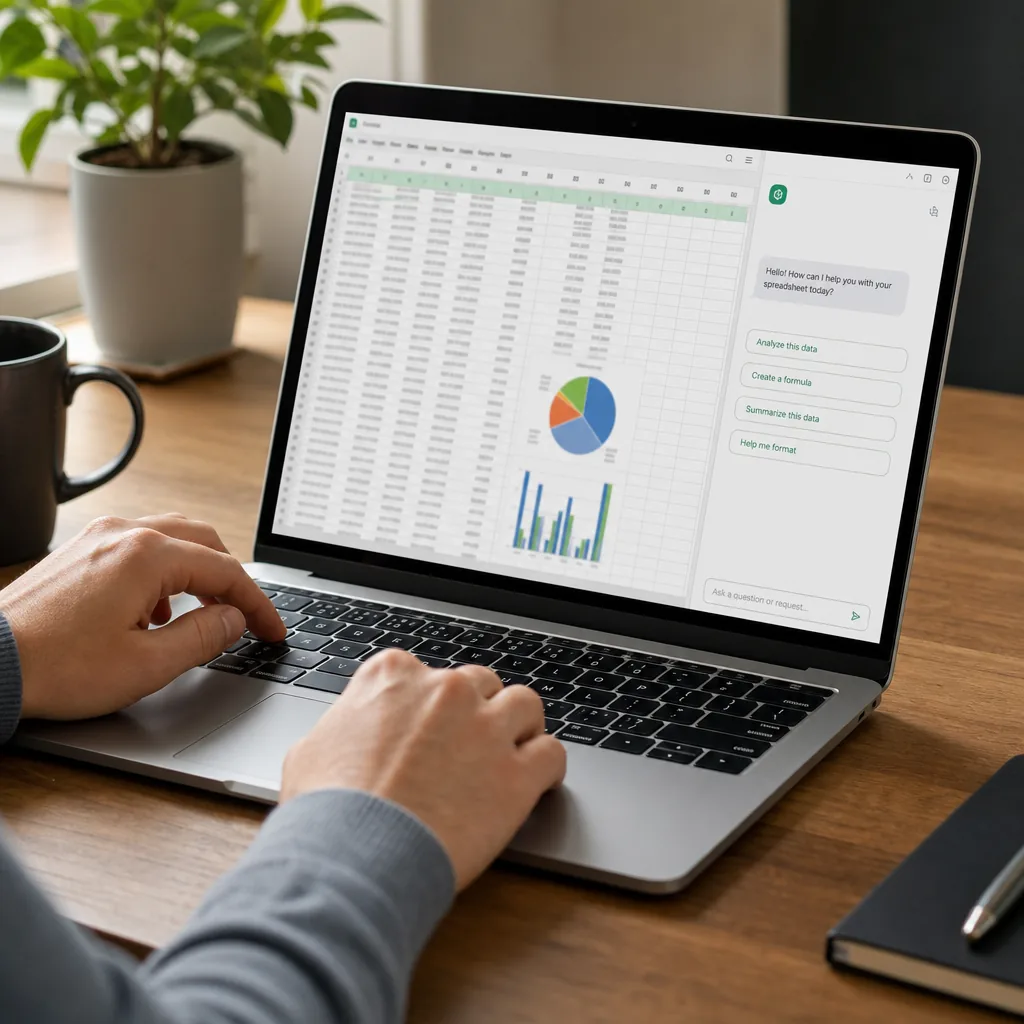
What is actually changing
Previously, Excel and Outlook leaned more heavily on models from OpenAI and Anthropic to power Copilot features, according to a person familiar with the work who spoke to Bloomberg on condition of anonymity. Now, a growing slice of those prompts — particularly routine, high-volume tasks such as summarising emails or performing calculations — is being routed to Microsoft's own MAI models instead. Frontier-grade tasks can still be sent to OpenAI or Anthropic, but the everyday workload is shifting in-house. Microsoft declined to comment, meaning there is no official breakdown of which specific features have moved.
The scale is still modest. The in-house models handle only a small fraction of total Copilot requests at this stage, but Bloomberg's source said Microsoft intends to keep cutting its spending on third-party AI over time.
Who is MAI, and is it any good?
Microsoft unveiled its MAI model family at its Build 2026 developer conference in San Francisco on 2 June 2026. Presented by Mustafa Suleyman, Executive VP and CEO of Microsoft AI, the launch introduced seven first-party models: MAI Thinking, MAI Thinking Mini, MAI Code, MAI Image, MAI Transcribe, MAI Voice, and MAI Voice Turbo — each built for a specific task rather than trying to be a general-purpose rival to GPT or Claude.
Microsoft's own figures for its flagship reasoning model, MAI-Thinking-1, are striking. It is a 35-billion active-parameter mixture-of-experts model with a 256,000-token context window. Microsoft reports scores of 97.0% on AIME 2025 and 94.5% on AIME 2026, and claims 53% on SWE Bench Pro — a tough coding benchmark — placing it alongside Anthropic's Opus 4.6. The company also says its Excel-tuned MAI model is comparable to GPT-5.4 on relevant benchmarks while being up to ten times more efficient.
There is an important caveat here. Benchmarks released at the time of Build showed MAI-Thinking-1 trailing OpenAI and Anthropic on standard third-party leaderboards, despite Microsoft's own evaluation claims. No independent benchmark data has yet been published for the versions actually deployed inside Office apps, so users have no external verification that the quality is equivalent to what they had before.
Microsoft also stated at Build that it trains its models from scratch without distilling from other labs, and that MAI is trained on commercially licensed data — a claim worth noting given the broader legal uncertainty around datasets such as Common Crawl, which the technical paper confirms was used in training.
Why Microsoft is doing this now
The motive is straightforward: money. Suleyman put it bluntly in June:
"We pay a lot of money to Anthropic — so our goal is to reduce and ultimately eliminate that cost."
Microsoft has invested more than $13 billion in OpenAI since 2019, but the relationship has grown strained. OpenAI's computing demands outgrew what Microsoft could supply, and OpenAI pursued partnerships with rivals including the $500 billion Stargate data centre project with Oracle and SoftBank. In April 2026, the two companies renegotiated their deal: Microsoft retains a licence to OpenAI's IP through 2032 on a non-exclusive basis, and will no longer pay OpenAI a revenue share. For now, Microsoft's primary cost-cutting focus is on Anthropic, where it has no equivalent legacy discount.
Microsoft is also co-designing MAI models with its own Maia 200 silicon, reporting a 1.4x performance-per-watt gain when running MAI workloads on that chip end to end — which compounds the savings at scale. Microsoft shares rose approximately 2% following the Bloomberg report, a signal that investors approve of the margin improvement this strategy implies.
This is not a Microsoft-only trend. According to TechCrunch, Amazon, Uber, Meta, and Accenture are all moving in the same direction, pulling AI workloads in-house to reduce dependency on third-party model providers.
What UK Copilot subscribers actually see — and don't
For most people using Word, Excel, or Outlook with Copilot, this change is invisible. The interface stays the same; only the model underneath shifts. Microsoft has not announced any pricing changes tied to the MAI rollout, and the service continues to cost £16.10 per user per month in the UK on an annual commitment, on top of an existing Microsoft 365 subscription.
The transparency gap is the real concern. One prompt might be answered by Microsoft's MAI, the next by OpenAI's GPT, the next by Anthropic's Claude. Users never see which model responded. For enterprise customers with data governance obligations, this matters: Anthropic models were added as a Microsoft subprocessor only in January 2026 and are explicitly excluded from EU/UK Data Boundary and in-country processing commitments. Businesses should verify with Microsoft which models are active on their tenant.
Suleyman also indicated that Microsoft's in-house speech transcription models will be progressively rolled out to Teams video conferencing in the coming months, extending the same in-house substitution logic to voice workloads. MAI models are also already active in PowerPoint and GitHub Copilot.
- No specific timeline has been confirmed for how much of total Copilot traffic will eventually move to MAI.
- Pricing for MAI-Thinking-1 via Azure AI Foundry is listed as TBA.
- Microsoft has not confirmed which exact Copilot features have switched, nor on what schedule.
What is confirmed is the direction of travel. Microsoft is building the infrastructure — the models, the chips, the renegotiated contracts — to run its AI products on its own terms. Whether the quality keeps pace with what users had before is a question only independent testing, when it arrives, will answer properly.
Why it matters
For UK businesses paying £16.10 per user per month for Microsoft 365 Copilot, this switch is invisible by design — but it raises a legitimate question about what they are actually paying for. Organisations with strict data governance requirements should note that Anthropic's models, added as a subprocessor only in January 2026, sit outside Microsoft's EU/UK Data Boundary commitments; as MAI takes over those workloads, that particular compliance headache may ease, but Microsoft has not formally confirmed which tenants are affected or on what timeline. More broadly, independent benchmarks for the production-deployed MAI models have not yet been published, so buyers have no third-party evidence that the swap comes without a quality trade-off.