
iPhone 18, iPhone 18 Pro & iPhone Fold: 2026-2027 Specs, Price & Release Dates
A measured, source-graded look at the iPhone 18 range — the iPhone 18 Pro, Pro Max and Apple's first foldable iPhone, all reportedly expected in autumn 2026, plus the standard iPhone 18 and iPhone 18e, now reported for the first half of 2027 — with the latest rumours on specs, pricing and release timing as of 14 August 2026.
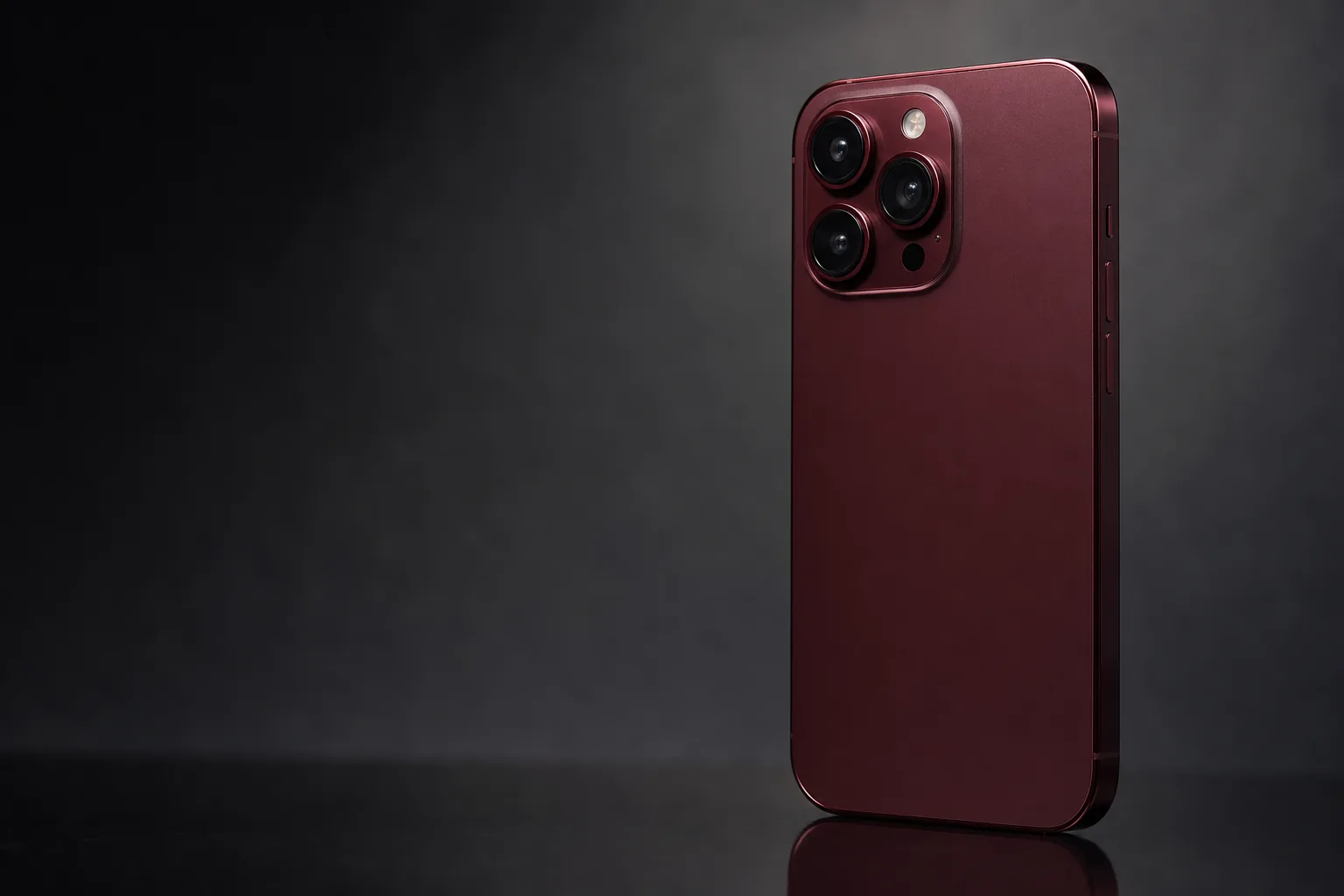 Illustrative concept image, not an official photo
A speculative render of the iPhone 18 Pro line-up — final design is unconfirmed.
In this piece I've pulled together everything reputable that's currently floating around about the iPhone 18 generation — the A20 Pro chip, partial under-display Face ID, vapour-chamber cooling chatter, variable aperture cameras, the foldable, and Apple's own modem and wireless silicon. I've also been deliberately careful to flag what's solidly sourced versus what's a single Weibo whisper, because there's plenty of both. There's a "How confident are we?" grading section further down where I score each rumour individually.
What's in this preview
- The split launch — autumn 2026 vs first half of 2027
- iPhone 18 Pro & Pro Max specs
- The foldable iPhone
- Where the iPhone 18 Air really sits
- A20 Pro chip & in-house silicon
- Camera & display changes
- How confident are we? (graded)
- Open questions & when we'll know
What's new this month (June 2026)
- Dark Cherry is the headline new colour. The latest Pro Max leaks point to a deep, wine-red "Dark Cherry" finish reportedly replacing last year's Cosmic Orange.
- 24MP front camera. Alongside the variable-aperture main camera, the selfie camera is now widely reported to jump from 18MP to 24MP across the Pro line.
- Pricing looks held, not hiked. Recent reporting suggests the iPhone 18 Pro Max starts around £1,199 — the same launch price as the 17 Pro Max — despite the spec bumps.
- Dummy units have leaked. Late-May 2026 case-maker dummy models suggest Apple is "playing it safe" on the camera-bar design rather than radically reshaping it.
- Foldable form factor firming up. The fold is now described as roughly a 5.3–5.5-inch outer screen opening to a ~7.8-inch inner display. Reported hinge problems are said to be largely resolved, though a genuinely crease-free display remains a design target rather than a verified fact, and production challenges still cloud the on-sale date.
Concept visualisation for illustration — based on rumoured specs, not a confirmed design.
The Split Launch: Why September 2026 Won't Be Business As Usual
The single most important thing to understand about this generation is that Apple is reportedly breaking its September tradition. Reporting from outlets including MacRumors, 9to5Mac and Macworld, together with supply-chain sources, describes Apple splitting the iPhone 18 family across two distinct launch windows. The existence of this split-launch plan is one of the most consistently repeated stories in the current rumour cycle, though Apple has published no roadmap and the exact 2027 timing should be read as reporting rather than confirmed fact.
The autumn 2026 event is expected to host the iPhone 18 Pro, iPhone 18 Pro Max and Apple's long-anticipated foldable iPhone — sometimes referred to in the rumour mill as the iPhone Fold or iPhone Ultra. The remaining models — the standard iPhone 18, an iPhone 18e and a second-generation iPhone Air — are reportedly being pushed into spring 2027.
This is significant because the editorial framing many of us had been using ("the iPhone 18 Air will replace the Plus in September") now looks shaky. Multiple sources indicate the Air 2 simply isn't on the autumn stage. If that holds up, Apple will, for the first time in over a decade, launch only flagship and ultra-premium iPhones in September, with the mainstream tier waiting until the following spring.
Why split? The most-repeated theory is production complexity around the foldable and Apple's desire to stop the cheaper iPhones cannibalising Pro sales in Q4. Neither has been confirmed.
Memory Shortage and Reported Price Pressure
One of the most significant developments since our last update is a reported DRAM shortage said to be affecting packaging of Apple's A20 Pro chip. According to reporting from Tim Culpan/Culpium, covered by Tom's Hardware and TechRadar in early August 2026, Apple and its manufacturing partners are reportedly struggling to secure enough DRAM to complete packaging of A20 Pro and related chips, with TSMC-made wafers said to be accumulating while they wait for memory components. Apple and TSMC have not publicly confirmed this.
The same reporting suggests this could mean thinner launch-day availability for the iPhone 18 Pro range, although Apple and its assemblers are still said to expect to meet the launch timetable — this is a reported possible supply constraint, not a confirmed delay.
Alongside the supply story, analyst cost estimates have become more specific. Tom's Guide reported in mid-August 2026 that Counterpoint has estimated the bill-of-materials increase for a 12GB/1TB iPhone 18 Pro Max at approximately $300 versus the equivalent iPhone 17 Pro Max, while GF Securities analyst Jeff Pu has separately estimated a possible $250–$300 increase. Taken together, current analyst estimates cluster around a $250–$350 rise in costs for the Pro models, driven by 2nm wafer costs, DRAM and NAND pricing, and new packaging requirements.
It is worth being precise about what that means. A rise in component costs is not the same as a rise in the shop price: the widely quoted $300 figure is an estimated bill-of-materials increase for one high-storage configuration, not a price Apple has announced. Apple has confirmed no iPhone 18 price rise at all, and has absorbed component cost increases before. For context, Apple's current UK starting prices are £1,099 for the iPhone 17 Pro and £1,199 for the iPhone 17 Pro Max — today's comparison prices, not forecasts for the iPhone 18 range.
The September 2026 Line-Up at a Glance
The above is a summary of the most-cited rumours from MacRumors, 9to5Mac, AppleInsider, Bloomberg and a handful of supply-chain leakers (Ming-Chi Kuo, Ross Young, Jeff Pu, Digital Chat Station, Ice Universe). Treat anything not yet corroborated as provisional — especially anything from a single Weibo source.
Speculative comparison sketch of the autumn 2026 iPhone trio — Pro, Pro Max and the rumoured foldable.
The A20 Pro Chip: Apple's First 2nm Silicon
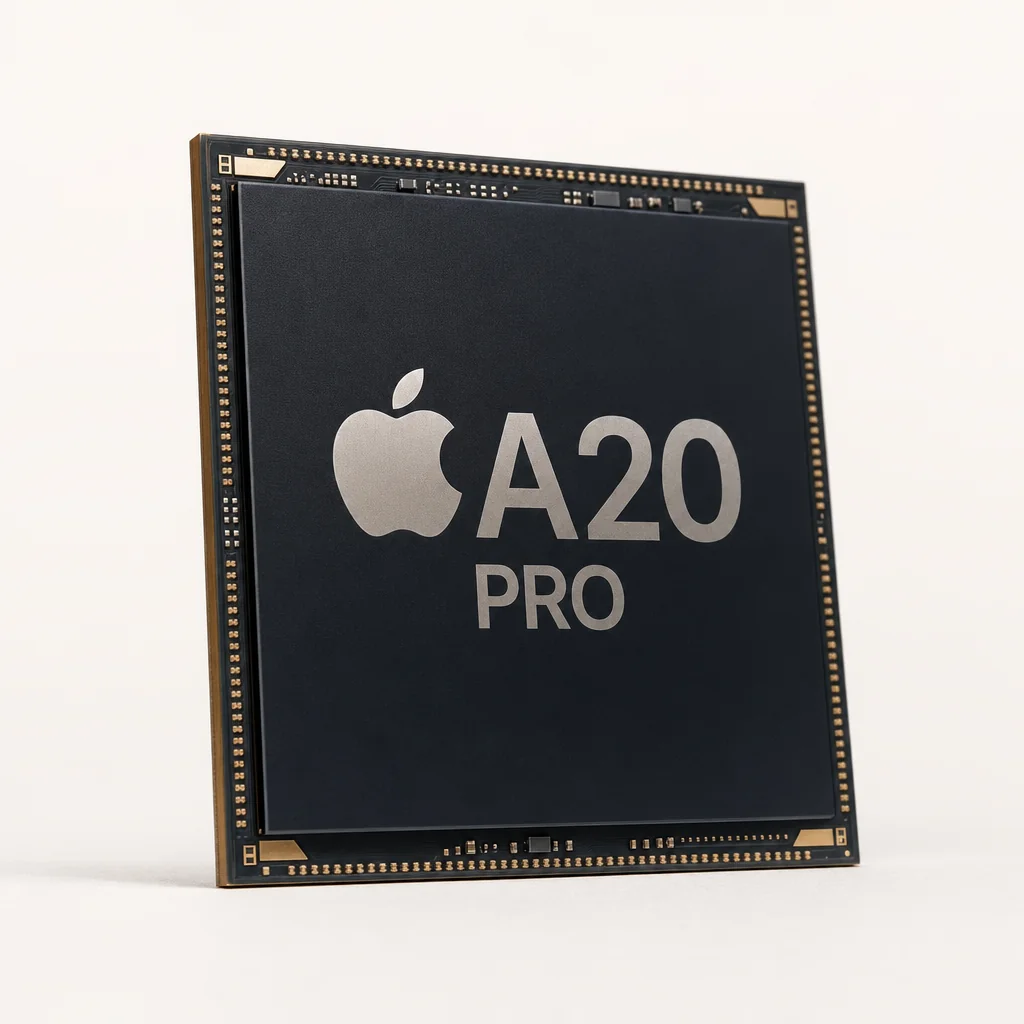
The headline silicon story for September 2026 is the move to TSMC's first-generation 2nm process. Reports from DigiTimes, Ming-Chi Kuo and Jeff Pu all align on this point, and it's one of the more solidly-sourced rumours in the generation.
The A20 Pro is expected to be manufactured on TSMC's 2nm node (a step down from the 3nm A19 Pro) and is also reported to debut a new packaging technique known as WMCM, replacing the InFo packaging Apple currently uses. In theory, the smaller die and improved packaging should yield meaningful gains — current estimates point to around 10–15% raw performance uplift over the A19 generation, and roughly 30% lower power draw at like-for-like workloads. Both figures come from supply-chain analysts and have not been verified against silicon.
What the 2nm jump actually means
The headline numbers (15% faster, 30% more efficient) are theoretical maximums based on TSMC's process improvements. Real-world gains in shipped iPhones historically land lower — Apple tunes for sustained efficiency, not benchmark sprints. Expect tangible battery-life improvements before you notice the speed.
One area that's far less certain is whether the non-Pro iPhone 18 (when it ships in spring 2027) will use the A20 Pro, a binned A20, or a slightly older chip. Apple has been quietly widening the gap between Pro and non-Pro silicon for several generations, and Bloomberg has indicated this trend will continue. Nothing definitive has leaked.
The Dynamic Island: Under-Display Face ID Claims Have Weakened
Earlier reports, including leaks shared by Weibo leaker Ice Universe in January 2026, suggested Apple was moving Face ID components underneath the display glass, which would let the Dynamic Island shrink substantially on the iPhone 18 Pro. That story has since weakened considerably: the latest MacRumors roundup reports that full under-display Face ID is not expected on the iPhone 18 Pro after all.
A smaller Dynamic Island remains plausible on the iPhone 18 Pro, but current reporting does not support attributing it to hidden Face ID hardware, whether partial or full. Until Apple confirms the design, treat specific shrink measurements or "under-display Face ID" claims as unconfirmed rumour rather than settled fact.
Camera Changes: Variable Aperture and a New Stacked Sensor
If the Dynamic Island shrink is the most visible change, the camera upgrade is probably the most genuinely useful. Multiple sources, including Weibo leaker Digital Chat Station and follow-up reporting from MacRumors, indicate Apple intends to fit the iPhone 18 Pro and Pro Max with a variable aperture lens on the main 48MP Fusion camera.
Variable aperture would be a first for the iPhone. It lets the lens physically open and close to control how much light hits the sensor — useful for shallower depth of field, better low-light flexibility and cleaner exposure control. Samsung and Huawei have shipped variable aperture phones before, with mixed results, so this isn't unprecedented — just new to Apple.
The front of the phone is reportedly getting attention too. Several mid-2026 leaks now point to the selfie camera stepping up from 18MP to a 24MP front camera across the Pro models — sharper self-portraits and, just as usefully, more detail for Face ID and video calls. It's a smaller headline than variable aperture, but it's one of the more consistently repeated camera claims.
There's also a separate, less-corroborated rumour about Samsung supplying Apple with a three-layer stacked image sensor referred to as PD-TR-Logic. The architecture stacks the photodiode, transfer transistor and logic onto separate layers, which would in principle reduce noise, improve responsiveness and increase dynamic range. This one has appeared in fewer outlets and should be treated as more speculative.
Variable aperture is reportedly coming to the iPhone 18 Pro's main 48MP camera — an iPhone first.
Display, Battery and Cooling: What's Changing Inside
Display sizes are not expected to change on the Pro line — multiple sources agree the iPhone 18 Pro stays at 6.3 inches and the Pro Max stays at 6.9 inches. What is reportedly changing is the panel technology: leaks suggest a move to so-called LTPO+ displays, which should improve power efficiency further and contribute to longer battery life. The Pro Max specifically is rumoured to feature a 6.9-inch LTPO+ Super Retina XDR OLED running ProMotion at 120Hz, with peak brightness reportedly reaching up to 3,000 nits — though that brightness figure has come from a single source and should be treated as speculative.
Battery capacity on the Pro Max is rumoured to land somewhere in the 5,100–5,200 mAh range, which would be a notable jump. As for cooling, the editorial brief flagged "vapour-chamber cooling" as a rumour thread, and while there has been chatter about Apple expanding its vapour-chamber design (which started appearing in the iPhone 17 Pro), nothing credible has surfaced yet about a fundamentally new cooling architecture for the 18 Pro specifically. Treat this one as low-confidence.
The Foldable iPhone: Apple's Most Expensive Phone Ever
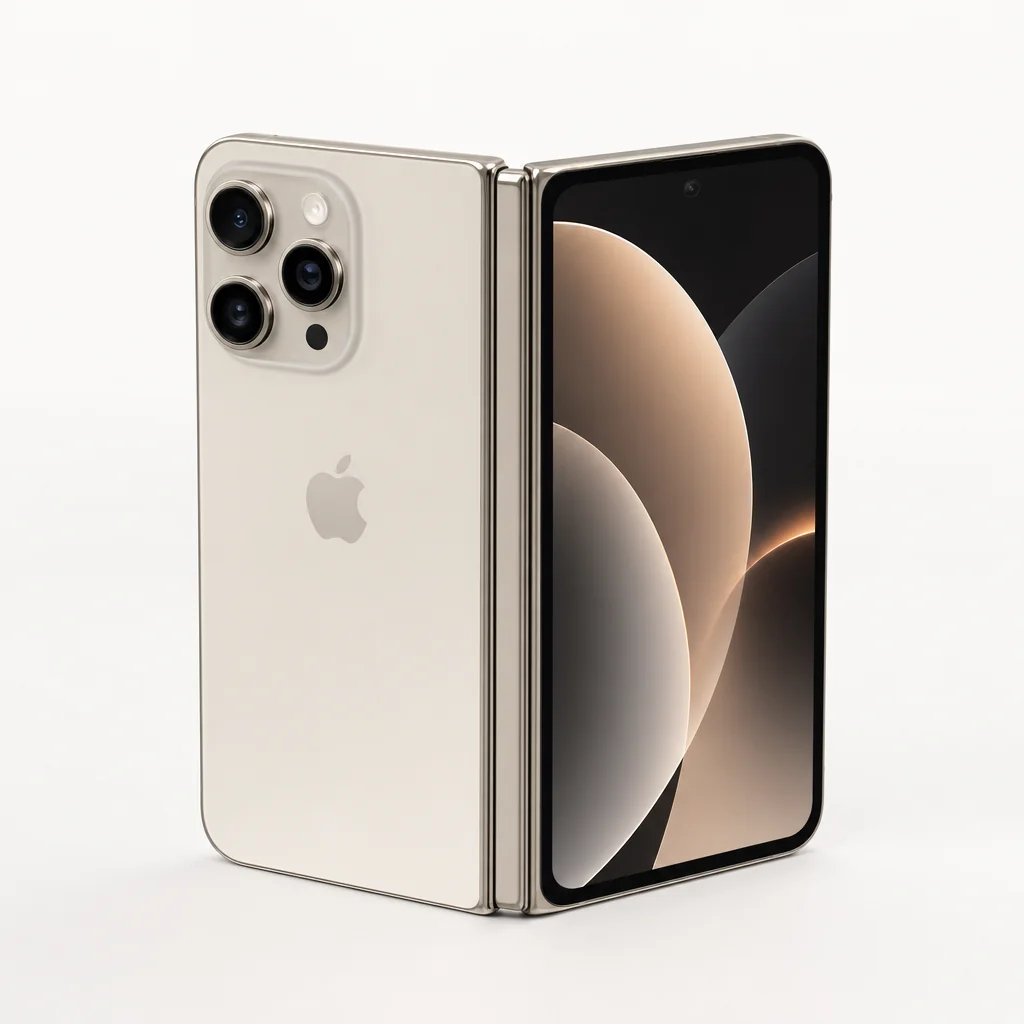
Apple's first foldable iPhone is reportedly being readied for announcement at the same September 2026 event — though supply-chain reporting suggests wider on-sale availability could slip into late 2026 or even 2027. Supply-chain and leaker reporting — including Ming-Chi Kuo and The Information — has consistently described it as a book-style fold (think Galaxy Z Fold rather than flip-phone clamshell), with an inner display of roughly 7.8 inches and an outer cover display of approximately 5.3–5.5 inches for use while closed.
The design detail Apple watchers care about most is the crease. Recent reporting describes a custom hinge and a metal-plate display structure that is targeting a crease-free or near-crease-free inner display — the weakness that has dogged Android foldables. That remains a design goal rather than a verified result: no independent hands-on test has confirmed it. Earlier hinge-related production concerns are reportedly now largely resolved, though supply-chain reports still describe a gradual production ramp and possible early supply limitations.
Pricing rumours have been remarkably consistent: above £2,000, making it potentially the most expensive iPhone Apple has ever sold, though no UK price has been confirmed. That positioning matters — this is reportedly not a mainstream device. Apple has reportedly told suppliers to prepare for around 10 million foldable units, up from an earlier reported target of roughly 7–8 million — but that is a supplier production-preparation target, not a confirmed number of retail units that will be available at launch, and other reporting suggests initial shipments could be far lower.
The foldable is the rumour with the highest variance. Sources broadly agree it exists and is targeting late 2026, but disagree on whether the September announcement will be a full launch or a preview-style reveal à la Vision Pro, and on exactly when meaningful retail supply will arrive.
The iPhone 18 Air: Where Does It Actually Sit?
This is where the editorial framing gets awkward. Most coverage written in early 2026 assumed the iPhone 18 Air would launch alongside the Pro models in September, replacing the Plus tier. Newer reporting flips that assumption: a second-generation Air has reportedly been linked to the first half of 2027 in some roadmaps, though it is not consistently described as part of the iPhone 18 range.
The reasoning, according to supply-chain and industry reporting, appears to be twofold. First, the original iPhone Air reportedly underperformed sales expectations, and Apple wants more time to refine the proposition — including possibly adding a second rear camera to address the chief criticism of the first-gen model. Second, Apple is said to want clearer airtime between the autumn Pro/Fold launch and the more mainstream models. Note that the evidence for an iPhone Air 2 is thinner than for the standard iPhone 18 and iPhone 18e, and it is not consistently described as part of the iPhone 18 range.
The Air 2's positioning relative to the current Plus tier is therefore still in flux. What seems likely — though not confirmed — is that the Plus name does not return, and the Air becomes Apple's permanent middle-tier large-screen option. Pricing has not been credibly leaked.
Apple's Own Modem and Wireless Silicon
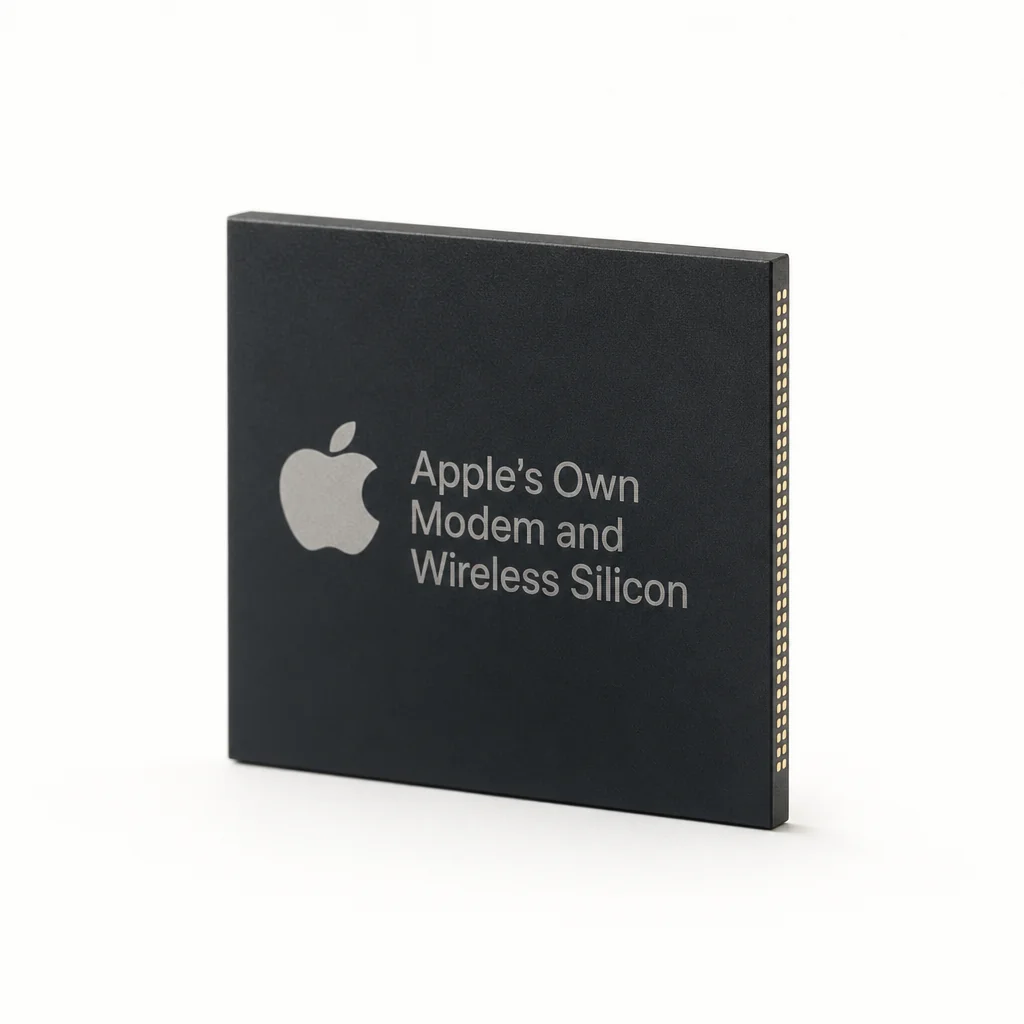
One of the quieter but more strategically significant rumour threads concerns Apple's continued march away from third-party silicon. The C1 modem debuted in the iPhone 16e and the C1X expanded that into the iPhone Air. For the iPhone 18 generation, Apple is reportedly preparing the C2 modem, which is expected to add mmWave 5G support (a notable gap in the C1) and close the performance gap with Qualcomm's modems.
Reports also indicate the C2 will support 5G via satellite for web browsing — not just messaging — in the iPhone 18 Pro models. That would be a meaningful step up from the current Globalstar-based emergency messaging.
Separately, Apple's N1 wireless chip (Wi-Fi 7, Bluetooth 6, Thread) introduced in the iPhone 17 generation is reportedly being followed by an N2 chip in the iPhone 18 Pro. Exactly what N2 adds is not yet clear — nothing credible has surfaced yet about specific new wireless standards or features.
C2 modem with mmWave
Apple's second-generation in-house modem reportedly fills the mmWave gap that has dogged the C1 since launch.
Satellite web browsing
Reported support for 5G via satellite, extending beyond emergency messaging to actual data — iPhone 18 Pro only.
N2 wireless chip
Successor to the N1. Specific improvements over Wi-Fi 7 / Bluetooth 6 are not yet leaked.
iPhone 18 Pro vs the Current Field
It's worth setting the rumoured iPhone 18 Pro alongside the phones it'll actually compete with at launch. The table below uses the most consistent rumour-side specs against the current flagship Android competition.
| Feature | iPhone 18 Pro (rumoured) | Samsung Galaxy S26 Ultra | Google Pixel 11 Pro |
|---|---|---|---|
| Chip | A20 Pro (2nm, reported) | Snapdragon 8 Elite Gen 2 | Tensor G6 |
| Display | 6.3" LTPO+ OLED 120Hz | 6.9" LTPO AMOLED 120Hz | 6.7" LTPO OLED 120Hz |
| Main camera | 48MP variable aperture (reported) | 200MP variable focal | 50MP fixed aperture |
| Face ID / biometrics | Not confirmed (full under-display Face ID not expected) | Ultrasonic in-display fingerprint | Fingerprint + Face Unlock |
| Modem | Apple C2 (reported) | Qualcomm X80 | Samsung Exynos 5400 |
| Foldable sibling | Yes — separate model | Galaxy Z Fold 7 | Pixel Fold 3 |
Caveat: every figure in the iPhone 18 Pro column is rumour-stage. The Samsung and Google columns reflect either shipped or near-final next-gen products. Treat the comparison as directional, not definitive.
The iPhone 18 Pro reportedly retains the 6.3"/6.9" sizing but introduces meaningful internal changes.
How Confident Are We? Rumour-by-Rumour Grading
This is the bit I think matters most. Below I've graded each major iPhone 18 rumour as High, Medium or Low confidence based on (a) how many credible sources have reported it, (b) whether Bloomberg/Gurman-tier reporting backs it, and (c) whether there's supply-chain or patent evidence supporting it.
Where the Rumours Contradict Each Other
Not every leak agrees, and being honest about that matters. Three areas in particular have meaningfully divergent reporting:
1. Foldable on-sale date. Some sources suggest a September 2026 announcement will include meaningful availability. Others suggest an announcement in September with wider on-sale availability slipping later into 2026 or into 2027. Both views are plausible; neither is locked in.
2. iPhone 18 Air timing. The original framing — Air 2 alongside the Pros in September — has been replaced in newer reporting by a possible first-half-2027 slip. Earlier 2025 reports were confident; later 2026 reports flatly contradict them. The newer reporting is more recent and more consistent across outlets, but the iPhone Air 2 itself is not consistently described as part of the iPhone 18 range, so this remains unsettled.
3. Under-display Face ID. Earlier rumours suggested Apple was moving toward full under-display Face ID, and some 2026 leaks described a partial version limited to the flood illuminator. The latest MacRumors roundup now says full under-display Face ID is not expected for the iPhone 18 Pro at all. A smaller Dynamic Island remains possible, but should not be attributed to hidden Face ID hardware until Apple confirms it.
The Biggest Open Questions
What looks pretty solid
- A20 Pro moving to TSMC 2nm
- Display sizes unchanged at 6.3" / 6.9"
- A foldable iPhone arriving at the autumn event
- Apple continuing the in-house silicon roadmap (C2, N2)
- The autumn 2026 / first-half-2027 split launch structure
What's still genuinely unclear
- Exact foldable on-sale date and pricing
- Whether the standard iPhone 18 uses A20 or A20 Pro
- Real-world brightness, battery and thermal numbers
- Whether vapour-chamber cooling expands
- Whether the Dynamic Island shrinks at all, given weakened under-display Face ID reporting
- Air 2 spec sheet and positioning relative to Plus
- Final UK pricing across the line-up
FAQ: The Questions People Keep Asking
Who Should Be Paying Attention?
iPhone 15 Pro and older owners
If you're on an iPhone 15 Pro or earlier and you upgrade roughly every three years, the iPhone 18 Pro is genuinely shaping up to be the right cycle to wait for — new chip architecture, redesigned Dynamic Island, variable aperture camera.
Foldable curious
If you've been watching the Galaxy Z Fold line and wishing for an Apple equivalent, September 2026 could finally answer that — but it'll reportedly cost more than £2,000, so manage expectations on accessibility.
Mobile photographers
Variable aperture is the headline camera change in years. If sensor and aperture flexibility matter to you, this is a generation worth following closely.
Mainstream upgraders on a budget
If you want a standard iPhone 18 rather than a Pro, brace for a longer wait — the first half of 2027 is the reported target. The September event reportedly won't have a non-Pro launch.
When Will We Know For Sure?
The honest answer: when Apple says so. Apple's habit is to send out invitations for its autumn event roughly two weeks before the keynote, which in practice means we should expect formal invites in late August or early September 2026, with the event itself almost certainly landing in the first or second week of September 2026.
Between now and then, expect the rumour mill to keep churning. The most reliable inflection points typically come from:
- July–August 2026: Supply chain ramp leaks via DigiTimes, Kuo and Pu reports based on component orders.
- Mid-August 2026: Apple invitation goes out — usually with a thematic tease.
- September 2026: The keynote itself. Pro, Pro Max and (reportedly) the foldable revealed.
- First half of 2027 (reported, not confirmed): The widely-reported second event for the standard iPhone 18 and iPhone 18e.
Until Apple takes the stage, everything in this article — everything — remains rumour. Some rumours are very well-sourced and likely to pan out. Others are single-source whispers that could evaporate by July. The "How confident are we?" grading above is the most honest framing I can offer.
The Bottom Line
The iPhone 18 generation is shaping up to be one of Apple's most ambitious in a decade — a 2nm chip, a redesigned Dynamic Island, variable aperture cameras, a brand-new foldable form factor, deeper in-house silicon, and a fundamentally restructured launch calendar. If even half of the well-sourced rumours hold up, September 2026 will be a genuinely consequential event for the iPhone.
That said, the most important thing this preview can do is be honest about uncertainty. The split launch and the foldable's pricing tier alone represent the biggest strategic shifts Apple has attempted since the iPhone X. There will be surprises — both things we expect that don't materialise, and things we never saw coming. Bookmark this piece, and I'll be back with a fully updated version the moment Apple's invitations land.