
LG G6 vs LG C6 vs LG G5 OLED: Which LG OLED Should UK Buyers Choose?
A practical, room-by-room buying guide to LG's 2026 flagship, 2026 C-series split range, and discounted 2025 Gallery OLED.
LG's 2026 OLED line-up is more complicated than usual, mainly because the C6 changes dramatically by screen size.
We link to the exact model on Amazon UK. Prices change often, so check the live price before you buy. As an Amazon Associate we earn from qualifying purchases.
If you are shopping for an LG OLED in the UK, the choice is not simply "newest equals best". The LG G6 is the obvious flagship, the LG G5 is the previous Gallery model now benefiting from price drops, and the LG C6 is actually two different TVs depending on the size you buy. That last point matters enormously: the standard 42–65-inch C6 uses a standard WOLED panel carried over from the C5 era, whilst the 77-inch and 83-inch C6H models get the newer Primary RGB Tandem 2.0 panel with Hyper Radiant branding.
Size caveat before you compare: the 48-inch and 97-inch G6 models are exceptions. They do not get the Primary RGB Tandem 2.0 panel or Reflection Free Premium coating that define the main 55-83-inch G6 range, so do not judge the whole line from the headline alone.
In this comparison
- Quick buying verdict
- C6 vs C6H explained
- Specs at a glance
- Bright rooms and reflections
- Gaming and PC use
- Wall mounting and sizes
- Smart features and sound
- Price-drop buying advice
- Pros, cons and FAQ
1. Quick verdict: the sensible choice for most UK homes
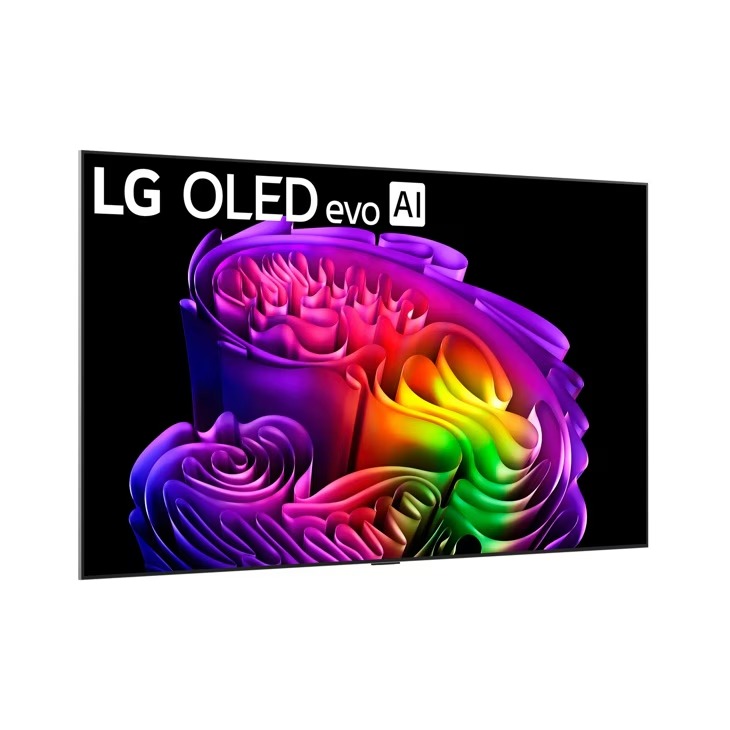
The short version is this: buy the LG G6 if you want LG's strongest 2026 OLED performance, especially in a brighter room or a premium wall-mounted living-room setup. Buy the LG G5 if the discount is substantial and you still want a true high-end Gallery OLED with a Primary RGB Tandem panel. Buy the LG C6 if you are looking at 42, 48, 55 or 65 inches and want the C-series gaming and webOS experience without paying flagship money. But if you are looking at 77 or 83 inches, pay very close attention: the C6H is a different proposition because it receives the Primary RGB Tandem 2.0 panel and Reflection Free Premium coating.
That creates an unusual buying landscape. In a compact bedroom, the 42-inch C6 may be the most sensible model simply because neither the G6 nor G5 goes that small. In a bright open-plan lounge, the G6's new Reflection Free Premium coating and Primary RGB Tandem 2.0 panel make it the most attractive option from 55 to 83 inches. For a cinema-style evening room, the G5 can be the sweet spot if the saving is large enough, because it already uses LG's first-generation Primary RGB Tandem 4-stack OLED panel with Brightness Booster Ultimate.
Buy LG G6 if...
You watch in a bright living room, want the newest panel tech from 55–83 inches, and prefer the cleanest Gallery-style wall-mount installation.
Buy LG G5 if...
You want a premium Gallery OLED but are happy choosing the 2025 flagship to take advantage of price drops.
Buy LG C6 if...
You need a smaller OLED, want 4 HDMI 2.1 ports and 165Hz support, and do not require the flagship panel in 42–65 inches.
My practical view is that the G6 is the safest "best TV" choice, but not automatically the best buy. The G5 is dangerous competition because it is still a high-end Gallery OLED, whilst the large C6H models blur the line between C-series and G-series more than usual. For UK buyers waiting for seasonal offers, the right answer may come down to the screen size you need and whether your room exposes the screen to daylight.
2. The range explained: G6, C6, C6H and G5 are not simple step-up models
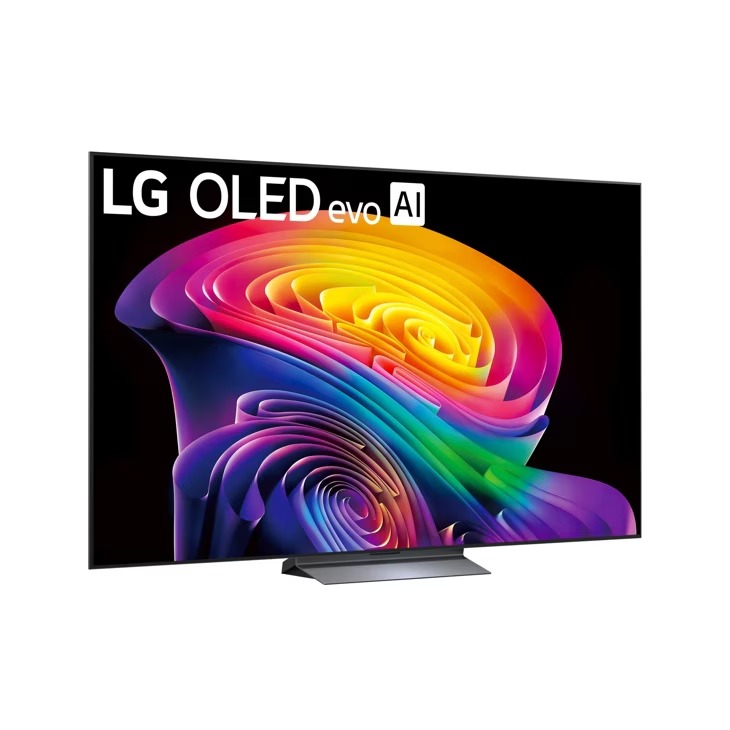
LG's OLED naming usually feels familiar: C-series for mainstream premium OLED, G-series for the brighter, design-led Gallery model. This year, though, the C6 name needs unpacking before you spend anything.
The LG G6 is the 2026 flagship in this comparison. Its key upgrade is a Primary RGB Tandem 2.0 OLED panel, described by LG through its Hyper Radiant Color Technology branding. It also uses the α11 AI Processor Gen3, supports up to 165Hz at 4K on 55–83-inch sizes, and adds a new Reflection Free Premium coating on 55–83-inch models. The 48-inch and 97-inch G6 models are important exceptions: they do not get the Primary RGB Tandem 2.0 panel or Reflection Free Premium coating, and size-specific refresh-rate and brightness claims must be checked rather than applied across the whole G6 range.
The LG G5 is the 2025 predecessor. It is not some ordinary older OLED being cleared out; it uses a first-generation Primary RGB Tandem 4-stack OLED panel with Brightness Booster Ultimate. It also supports up to 165Hz on 55–83-inch sizes, whilst the 48-inch model runs at 144Hz and the 97-inch model at 120Hz. Its processor is the α11 AI Processor Gen2, so the G6 moves ahead on processing power, but the G5 remains a serious premium set.
The LG C6 is where buyers can be caught out. In 42, 48, 55 and 65 inches, the standard C6 uses a standard WOLED panel carried over from the 2025 C5 generation. It does not get the Tandem panel, does not use Hyper Radiant branding, and does not have Reflection Free Premium. The 42-inch C6 also misses out on Brightness Booster Standard, whilst the other standard C6 sizes use Brightness Booster Standard.
The LG C6H, which covers the 77-inch and 83-inch C6 models, is the surprise. Those large sizes receive the Primary RGB Tandem 2.0 panel, Brightness Booster Pro, Hyper Radiant Color branding and the Reflection Free Premium coating. In other words, if you are shopping for a very large C-series OLED, you are not looking at the same display hardware as the 55-inch C6.
Important C6 buying note: the normal C6 and CS6 do not receive the upgraded Primary RGB Tandem panel. For the C6 family, the "H" suffix matters: the 77-inch and 83-inch C6H models are the large-screen variants with the higher-end panel package.
3. Key specifications at a glance
Spec sheets never tell the whole story, but they are useful here because the differences are structural rather than cosmetic. The G6 and C6H share the newer panel generation; the standard C6 does not. The G6 and C6 use the newer α11 AI Processor Gen3, whilst the G5 uses the Gen2 version. All three families are very gaming-focused, and they share the same core gaming feature set — 4× HDMI 2.1, 4K/165Hz, VRR, NVIDIA G-Sync, AMD FreeSync Premium, ALLM, HGiG and Dolby Vision Gaming. Gaming features are not where these models separate; panel, brightness and coating are.
The headline specification is not just brightness — it is which panel generation each size actually uses.
For a buyer, the biggest practical takeaway is that "C6" alone is not enough information. A 55-inch C6 and an 83-inch C6H sit in different performance classes for brightness technology and reflections. Meanwhile, the G5 remains closer to the G6 than its age might suggest, especially if you are focused on film viewing in controlled lighting rather than chasing every processing and anti-reflection improvement.
| Feature | LG G6 | LG C6 / C6H | LG G5 |
|---|---|---|---|
| Model year | 2026 | 2026 | 2025 |
| Panel technology | Primary RGB Tandem 2.0 on 55–83 inches | Standard WOLED on 42–65 inches; Primary RGB Tandem 2.0 on 77/83-inch C6H | First-gen Primary RGB Tandem 4-stack OLED |
| Brightness branding | Hyper Radiant Color Technology | Brightness Booster Standard on standard C6 sizes except 42-inch; Brightness Booster Pro and Hyper Radiant Color on C6H | Brightness Booster Ultimate |
| Processor | α11 AI Processor Gen3 | α11 AI Processor Gen3 | α11 AI Processor Gen2 |
| Refresh rate | Up to 165Hz at 4K on 55–83 inches; 97-inch is 120Hz | Up to 165Hz | Up to 165Hz on 55–83 inches; 48-inch is 144Hz; 97-inch is 120Hz |
| Gaming features | NVIDIA G-Sync, AMD FreeSync Premium, VRR, ALLM, HGiG, Dolby Vision Gaming | NVIDIA G-Sync, AMD FreeSync Premium, VRR, ALLM, HGiG, Dolby Vision Gaming | NVIDIA G-Sync, AMD FreeSync Premium, VRR, ALLM, HGiG, Dolby Vision Gaming |
| HDMI | 4× HDMI 2.1 | 4× HDMI 2.1 | 4× HDMI 2.1 |
| Sizes | 48, 55, 65, 77, 83 and 97 inches | 42, 48, 55, 65, 77 and 83 inches | 48, 55, 65, 77, 83 and 97 inches |
| Wall-mount focus | Flush Fit Gallery Design; wall mount supplied with W SKU | Stand model primary SKU; wall mount optional | Gallery-style flagship design |
| Buy | Check price | ||
| Buy | Check price | Check price |
4. Bright rooms, reflections and picture punch
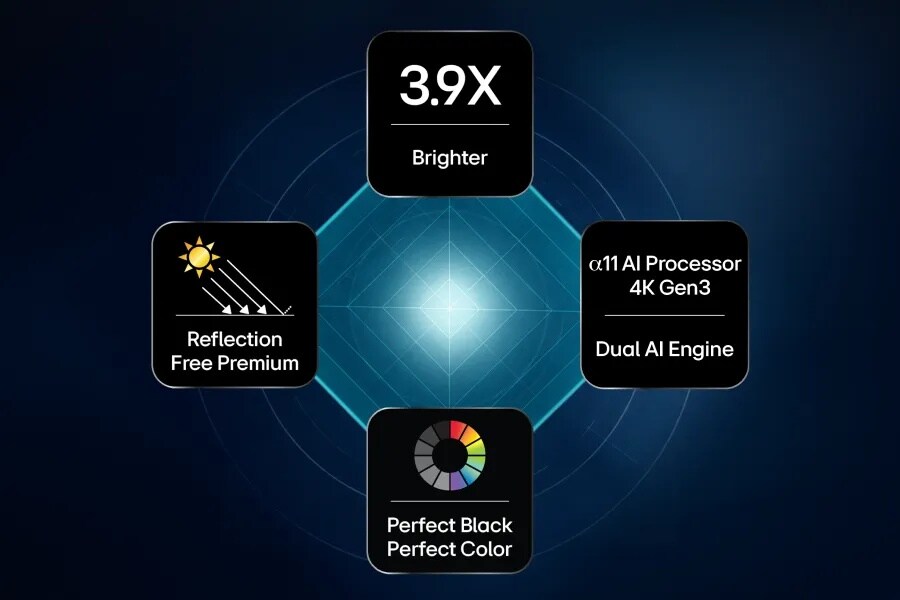
Room brightness is the point where this comparison becomes very practical. OLED has traditionally been the enthusiast's favourite for contrast, black level and viewing angles, but bright UK living rooms can be awkward — especially if you have patio doors, big windows, pale walls or ceiling lights reflected straight back at the screen.
The LG G6 is the best-equipped model here for that situation, provided you are choosing a 55, 65, 77 or 83-inch size. It combines the second-generation Primary RGB Tandem 2.0 panel with the new Reflection Free Premium coating. LG has kept a glossy screen character, but the coating is designed to cut reflections significantly; it is described as producing roughly half the reflections of the G5. That is exactly the sort of upgrade you notice not only during daytime sport, but also in dark scenes where a lamp or window reflection can otherwise sit over the image.
The G5 is still a bright, high-end OLED thanks to its first-generation Primary RGB Tandem 4-stack panel and Brightness Booster Ultimate. In a darker lounge or dedicated film room, it should remain a very compelling television because OLED's strengths are at their most obvious when ambient light is under control. The G6's newer anti-reflection approach is the more meaningful upgrade if your room is bright, reflective or used heavily during the day.
The standard C6 is the model I would treat most carefully for bright-room use. In 48, 55 and 65 inches it uses Brightness Booster Standard, whilst the 42-inch size does not receive that brightness feature. That does not make it a bad television; it simply means it is not the model I would prioritise for a sunlit lounge if a G5 deal or G6 budget is available. The C6H changes the equation at 77 and 83 inches because it gets Brightness Booster Pro, Hyper Radiant Color and Reflection Free Premium.
Bright-room rule of thumb
If your sofa faces windows or you watch lots of daytime TV, prioritise the G6 in 55–83 inches or the 77/83-inch C6H. If you mostly watch films at night, a discounted G5 can make more sense because its first-gen Tandem panel is still firmly in flagship territory.
In a bright room, anti-reflection treatment can matter as much as peak brightness because reflections sit directly over dark scenes.
Screen size also interacts with brightness. A 77 or 83-inch screen dominates the room and catches more ambient light simply because there is more glass. That is one reason the C6H's upgraded panel and coating are so useful: large-screen buyers are more likely to notice the difference. Conversely, a 42-inch bedroom C6 may not need flagship brightness if it is used at night from a short distance.
5. Gaming and PC use: the feature set is shared, so size and panel decide it
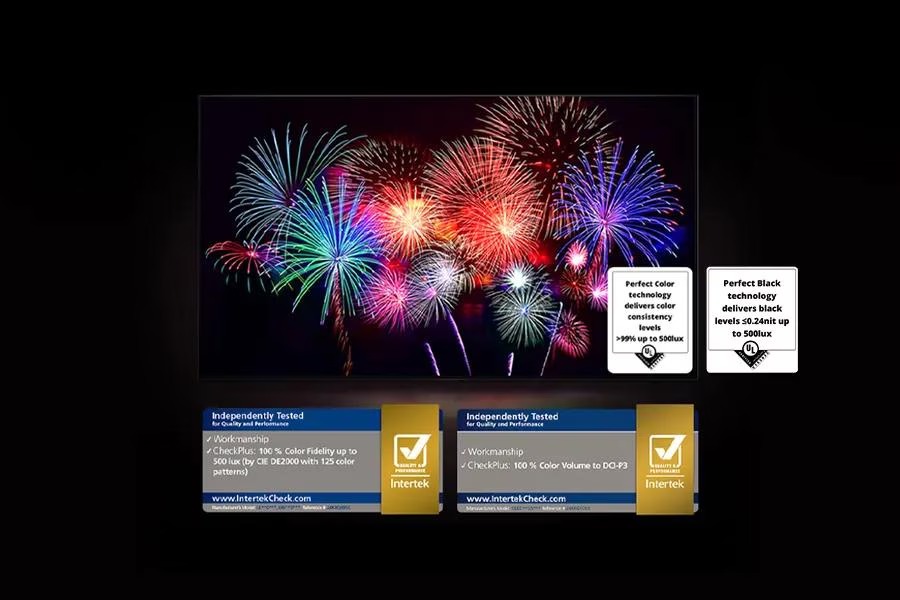
LG OLEDs have been favourites with console and PC gamers for years, and that continues here. The G6, C6 and G5 all quote a 0.1ms response time, which is one of the key reasons OLED gaming feels so immediate. Motion clarity benefits from pixel-level response rather than relying purely on panel refresh rate.
The G6 has the lowest measured input lag of the three at 8.9ms. Its feature list is the same one you get on the C6 and the G5 — NVIDIA G-Sync, AMD FreeSync Premium, VRR, ALLM, HGiG and Dolby Vision Gaming — so the G6 wins on measured speed and panel, not on features the others lack. It also offers up to 165Hz at 4K on 55–83-inch models, which is particularly interesting for high-end PC gamers. The 97-inch G6 is 120Hz, so the 165Hz point is not universal across every size.
The C6 is also very gaming-friendly. It has 4× HDMI 2.1, up to 165Hz, NVIDIA G-Sync, AMD FreeSync Premium, VRR, ALLM, HGiG and Dolby Vision Gaming — the full set, exactly as on the G6. This is the first C-series to reach 4K/165Hz. For a desk or bedroom, the 42-inch C6 is likely to be the natural PC/console size in this trio because the G-series does not start that small. Just remember that the 42-inch C6 is the least ambitious display configuration in brightness terms.
The G5 remains a strong gaming choice too, with NVIDIA G-Sync, AMD FreeSync Premium, VRR, ALLM, HGiG and Dolby Vision Gaming, and measured input lag of about 9.2ms — a difference from the G6 you will not feel. Its refresh-rate story is size dependent: 55–83-inch models support up to 165Hz, the 48-inch model is 144Hz, and the 97-inch model is 120Hz. The 55–83-inch G5 models also carry VESA ClearMR 10000, which will matter to buyers comparing motion clarity credentials.
Those processor uplifts matter beyond menus. The α11 AI Processor Gen3 in the G6 and C6 is described as using a 6nm SoC and brings major gains over the Gen2 processor in the G5: a 50% faster CPU, 70% faster GPU and a 5.6× faster NPU. In day-to-day terms, the most visible benefits should be in image processing, AI features and responsiveness rather than a single dramatic "wow" moment when you plug in a console.
For gaming, my choice would be simple. For the best large-screen gaming experience, go G6 or C6H depending on deal and wall-mount needs. For a compact gaming room or desk, the 42-inch C6 is the obvious physical fit. For a value-led big gaming screen, a discounted G5 in 55–83 inches remains highly appealing because it still reaches up to 165Hz and has the core variable-refresh features.
6. Wall mounting, stands and screen sizes
This is where the G-series earns its identity. The LG G6 uses LG's Flush Fit Gallery Design, and the wall mount is supplied with the W SKU. If you want the TV to sit elegantly against the wall, the G6 is the most natural choice in this comparison. A stand is sold separately or available with the S SKU, so buyers who do not intend to wall mount should check the exact bundle before ordering.
The C6 is more conventional. Its primary SKU is stand-led, with wall mounting optional. That makes it easier for renters, TV-unit users and anyone who moves furniture around. It is also the only range here with a 42-inch option, which gives it a role the G-series simply cannot fill. A 42-inch OLED can work beautifully in a bedroom, studio flat, gaming nook or office, whereas a 55-inch Gallery TV is often overkill.
Screen sizes are not just about wall space. They determine which panel and refresh specification you actually get. With the G6, the key performance zone is 55 to 83 inches, because those sizes get the Primary RGB Tandem 2.0 panel and Reflection Free Premium coating. The 48-inch and 97-inch G6 models do not receive those particular display upgrades, and the 97-inch model is 120Hz rather than 165Hz.
With the G5, the 55–83-inch models are again the sweet spot for high refresh rate, reaching up to 165Hz. The 48-inch model is 144Hz, which is still very fast, whilst the 97-inch model is 120Hz. With the C6, the most important boundary is not refresh rate but panel type: 42–65 inches are standard WOLED, whilst 77 and 83 inches are C6H with Primary RGB Tandem 2.0.
Small rooms
The 42-inch C6 is the obvious pick for bedrooms, desks and flats where a 48-inch or 55-inch screen is too large.
Main lounge
The G6 in 55–83 inches is the most complete option for a living-room centrepiece, especially if you plan to wall mount.
Big cinema setup
The 77 and 83-inch C6H models are far more interesting than the smaller C6 models because they get the upgraded panel package.
Very large screens
The G6 and G5 ranges both extend to 97 inches, but the 97-inch G6 is 120Hz and does not get the G6's key Tandem 2.0/coating package.
Gallery-style wall mounting is a major reason to choose a G-series OLED over a C-series model.
7. webOS, AI features, sound and everyday use
The G6 and C6 both run webOS 2026, also referred to as webOS 26. LG includes Google Gemini and Microsoft Copilot, alongside Google Cast and Apple AirPlay 2. The platform also comes with five years of updates, which is worth having if you keep your TV for a long time rather than upgrading every few years.
Smart-home support is especially broad on the G6. It includes Matter with Thread, Apple Home, Google Cast, Zigbee and Homey integration. LG has also dropped WiSA in favour of Dolby Atmos FlexConnect on the G6. If you are building a living room around connected lighting, speakers and smart-home routines, the G6 looks like the most future-facing option in this group.
On video formats, the G6 and C6 support Dolby Vision and Dolby Atmos, but they do not include Dolby Vision 2. For most buyers right now, I would not make Dolby Vision 2 the deciding factor; Dolby Vision support itself remains the important everyday feature for streaming films and prestige TV. The G6 also adds 12-bit colour processing and 13-bit luma-channel output, which is a first for LG OLED and speaks to how much emphasis LG is putting on tonal handling and colour refinement.
For audio, the G6 uses a 4.2-channel speaker system with AI Sound Pro. As ever with ultra-thin premium TVs, I would still budget mentally for a good soundbar or separate audio system if you care about cinema impact. OLED picture quality can make a mediocre sound system feel especially exposed; a TV this capable deserves audio that can keep up.
Living-room advice
If the TV is going above a media unit, the C6 is the easier plug-and-play choice. If the TV is becoming a designed feature wall, the G6 is more convincing because the Gallery design, smart-home features and premium panel package all point in the same direction.
8. Price drops and buying timing
Exact prices move too quickly to build sensible buying advice around a static number, especially in the UK where retailer bundles, cashback-style promotions and seasonal sales can change the picture overnight. So the better question is not "which one is cheapest today?" but "how much cheaper does a model need to be before it becomes the smarter buy?"
The G5 is the obvious price-drop candidate because it is the 2025 flagship. If it falls meaningfully below the G6 in the size you want, it becomes a very strong choice for film-first buyers and anyone who wants a Gallery OLED without paying for the newest processor and reflection coating. I would be most tempted by the G5 in 55, 65, 77 or 83 inches, where it still has the premium panel and up to 165Hz refresh rate.
The standard C6 should be judged against its own role: it is not trying to be a G6 in 42–65 inches. It makes sense when you want the C-series feature mix, the α11 AI Processor Gen3, 4× HDMI 2.1, 0.1ms response time and up to 165Hz support, but do not need the upgraded panel. It is particularly strong at 42 inches because neither G-series model offers that size.
The C6H is the interesting wild card. At 77 and 83 inches it gets a panel and coating package much closer to the G6 than you might expect from the C-series badge. If you do not need the G6's Gallery wall-mount approach, the C6H could be the model to watch closely during sales periods.
My buying trigger would be different for each model. For the G6, I would wait for a deal only if you are not in a rush; it is the flagship and will remain the cleanest recommendation for bright rooms. For the G5, I would actively compare current sale pricing because that is the whole point of considering it against a newer set. For the C6, I would separate the standard sizes from the C6H sizes before comparing deals, because they are not equivalent display propositions.
9. Pros, cons and model-by-model recommendations
Rather than treating this as one winner and two losers, it is better to think of each model as having a best-fit buyer. The G6 is the flagship answer, the G5 is the discounted premium answer, and the C6 is either the practical smaller-screen answer or, in C6H form, a surprisingly serious large-screen alternative.
The best OLED here depends heavily on where it will live: bright lounge, gaming desk, media wall or dark cinema room.
Reasons to choose the G6
- Primary RGB Tandem 2.0 panel with Hyper Radiant Color Technology on 55–83-inch sizes.
- Reflection Free Premium coating on 55–83-inch models, with roughly half the reflections of G5.
- α11 AI Processor Gen3 brings 50% faster CPU, 70% faster GPU and 5.6× faster NPU versus Gen2.
- Excellent gaming credentials, including the lowest measured input lag here at 8.9ms.
- Flush Fit Gallery Design suits a premium wall-mounted installation.
Reasons to pause on the G6
- The 48-inch and 97-inch versions do not receive the key Tandem 2.0 panel or Reflection Free Premium coating.
- Stand buyers need to pay attention to the SKU, as the wall-mount-focused version is the natural G-series package.
- If the G5 is heavily discounted, the older flagship may be the more sensible buy for darker rooms.

See LG OLED evo AI G6 (65-inch) on Amazon UK
Check today's price & availability on Amazon UK
Reasons to choose the C6 / C6H
- Only range here available at 42 inches, making it ideal for compact rooms and gaming desks.
- α11 AI Processor Gen3 across all C6 sizes.
- 4× HDMI 2.1, 0.1ms response time, G-Sync, FreeSync Premium, VRR, ALLM, HGiG and Dolby Vision Gaming.
- 77 and 83-inch C6H models get Primary RGB Tandem 2.0, Brightness Booster Pro and Reflection Free Premium.
Reasons to pause on the C6 / C6H
- Standard 42–65-inch C6 models use standard WOLED rather than the Tandem panel.
- The 42-inch C6 does not receive Brightness Booster Standard.
- It is not the natural choice if you specifically want a flush Gallery-style wall installation.

See LG OLED evo AI C6 (65-inch) on Amazon UK
Check today's price & availability on Amazon UK
Reasons to choose the G5
- Still a true premium OLED with first-gen Primary RGB Tandem 4-stack panel technology.
- Brightness Booster Ultimate keeps it competitive for picture impact.
- Up to 165Hz on 55–83-inch models, plus G-Sync, FreeSync Premium, VRR, ALLM, HGiG and Dolby Vision Gaming.
- Strong candidate for value if current discounts are significant.
Reasons to pause on the G5
- Uses the α11 AI Processor Gen2 rather than the newer Gen3 chip in G6 and C6.
- G6 has the newer Reflection Free Premium coating on key sizes.
- The 48-inch G5 is 144Hz rather than 165Hz, and the 97-inch model is 120Hz.
For most people asking me which one to buy, I would start with the room. A bright living room pushes me towards G6. A darker room and a strong sale price pushes me towards G5. A desk, bedroom or smaller flat pushes me towards C6. A 77 or 83-inch lounge screen without a strict need for Gallery wall mounting puts C6H firmly on the shortlist.
10. Final verdict and FAQ
The G6 is the flagship pick, but the G5 and C6H make this a more nuanced buying decision than usual.
Gadget Scout verdict
The LG G6 is the best all-round OLED in this comparison, especially in 55, 65, 77 and 83 inches where it gets the Primary RGB Tandem 2.0 panel and Reflection Free Premium coating. It is the model I would choose for a bright UK living room, a premium wall mount or a no-compromise gaming/movie setup.
The LG G5 is the smartest deal-hunter's option. It is older, but its first-gen Primary RGB Tandem 4-stack panel, Brightness Booster Ultimate and up-to-165Hz support on 55–83-inch sizes mean it still belongs in a flagship conversation.
The LG C6 is best split into two recommendations: standard C6 for smaller, practical OLED setups, and C6H for large-screen buyers who want the upgraded panel package without automatically moving to the G6.
- Best overall: LG G6, particularly 55–83 inches.
- Best discounted premium buy: LG G5.
- Best smaller-room choice: LG C6 at 42 or 48 inches.
- Most interesting large-screen alternative: LG C6H at 77 or 83 inches.
Ultimately, the right LG OLED is the one that matches your room rather than the one with the newest badge. In a bright, design-led lounge, I would choose the G6. In a sale, I would look very hard at the G5. For a compact gaming setup, I would buy the C6. And if I were shopping for a 77 or 83-inch C-series screen, I would make absolutely sure I was looking at the C6H variant before comparing it with the G6.
- LG OLED evo AI G6 (65-inch)View on Amazon
- LG OLED evo AI C6 (65-inch)View on Amazon