
We link to the exact model on Amazon UK. Prices change often, so check the live price before you buy. As an Amazon Associate we earn from qualifying purchases.
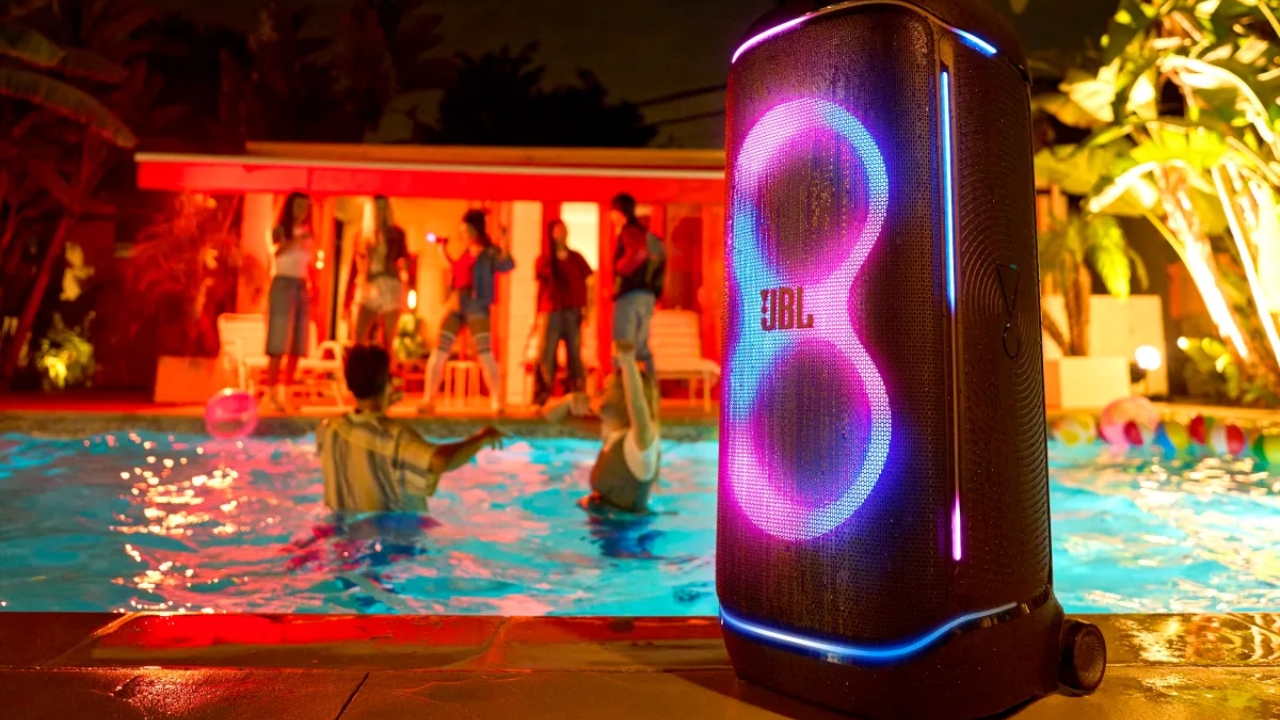
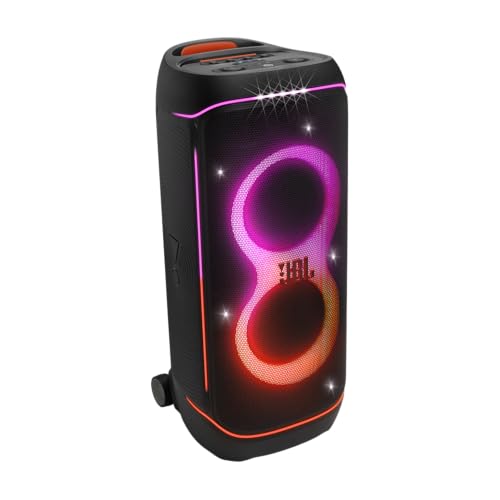
The JBL PartyBox 720 in its element — the lightshow and dual-woofer pattern give the bigger PartyBox models real visual presence.
JBL PartyBox lineup: the full party speaker range compared
From the battery-free PartyBox Ultimate to the compact Encore models and the new On-the-Go 2 Plus, here's the in-depth comparison of JBL's full party speaker range, what each model does best, and which one I'd actually recommend for different types of buyers.
JBL has done something rather clever with the PartyBox range in 2026: instead of forcing everyone into one "best" speaker, it now has a fairly clear ladder. At the top you've got enormous, event-style units like the 1,100W PartyBox Ultimate and 800W PartyBox 720. In the middle sit the more realistic all-rounders such as the 400W PartyBox 520 and 240W Stage 320. Then there are the smaller, more lifestyle-friendly models like the Club 120, Encore 2, Encore Essential 2 and On-the-Go 2 Plus. The trick is understanding whether you need headline wattage, battery flexibility, karaoke features, transport convenience, or simply something you can pick up without planning your entire evening around it.
What's in this comparison
- The full JBL PartyBox range at a glance
- Key specs and what actually matters
- Sound power, portability and battery comparison
- Lightshows, karaoke and app features
- How the models stack up for real-world use
- JBL vs a few sensible competitor categories
- My picks for best value and best overall
- FAQs and final verdict

See JBL PartyBox On-the-Go 2 on Amazon UK
Check today's price & availability on Amazon UK
1. The 2026 JBL PartyBox range in one view
As of May 2026, the actively sold and/or newly released JBL PartyBox line-up includes eight current models: the PartyBox Ultimate, PartyBox 720, PartyBox 520, PartyBox Stage 320, PartyBox Club 120, PartyBox Encore 2, PartyBox Encore Essential 2 and PartyBox On-the-Go 2 Plus. Even before getting into the weeds of ports and battery swaps, there's a very obvious split in the range.
The PartyBox Ultimate is the statement piece: AC-powered only, 1,100 watts, a true three-way driver system, Wi-Fi with Dolby Atmos support, and the most elaborate lightshow in the range. It's the one for people who want something close to a mini event rig rather than a casual Bluetooth speaker. Then comes the PartyBox 720, which matters because it's the loudest battery-powered JBL party speaker in the line-up at 800 watts, complete with dual 9-inch woofers, dual swappable batteries and full-panel lighting.
Below that, JBL has built what I'd call the sensible core. The PartyBox 520 puts out 400 watts and still gives you dual XLR inputs, wheels and a telescopic handle, whilst the PartyBox Stage 320 trims things to 240 watts and leans heavily into versatility with up to 18 hours of battery life, a replaceable battery and a proper wheeled chassis. The Club 120 then becomes the compact but still feature-rich option at 160 watts, with a foldable handle, replaceable battery and Auracast support.
Finally, the smaller family is more specialised. The Encore 2 and Encore Essential 2 both sit in the 100W class, with the Encore 2 leaning towards karaoke convenience and bundled wireless mics, and the Essential 2 stripping back some extras. The On-the-Go 2 Plus also sits in the 100W bracket but takes a different route, focusing on shoulder-strap portability and EasySing AI real-time vocal removal.
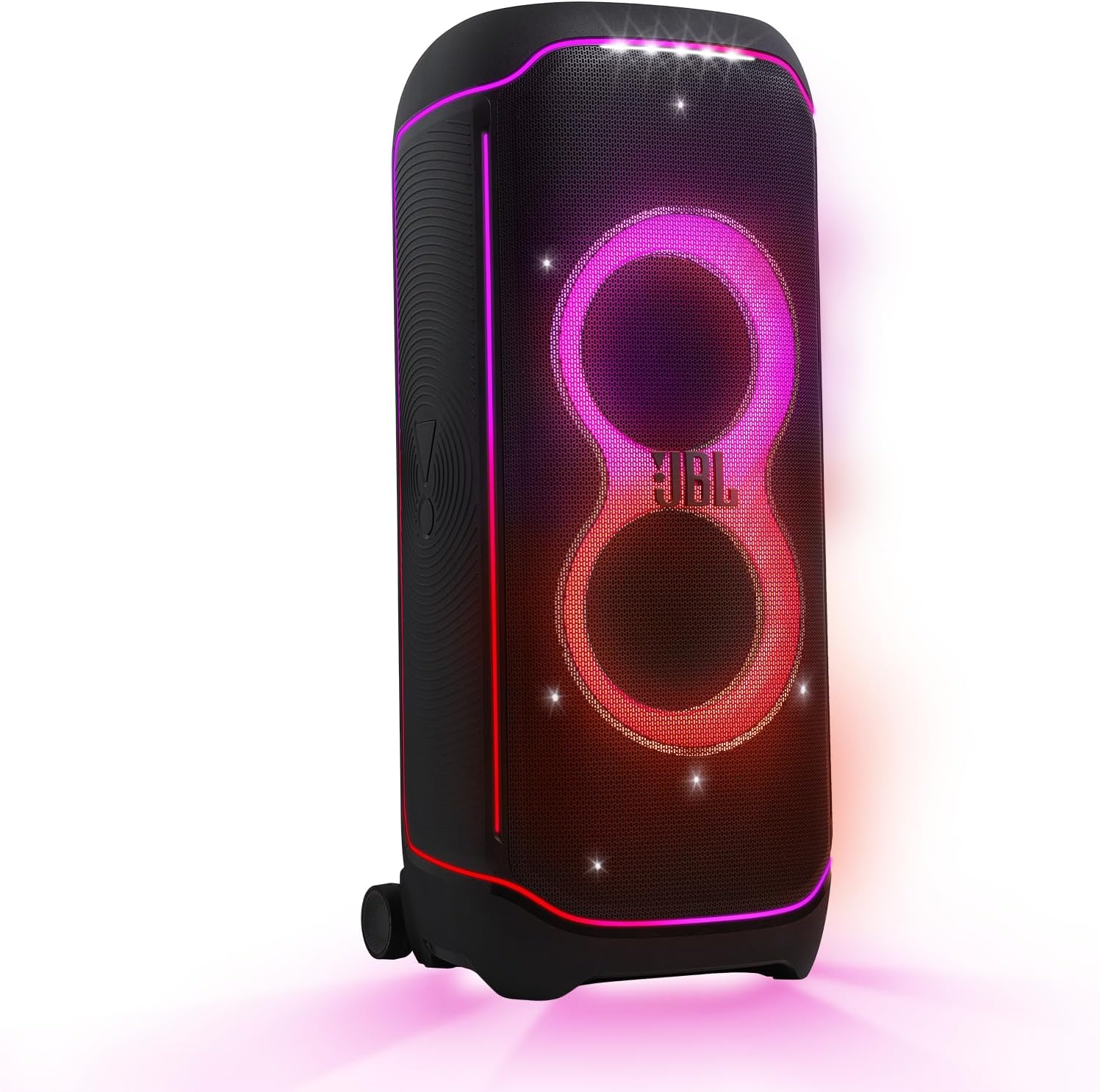
The current range is broad enough that size, wheels and battery strategy often matter as much as raw output.
2. Core specifications: where the real differences are
When I compare party speakers, I always try to look beyond the marketing shorthand. "Bigger" and "louder" are easy to understand, but they don't tell you how practical a speaker is to live with, move around, or repurpose for karaoke and events. In this range, there are five areas that really separate the models: power output, driver configuration, battery architecture, input flexibility and transport design.
Power and drivers
The PartyBox Ultimate sits alone at the top with 1,100 watts and a proper three-way configuration: dual 9-inch subwoofers, 4.5-inch midrange drivers and 2.75-inch tweeters. That matters because it suggests JBL isn't only chasing bass quantity; it's also trying to preserve separation and scale across the frequency range. For larger rooms and more serious gatherings, that three-way design is a significant advantage on paper.
The PartyBox 720 follows with 800 watts and a simpler but still substantial layout of two 9-inch woofers and two 1.25-inch tweeters. The PartyBox 520 comes in at 400 watts with two 7.5-inch woofers and two 1-inch tweeters. The Stage 320 steps down to 240 watts with two 6.5-inch woofers and a pair of 25mm dome tweeters, and the Club 120 lands at 160 watts with two 5.25-inch woofers and two 2.25-inch tweeters. That creates a fairly predictable scaling in bass authority, reach and overall room coverage.
For the Encore 2, Encore Essential 2 and On-the-Go 2 Plus, the research confirms they sit in the 100W class, but several finer technical details are either not fully confirmed in the available search results or weren't published in the brief. Where that's the case, I'd rather be clear and say so than pretend we have a complete spec sheet.
Battery life and battery design
Battery strategy is one of JBL's strongest differentiators in 2026. The Ultimate has no battery at all, so it's AC-only. That sounds restrictive, but on a flagship this size it's honestly sensible. Once a speaker gets into genuine event-speaker territory, most owners care more about consistency than dragging it to the far end of the garden.
The 720 is more interesting because it combines huge output with up to 15 hours of playtime and dual-swappable battery support using two JBL Battery 600 packs, sold separately. The 520 also offers up to 15 hours and replaceable batteries. The Stage 320 is still one of the smartest options in the range with up to 18 hours of playtime, the ability to double that with a battery swap, and a useful FastCharge claim where 10 minutes gets you two hours of playback. The Club 120 gives 12 hours and can also double endurance with a battery swap. The Encore 2 and Encore Essential 2 both offer up to 15 hours, and the Encore 2 specifically adds a 10-minute quick charge for an additional 80 minutes.
Connectivity and inputs
JBL has pushed modern wireless features down through the range. Bluetooth 5.4 and Auracast appear on the 720, Stage 320 and Club 120, with the 520 also confirmed to support Bluetooth with Auracast. The 720 specifically supports SBC and AAC codecs, and adds a USB-C port that can handle digital audio, including lossless playback. That's a genuinely useful spec, not fluff, because it means better integration with phones and streaming sources without relying purely on Bluetooth compression.
For live use, the 720 and 520 stand out. The 720 has dual XLR–1/4-inch combo inputs, a 3.5mm aux port and USB-C. The 520 has two XLR inputs for mic, guitar or DJ console use. The Stage 320 gives you two quarter-inch jacks, 3.5mm aux and USB-A. The Club 120 offers two mic inputs and one guitar input. The Ultimate has wired and wireless playback plus microphone input, and dual mic/guitar inputs are confirmed by Sweetwater.
Pro tip
If you're torn between the Stage 320 and the 520, don't only look at the wattage jump from 240W to 400W. Think about how often you'll use live inputs, how often you'll move the speaker, and whether the longer 18-hour claim plus fast charging on the Stage 320 actually makes it the more practical choice for your weekends.
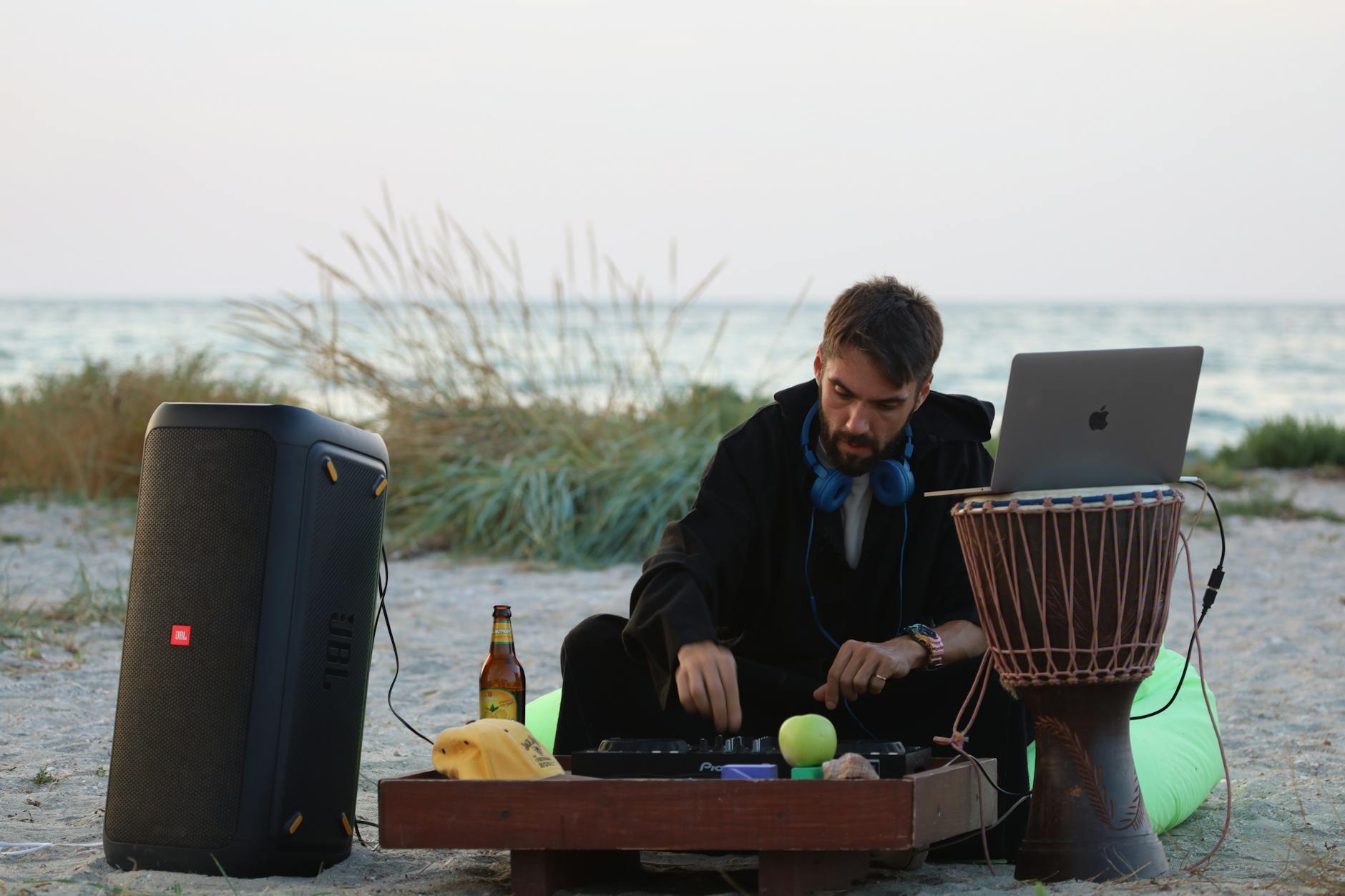
The spec sheet tells only half the story; battery architecture and input flexibility are often the deciding factors.
3. Output, scale and portability compared
One of the easiest mistakes buyers make is assuming they should simply buy the most powerful speaker they can afford. In reality, party speakers are all about context. A 1,100W AC-only speaker can be amazing in a permanent entertaining space and a terrible fit for someone who regularly carries gear to friends' houses. Likewise, a 100W karaoke box might be brilliant fun in a small room and completely run out of puff outdoors with a crowd.
To make the line-up easier to understand, I like to visualise relative output and transport burden together. The bars below are not lab measurements; they are a simple way of showing how the confirmed power figures stack up within JBL's own line-up where that data is available.
The striking thing here is how dramatic the leap is between the Stage 320 and the 520, and then again to the 720 and Ultimate. In practical terms, the Stage 320 and Club 120 feel like consumer-friendly portables first, party products second. The 520 starts crossing into semi-serious event use. The 720 is absolutely an event-grade portable, and the Ultimate is, frankly, a mains-powered monster.
Weight also matters. The PartyBox 720 is confirmed at 68 lb, or about 30.8 kg, which is not something you'll casually pop under one arm. The Stage 320 is 16.5 kg, or 36 lb, and measures 26.3 x 15.2 x 13.2 inches. That is still substantial, but much more realistic for one-person transport, especially with the telescopic handle and wide wheels. The Club 120 is lighter again at 11.05 kg, or 24.35 lb, and folds into a much easier grab-and-go shape with its foldable handle.
The 520 is confirmed to have a telescopic handle and wide wheels, but its exact weight and full dimensions are not confirmed by the manufacturer. Likewise, the Ultimate's weight and dimensions were not confirmed by the manufacturer. So if physical size is your main concern, those are details you'll want to double-check directly with JBL or a retailer before buying.
PartyBox Ultimate
Best thought of as a mains-powered centrepiece. Tremendous scale, but no battery means it's for planned setups rather than spontaneous portability.
PartyBox 720
The sweet spot if you want near-flagship presence without giving up battery use, though the 30.8 kg weight is still a commitment.
PartyBox 520
A clever middle ground: more substantial than the Stage 320, still portable enough to wheel around, and fitted with proper XLR inputs.
Stage 320 / Club 120
The genuinely user-friendly options for most people, with better everyday flexibility than their bigger siblings.
4. Features that actually change the experience
JBL doesn't only compete on loudness. The PartyBox line has become more feature-driven over time, and in 2026 there are some meaningful differences depending on how you use your speaker. I'd group the standout extras into four buckets: lightshow sophistication, app control, AI-assisted audio features, and karaoke/live performance tools.
Lightshows and visual flair
If you care about atmosphere, the visual side of the PartyBox range is more advanced than many mainstream Bluetooth speaker families. The Ultimate gets the largest multi-dimensional lightshow, including a starry night effect, light trails, strobes and even floor-projecting lights. That last detail is worth noting because it changes how the speaker fills a room visually, not just sonically.
The 720 offers a full-panel lightshow, which should appeal to anyone who wants strong visual presence without stepping all the way up to the Ultimate. The Stage 320 has an adaptive music-synced lightshow, whilst the Club 120 gets a symmetric themed light show with starry lights, light trails and strobe effects. Even at the smaller end of the range, you're not simply getting a plain black box.
Apps and sound shaping
App support is slightly split across the range. The Ultimate uses the JBL One app for wireless pairing and sound customisation. The 720, 520, Stage 320 and Club 120 all use the JBL PartyBox app, though the exact controls vary. The 720 is especially strong here with a 7-band EQ, customisable lightshow, mic settings and DJ effects. The Stage 320's app is confirmed to include a 5-band EQ. If you enjoy tweaking the sound for indoor use, outdoor spaces or different music styles, the 720 has the richest confirmed control set of the battery models in this research set.
AI Sound Boost and AI karaoke tools
AI Sound Boost appears on the 720, 520, Stage 320 and Club 120. JBL's naming suggests a system designed to optimise output and maintain strong sound under load, although I won't overclaim beyond the confirmed presence of the feature. In day-to-day terms, features like this tend to matter most when you're pushing a speaker hard and want it to retain punch without sounding strained.
The more novel addition is on the On-the-Go 2 Plus, which is confirmed to include EasySing AI real-time vocal removal. That's a very different kind of smart feature. Rather than focusing on the speaker's raw output, it's aimed at making karaoke sessions more flexible, especially if you're streaming ordinary songs and want a cleaner backing track feel.
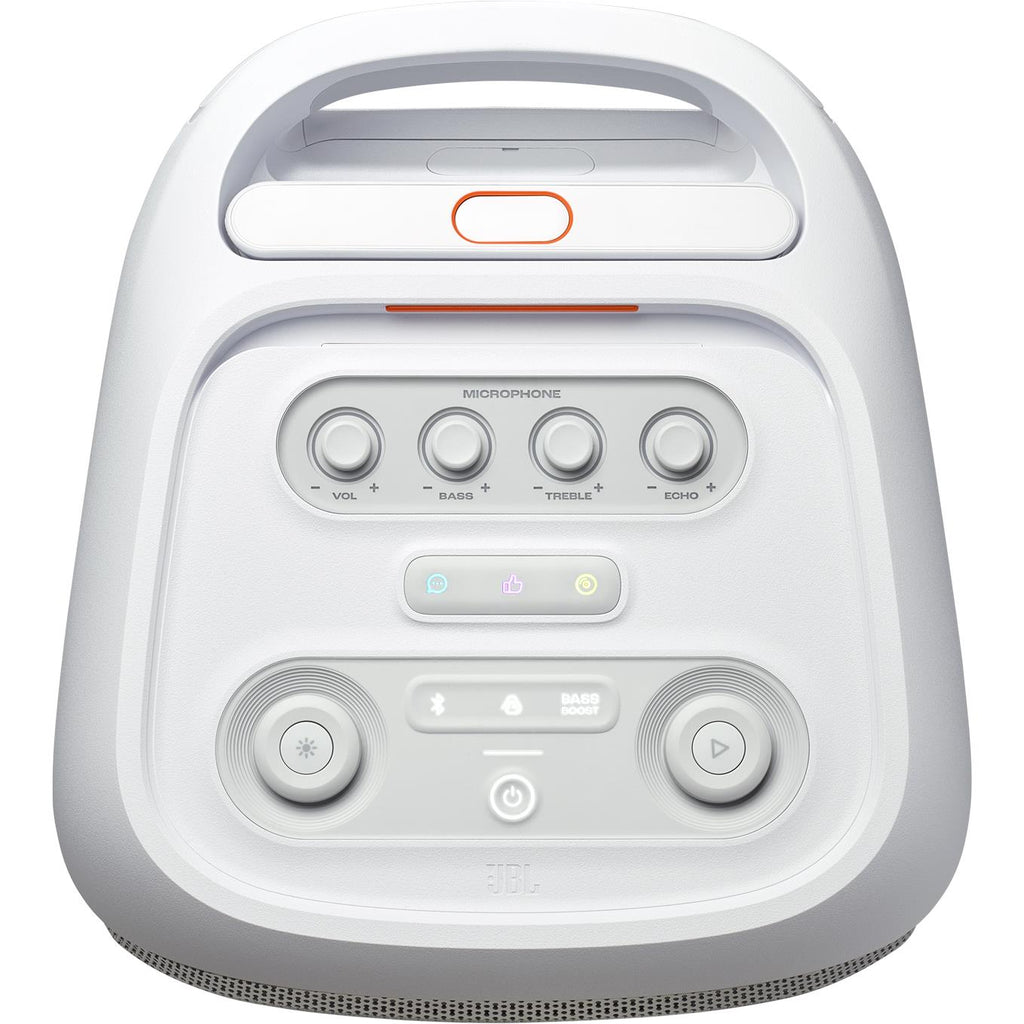
The Stage 320's top-deck controls — microphone EQ knobs and a bass-boost button keep live use simple.
Not every detail is confirmed for every model in the research set. For example, the Encore 2's exact driver configuration and exact wattage figure were not separately confirmed, only that it sits in the 100W class. Where JBL's published material is incomplete in the brief, I've avoided filling in the gaps with guesswork.
5. Which PartyBox is best for karaoke, instruments and live use?
This is where the range gets more nuanced. Plenty of buyers will use these speakers purely for Bluetooth music, but JBL clearly wants the PartyBox line to cover karaoke nights, acoustic performances, house parties with a mic, and even low-friction DJ setups. If that's your use case, not all models are equal.
The PartyBox 720 is one of the strongest all-rounders for mixed entertainment use. Its dual XLR–1/4-inch combo inputs are considerably more versatile than simple consumer mic jacks, and you also get 3.5mm aux plus USB-C digital audio support. That means the 720 is not merely a big Bluetooth speaker; it's a portable PA-lite system for people who want proper input options. Auracast support and Bluetooth 5.4 also keep it current.
The PartyBox 520 is also a strong candidate for more serious use because it features two XLR inputs for mic, guitar or DJ console. That's a standout spec at this point in the line-up, particularly if you're doing small gatherings where one speaker needs to cover music and live input duties without fuss.
The Stage 320 gives you two quarter-inch jacks, a 3.5mm aux input and USB-A, plus a pole mount on the bottom. That pole mount detail is easy to overlook, but it can make a huge difference in practical use. Lifting the speaker off the floor can improve coverage and positioning in a party or event space. For mobile entertainers, that's arguably more valuable than a flashy headline spec.
The Club 120 has two mic inputs and one guitar input, which makes it more capable than its compact size suggests. If you want a small-ish speaker for karaoke and casual instrument use, it's one of the most approachable models in the range. Then there's the Encore 2, which is explicitly karaoke-focused and comes with wireless microphones. It offers up to 15 hours of playback and Bluetooth 5.4, which makes it a very appealing no-fuss karaoke solution even if some of its finer specs weren't fully confirmed.
The On-the-Go 2 Plus is perhaps the most specialised of the lot. With a shoulder strap, wireless mic and EasySing AI real-time vocal removal, it's almost the anti-Ultimate: less about maximum SPL and more about taking the fun with you. For picnics, impromptu singing sessions or compact gatherings, that design makes a lot of sense.
Best strengths for live and karaoke use
- The 720 offers the richest confirmed port selection, including dual combo inputs, aux and USB-C digital audio.
- The 520 keeps proper XLR connectivity in a more manageable tier than the 720.
- The Stage 320 adds a pole mount, which is genuinely useful for parties and small event setups.
- The Club 120 makes mic and guitar use accessible without hauling a giant wheeled speaker.
- The Encore 2 and On-the-Go 2 Plus clearly target karaoke convenience rather than technical setup complexity.
Main limitations to keep in mind
- The Ultimate is incredibly powerful but far less flexible if you need battery operation.
- The 720's 30.8 kg weight means "portable" is relative.
- Some smaller-model specifications are still not fully confirmed in the research data, which makes exact side-by-side analysis trickier.
- IP ratings are mostly splash-oriented (IPX4 on most battery models; the Encore Essential 2 is IP4X), so these are party speakers, not adventure speakers.
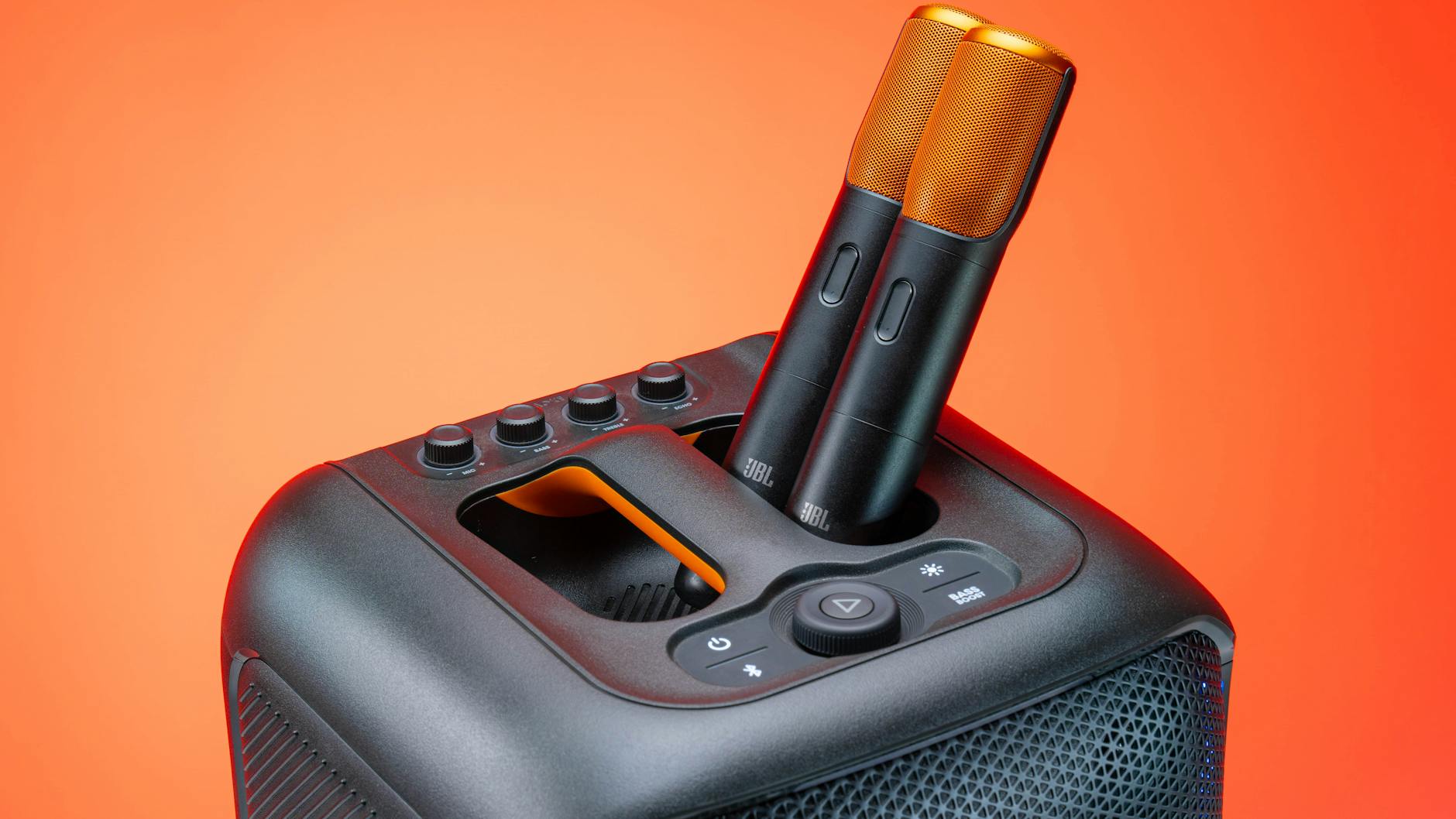
For karaoke and live input duties, ports and placement options can matter just as much as wattage.
6. Best JBL PartyBox by use case: my honest picks
If a friend asked me which PartyBox to buy without giving me any context, I'd refuse to answer. This range is too broad for a single universal recommendation. Instead, these are the picks I'd make based on actual needs.
Best overall for most people: PartyBox Stage 320
The Stage 320 is not the biggest, flashiest or most expensive-sounding option on paper, but it is arguably the most balanced. At 240 watts, it's powerful enough for proper home parties and outdoor gatherings without becoming absurd to move. It offers up to 18 hours of battery life, replaceable battery support, a 10-minute charge for two hours of playback, Bluetooth 5.4 with Auracast, wheels, a telescopic handle, live inputs and even a pole mount. In other words, it does a little bit of everything well. For most households, that's the smartest type of speaker to own.

See JBL PartyBox Stage 320 on Amazon UK
Check today's price & availability on Amazon UK
Best if you want battery power without compromise: PartyBox 720
The 720 is the one I'd point serious party hosts towards. It offers 800 watts, dual 9-inch woofers, full-panel lighting, AI Sound Boost, Auracast, Bluetooth 5.4, dual-swappable battery support and excellent live connectivity. It's heavy at 68 lb, but if you want major scale whilst keeping battery operation, there isn't really another JBL in the line-up that matches it.
See JBL PartyBox 720 on Amazon UK
Check today's price & availability on Amazon UK
Best mid-range step-up: PartyBox 520
The 520 looks very promising as the "grown-up" alternative to the Stage 320. You get 400 watts, bigger woofers, replaceable battery, Auracast, USB-C audio and dual XLR inputs, plus a telescopic handle and wheels. If you know the Stage 320 may leave you wanting a bit more low-end authority or crowd coverage, the 520 is likely the better long-term purchase.

See JBL PartyBox 520 on Amazon UK
Check today's price & availability on Amazon UK
Best compact all-rounder: PartyBox Club 120
The Club 120 is the sensible pick for people who want the PartyBox experience without living with a small appliance on wheels. It delivers 160 watts, Bluetooth 5.4 with Auracast, up to 12 hours of battery life, a replaceable battery, mic and guitar inputs, a foldable handle, pole mount and JBL's lightshow effects. It's the kind of model I can see being used far more often simply because it's less hassle.
See JBL PartyBox Club 120 on Amazon UK
Best for fixed indoor entertaining spaces: PartyBox Ultimate
If you have a large room, bar area, games room or covered entertaining space and portability is irrelevant, the Ultimate is clearly the halo product. 1,100 watts, a three-way driver system, Wi-Fi, Dolby Atmos support and JBL's largest lightshow make it the speaker for going all-in. But I'd only recommend it to buyers who genuinely want a permanent or semi-permanent setup.

See JBL PartyBox Ultimate on Amazon UK
Check today's price & availability on Amazon UK
Best for karaoke-first buyers: Encore 2 or On-the-Go 2 Plus

See JBL PartyBox Encore 2 on Amazon UK
Check today's price & availability on Amazon UK
The Encore 2 looks attractive if you want a compact karaoke speaker with wireless mics included and up to 15 hours of battery life. The On-the-Go 2 Plus is better if portability and singing-oriented features matter more than pure output, especially thanks to the shoulder-strap design and EasySing AI vocal removal.
Home party hosts
Pick the Stage 320 if you want the broadest mix of portability, battery life and punch, or the 520 if you host larger gatherings more often.
Serious event-minded users
Choose the 720 for maximum battery-powered impact, or the Ultimate if your setup is mains-powered and largely stationary.
Karaoke lovers
Look at the Encore 2 for easy all-in-one fun, or the On-the-Go 2 Plus if you want portable singing sessions with AI-assisted vocal removal.
7. JBL PartyBox vs competing speaker categories
Because the available information here is specifically centred on the JBL line-up, I'm not going to pretend we have confirmed apples-to-apples specifications for every rival model in this exact article. What I can do, honestly, is compare the JBL PartyBox range against the three categories it most clearly competes with: premium portable party speakers, compact karaoke speakers, and small PA-style event speakers.
This is useful because many buyers aren't choosing between two JBLs alone. They're asking whether they want a lifestyle party speaker, a karaoke speaker, or something edging towards portable PA territory.
| Feature | JBL PartyBox line-up 2026 | Typical compact karaoke speaker | Typical portable PA / event speaker |
|---|---|---|---|
| Range breadth | Very broad: from 100W-class shoulder-strap models to 1,100W mains-powered flagship units | Usually focused on 1-2 compact models | Often aimed at larger, more utilitarian form factors |
| Battery strategy | Strong across the range, with replaceable or swappable batteries on several models | Often built-in battery only | Mixed; some models omit batteries or treat them as optional |
| Lighting and visual effects | One of JBL's strongest advantages, especially on Ultimate, 720, Stage 320 and Club 120 | Common, but usually simpler | Usually minimal or absent |
| Live inputs | Strong on 720, 520, Stage 320 and Club 120 | Good for mics, less often robust for instruments or DJ use | Often very good, but more technical and less lifestyle-friendly |
| Wireless ecosystem | Bluetooth 5.4 and Auracast appear on several current models | Varies widely | Wireless features often less central than inputs |
| Best for | People who want fun, flexibility and relatively polished design | Karaoke-first buyers on a smaller scale | Users prioritising projection and live sound practicality over flair |
In my view, that's JBL's big advantage. PartyBox speakers generally sit in the sweet spot between consumer-friendliness and event usefulness. They're more fun and more design-conscious than many PA-style boxes, whilst also being more capable than basic karaoke speakers. The downside is that once you get to the very largest models, you're paying for a lot of spectacle and hardware, so you want to be sure you'll actually use that scale.
8. Pricing, value and what to buy with confidence
the available information provided here does not include a complete confirmed price list for every model across all regions, so I'm not going to invent one. That means I can't fairly rank the entire line-up by exact price-to-performance ratio in pounds and pence. What I can do is talk about value in structural terms: which speakers appear best-positioned for different budgets and expectations.
In value terms, the Stage 320 looks especially strong because it combines a 240W output, 18-hour battery claim, replaceable battery, fast charging, wheels, Auracast, live inputs and a pole mount. It covers a lot of use cases before you ever feel pushed into the more expensive 520 or 720. The Club 120 should also appeal to budget-conscious buyers who don't need wheeled transport or event-grade output but do want a proper lightshow, replaceable battery and flexible inputs.
The 520 looks like the "buy once, keep for years" model if your parties regularly outgrow smaller speakers. The 720 is value for people who would otherwise buy a huge mains-powered speaker and regret losing portability. And the Ultimate only becomes good value if you really want that flagship experience, including Wi-Fi Dolby Atmos support and the largest lighting package JBL offers.
Best value all-rounder
Most balanced set of confirmed features in the range: 240W, wheels, 18-hour battery claim, replaceable battery, Auracast and useful live inputs.
Best step-up buy
For buyers who know they need more authority than the Stage 320 without jumping straight to the sheer size and weight of the 720.
Best no-compromise portable
The premium choice if you want serious scale, swappable batteries, dual combo inputs and full-panel lighting in one package.
If you're close to buying, it's worth checking live pricing because PartyBox models often fluctuate depending on retailer stock and bundles.
9. Overall rating of the 2026 PartyBox family
Reviewing a full range is a bit different from scoring one product, but I do think JBL deserves credit for building a line-up that makes sense. There's a logical progression from compact fun speakers up to serious event-capable units, and several models now share useful modern touches like Auracast, Bluetooth 5.4, replaceable batteries, and more mature input options.
The main weaknesses are also pretty clear. Some of the smaller-model details remain less transparent in the available material than I'd like, especially around full driver specs. The bigger speakers can become physically cumbersome very quickly, and the Ultimate in particular is a niche product despite its obvious appeal. Still, taken as a whole, this is one of the most coherent and feature-rich party speaker families around.
10. FAQs and final verdict
Final verdict
JBL's 2026 PartyBox line-up is one of the clearest examples of a brand properly segmenting a category instead of just making the same speaker in three sizes. Each step up the range tends to bring a genuine shift in capability: more output, bigger drivers, more flexible inputs, better transport hardware, or stronger battery strategy.
If I were spending my own money, the Stage 320 would be my default recommendation for most readers because it gets the balance right. It's powerful enough to feel like a proper party speaker, portable enough to use often, and feature-rich enough to handle more than simple Bluetooth playback. If you know you want more low-end scale and more serious input flexibility, the PartyBox 520 is probably the smarter upgrade path than jumping immediately to the 720. And if you do want the biggest battery-powered statement JBL currently makes, the PartyBox 720 is the standout.
The PartyBox Ultimate is brilliant but specialised. The Club 120 is more practical than many people will assume. The Encore 2 and On-the-Go 2 Plus make a lot of sense for karaoke-first buyers. In short: there isn't one best JBL PartyBox, but there is almost certainly one that fits your life far better than the rest.
For a final retailer check before buying, I'd compare current listings and bundles rather than relying on launch pricing assumptions.
- PartyBox UltimateView on Amazon
- JBL PartyBox On-the-Go 2View on Amazon
- JBL PartyBox Stage 320Best JBL PartyBox by use case: my honest picksView on Amazon
- JBL PartyBox 720Best JBL PartyBox by use case: my honest picksView on Amazon
- JBL PartyBox 520Best JBL PartyBox by use case: my honest picksView on Amazon
- JBL PartyBox Encore 2Best JBL PartyBox by use case: my honest picksView on Amazon