
Best Desk Height UK in 2026: The Definitive Buyer's Guide
From HSE ergonomic standards to the best height-adjustable desks you can actually buy this year — everything UK home and office workers need to set their workstation up properly.
The right desk height transforms an average workday into a comfortable one — and modern adjustable desks finally make it achievable.
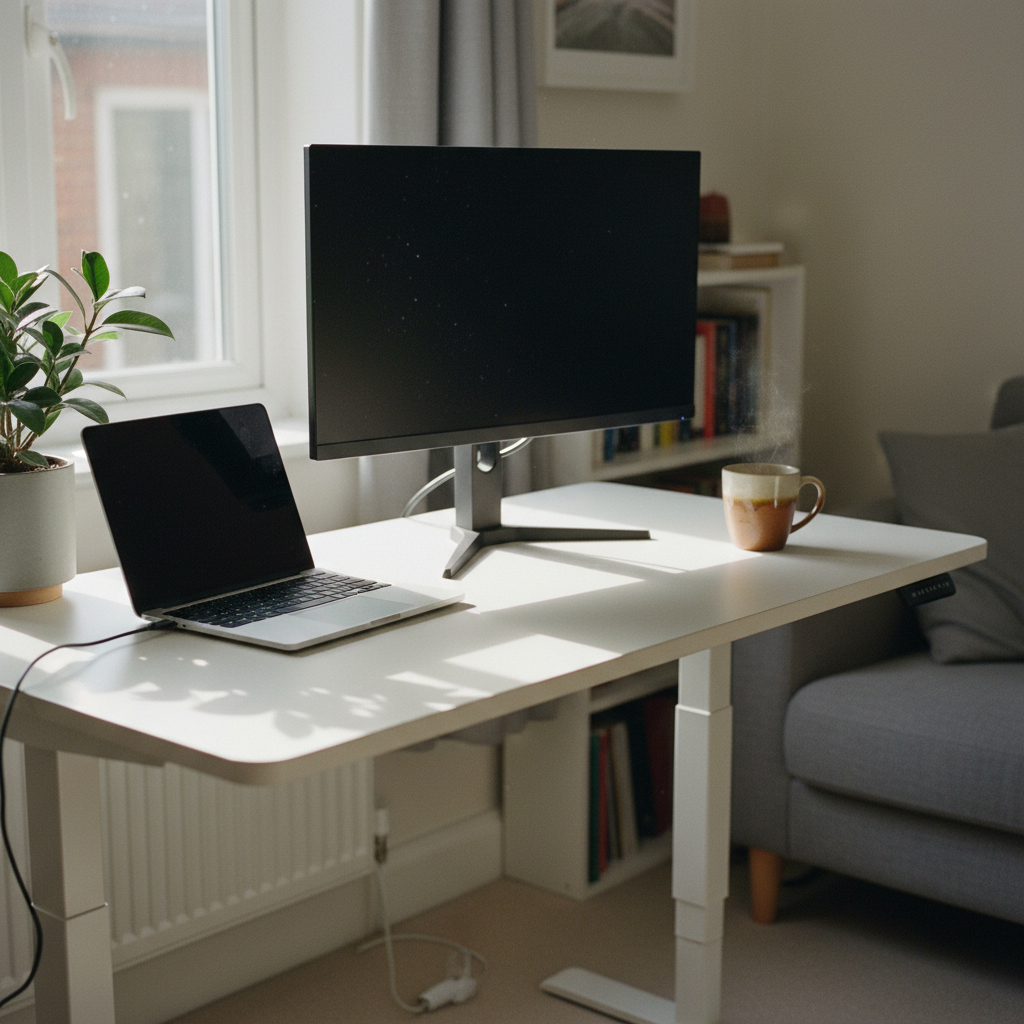
Height-adjustable desks have moved from niche to default for UK home offices in just three years.
What's in this guide
- The HSE standard explained
- Finding your ideal desk height
- Sitting vs standing heights
- Top adjustable desks for 2026
- Comparison table
- Picks by use case
- Frequently asked questions
- Final verdict
What Is the Standard UK Desk Height?
Let's start with the official line. The Health and Safety Executive (HSE) publishes ergonomic guidance for UK workplaces, and its recommended height for a standard sitting desk is 730 mm — which the HSE describes as the optimum height for general computer work and paperwork. There's flexibility around that figure: HSE states that desk heights anywhere between 700 mm and 800 mm can still be suitable, depending on the user.
In practice, most fixed-height office desks sold in the UK fall into the 70–76 cm (28–30 inch) range, which broadly aligns with European ergonomic standards. The bigger picture is that British workplace legislation places obligations on employers to provide workstation configurations that prevent occupational musculoskeletal disorders, and HSE guidelines actively encourage workstation evaluations to ensure each desk genuinely suits the person sitting at it.
The catch: while the average UK desk sits somewhere between 69 cm and 80 cm, that standard was designed around a person of 5'9". The UK average woman is 5'3", and many find standard desks frustratingly too tall — leading to raised shoulders, hovering wrists and chronic neck strain.
How to Find Your Ideal Desk Height
The single most useful thing I've learned writing about ergonomics is that you don't need a consultant to find your sweet spot — you need a tape measure and one rule of thumb. The classic formula is to take your height in inches and add 1, giving you your ideal desk height in centimetres. So a 6-foot person (72") lands at roughly 73 cm, which is exactly the HSE optimum.
The other way to check is by posture. When seated properly:
Elbows at 90 degrees
Your forearms should be parallel to the floor when your hands rest on the keyboard, with shoulders relaxed — not hitched up towards your ears.
Feet flat on the floor
Knees at roughly a right angle. If your feet dangle, you either need a lower desk or — more practically — a footrest.
Monitor at or below eye level
The top of the screen should sit roughly level with your eyes so your neck stays neutral. Laptops on desks almost always fail this test without a riser.
Wrists straight
No bending up or down to reach the keys. If your wrists kink upwards, the desk is too high.
Desk Height by User Height (Sitting)
| Your Height | Ideal Sitting Desk Height | Notes |
|---|---|---|
| 150–160 cm (4'11"–5'3") | 58–64 cm | Most standard desks are too tall; footrest essential |
| 5'4" (163 cm) | 27–28 inches (~69–71 cm) | A 30" desk only works with chair raised + footrest |
| 5'6" (168 cm) | 28–29 inches (~71–74 cm) | Most standard desks fit comfortably |
| 5'9" (175 cm) | ~73 cm (HSE optimum) | The textbook standard works well |
| 6'0" (183 cm) | 30 inches (~76 cm) | A standard 30" desk is essentially perfect |
| 190–200 cm (6'3"–6'7") | 76–82 cm | Many fixed desks too low; adjustable strongly advised |
A correctly set-up workstation: elbows at 90°, feet flat, monitor at eye level. Get the desk height right and the rest falls into place.
Standing Desk Heights — A Different Calculation Entirely
If you're moving from a fixed sitting desk to a sit-stand setup, the maths changes considerably. The average standing desk height ranges between 95 cm and 115 cm, depending on the user's height and arm length. In practice, ideal standing heights can run anywhere from 95 cm up to 125 cm for very tall users — and shorter users need to drop well below that.
The good news is that modern electric height-adjustable desks typically cover the whole span. A well-specified desk in 2026 will adjust roughly from 60 cm to 125 cm, comfortably accommodating everyone from a 5-foot user (whose ideal sitting height is around 60 cm) up to a 6'8" user (who needs around 129–130 cm standing). If you're at either end of that bell curve, check the minimum and maximum carefully — not every desk reaches where you need it to.
Pro Tip: The Useful Range
For most adults, the useful adjustable range is 62 cm to 128 cm. If a desk's spec sheet only starts at 70 cm or tops out at 115 cm, it might still suit you — but it locks out shorter and taller users entirely. Always pick a frame that covers your full sitting and standing requirement with headroom either side.
Why Height-Adjustable Desks Have Become the Default Answer
Here's the inconvenient truth about fixed-height desks: even at the HSE-optimal 730 mm, they only really suit users around 5'9". Everyone shorter compensates by raising the chair (and often dangling their feet). Everyone taller compensates by hunching forward. Sit at the wrong height for 67 days a year and the cumulative effect on your neck, shoulders, and lower back is genuinely significant.
That's why I now recommend a height-adjustable desk for almost anyone setting up a serious home office or replacing an old workstation. The flexibility means a single desk works for a 5'2" partner and a 6'1" partner, scales as kids grow, and lets you alternate between sitting and standing throughout the day — which the research overwhelmingly favours over either extreme.
Below are my picks for 2026, chosen across budgets, build qualities and use cases.
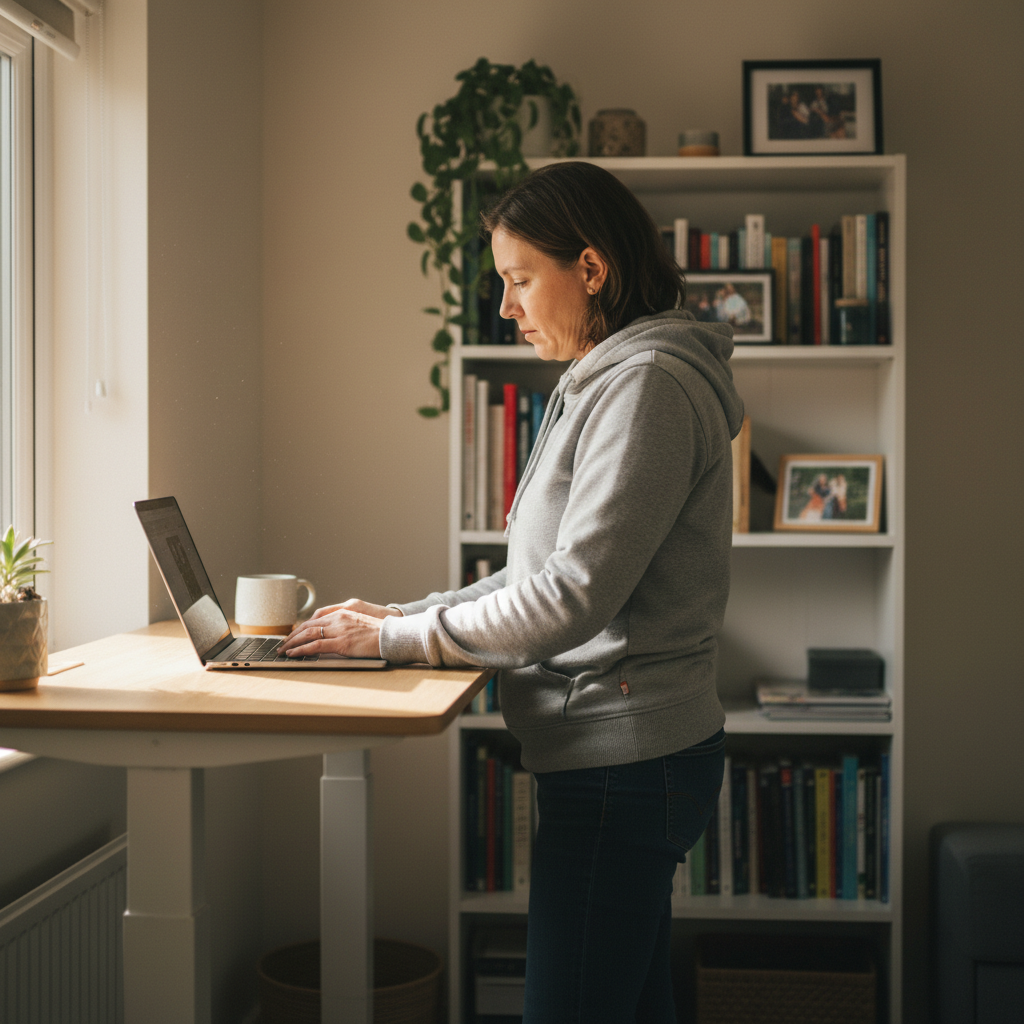
Most adjustable desks offer a 60-125 cm range - enough for proper sitting AND standing posture across heights.
The Best Height-Adjustable Desks UK 2026
1. Flexispot E7 — The All-Rounder
If I had to recommend one electric standing desk to most UK buyers, it would be the Flexispot E7. It hits the brief comfortably: a dual-motor frame, a generous height range that covers virtually every adult user, a sturdy steel construction that doesn't wobble at full extension, and a memory keypad with four programmable presets. It's the desk I steer most first-time buyers towards because it gets the fundamentals genuinely right.
Pros
- Wide adjustable range suits very short and very tall users
- Dual motor lifts smoothly, even with a loaded desktop
- Stable at standing height — minimal wobble
- Four memory presets for sitting, standing and shared use
- Choice of desktop sizes and finishes
Cons
- Assembly is a two-person job — the frame is heavy
- Larger desktops take up significant room
- Cable management requires aftermarket additions
2. IKEA Bekant — The Sensible Mid-Market Choice
The Bekant has been a quiet UK favourite for years, and the current generation remains a sensible buy. It's not the flashiest desk in this list — there's only one motor, the range is narrower than premium rivals, and the controller is functional rather than fancy — but it's well-built, sized for typical British home offices, and backed by IKEA's long guarantee. For someone who wants adjustability without the premium price, it ticks the boxes.
3. Fully Jarvis — The Enthusiast Pick
The Jarvis has a cult following among people who really care about their workstation, and it deserves it. The frame quality is excellent, the lift is quiet and smooth, and you can configure it with various desktop materials, sizes and edge profiles. It's the desk I'd pick if I were upgrading a long-term office rather than fitting out a temporary corner of the spare room.
A premium adjustable frame transitions silently between sitting and standing — the difference in build quality compared with budget desks is immediately obvious.
4. Flexispot EG1 — The Budget Entry Point
See Flexispot EG1 on Amazon UK
Not everyone can — or should — drop several hundred pounds on a desk. The EG1 is Flexispot's most accessible electric desk and it does the essentials remarkably well. Single motor, simpler controller, narrower range than the E7, but it still delivers proper electric height adjustment for a fraction of the cost. If you've never owned a sit-stand desk and want to see if you'll actually use the standing function before committing, this is the smart way in.
5. Yo-Yo Desk Pro 2+ — The Converter Solution
See Yo-Yo Desk Pro 2+ on Amazon UK
If you're renting, sharing a desk, or simply unable to replace your existing furniture, a desk converter sits on top of your current surface and lifts your monitor and keyboard up to standing height. The Yo-Yo Pro 2+ is one of the better-known options in the UK and works well for laptop users in particular. It's not as elegant as a full electric desk, but it's a sensible compromise.
6. Songmics Standing Desk — The Compact Option
See Songmics Standing Desk on Amazon UK
For smaller rooms — flats, studies, box rooms — a full-width 160 cm desk simply doesn't fit. Songmics' smaller adjustable desks are aimed squarely at this scenario, offering a more modest footprint without losing electric adjustment. The build doesn't match a Jarvis, but for a tight space it's a pragmatic choice.
At-a-Glance Comparison
| Desk | Best For | Motor | Standout |
|---|---|---|---|
| Flexispot E7 | Most UK home offices | Dual | Range + stability |
| IKEA Bekant | Sensible mid-market | Single | Long guarantee |
| Fully Jarvis | Enthusiasts / long-term setups | Dual | Build quality |
| Flexispot EG1 | First-time buyers on a budget | Single | Entry price |
| Yo-Yo Desk Pro 2+ | Renters / desk-toppers | Manual/gas | No furniture replacement needed |
| Songmics Standing Desk | Compact rooms | Single | Smaller footprint |
Check the latest price and any current bundles on Amazon — pricing on standing desks moves regularly with seasonal promotions, and Flexispot in particular often runs sales worth waiting for.
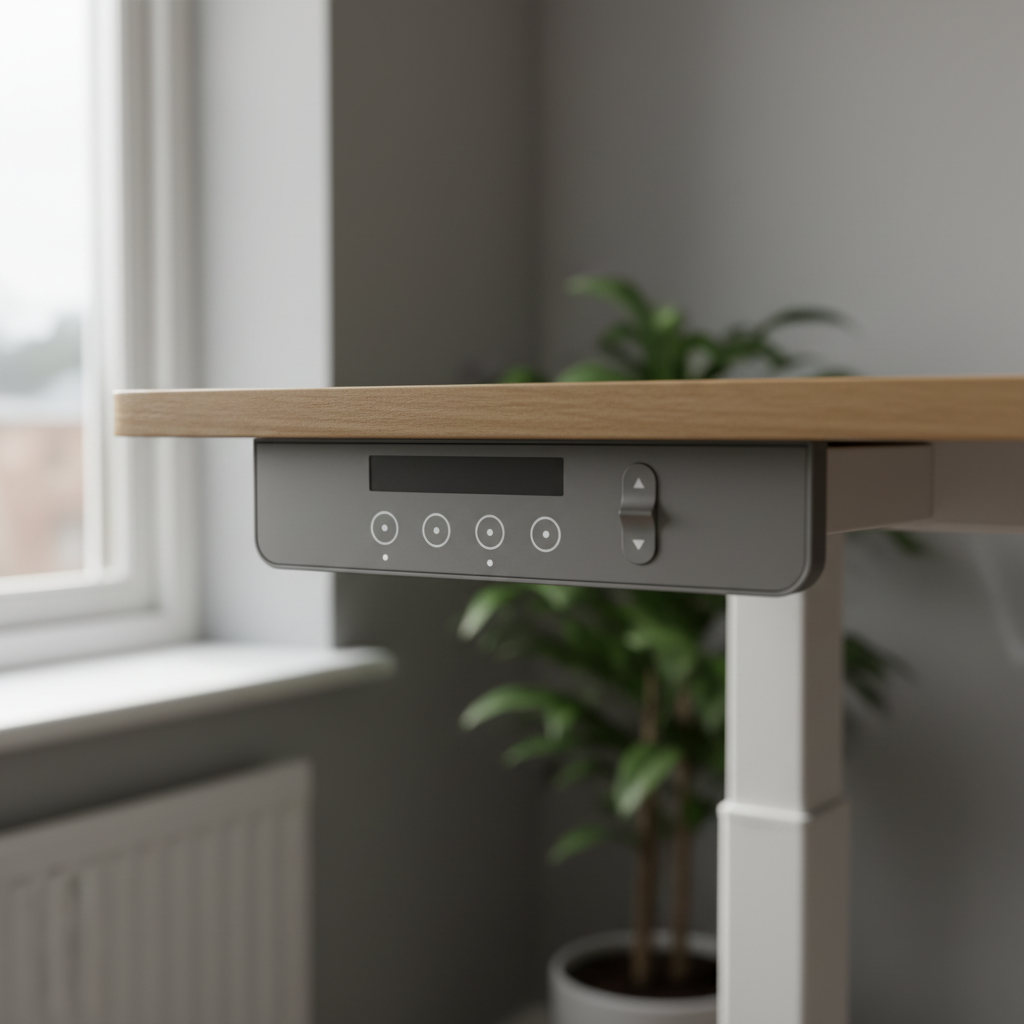
Memory presets on the controller are the small detail that turns a standing desk from a feature into a habit.
How They Stack Up — Key Capability Comparison
The bars below show how the picks compare on the dimensions that matter most when you're actually using the desk every day. Stability, range coverage and lift quality are the three things you'll feel within the first week of ownership.
Picks by Use Case
Permanent home worker
Go for the Flexispot E7 or Fully Jarvis. You'll spend enough time at this desk that build quality genuinely matters.
First-timer on a budget
Start with the Flexispot EG1. Prove to yourself that you'll actually use sit-stand before paying more.
Shorter than average
Any electric desk that drops to around 60–62 cm. Avoid fixed-height desks entirely — they will always feel too high.
6'2" or taller
Check the maximum height carefully. The E7 and Jarvis both reach standing heights that suit very tall users.
Tight on space
The Songmics or a smaller Bekant variant. Don't force a 160 cm desk into a box room.
Renting / can't replace furniture
The Yo-Yo Desk Pro 2+ converter sits on your existing desk — no commitment, no assembly upheaval.
Shorter users often suffer most from "standard" desks. An adjustable frame that drops to around 60 cm is genuinely transformative.
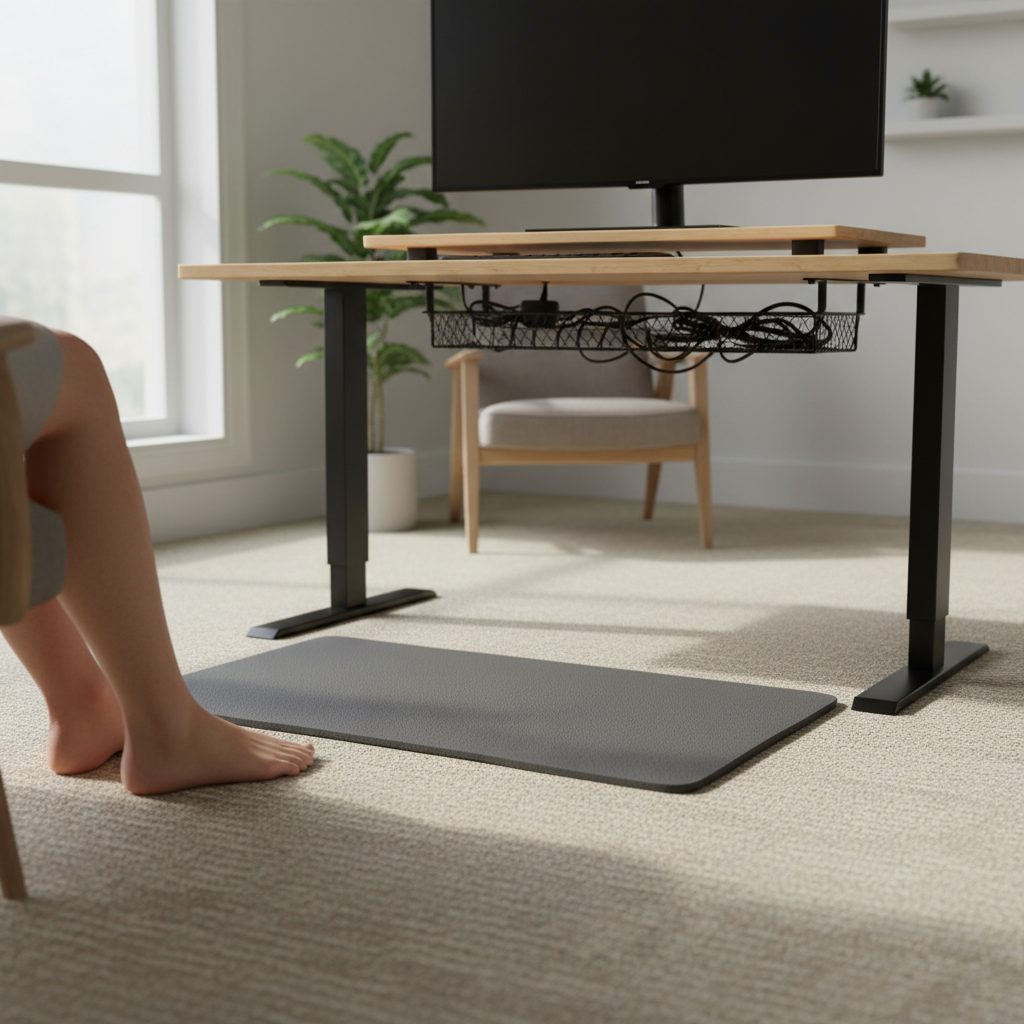
An anti-fatigue mat softens the floor; without one, standing for hours can be worse than sitting.
Overall Recommendation Scorecard
Setting Up Your Desk Height Properly
Buying an adjustable desk is only half the job. You also need to actually set it up correctly — and most people get this wrong the first time round. Here's the order I work through whenever I'm helping someone configure a new workstation:
Adjust your chair first
Feet flat on the floor, thighs roughly parallel to the ground, knees at a right angle. Don't think about the desk yet.
Set the desk to elbow height
With your arms hanging naturally at your sides and forearms lifted to 90°, raise or lower the desk so the surface just touches your forearms. That's your sitting height.
Position your monitor
The top of the screen should sit at or just below eye level. A monitor arm or riser is usually needed — laptop screens almost always sit too low.
Save your presets
Programme one preset for your sitting height and one for standing. If you share the desk, save partner presets too.
Use a footrest if needed
If you're shorter and raising the chair leaves your feet swinging, a footrest gives essential support so you don't have to compromise between correct arm posture and happy feet.
Frequently Asked Questions
The right adjustable desk should disappear into the background of your workday — quiet, stable, and effortless to raise or lower.
The Verdict
The "best desk height UK" question has two answers in 2026. The textbook answer is the HSE's 730 mm — a sensible compromise for a hypothetical 5'9" worker doing general computer tasks. The honest answer is that your best desk height depends on your height, your chair, your monitor setup and whether you also want to stand. For most people, the simplest route to getting this right every single day is an electric height-adjustable desk that covers roughly 62–128 cm.
For the broad majority of UK home workers, the Flexispot E7 is the desk I'd buy. It's stable, the range is generous enough to suit shorter and taller users alike, and the dual motor handles a loaded desktop without fuss. If budget is tight, the Flexispot EG1 is the smart entry point. If you want the absolute best long-term build, the Fully Jarvis earns its enthusiast reputation. And if you can't change your furniture, the Yo-Yo Desk Pro 2+ remains a sensible converter.
Whichever you choose, the real upgrade isn't the desk — it's the habit of setting it correctly, alternating between sitting and standing, and giving your body the variation it actually needs across those 67 days a year you'd otherwise spend in a single static posture.
An adjustable desk pays for itself in comfort. Get the height right and the rest of your workstation finally makes sense.
Some images in this article are illustrative scenes generated by AI for editorial context. Photos of named products are real product photography. The brands and models discussed are unaffiliated with the imagery.